Tag: Nguyễn Phú Trọng

  • Is Vietnam Now A Country Without A Solid Leader?

    Is Vietnam Now A Country Without A Solid Leader?

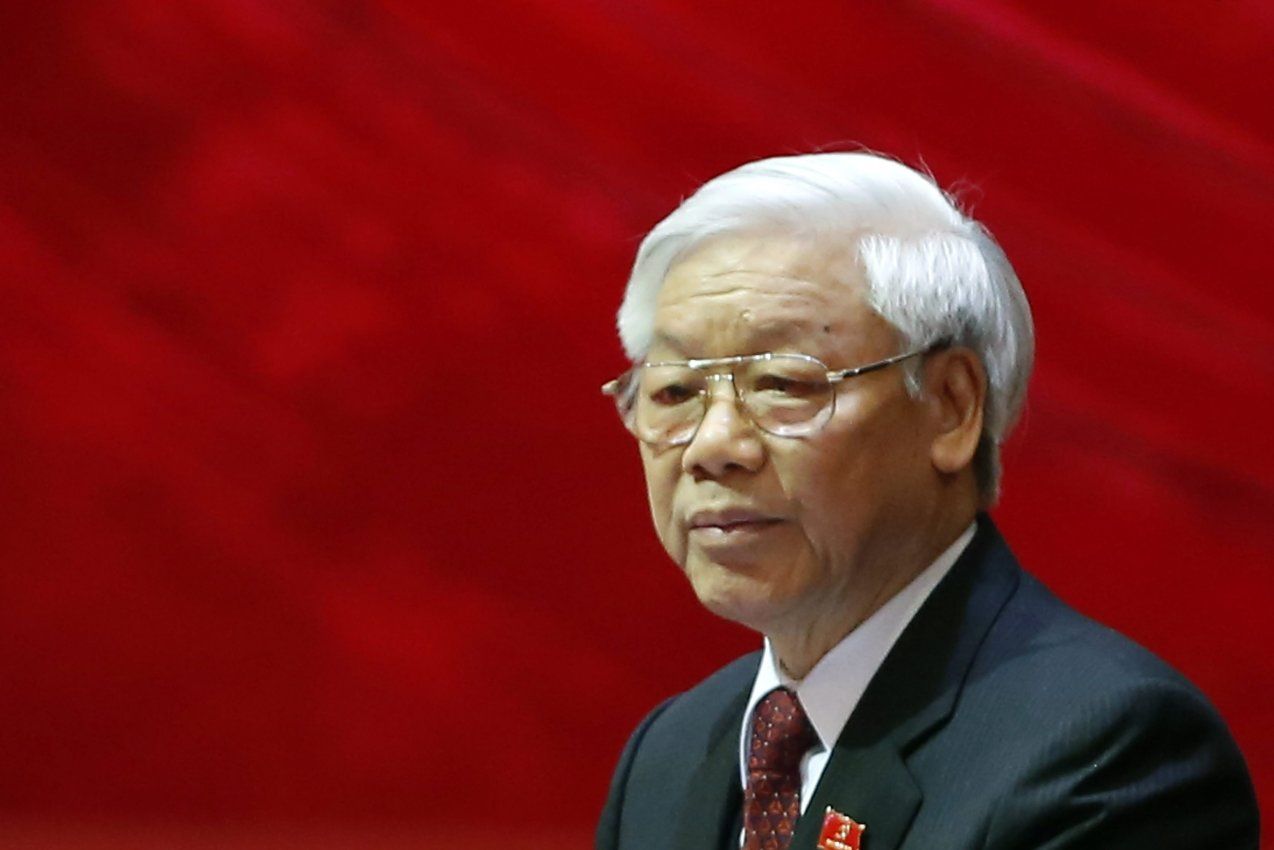
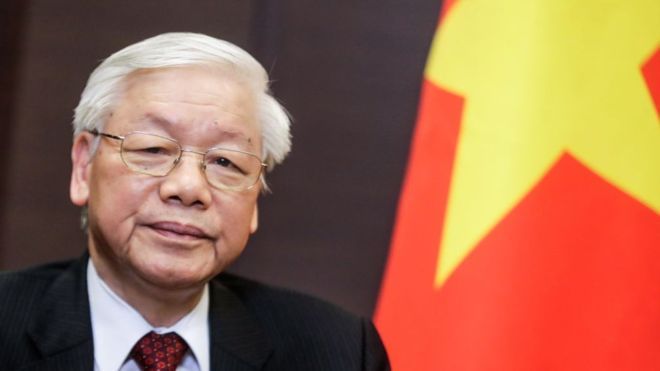
    For more than half a year, the health of Vietnam’s President Nguyen Phu Trong has remained a top secret while rumors and speculation about him continued to spread across social media. Trong was not able to visit the United States in October 2019 as planned, and that fact stirred up new discussion about his health. Surprisingly, the health of the man who currently holds the top positions as the president of Vietnam and general secretary of the Vietnamese Communist Party (VCP) remains a state secret in Vietnam.

    How is that possible?

    According to the new Law on the Protection of State Secrets (link inVietnamese), passed in November 2018, all information that “protects the health of the top leaders of the (Communist) Party and of the state” is a state secret.

    This law now appears to be coming under increasing public scrutiny as a result of growing  speculation regarding the current health condition of the most politically powerful man in Vietnam.

    Rumors about Nguyen Phu Trong’s health have consumed the entire nation since mid-April 2019, and effectively bumped his name to the top of Vietnam’s Google trends on the weekend of April 13, 2019, pushing it to the No. 2 slot that Sunday evening.

    It apparently all began with a Facebook post by freelance journalist Le Nguyen Huong Tra, which quickly went viral after she announced around 4pm on Sunday, April 14, that the 75-year-old Trong suddenly became ill while visiting Kien Giang province in the south. Helicopters were called to take him from the province back to Ho Chi Minh City for an emergency admission to Cho Ray Hospital.

    Later that evening, more rumors from social media pieced together the puzzle and alleged that Trong had suffered a brain hemorrhage, probably the result of a stroke, which affected the left side of his body. Some pictures, allegedly taken late Sunday afternoon at that hospital, also showed police officers surrounding the premises, leading more people to believe Trong was indeed admitted there for emergency treatment.

    As the country’s other top leaders remained completely silent, pro-government trolls on Facebook immediately went to work.

    Kien Giang province, however, has long been perceived by many Vietnamese as a “kingdom” that belongs to the family of Nguyen Tan Dung – Vietnam’s former prime minister,  a man who was also Trong’s old foe and his rival for the top Communist Party post in 2016. The place is Dung’s hometown, and where his power has taken firm root. In fact, Dung’s eldest son, Nguyen Thanh Nghi, currently holds the top leadership position in the Communist Party’s provincial committee there.

    The animosity between the two former rivals, Trong and Dung, is not believed to have ever ceased to exist. If anything, it has intensified with Trong’s anti-graft campaign in recent years, in  which most of the convicted corrupt officials were identified as Dung supporters in the past. As such, the rumor that Trong felt seriously ill in Kien Giang became even more of a tantalizing tale that the public failed to resist.

    Trong, as the leader of both the state and the Communist Party, has been enjoying an unprecedented power that has not been seen since Le Duan’s death in 1986. The possible downside of this setup, perhaps, would be that the country’s future hinges on his wellness. And in the worst case scenario, the Party will have to promptly fill two top positions at the same time to maintain stability until its next Party Congress. It would, then, seem to be a reasonable demand from the public to ask the government for an official account of Trong’s current condition.

    But with the current Law on Protection of State Secrets, however, the details of the health of a Vietnamese leader may never be disclosed, even when the public does have a legitimate reason to demand the facts, as in the case of President Trong.

    At the time this law was under debate in the National Assembly, one legislator, Bui Dang Dung, had questioned whether it was reasonable to classify leaders’ health as a state secret. Nevertheless, he was in the minority and the law was passed with a more than 91 percent approval.

    But why can’t the public in Vietnam be informed about the health of their top leaders and about their fitness for office?

    The answer probably would lie in the manner with which the Communist Party controls and decides elections, as well as its appointment of the top leadership in Vietnam. Despite having a law on elections, in reality, voting in Vietnam is essentially meaningless. Vietnamese people often joke that we don’t have free elections, but rather a selection. And it is a selection that takes place among the Communist Party’s factions, after all the infighting has settled.

    The Party Congress is the backdrop for spectators to watch which candidates will come out as winners, or may we say, rulers of the country. This was the reason for the world to pay attention to Vietnam’s last Party Congress in 2016, where Trong triumphed over Nguyen Tan Dung. The Party members formed alliances and voted accordingly to protect their interests during that meeting.

    As citizens the Vietnamese people are presented with ballots to elect their representatives from among the Party-approved candidates during the general election that follows the Party Congress. The people rubberstamp Party choices for National Assembly members, which consist of those who will, in turn, rubberstamp the Party’s choices for our nation’s top leaders and policy decisions.

    Every few years, however, rumors and unofficial accounts regarding the health of leaders mysteriously show up on social media in Vietnam. Sometimes, the rumors turned out to be true, as in the cases of Nguyen Ba Thanh (Head of the Internal Affairs of the party) or Tran Dai Quang (President). And at other times, the rumors turned out to be false, as with the story of the Minister of National Defense, General Phung Quang Thanh, back in 2015. Most of the time, the public would follow such news with keen interest, believing that they were getting a glimpse into the power struggle within the Communist Party. As the rumors have it, neither Nguyen Ba Thanh’s or Tran Dai Quang’s illnesses resulted from natural causes; instead they were likely poisoned by their political rivals.

    Regardless of whether such rumors contain any substance, negative information regarding a leader’s health can trigger factions within the Party to shuffle and change their alliances, causing the power paradigm to shift and create instability. For the Communist Party, it only makes sense that all information should be kept hidden and dealt with internally to avoid just that. The Party would, by all means, keep information away from the people’s scrutiny to avoid anything that could remotely affect its absolute political power in the country.

    After all, it does not matter how many factions there are in the Party and what they may fight about. Until now, Party members have always agreed, unanimously, that they must continue their political monopoly. With that, the culture of non-transparency and secrecy persists and continues, from the internal actions of the Communist Party to the governing functions of a state with no apparent distinction.

    The leadership of the Communist Party will be on full display in 2021 when their members meet for their Party Congress which will elect the next general secretary and the next group of leaders. During 2019, besides  Trong, the other two most powerful leaders of Vietnam,Nguyen Xuan Phuc and Nguyen Thi Kim Ngan, have both faced major controversies that could diminish their power in their next Party Congress. But the health of Trong remains the top story among the public.

    In October 2019, a video clip of less than 60 seconds showed Trong greeting Laotian leader Bounnhang Vorachith. In the video, viewers can see Trong’s frailty, probably due to an earlier stroke which left one side of his body extremely weak. His walking also showed problems and the question was once again raised among Vietnamese citizens: Is he well enough to lead his Party and the whole country?

    His failure to govern the country was exposed in the tragedy of the 39 Vietnamese citizens who froze to death in Essex, the United Kingdom, earlier this month. After the British and Vietnamese authorities confirmed the nationality of the victims, Prime Minister Nguyen Xuan Phuc extended his condolences to their families. At the same time, President Trong remained silent, even though someone in his position – according to the Constitution – should offer state condolences to the victims and their families.

    In Vietnam’s current regime, whether Trong is well enough to lead may not be a question that people may easily ask and have an answer for. Many people have assumed that it could very well be that within the Communist Party the infighting has already begun to choose the country’s next top leader. In the meantime, citizens can only pay attention to social media and non-governmental media outlets for news about the health of their leader and whether he is still be able to rule.

    For a bit over one year from now until 2021, VCP factions will continue to fight to select their leaders while close to 100 million Vietnamese citizens can only accept the party’s selection. How can this country have a solid leadership when the people do not have the right to elect their top leaders or to be informed about his or her ability to lead?
  • Nguyen Phu Trong Released Carp In Celebration Of Tet While Refused To Pardon Tran Huynh Duy Thuc

    Nguyen Phu Trong Released Carp In Celebration Of Tet While Refused To Pardon Tran Huynh Duy Thuc

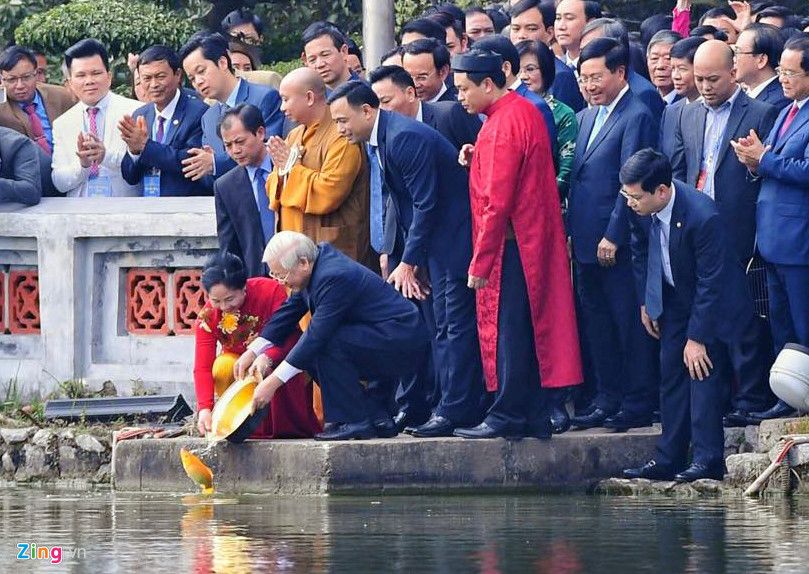
    One of the most widely circulated pictures on Vietnam’s social media in the last 24 hours was probably the picture of President Nguyen Phu Trong releasing a carp into Hoan Kiem Lake on January 26, 2019.

    President Trong was with a group of overseas Vietnamese who were part of a government’s sponsored program to come back to Vietnam to celebrate Tet – which will be on February 5, 2019.

    In Vietnam, like some of its neighboring countries, the Tet’s celebration starts almost a month before with many rituals that have been around for generations.

    Releasing carps into ponds and lakes has been a part of the annual celebration of Tet in some regions of Vietnam, probably more in the Northern provinces than in the South.

    It is being done during the ritual of sending the Kitchen God up to heaven so that he could make the report to the Jade Emperor on the 23rd of the 12th month under the Lunar calendar.

    The carp is believed to be the vehicle that could take the gods up to the sky because of the folklore widely circulated in East Asian cultures: “carp leaping over the dragon’s gate”.

    Moreover, the act of releasing – phóng sinh (放生) – captured carps, birds, and other animals, is believed to be done out of mercy and benevolence in Vietnamese culture.

    Unfortunately, as time goes by, this practice has given rise to other social problems, such as the illegal captures of birds and animals, as well as environmental issues when people release not only the carps but also the plastic bags they use to carry the fish to the releasing waters.

    However, some netizens were criticizing Trong for engaging in the practice of “releasing” this year for an entirely different reason.

    About a week ago, Tran Huynh Duy Thuc’s family and lawyer announced the government still refused to either grant a review of his case or pardon him after 12 petitions and one complaint against the Office of the President.

    Thuc is currently serving his tenth-year of the 16-year-sentence for “subverting against the people’s government” for calling for political pluralism and democracy in the country.

    The criticizing netizens raised the issue that if the government is still detaining over 200 political prisoners, charging them with vaguely defined crimes when they were only exercising their rights to express their political opinions peacefully, then what is the benevolent meaning behind the releasing of the carps by the president?

    Notwithstanding the political dissidents, there are also four wrongful convictions involving the death penalty which President Trong has continued to stay silent about their status. Three of these inmates have spent more than a decade on death-row while the evidence used to convict them have been proven to be improperly admitted.

    Some people believe that it would have been a lot more meaningful for the President of Vietnam to consider releasing citizens who were wrongfully convicted during this time of the year.

  • What Should Be On New President Nguyen Phu Trong’s Agenda?

    What Should Be On New President Nguyen Phu Trong’s Agenda?

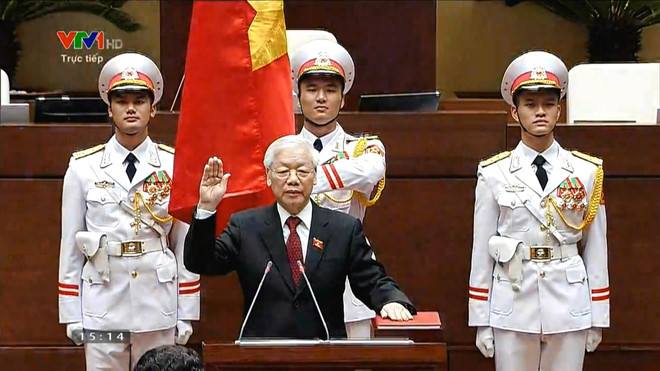
    On October 23, 2018, General Secretary Nguyen Phu Trong took the oath of office as the new president of Vietnam. He was the only candidate introduced by the Central Committee of the Vietnamese Communist Party (VCP).

    Earlier in the day, the National Assembly confirmed Trong by 99.79% in a secret vote, effectively making him one of the most powerful men in the history of the VCP, right up there next to Ho Chi Minh and Le Duan.

    Approximately one month after the funeral of the late president, Tran Dai Quang, the country is about to face a new era under the absolute leadership of Trong.

    Being both the leader of the VCP and the head of state, Trong now possesses the kind of power that has been unseen in Vietnam during the past several decades.

    As state-owned media praises his accomplishments and compares him to Ho Chi Minh, for better or worse, Trong now has the opportunity to lead the country towards an unprecedented future.

    However, great power indeed comes with great responsibilities. For the time being, President Trong’s agenda should take a serious look at a few urgent matters.

    Vietnam’s Cybersecurity Law of 2018

    International human rights groups, such as Amnesty International and Human Rights Watch, have rebuked Vietnam with harsh criticisms regarding its new cybersecurity law throughout this year.

    In a country that ranks 175/180 on the latest Reporters Without Borders’s Press Freedom Index, and is listed as “not free” by Freedom House, the internet plays a vital role in providing Vietnamese citizens with an alternative public sphere. It is where they could express themselves, criticize the authorities, and even mobilize opposition.

    With the new bill, the government seeks to further restrict the people’s freedom of expression and their freedom to access the internet.

    The government plans to do this by targeting service providers and tech giants, such as Facebook and Google, requiring them to store users’ personal data inside Vietnam and to turn such data over to the police upon request.

    The seemingly unlimited power of the police in enforcing the new law – which appears to lack any judicial oversight as detailed in the draft decree released in early October 2018 – raised the most concerns. It also prompted civil society groups to call on the government to indefinitely halt its effective date of January 1, 2019.

    A few even suspected that Vietnam’s new cybersecurity law could very well be the late president’s brainchild. After all, it was during Tran Dai Quang’s tenure as the head of the Ministry of Public Security in 2014 that the national police force formed the Bureau of Cybersecurity.

    Quang also authored the book “Cyberspace: Future and Action” published in 2015 by the MPS, where he outlined the very concept that has become the backbone of the new law which emphasizes the issue of national sovereignty in cyberspace.

    Even in his last days, Tran Dai Quang still refused to take any action on the controversial bill.

    According to Vietnam’s laws, once the National Assembly passes a bill, the president will have 15 days to sign an order publicizing it to complete the process. But back in June 2018, Quang disregarded the plea made by close to 30,000 Vietnamese netizens via an online petition asking him not to publicize the new law.

    However, the new President Trong may not be able to ignore the mounting opposition to the cybersecurity bill.

    As the third cycle of Vietnam’s Universal Periodic Review (UPR) is rapidly approaching in January 2019, one of the most controversial items to be discussed is expected to be this new law.

    Moreover, just this month, Vietnam is one step closer to sealing the deal with the EU for a Free Trade Agreement, one that is believed to be the most ambitious trade deal in which the EU has made with a developing country.

    The EV-FTA, nevertheless, comes with a human rights clause where a material breach could allow the other side to suspend the entire agreement unilaterally.

    Both domestic and international rights groups have analyzed and concluded that the new cybersecurity law violated numerous international human rights standards.

    It is likely that Vietnam, under President Trong’s leadership, will have to address and provide a reasonable resolution regarding this issue before the EU Parliament meets in the spring of 2019 to consider whether it should ratify the FTA.

    Wrongful Death Penalty Cases

    The life of Dang Van Hien, a farmer who killed three workers of an investment company that was involved in land disputes with him and other farmers in his village in Dak Nong Province in almost a decade, is now in the hands of President Trong.

    The case had captured the attention of the entire nation, raising serious questions about the reality of land disputes and land grabbing in Vietnam.

    Over 3,000 people signed an online petition immediately after an appellate court in Ho Chi Minh City affirmed Hien’s death sentence, asking the government to spare his life.

    People believed that there were extenuating circumstances in the case that should overturn the death sentence given to Hien, and they were calling on the president of Vietnam to grant him a reprieve.

    In response to the people’s plea, about one month before his passing, Tran Dai Quang had taken notice of Dang Van Hien’s death sentence.

    In a letter addressed to both the Supreme People’s Court and the Supreme People’s Procuracy Office, Quang requested them to review and report the case to the president’s office.

    Dang Van Hien would be the fourth death penalty case which requires President Trong’s immediate attention.

    During the past decade, three wrongful death penalty cases also captured national attention in Vietnam: Ho Duy Hai, Nguyen Van Chuong, and Le Van Manh.

    Under Vietnam’s laws, the president has the power to pardon death-row inmates and grant a reprieve in criminal cases.

    Since 2005, Le Van Manh had undergone a total of seven court hearings, including three trials, three appeals, and one cassation trial. In total, he has been on death row for 13 years.

    Nguyen Van Chuong has been kept on death row for 11 years, while Ho Duy Hai was sentenced to death ten years ago.

    All the requests for cassation trials and reviews of their sentence were ignored, leaving these three men languishing on death row for more than a decade while their family members, with minimal means, have tried desperately to save them.

    As recent as October 10, 2018, on World Day Against the Death Penalty, these families again attempted to raise public awareness by advocating for their release in Hanoi.

    During Truong Tan Sang’s presidency (2011-2016), he had granted reprieves for 179 death row inmates. In December 2014, President Sang also personally signed an order indefinitely halting Ho Duy Hai’s execution after a public outcry about his case erupted on social media.

    These four well-publicized death penalty cases should become one of President Trong’s priorities.

    It is not only a matter of saving lives, but these cases also carry the Vietnamese people’s hope to see justice being carried out.

    The Ongoing Fight Against Corruption 

    The VCP has meticulously crafted President Trong’s image as a “clean” politician.

    It was his public dedication to fight corruption in Vietnam that distinguished him from his political foe, former Prime Minister Nguyen Tan Dung, during their rivalry for the VCP’s top leadership position, in which Trong came out as the winner in February 2016.

    However, the strong demand for Trong to disclose his personal assets as required by law, first initiated by a group of former VCP members back in May 2018, has been making headlines again in recent months.

    Feeling the pressure mounting during the days leading to his inauguration, the Party provided statements from members of the National Assembly on the same day he took office as the new president, asserting that they had reviewed his assets declaration and that it showed that Trong was “absolutely clean.”

    Corruption remains a critical problem for Vietnam, and it will require President Trong’s immediate attention as it is believed to be the roots of other social and political issues in the country.

    According to Transparency International’s Corruption Perception Index in 2017, Vietnam was rated 35/100, putting the country among the group of “highly corrupted” nations.

  • To Tell or Not To Tell Them About My Personal Assets: A General Secretary’s Dilemma

    To Tell or Not To Tell Them About My Personal Assets: A General Secretary’s Dilemma

    In a surprising move right before the 7th Party Central Committee plenary meeting, a group of Vietnamese Communist Party (VCP) members and citizens have publicly demanded – in a letter – that the General Secretary, Nguyễn Phú Trọng, discloses his personal assets in according with the VCP’s own rules.

    The demand was quickly spread on social media in Vietnam in the past three days.

    The plenary meeting, which commences on Monday, May 7, 2018, in Vietnam, concentrates on discussions involving the integrity, capacity, and merits of the Party’s strategic personnel.

    The timing of both the letter and the plenary meeting is at the high of the anti-graft campaign initiated by the Party’s chief in the past two years, right after his power was successfully consolidated at the last Party’s Congress in 2016.

    For a long time, the question concerning personal assets of Party’s leaders and high officials has been on the mind of the people in Vietnam where corruption is high.

    But this is probably the first time that a group of Party’s members publicly asking the Head of the Party to be transparent about his own assets and declare them.

    Mr. Trọng, of course, could keep silent and does not have to respond to the letter.

    Dr. Nguyễn Quang A, a long-time dissident intellect and one of the signatories of this letter, is not optimistic either: “I believe it is highly probable that he would not respond at all”.

    While Trọng could continue to stay in his safe zone and only respond to the public and the press in pre-arranged conferences as he has done in the past, this time, there are three important reasons for him to consider responding to this written demand from his own comrades.

    Trọng should have his assets declaration form ready because the laws required him to do so.

    Vietnam’s laws required that officials – which include the VCP leaders – have to prepare an annual assets declaration form.

    Accordingly, “officials are defined as Vietnamese citizens who are either elected, appointed, or approved to hold a position or title, according to their terms in the VCP’s system.” – (Article 4, Vietnam Law on Cadres and Civil Servants).

    Trọng is not only the General Secretary, he is also a current member of the National Assembly.

    Vietnam’s laws then also require that all candidates running for the National Assembly have to submit assets declaration forms prior to the election.

    This is done in according to the 2012 amendments to the Law on Preventing Corruption.

    If Trọng refuses, he indirectly declares he is above not only the law but the Party as well.

    As the General Secretary who famously declares: “the Constitution (of Vietnam) is the most important legal document after the VCP’s Manifesto,” Trọng must act according to the Secretariat of the VCP’s Decision 99/QD-TW, issued on October 3, 2017, where it clearly states that the assets of all Party’s leaders “must be public for the people to know.”

    One must understand the crucial role of the Secretariat in the VCP and how powerful this body is to appreciate Decision 99/QD-TW. According to the VCP’s rules, this is the body which governs the daily operation of the Party. Mr. Trọng is also a member of the Secretariat.

    If he refuses to comply with the Secretariat’s decision, then he has violated the core principle of the Communist Party: centralized democracy. The VCP operates in a system where the minority must obey the majority; subordinates must obey upper management; an individual must obey the organization.

    Thus, while an individual may disagree with a decision of the Party, that individual must still “strictly complies”.

    As a person who dedicates his life to sustain the Party, Mr. Trọng must know that this principle decides the VCP’s survival. If he doesn’t respect it, then he has put himself above the Party.

    No one will believe Trọng is committed to fighting corruption when he refuses to be transparent about his own assets.

    Transparency International ranked Vietnam as the second most corrupted country in Asia after India in March 2017.

    The VCP’s chief has initiated an ambitious campaign against corruption in the past two years, a Vietnamese version of Xi Jinping’s “killing tigers, swatting flies.”

    Earlier this year, he reaffirmed such commitment to weed out corruption at all levels by famously declared there would be “no off-limit zones” for the campaign.

    The slogan “Burn the Furnace” became well-known to many Vietnamese, where corrupted officials are seen as “wood logs” ready to be thrown into the fire.

    Trinh Xuan Thanh – a more famous “wood log” who was sentenced to life in prison earlier this year – gained international attention when German police alleged that Vietnamese secret services had kidnapped Thanh in broad daylight in the middle of Berlin last summer.

    Vietnam insisted that Thanh came back to Vietnam voluntarily to turn himself in.

    While the international community may think that repairing a deteriorating diplomatic relationship with Germany is crucial for Vietnam, such task is still secondary when compares to maintaining the VCP’s legitimacy with its own people.

    The public in Vietnam is clearly divided over Trinh Xuan Thanh’s case.

    One of the main reason for those who support the government’s conducts – including the alleged kidnapping – in such matter is because they want to believe in the commitment of the Party and of Mr. Trọng in fighting against corruption.

    But their belief does not come blindly.

    An important question has been lurking among the public in Vietnam – and yet no one has dared to raise it – was whether Trọng has ever committed corruption himself and if that is the case, then would he be prosecuted as well?

    An even more important question concerns over the legitimacy of this “Burn the Furnace” campaign initiated by Trọng. Is he really committed to fighting against corruption or is he using such a campaign to target and eliminate other factions within the VCP?

    For now, most people in Vietnam probably would not go that far to question Trọng’s intention over his anti-graft campaign, but they do want to know whether he is a “clean” official.

    And for this, Trọng would need to be transparent about his own assets by providing to the public his assets declaration form according to laws.

    Social activist Nguyễn Anh Tuấn comments, “whether Mr. Trọng is transparent about his own assets will say a lot about the legitimacy of the anti-corruption campaign he has initiated”.

    “If he is transparent about his assets, then it is great because his subordinates would have no excuse to delay declaring their own. The public and the press will have some basis for monitoring officials”.

    “On the contrary, if he ignores the people’s request this time, then they have reasons to question his commitment to fighting corruption”.