Tag: National Assembly

  • Vietnam Briefing: COVID-19 Crisis Deepening While The National Assembly Convened To Elect State Leadership

    Vietnam Briefing: COVID-19 Crisis Deepening While The National Assembly Convened To Elect State Leadership

    The Vietnam Briefing, which is released every Monday morning Vietnam time, looks at Vietnam’s political developments of the past week.


    COVID-19

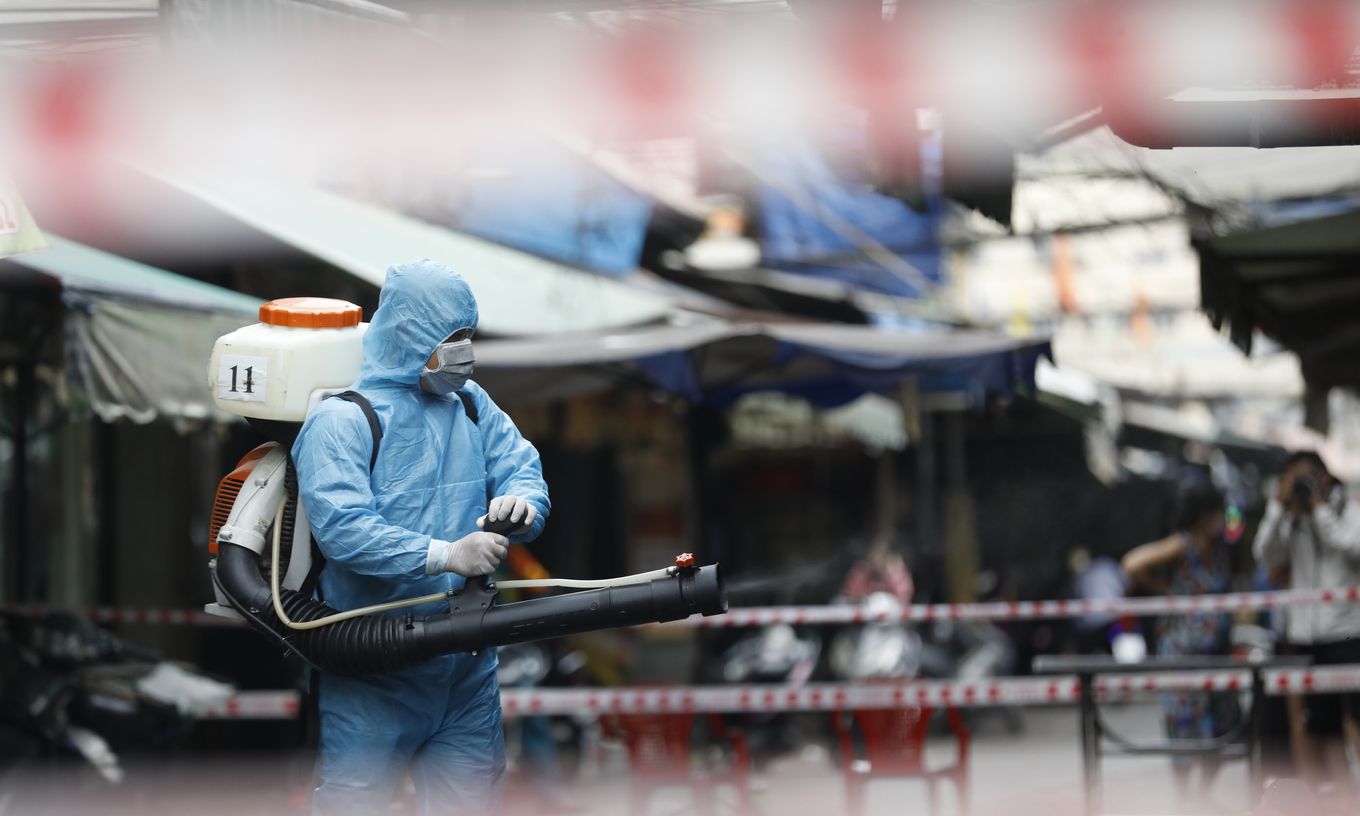
    • Last week witnessed the daily COVID-19 tally reach an all-time high on Saturday, with 7,968 cases reported. The total number of cases surpassed 100,000 on Sunday, July 25.
    • According to data from Johns Hopkins University, only more than 4.5 million doses have been administered, which is equivalent to 4.6 percent of the population, with only 0.39 percent of the population having been fully vaccinated.
    • Hanoi, the capital city, started a 15-day social distancing period on Saturday, July 24.
    • Ho Chi Minh city started to impose a night curfew from Monday, July 26, prohibiting residents from leaving their homes after 6 PM without a legitimate reason.

    Vaccination scandals

    Vietnam’s public always speculates that government officials, their relatives, and big corporations have unfair access to vaccines. Last week, two scandals gave them legitimate reasons to believe that.

    • A woman announced on her Facebook page that she received a COVID-19 vaccine shot last week with help from her “grandfather.” The hospital that administered the shot explained that her father registered for her. The father happens to be a lecturer at the Academy of Military Medicine who taught one of the doctors administering vaccines. It’s a popular practice in Vietnamese culture for a woman who has children to call her own father “ông ngoại” (maternal grandfather), following the way her children call him.
    • The Ho Chi Minh City government “lent” 5,000 COVID-19 vaccine doses to the giant corporation Vingroup, city officials said on Saturday. They explained that this was done due to Vingroup’s large assistance to the government’s pandemic response and that they would do so again for other enterprises for the same purpose.
    • The two above-mentioned vaccination scandals angered the public as people questioned the fairness of the government’s vaccine rollout policy. Some public members were enraged at the Vingroup “lending agreement” because they believed the government did not have the authority to lend these vaccines since they were donated to Vietnam under the COVAX program.

    Meanwhile, the National Assembly convened to rubber-stamp the Communist Party’s decisions on personnel

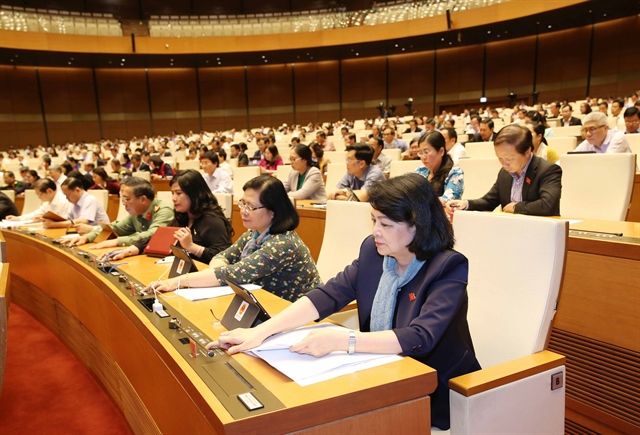
    The pandemic is usually not a reason for a national legislative body to stop working. But while online meeting procedures have not been introduced yet, the National Assembly convened its first session of the new term on July 20 after the election in May to largely rubber-stamp the Communist Party’s major decisions on personnel.

    • The National Assembly always convenes shortly after the general elections to elect state leadership, including its own. On July 20, members elected Vuong Dinh Hue as chairperson of the body and 17 other top positions.
    • As expected, the National Assembly  Standing Committee has nominated Nguyen Xuan Phuc as state chairman (a.k.a state president).
    • On July 26, the National Assembly is expected to elect the state chairperson, the prime minister, the vice state chairperson, the chief justice of the Supreme People’s Court, and the prosecutor general of the Supreme People’s Procuracy. These people are expected to be the same officials who were elected to the same positions in April.
    • The National Assembly on July 23 voted to pass a resolution to maintain the current 22 ministry-level departments of the administration.
    • The National Assembly has also decided to shorten its first session due to the COVID-19 pandemic and end the session on July 28 instead of July 31.

    Facebook users sentenced to years of imprisonment

    Nguyen Van Lam, 51, was sentenced by Nghe An’s People’s Provincial Court to nine years in prison and three years of probation for “making, storing, spreading information, materials, items for the purpose of opposing the State” under Article 117 of the Penal Code. He was accused of using Facebook to spread information that is deemed to be anti-state.

    More cases:

    • Tran Hoang Minh, a Facebook user, was sentenced to five years of imprisonment allegedly for “abusing democratic freedoms” under Article 331 of the Penal Code, according to RFA. The Hanoi People’s Court convicted him based on the accusation of publishing 51 pieces of content on Facebook concerning the Dong Tam incident. Minh had no defense lawyer nor relatives present during his trial. It’s unclear whether or not he will file an appeal.
    • A former attorney in Hanoi, Nguyen Thi Thuy, was convicted of the same crime on July 21 and sentenced to 20 months of imprisonment: “In the process of protecting rights of Ngu, Thuy said he was wrongly accused and illegally arrested. She later wrote two documents that hurt the prestige and honor of several Party and State leaders and sent them to ministries and agencies, thus exerting pressure on them to follow her proposal.”
    • Nguyen Van Son, a relative of the detained blogger Le Dung Vova, was charged with concealment of crimes, Hanoi Police announced on July 22. He is accused of assisting Dung while he was in hiding before his arrest on June 30.

    Former mayor of Hanoi prosecuted for illegally interfering in bidding activities

    From VietnamPlus:

    “The Investigation Police Agency under the Ministry of Public Security on July 24 executed a decision on commencing legal proceedings against Nguyen Duc Chung, former chairman of the Hanoi People’s Committee, for the charge of “abusing position and power while performing duties” in the case related to the municipal Department of Planning and Investment and relevant units.”


    U.S. trade agency drops tariff threat against Vietnam over currency practices

    From Reuters:

    “The U.S. Trade Representative’s office on Friday said it had determined that no tariff action against Vietnam was warranted after its central bank agreed with the U.S. Treasury not to manipulate its currency for an export advantage.”


    US Defense Secretary to visit Vietnam

    From VietnamPlus:

    “US Secretary of Defense Lloyd Austin will pay an official visit to Vietnam on July 28 and 29 at the invitation of Vietnamese Minister of National Defence Gen. Phan Van Giang.”

    From VnExpress:

    “A former U.S. vessel donated to Vietnam Coast Guard arrived in the country earlier this month, according to the U.S. Embassy in Hanoi.”


    Learn more about Vietnam:

    In Vietnam, the Party’s Rolling Crackdown on Dissent Continues

    Stewart Rees/The Diplomat/July 23

    “Proponents of an EU trade pact said it would nudge one-party Vietnam towards greater respect for human rights. The evidence so far points in the other direction.”

    Vietnam Still Trolling Donald Trump With Economic Successes

    William Pesek/Forbes/July 22

    “Vietnam just made a deal with the U.S. Treasury Department: we won’t weaken the dong if you take us off the dreaded “currency manipulator” list. It’s actually a bigger victory for Hanoi than Prime Minister Phạm Minh Chính’s government may realize.”

    New research: “The Growing Salience of Online Vietnamese Nationalism”

    Luong Nguyen An Dien/ISEAS/2021

    “The growing salience of online Vietnamese nationalism has posed serious challenges and dilemmas for the regime. The authorities have had to encourage nationalistic patriotism without letting Sinophobia spiral out of control or turn against the regime.”
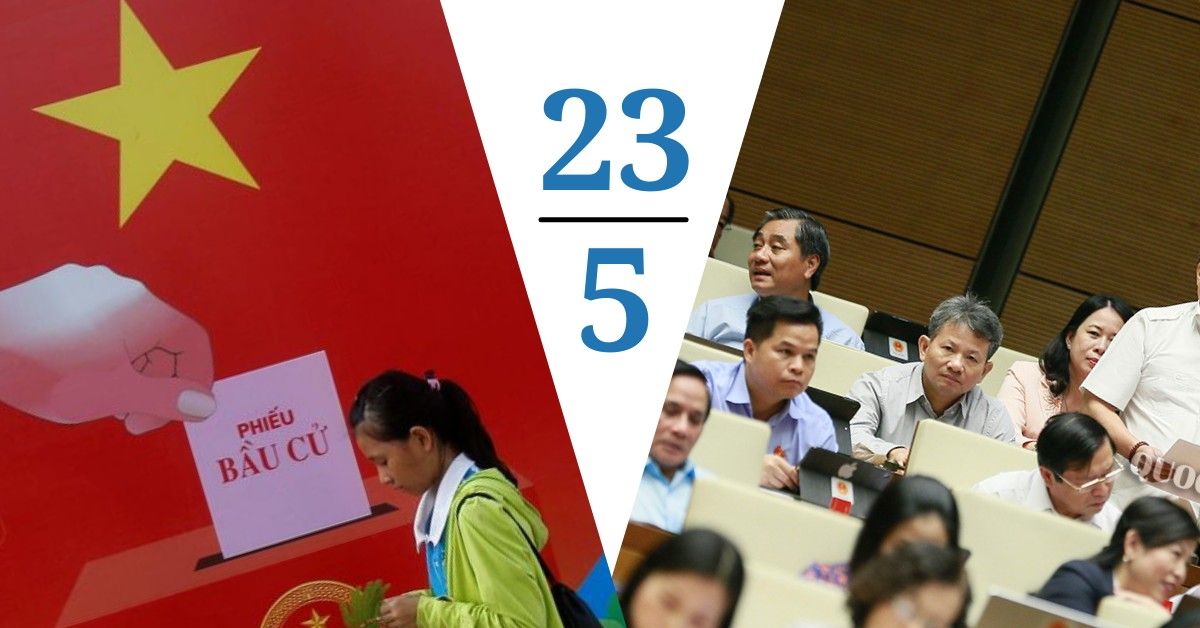
  • A Few Things You Should Know About Vietnam’s National Assembly Chairpersonship

    A Few Things You Should Know About Vietnam’s National Assembly Chairpersonship

    Though it is one of the “four pillars” of the Vietnamese government, the National Assembly chairpersonship remains the weakest position.


    Vietnam’s National Assembly has been preparing to change its window dressing in late March 2021. No need to wait until the general election wraps up in May 2021; the National Assembly chairmanship had a new occupant in the final days of March. To reaffirm that the election in May did not change Vietnam’s political situation, July 20, 2021 would mark Vuong Dinh Hue’s continuation to serve the same leadership position as the National Assembly chairman for the next 5 years when it re-elected him.

    One amongst the “four pillars of the imperial court”

    Beginning in the mid-1980s, Vietnamese politics slowly moved beyond the individual leadership model and the overpowering influence of Ho Chi Minh and his successor Le Duan. This, in combination with the economic reform process, led to the gradual development of a new institutional division of power. Over time, supreme power was divided among four positions: the general secretary, state president, prime minister, and chairperson of the National Assembly.

    Today, as war has receded into the distance and demands to join the international community grow, the political system functions have begun trending towards laws of the state rather than the directives of the Vietnamese Communist Party. As such, the National Assembly increasingly plays a larger and more dynamic role in the political system.

    However, it wasn’t until 1992, when Nong Duc Manh was elected as National Assembly chairman, that a member of the Politburo occupied the position. Before that, Truong Chinh – a Politburo member – served as chairman of the National Assembly Standing Committee from 1960 to 1981. Still, as stated above, the National Assembly did not play a large role during that time, though it’s hard to say that its role today is large either.

    The National Assembly chairmen after Truong Chinh all worked their way up to become members of the Party Central Committee (such as Le Quang Dạo) or outside the Party Central Committee altogether (e.g., Nguyen Huu Tho).

    All National Assembly chairmen from Nong Duc Manh onwards were members of the Politburo. Though its numbers are among the “four pillars,” the National Assembly chairmanship remains the weakest position and must abide by party decisions.

    Launchpad to power

    Of the five National Assembly chairmen since 1992, two have become general secretary of the VCP’s Central Committee – the highest position in the entire political system: Nong Duc Manh (2001 – 2011) and Nguyen Phu Trong (2011- present).

    In stark contrast, the prime minister’s office has been unable to propel its occupant any further. One after the other, Vo Van Kiet, Phan Van Khai, and Nguyen Tan Dung became prime ministers and then retired, failing to make it to the general secretary. The exception is Nguyen Xuan Phuc, who, rather than retiring after serving as prime minister, is set to become state president; that is, he is taking one step down the ladder of party power.

    Is the National Assembly chairman the “boss” of the National Assembly representatives?

    No.

    In principle, the National Assembly chairman is simply a member of the National Assembly, with all members being equal and everyone retaining one vote. No representative can force another representative to do his or her bidding. The National Assembly chairperson cannot issue any order to a representative, except for limited powers during work assignments with vice National Assembly chairpersons.

    Then what does the National Assembly chairman do?

    He or she mainly coordinates the activities of the National Assembly and the National Assembly’s Standing Committee, presiding over meetings and sessions and ratifying adopted constitutions, laws, resolutions, and ordinances.

    For more details, please see Vietnam’s Constitution and the Law on National Assembly Organization.

    The National Assembly chairman also usually acts as head of the National Electoral Council. This arrangement contains a conflict of interest when a representative (and often also a candidate) organizes elections. In democratic countries, the council must, in principle, be independent of the National Assembly.

    A position almost always reserved for men

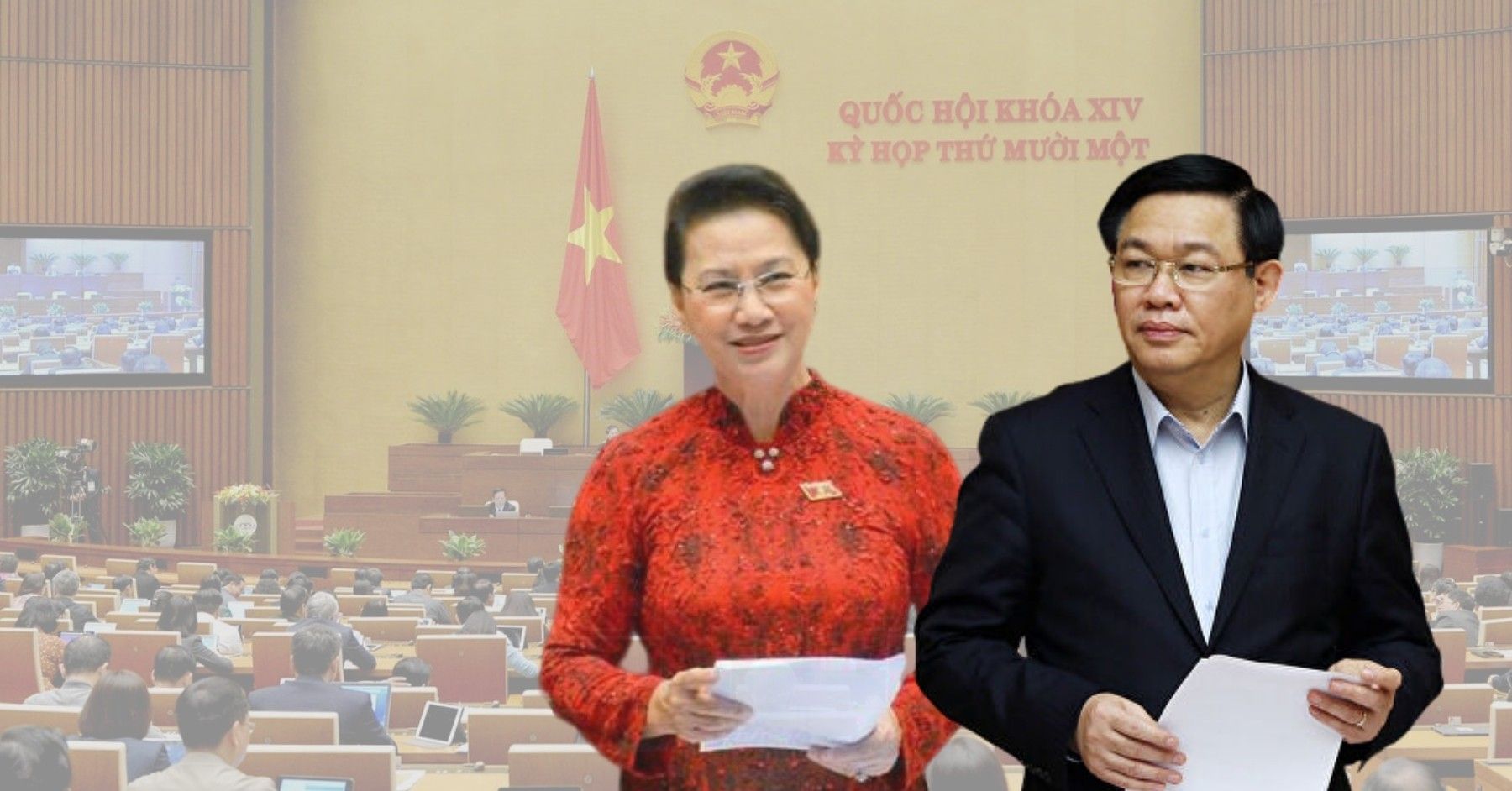
    Of the 11 National Assembly chairpersons in Vietnam’s modern history, the only woman to serve in this position was Nguyen Thi Kim Ngan, who held the position from 2016 to 2021. But truth be told, Ngan is the only woman to have ever served as one of the “four pillars.”

    Her predicted successor, Vuong Dinh Hue, will carry on the near-exclusive tradition of men being at the helm of the National Assembly.

    Hue has served as minister of finance (2011-2012), head of the Central Economic Committee (2012-2016), deputy prime minister (2016-2020), and secretary of the Hanoi party committee (2020-current). He has been a member of the Politburo since 2016.


    This article was written in Vietnamese by Trinh Huu Long and was previously published in Luat Khoa Magazine on March 30, 2021. The English translation was done by Will Nguyen.

  • Vietnam Election 2021: Twelve Milestones That All Voters Should Know

    Vietnam Election 2021: Twelve Milestones That All Voters Should Know

    This article was written in Vietnamese by Hong Anh and previously published in the Luat Khoa Magazine on February 26, 2021. The translation carries some revisions of the original article that we have sought the author’s consent.


    On May 23, 2021, the entire population of Vietnam will vote for their National Assembly deputies and the People’s Councils at all levels. No matter who they are, no matter where they live, as long as they hold Vietnamese nationality and are over 18, the citizens will have the right to vote.

    One may be thinking that she or he does not need to understand the voting procedures in Vietnam because the country just has only one political party so that elections probably don’t mean anything.

    We disagree.

    It is correct that Vietnam is an authoritarian regime, and probably many people know this as well. However, we suggest that trying to understand our system right now is still a better strategy if we want to strive for a democratic election in the future. We think it is a better option than just complying and voting unconsciously or strictly complaining and disregarding it.

    It is because if we want to understand democracy, then we should try to understand the complicated yet undemocratic Vietnam’s electoral system currently is.

    The following 12 milestones will explain in detail Vietnam’s electoral process.

    Right around Tet (Lunar New Year), Vietnamese people probably heard from the public loudspeakers in their areas that the local governments have established their election committees. Each province, district, and commune will have its electoral committee, organizing and overseeing elections in their localities.

    The Provincial Election Commission is responsible for organizing the election of the National Assembly deputies (NA deputies) and the deputies of the People’s Council (PC deputies) at the provincial level. Election committees at district and commune levels are responsible for electing members of the People’s Council at the same level.

    These committees will handle candidate applications.

    Self-nominated or independent candidates may be pretty disappointed to learn that there are no positions for independent members (who are not from the Vietnam Communist Party [VCP] or holding a role in the government) in these committees. The heads of these committees are usually secretaries and deputy secretaries of the Party committees in provinces and cities (see examples of members of the provincial election committee in Quang Ninh and Hung Yen).

    In democratic countries, political parties often cannot know how many seats their party will definitely hold in the parliament until after the ballots get counted and announced.

    In Vietnam, it is the opposite. We can know well in advance the backgrounds of those who will be structured by the VCP to have a seat in the National Assembly and the People’s Councils at all levels. Being “structured” by the VCP has the same meaning as being positioned in these seats by the Party’s selection.

    The current National Assembly Standing Committee has already drafted the plan to structure the deputies into the new National Assembly. The “new” National Assembly is the one that the people will vote for on May 23, 2021.

    At the same time, the current Standing Committee of the National Assembly has also instructed the provinces to build their structure of their People’s Councils at all levels in their respective provinces.

    There will be 500 seats in the 15th National Assembly, including 207 deputies working at the central level of the VCP and the government. Two-hundred ninety-three (293) deputies will include those who are working at the local government level. The list can be found here for more details.

    This is also the expected number of seats that the National Assembly will reserve for people who belong to the Party’s agencies, the government, the police, the army, mass organizations, and so forth. These people are called “recommended” candidates. A total of 427 (out of 500) seats are in this category. These seats are expected to be approved in the first “hiệp thương” consultation conference.

    There will be seats for independent or non-communists deputies and they will be among the remaining 73 deputies. They will be nominated by the provinces and cities. However, the party, state agencies, and provincial departments may also have a share of these 73 seats.

    For many people, these “hiệp thương” consultations are perhaps the strangest electoral proceedings in Vietnam. They compose a vetting and negotiating process so that the Vietnam Fatherland Front will come up with the list of the VCP’s approved candidates for the ballots.

    Literally, this is the decisive activity organized by the Vietnam Fatherland Front and its other member organizations. The Vietnam Fatherland Front and its branches are considered to represent all parts of society, including NGOs and political parties as well.

    These consultative conferences are held at all levels, from central to local.

    The Vietnam Fatherland Front is an important body during the election in Vietnam. This agency will have to ensure that the election takes place as expected by the Party and the government, with the right structure and composition of candidates. It is also the body that is empowered to oversee all elections.

    The first consultation meeting will have an agreement on the number of “recommended people” to be candidates for National Assembly deputies and People’s Councils at all levels.

    By February 17, 2021, the first “hiệp thương” consultation conference was completed at the central and local levels. The localities have also announced the number of “recommended” candidates.

    For example, Binh Dinh Province has decided to introduce 13 candidates to the National Assembly, including three people at the central government level to stand for candidacy and the remaining 10 people will be for the locality. However, Binh Dinh Province issued a regulation saying that the central government can only have seven elected National Assembly deputies, three representatives at the central level, and four representatives at the local level.

    This means that three candidates from the central government will inevitably be elected, leaving only 10 local candidates competing with each other for the other four spots. The workplaces of these 10 people are also predetermined, including provincial leaders, departments, organizations. There is, however, no structure for self-nominated people.

    After the first “hiệp thương,” it is expected that the number and composition of candidates for the National Assembly of localities will be adjusted by the National Assembly Standing Committee for the first time.

    The central government, the provinces, and cities will use this adjustment as the basis to select specific people in their localities to run for the National Assembly.

    For the candidates of the deputies of People’s Councils at all levels, the Standing People’s Councils may adjust the number and structure of the “recommended” candidates.

    Candidates for the National Assembly and People’s Councils at all levels have about three weeks to apply for their candidacy.

    During this time, the Party’s agencies, governmental units, unions, the military, the police, and so forth will also introduce their officials who will run in the election and hold voters’ opinion gatherings at the workplaces of those officials.

    During this step, the self-nominees only submit their applications. The respective local electoral committee will consider their records to be valid or not.

    This second conference will be organized in order to prepare a preliminary list of candidates for the National Assembly and representatives of the People’s Councils at all levels, including both the “recommended” and self-nominated candidates (if any).

    After this second “hiệp thương” consultation, another conference will be held in the residential areas where the candidates reside so that the residents in such areas can voice their opinions about the candidates. For the self-nominated candidates, there must also be another, separate conference at their workplace to gather the opinions of the people who work in the same unit as the candidates.

    During this time, one may be invited to a conference of voters to comment on candidates for the National Assembly and People’s Councils at all levels.

    The rule does not require everyone to come to these conferences. However, these conferences can only be held if there are more than 55 voters (applied to areas that have more than 100 voters), or where at least 50 percent of the voters participate (if those areas have less than 100 voters). If the number of voters is not met, you can request to stop the conference.

    For non-partisan candidates, in addition to the conference of voters where they reside, it is also necessary to organize another conference to gather voters’ opinions about them at work.

    If you are a Vietnamese citizen, age 18 or older, your name will appear on the electoral roll. This list is posted at the headquarters of the commune people’s committee and the polling station. You will be given a ballot. Even those people who reside for less than 12 months in any locality will also likely be on that locality’s electoral roll.

    Persons who are not allowed to vote are those whose voting right was taken by a court, death-row inmates, or people currently serving a prison sentence and not entitled to probation.

    This third conference is held to finalize the list of qualified candidates for the National Assembly and People’s Council at all levels based on the results of the voter conferences.

    For the “recommended” candidate for the National Assembly, this third conference must also be based on the adjustment of the National Assembly Standing Committee (the second adjustment comes right after the second “hiệp thương” consultation meeting closes).

    The candidates who get a pass after the third “hiệp thương” consultation conference are the ones who will be on the ballots for which you will vote for. The list of these people will be announced no later than 25 days prior to the election date.

    The National Election Council will announce the official candidate list to run for the National Assembly. Election committees at all levels will announce the official candidate list for those running for People’s Council deputies at each level.

    During this time, if you are a voter, you may be invited to attend a voter conference. This is a conference where the candidates will persuade you to vote for them. Each candidate will read out his or her campaign during these conferences.

    In addition to the voter-meeting conference, you may also listen to the radio, watch television, or read newspapers to get the introduction of the candidates. This is the only campaign allowed to take place close to the voter meeting.

    The general election will happen on May 23, 2021, in Vietnam. This is the day when the public loudspeaker system works most actively. You may also see many people flocking to the polls. On televisions, the news will also focus on broadcasting information about the election. In some rural places where the voters have difficulty traveling, the election may take place sooner.

    The Vietnamese government continuously repeats that everyone has the right to vote for our deputies of the National Assembly and the People’s Councils at the provincial, district, and commune levels. For those who cannot get to the polling booth, such as the disabled, the elderly, or people being treated at a hospital, the authorities will have a voting team that will bring the ballot box to them. Vietnam also reported that the voting turnout in Vietnam is incredibly high for the last elections, mostly 98-99% of the entire population have voted.

    Yet, voting is a right, and whether to vote or not to vote is your decision.

    We write this article to only explain Vietnam’s full electoral process and we must admit that it is such a complicated one, with almost absolute priority for the cadres of the Party, the government, and the state organizations.

    Unfortunately, whether the people prefer this electoral process or not, it is still the only method to elect representatives in Vietnam, a country that is still very far from having democratic elections.

    In Vietnam, do we really elect the persons who we wholeheartedly support, or are we just following and accepting the government’s wishes and plans? For now, it seems that the people in Vietnam can only elect the candidates that the VCP selects and approves.

  • Vietnam Briefing: Dong Tam And The General Election

    Vietnam Briefing: Dong Tam And The General Election

    It’s a new week and Vietnam Briefing’s mission is to keep our readers up to date on developments in Vietnam. As we missed the briefing last week, here is the key news of the past two weeks.


    Vietnam has started to roll out COVID-19 vaccines

    The Vietnamese government started administering the first COVID-19 vaccinations doses on March 8. Frontline workers, including doctors, nurses and technicians at designated hospitals combatting COVID-19 are among the first to receive the vaccines produced by Oxford University and AstraZeneca.


    High court affirms verdict on Dong Tam case

    The appellate trial of the Dong Tam case (March 8-9) went just as everyone expected: no overturning of any sentences and no amendment to the lower court’s verdict. The sentences of the six defendants remain the same, including two death penalties.

    A fair trial? It’s hardly a thing in Vietnam. Take the word of Phil Robertson of Human Rights Watch:

    “There are still many unanswered questions about what happened during the Dong Tam raid that authorities have never been willing to clarify.”

    “We are also deeply troubled by the information brought out in the defense lawyers’ report, stating that police used torture on some defendants to force them to confess, raising fundamental concerns about the fairness of the entire trial.”

    A historic case, yes. The Dong Tam case is undoubtedly one of the most important and consequential events in Vietnam’s post-1975 history. Those who wish to study the country’s history of land struggles and party-controlled judiciary should take a very close look into the case as it is among the most well-documented events and it provides an intensive account of the issues.

    Learn more about the case:


    The National Assembly is in the final days of its current term. Yet, it may elect new state leaders just before the election.

    In an unexpected, but not unprecedented, move, the Communist Party’s Central Committee is sending three candidates to the National Assembly’s last session of the term for confirmation of three top state positions: president, prime minister, and chair of the National Assembly.

    The Party and state media provided no information about who the candidates are, but you don’t need them to name names in order to know who these people are. Vietnamese people often read between the lines and listen to internet influencers – some they believe have inside information – to know what’s going on.

    So who are they? Current Prime Minister Nguyen Xuan Phuc for president, Pham Minh Chinh for prime minister, and Vuong Dinh Hue for National Assembly chair. VCP General Secretary Nguyen Phu Trong is not seeking reelection for the presidency, although he is now running for a National Assembly seat.

    What’s special about that? It’s not about who for what, it’s about timing. If elected in April during the last session of the current National Assembly, which is almost certain, the candidates will only serve a few months until the end of the current term. After the general election on May 23, the new National Assembly will convene in July and repeat the same process of electing the same people to the same positions. That’s what happened in April 2016, right before the last general election, which was held more than a month later. And we don’t think there are many people who can explain why the VCP has to rush to do such a repetitive process. The logic behind this remains a mystery to the public.


    Man arrested after declaring intention to run for office

    This is not something that happened the last time we had an election in 2016 (yes, I know how hard it is to call it an election, but let’s use the word for now). A 61-year-old man named Tran Quoc Khanh was arrested on March 9 and accused of “making, storing, spreading information, materials, items for the purpose of opposing the State of Socialist Republic of Vietnam” under Article 117 of the Penal Code.

    He is known for his frequent Facebook activities including live-streaming on human rights and corruption in Vietnam. The arrest was conducted by Ninh Binh Provincial Police shortly after Mr. Tran declared his intention of running for a National Assembly seat.

    Something to note: Unlike the exciting election season in 2016 when dozens of activists and independent candidates campaigned for office, despite all failing, there are almost no independent candidates running for office this time.


    Here is what the incoming National Assembly may look like

    Remember what we mentioned about this two weeks ago? Here is an infographic from the state news agency’s article titled “Expected structure of deputies of the 15th National Assembly.” Yes, the election is more than two months away, but the government has already “expected” the results.


    Freedom House drops Vietnam’s freedom score

    This time every year, the US-based human rights group Freedom House announces its widely-cited work: Freedom in the World Index. And unlike the recent years, Vietnam’s score dropped 1 point in the 2021 index, down to 19/100 and remains in the “Not Free” group of countries.

    What was Vietnam’s response to this? Ministry of Foreign Affairs spokesperson Le Thi Thu Hang said on March 11 that Vietnam has consistently protected and promoted human rights. That’s the government’s usual way of dealing with such queries from reporters who work for the international media. We have no knowledge of any reporter from the Vietnamese media asking about such issues, and we doubt anybody ever does.


    Vietnam joins China, Russia and India to block UN Security Council’s condemnation of Myanmar’s coup

    The United Nations, especially its Security Council, has been reluctant to make any strong statements on the military coup in Myanmar. On March 9, they failed to agree on such a statement, and Vietnam, as a non-permanent member of the council, jointly blocked the effort with China, Russia, and India.

    Context:

    • Vietnam is the fourth biggest foreign investor in Myanmar as of January 2021, with 19 projects and approximately US$1.5 billion invested there.
    • Vietnam’s military has close ties to Myanmar’s military businesses, such as Mytel.

    Vietnam commemorates the 33rd anniversary of the Gac Ma incident

    March 14 has been a sensitive date in Vietnam over the past 12 years since the public started to learn about the bloody incident of Gac Ma.

    The Gac Ma incident happened on March 14, 1988, when Chinese warships fired on a group of mainly unarmed Vietnamese troops in Gac Ma Reef (Johnson South), killing 64 of them. Gac Ma (Johnson South Reef), Colin and Len Dao (Lansdowne) Reefs are part of the Truong Sa (Spratly) Islands where the two countries both claim sovereignty. It’s rumored that Vietnam’s then-Minister of National Defense ordered that there be no resistance to the Chinese.

    Why sensitive? Not many things in Vietnam are as sensitive as the country’s relations with China. The Vietnamese government censored information about the Gac Ma incident for over 20 years until the early 2010s. Even now, many state media outlets do not mention China in their stories about Gac Ma Reef, although the government has increasingly tolerated open discussions about the topic.

    What to watch? Citizens, mostly dissidents and activists, spread information about the Gac Ma incident on social media, criticizing the government’s handling of China, and they also go to cemeteries and temples to commemorate the soldiers who lost their lives on that day. They often face government harassment due to these activities.

    Go deeper: Here is some useful material to understand more about the issue, including a video clip of the 1988 incident.


    French warship visits Vietnam

    Shortly after completing a patrol in the South China Sea in February, the French Navy sent a warship to Vietnam on March 9, where it spent four days in Cam Ranh Port (southern Vietnam) for helicopter repairs.

    The South China Sea is certainly a place global superpowers can’t afford to ignore due to its strategic position in terms of security and trade, especially when China has aggressively claimed sovereignty over most parts of the sea with its nine-dash line.

    Cam Ranh Port is a familiar name to those who study security in the region. It is a strategic deep water bay in the south of Vietnam and it played a crucial role in the Vietnam War. This is where the Soviet Union, and later Russia, stationed troops from 1979 to 2002.


    Events to watch:

    Mainland Southeast Asia: power, protest and participation

    March 23, 2021 3 pm, Auckland, Wellington

    Three expert scholars will contextualise developments in Thailand, Myanmar and Vietnam, followed by a discussant response and Q&A

    Speakers: Thitinan Pongsudhirak (Thailand), Wai Wai Nu (Myanmar), Nguyen Khac Giang (Vietnam). Discussant: Natasha Hamilton-Hart. Chair: Emeritus Professor Roberto Rabel

    Hosted by the Centre for Strategic Studies: NZ


    Learn more about Vietnam:

    Vietnam: Successfully Navigating the Pandemic | IMF, 10 March 2021:

    Despite COVID-19, Vietnam’s economy has remained resilient, expanding by 2.9 percent in 2020—one of the highest growth rates in the world—and with growth projected to be 6.5 percent in 2021, thanks to strong economic fundamentals, decisive containment measures and well-targeted government support, according to the IMF’s latest annual assessment of the country’s economy.

    How Economic Reforms of the 1980s Changed the Face of Vietnam | National Interest, 12 March 2021:

    “Back when the Heritage Foundation published its first index [of Economic Freedom] in 1995, Vietnam scored 41.7 points. By 2005, this had risen to 48.1 points and in 2010 it climbed further to 49.8 points. What is remarkable is the huge increase in economic freedom since 2015, when Vietnam was awarded a score of 51.7. Since then, Vietnam has added another 10 points to reach 61.7 points today—an increase of 20 points since 1995!”

    Vietnam, ASEAN, and the US-China Rivalry in the Indo-Pacific | The Diplomat, 13 March 2021:

    “China may not feel comfortable if Vietnam pursues stronger security ties with the U.S. and its allies, but it is China’s aggressive behaviors in the South China Sea that have pushed Vietnam into this course of action. China should adjust its approach or risk pushing Vietnam and other regional countries further toward the United States.”

    “Politically, certain reforms may also be explored, but mainly to streamline and increase the efficiency of the political system, not to democratize it. Vietnamese leaders believe that political stability is a precondition for economic development, and they will not tolerate any developments that may destabilize the political system.”

  • New Visa Rules Make It Easier for Foreigners to Work, Invest in Vietnam’s Coastal Economic Zones

    New Visa Rules Make It Easier for Foreigners to Work, Invest in Vietnam’s Coastal Economic Zones

    On November 25, the National Assembly (NA) of Vietnam passed amendments to its Law on Entry, Exit, Transit, and Residence of Foreigners that would allow visa-free entry into coastal economic zones, as well as enable visa status changes from inside the country. The amendments were approved with 83.6% of the vote and go into effect July 1, 2020.

    The amendments stipulate that in order for a coastal economic zone to quality for the visa-free exemption, it must be separate from the mainland, possess clearly defined territory and boundaries, have an international airport, and must not compromise national security or national defense.

    Of note in the amendments is the alternate phrasing “special administrative-economic unit” used to refer to areas affected by the new law. The phrase “special economic zone” (SEZ) is considered sensitive after nationwide protests broke out in June of 2018, in opposition to a Special Economic Zones (SEZ) law that was being considered before the NA. The law would have established SEZs in Van Don, Bac Van Phong, and Phu Quoc, but widespread concern that the SEZs would be overrun by Chinese investors prompted the NA to shelve the law.

    Some Vietnamese have notedthat Van Don and Phu Quoc of the previously-shelved SEZ law both qualify for visa-free entry under the new amendments, sparking concerns that the government is attempting to circumvent popular opposition. Representatives of the NA themselves have expressedconcerns that opening up these areas to visa-free travel may pose a national security threat and have requested greater government regulation.

    But Vo Trong Viet, chairman of the NA Committee on National Defense and Security, has argued that “the amendments would make it easier for foreigners to stay in Vietnam to learn about the market, and look for jobs and investment opportunities without wasting time and money on immigration procedures.”

    Also included in the amendment is a stipulation allowing foreigners to change or renew their visa status while inside Vietnam, instead of having to leave the country entirely, as was previous practice. The amendment allows for visa changes by individuals in specific circumstances: “visitors who can prove they are investors or representatives of foreign organizations that make legal investments in Vietnam” and their family members, as well as foreign workers who receive job offers or enter with e-visas (provided they have the requisite work permit or work permit exemption).

    Vietnam’s National Assembly, elected in 2016 and currently in its 14th session, consistsof 496 members, 475 of which belong to the Communist Party (the remaining 21 are independents). Though largely considered a “rubber stamp” parliament due to a lack of public consultation and debate, discussions over pieces of legislation have increased in recent years, and the NA has begun to assume a larger political role in the eyes of the public. The NA meets twice a year to formally ratify laws, with individual members serving five-year terms.

    Elections for the 15th session of the NA are set to take place in 2021.