Tag: mytel

  • Oppression Through Greed: What The Myanmar Military And Vietnam Stand To Gain

    Oppression Through Greed: What The Myanmar Military And Vietnam Stand To Gain

    More than a month has passed since the start of the Myanmar coup and since then various notable events have taken place. At the start of the takeover, several prominent figures of the ruling National League for Democracy (NLD) were arrested and detained. Among those taken into custody were Aung San Suu Kyi and President Win Myint of the NLD .

    The following weeks were then marked by massive demonstrations and acts of civil disobedience by the citizens of Myanmar. Crowds of people from all walks of life continue to gather to protest around the country in a display of anger and frustration against the fledgling dictatorship of Min Aung Hlaing.

    The Myanmar military has responded with escalating acts of violence and control typical of any authoritarian state. Initially, they tried to shut down forms of communication and when these proved to be less than effective, they resorted to using physical force against their own citizens. To date, at least 149 people have been killed and countless more have been arrested.

    While the Myanmar military continues to claim that its takeover was inevitable due to its alleged and unsupported claims of election fraud, the truth is much less conspiratorial. It is the result of the callousness and unending greed of those who would willingly choose to set their nation ablaze rather than let power slip from their fingertips.

    Information has been released and verified that exposes the connections the Myanmar military has with several local and international corporations and businesses; these business interests continue to be the main driving force behind the Myanmar military’s oppressive and repressive actions.

    Yet, how much money do they actually stand to gain?

    In December 2020, Justice for Myanmar, a movement which aims to expose systemic oppression and human rights violations in the country, released a comprehensive report that details the involvement of the Myanmar military with Mytel and Viettel. The report then explains how these three entities work in tandem to further line their pockets while committing grave violations of human rights. Viettel is publicly known to be a state-owned enterprise with direct ties to both the Communist Party of Vietnam and the Ministry of Defense.

    Then, on March 4, 2021, Justice for Myanmar released additional information regarding this issue. While its previous report explores the structure and the effects of the symbiotic relationship of the military, Mytel, and Viettel, this more recent exposé focuses more on the financial aspect of the situation.

    Justice for Myanmar claims that Military generals involved in this operation may be entitled to more than US$700 million after five to nine years since the start of Mytel’s business venture and a further US$450 million in the five years after that.

    This is due to the military owning more than 28 percent of shares in Mytel through Star High, a subsidiary of the Myanmar Economic Corporation, which is a Myanmar military conglomerate.

    However, when the other domestic investor – Myanmar National Telecom Holdings (MNTH) – was unable to keep its financial obligations and was forced to sell a number of its total shares in Mytel to Star High, causing the military owns more shares of Mytel.

    In effect, the military actually owns as much as 39 percent of Mytel in shares while 49 percent belongs to Viettel. The remainder goes to the other smaller investors that came from MNTH.

    Viettel also stands to achieve significant financial gain through this arrangement.

    Viettel was essential in the establishment of Mytel itself. In Mytel’s first three years of operation, Justice for Myanmar reported that Viettel “agreed to provide the lion’s share of the US$1.38 billion needed by Mytel in its first three years by investing US$169 million in its shares and lending it up to US$903 million.”

    Aside from this, Viettel also dedicated staff and personnel to train and establish Mytel’s workforce. Interest is also paid to Viettel from the loan taken by Mytel on top of the 2 percent annual management fee from yearly profits.

    Mytel also has allegedly made deals with some Vietnamese banks as well. This report stated that Mytel had entered into a US$40 million five year loan with Vietnam’s TP Bank.

    It is clear that this arrangement stands to be very financially lucrative for those involved, and while the ethics of both military and sizable foreign ownership in commercial businesses is, to an extent, debatable, the danger with Mytel lies in the nature of the company itself.

    Mytel is not just any company; it is a telecommunications company. And it is often the case that governments and militaries have malicious vested interests in controlling telecommunications.

    There is already evidence available that the Myanmar military is using Mytel to infringe on the rights of the already oppressed Rohingya minority. Being a telecommunications company also gives the Myanmar military direct access to information it can use to strengthen and extend its hold on the country.

    Justice For Myanmar spokesperson Yadanar Maung states that, “Every phone call on the Mytel network and every kilobyte of data finances the people’s oppression. The brutal and corrupt Myanmar military junta is motivated by personal profit and it is greed that drives their brazen and bloody attacks on the people.” His words and sentiments seem to be echoed by a few of Mytel’s former business partners.

    In response to its militarization, some of Mytel’s domestic and international business partners and investors have grown concerned.

    Singaporean payments firm Coda has removed Mytel from it’s payment channels and International Power Generation, (IPG), a local investor, has taken initial steps to distance itself from the company. While the actions of Coda and IPG are commendable and other investors in Mytel should follow suit, it still remains doubtful if this will have any significant and immediate effect.

    After all, the fact remains that the three-way relationship between Mytel, Viettel, and the Myanmar military is only one of more than 100 business channels that the Myanmar military uses to fatten its coffers. Should one avenue be shut down, others continue to remain open for them to exploit and use. With the amount or resources available at their disposal, it should only be a minor inconvenience for them to open up alternative methods for monetary gain. But, this is hardly a surprise. In fact, it is expected.

    The struggle for true freedom and democracy has never been an easy fight. It has always been a Sissyphean battle, an uphill and treacherous climb against overwhelming odds. And once you reach the top, there is also no guarantee that you can stay there.

    Oftentimes, a nation finds itself on the zenith of the hill only to stumble and fall partway or even descend all the way to the very bottom. Yet, as believers in a better tomorrow for ourselves and for all, we pick ourselves up and try again. We stand and climb as many times as it takes, for a future we might not even get to see.

    And here lies the beauty of the struggle.

    While the Myanmar military and other authoritarians like it fight to amass wealth and hoard as many pieces of magic paper they can get, others fight for something much greater than themselves: an idea, a dream, a possibility.

    What activists, protestors, and demonstrators in Myanmar, and in the rest of the world stand to gain cannot be measured in billions, or even trillions of dollars. Rather, its value can only be glimpsed in the people’s eyes as they continue to stand firm, shoulder-to-shoulder, against tyranny and against terror.

    Now is the time to stand with the people of Myanmar; for the good of one is for the good of all.
  • Vietnam-Myanmar, A Tale Of Two Systems: The Takeover Of Telecommunications By Authoritarian Governments And The Military

    Vietnam-Myanmar, A Tale Of Two Systems: The Takeover Of Telecommunications By Authoritarian Governments And The Military

    A report submitted by Justice for Myanmar, a movement which aims to expose systemic oppression and human rights violations in the country, on December 20, 2020, released details regarding the involvement of Viettel and other international businesses in the Myanmar telecommunications sector. This piece of investigative journalism states that “the commercial partnerships established between these businesses and Mytel (Myanmar’s newest mobile network operator) show that they are complicit in the abuses committed by the Myanmar military.”

    An even more concerning factor would be the connivance of the Vietnamese government itself. Viettel is a state-owned enterprise operated by Vietnam’s Ministry of Defense and it is also the fourth largest stakeholder in Mytel. Hence, the Vietnamese government appears to have a direct hand in the affairs of another sovereign nation. In the same vein, Mytel itself has its own fair share of controversies and scandals hounding it since its inception.

    While a large number of businesses are named in the report, Mytel and Viettel are given more attention and both play an integral role in the scandal surrounding the Myanmar telecommunications sector. The remainder of this article will shed light on both these companies and will examine the reasons for their involvement in this issue.

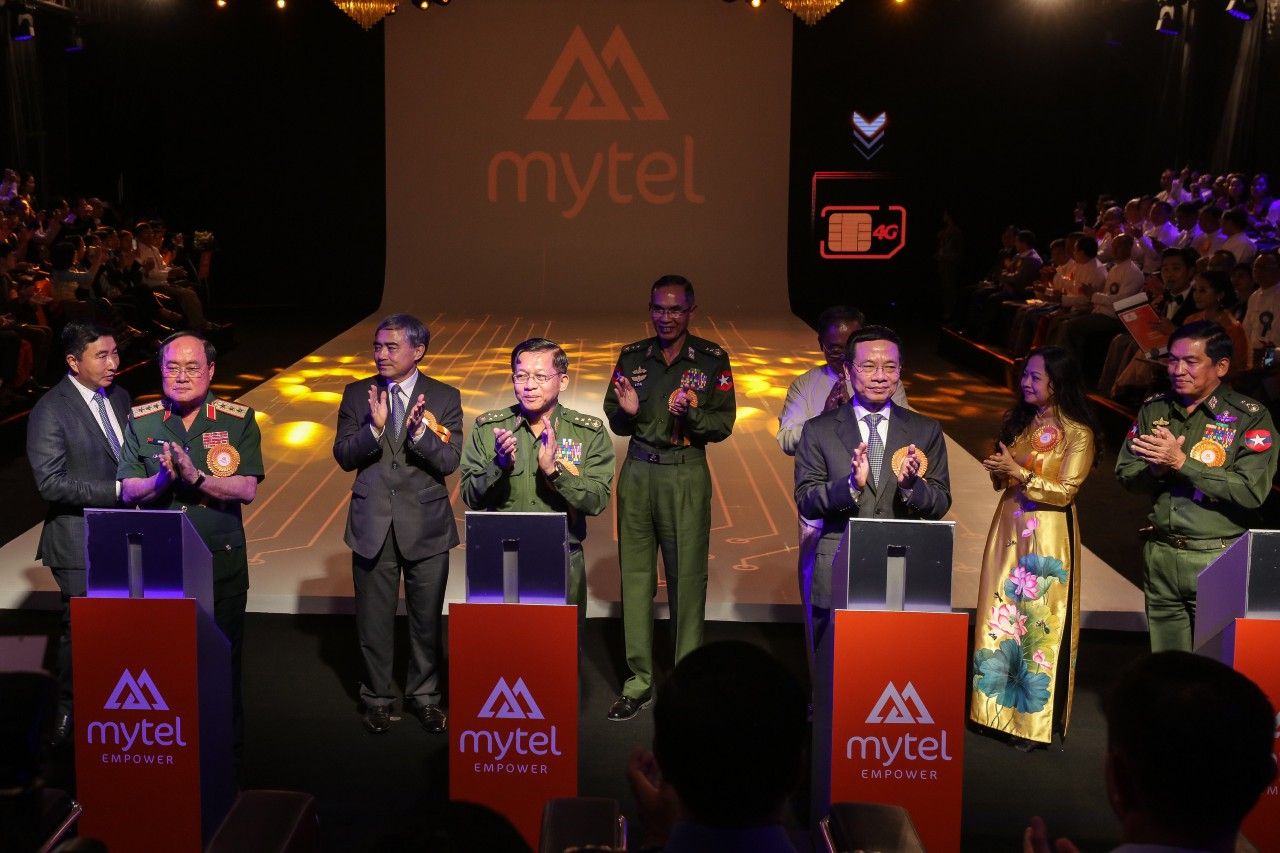
    Mytel is Myanmar’s fourth mobile network operator. It launched in June 2018 and from the report, it was envisioned to be “a successful collaboration between the private sector and [the] Union government” of Myanmar. In the two years it has been in operation, Mytel has amassed more than 10 million subscribers and their quarterly profits are estimated to be at around US$25 million. On the surface, Mytel appears to be your typical for-profit communications business. However, the aforementioned report exposes the truths, lies, and intricacies within this corporation.

    Justice for Myanmar also stated that 28 percent of Mytel’s shares are publicly owned, the shares under the control of Star High Co. Ltd., a privately registered company that is a subsidiary of the Myanmar Economic Corporation (MEC), a military-controlled conglomerate.

    A lack of transparency regarding the company’s finances also plagues Mytel with public shareholders not being informed of how the company’s profits are being used. The report also highlights that the communication infrastructure built by Mytel is being utilized by the Myanmar military to aid in their oppression of the Rohingya ethnic minority. With the advent of 5G coming into the region, these human rights violations and abuses will only intensify.

    Unlike Mytel, Viettel is publicly known to be a state-owned enterprise with direct ties to both the Communist Party of Vietnam and the Ministry of Defense. Since its establishment in 1989 as a construction company, the enterprise has gradually evolved and is now the leading force in the Vietnamese telecommunications sector. The company’s reach has also extended to other fields as well, such as the real estate and investment sectors. It’s involvement in Myanmar began in 2010 and its sway and influence in that country has only grown since then. According to the report, aside from being a major shareholder in Mytel, Viettel has also been actively aiding the modernization of Myanmar’s military through providing equipment and training. In effect, Vietnam Ministry of Defense, a foreign government entity, is aiding and complicit in the multitude of war crimes and human rights violations of the Myanmar military.

    It is apparent that both these companies, Viettel and Mytel, are heavily influenced, or even controlled, by their country’s respective governments and military. Yet, what benefits could these twin pillars of the state stand to gain from their involvement in the telecommunications sector? Why are these two towers of nationhood so fascinated with controlling communications?

    The meddling of the government and the military in telecommunications is not something new. This is most apparent when we look at the various authoritarian states of the past. Mass surveillance, wiretapping, and undercover spy rings are the tricks of the trade and these were heavily used to observe and control citizens living under the heels of these regimes.

    For instance, a 2015 report by Amnesty International asserted that the Stasi surveillance network had around 174,000 informants, which made up about 2.5 percent of the working population of East Germany during the Cold War. The amount of information this network was able to amass about both citizens and foreign tourists is both staggering and horrifying; this information was then used to influence public opinion, identify dissidents, and control the general population. Since the fall of the Berlin Wall in 1989, around 2.75 million people have asked to see their files in the Stasi database. While this is just one prime example of how totalitarian states use the personal information of their citizens, this has been fairly consistent throughout history. No matter which era, the play has been the same: authoritarian regimes collect information from just about everyone and use this knowledge to quash any dissenting thoughts people might hold and to quell any actions the government might find subversive.

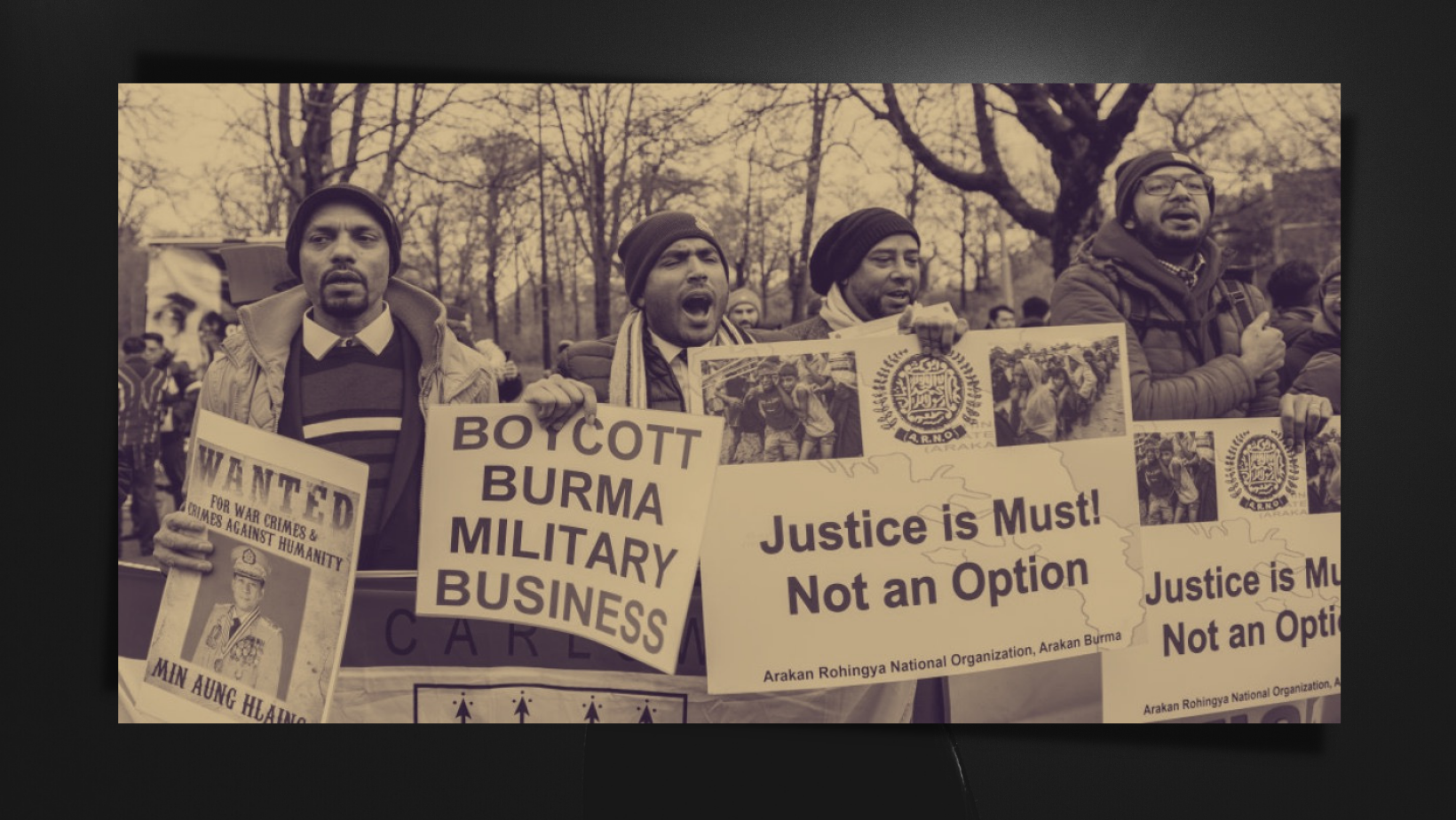
    This is exactly what we see in how the Myanmar military treats the Rohingya people. Several Mytel towers are built inside military bases found within ethnic areas. In doing so, Mytel subverts the need for negotiations and the consent of the local communities in order to expand its communications network inside those locations. The townships of Ann, Kengtung, and Lashio have suffered the brunt of the abuses by the Myanmar military with thousands of citizens displaced from their homes, a lack of food and water, extrajudicial killings, forced disappearances, torture, and constant surveillance all made possible due to the infrastructure established by Mytel, with the invisible hand of the Vietnamese government pulling the strings from behind the scenes.

    While surveillance has historically been known to be the main reason governments and militaries desire to control telecommunications, in the case of Viettel and Mytel, a lucrative avenue for corruption presents itself.

    The Justice For Myanmar report also mentions that the profits the Myanmar military makes through Mytel are hidden through proxy shareholders and military shell companies. While 23 percent of the profit goes to 11 Myanmar investors, another 28 percent goes to the state-owned enterprise, Star High Co. Ltd. Although Star High is registered as a private company, it is listed as a public company on both the Mytel website and official government documents. Shares in this company also belong to individual members. Moving through Star High, the money flows and changes hands several times and at the end of it all, no one can really tell where the money goes. The remaining 49 percent of the profit, the lion’s share, goes to Viettel Global JSC, and at the end, reaches Vietnam’s Ministry of Defense.

    In the case of Mytel and Viettel, corruption and control appear to be the main forces that fuel how the Vietnamese and Myanmar governments and militaries act. A symbiotic relationship has been formed between all players involved that benefits those in-charge, but at the cost of human rights, and more importantly, human lives.

    The lives of their citizens and those underrepresented are treated not even as commodities, but as obstacles that need to be discarded, ignored, or eliminated. Yet, the dramatic irony of it all is that the same advancements in telecommunications used by governments and military to push their agendas also provide others with the means to identify and lay bare the truth for all the world to see. At the end of the day, all truths will be exposed, all lies will be debunked, and all will be laid bare at the feet of justice.