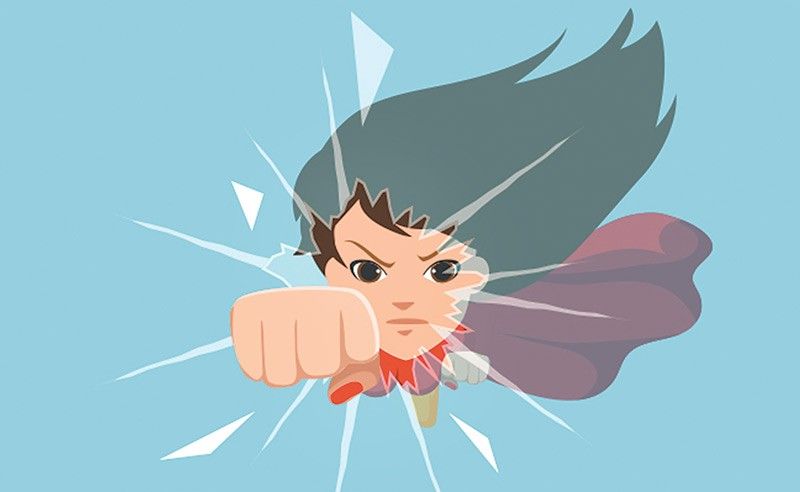
The glass ceiling for women in Vietnam, to me, is as high as the sky for most.
Recent stories about sexual assault and other violent crimes against young girls and women not only caught the public attention but also gave observers glimpses of a patriarchal society which has remained – for centuries – the same in term of gender equality.
On May 28, 2018, Phụ Nữ (Women) newspaper published an online story, detailing a groping incident three days before, where the victim was one of the biggest music stars in Vietnam, Mỹ Tâm. As one of the most beloved pop singers in the country, known to many of her fans as the Queen of Ballads, Mỹ Tâm probably has one of the largest fan bases, if not the largest.
But none of that great fame was able to protect her from being a victim of sexual assault.
To add insult to injuries, Mỹ Tâm was assaulted while performing on stage at a private event in front of the whole audience, yet all she could do was to retreat to the backstage.
No one came to assist her; no one confronted the perpetrator who was mentioned in the article as an “important official.” The only kind gesture to show some sympathy for Mỹ Tâm was the fact that someone dared to make a report to the press.
It is still a big taboo for women who accuse men of sexual harassment and assault in a country like Vietnam because there would always be the fear that the public may not be sympathetic toward the victims.
It is true that when compares to other East Asian countries like its neighboring Japan, Vietnamese society shows signs that it is catching on to the #MeToo movement where people publicly support the victims.
The recent alleged rape allegations made by an intern at Tuổi Trẻ newspaper helped demonstrated this point.
But in a culture where, for thousands of years, women have been taught and praised for being able to keep quiet of their sufferings while making sacrifices for the sake of others, victim-blaming in most cases should come as no surprise.
People may not defend the perpetrators, but they will judge the women if they don’t fit the “proper” Vietnamese woman standard.
On April 27, 2018, dancer Phạm Lịch publicly alleged rocker Phạm Anh Khoa had made improper sexual advances at her. About a week later, another female dancer Nga My and an unnamed stylist also made public allegations against Pham Anh Khoa for sexual misconducts. And while Khoa eventually apologized for his behaviors on May 15, 2018, he only did so after UNFPA dropped him as one of its goodwill ambassadors, his appearances on TV were canceled, and a rock concert in Hochiminh City pulled the plug on him.
The public backlash against Khoa began after an NGO that works to promote gender equality in Vietnam, CSAGA, organized an event for him to explain his side of the story.
People quickly pointed out that CSAGA was given Khoa a platform to normalize improper and illegal behaviors against women because he was not acknowledging any faults, he was explaining that his conducts were “industry standards.” Phạm Lịch recently told reporters that she could not find any work for the past month after making her allegations against Khoa public. It is not too far-fetched to infer that she is likely being punished by the industry for breaking the silence on sexual abuse.
Both Khoa and CSAGA apologized immediately after the backlash, but with his half-hearted attempt to explain himself, Khoa inadvertently opened the pandora box and revealed a culture of subtle victim-blaming in Vietnam.
Such a culture became even more vividly portrayed just last week when a nude model alleged that a famous artist had raped her at work. Many commentators online, including democracy activists and lawyers, shifted the burden of proof to the alleged victim and insisted that she must prove she had forcibly fought back during her ordeal or it would not be rape.
No means no simply was not enough.
The victim’s credibility was questioned, and her job as a nude model took away a significant portion of public sympathy. People, women included, scoffed at her story when information surfaced that the perpetrator allegedly had used a condom.
Just this week, the case of alleged child abuse against Minh Tiệp, a sports newscaster at the national television broadcasting company VTV shows how victim-blaming extends to cases involving teenage girls as well.
When first asked about the alleged abuse, Minh Tiệp used the media to paint the victim, his 15-year-old sister-in-law, as a “bad girl.” She was, according to him, someone who has been dating as early as in 6th grade and always talked back at him and his wife, her older sister, while they were trying to teach her right from wrong.
A member of Vietnam’s National Assembly – Phạm Tất Thắng – played down the case as “one of those that should be dealt with by the family,” even after the father of the teenager told newspapers that Minh Tiệp slapped his daughter. Mr. Pham is a Vietnamese congressperson who belongs to a committee which deals with culture, education, women, children, and teenagers matters.
These stories should not come as surprises once you realized that they all attempted to portray the victims as being “improper.”
Because the “proper” Vietnamese woman only dresses and speaks in an approved manner, she will not work certain jobs, and above all, she endures her sufferings for the sake of others. She will not bring attention to herself and definitely keeps quiet about her injuries and her pains if they would bring shame to her family.
This proper woman thus is a virtuous one who would sacrifice all that she is for the well-being of her loved ones, and for that, she has been idealized, worshipped and expected to be placed on a pedestal throughout Vietnamese history for future generations of girls and young women to follow.
We were taught folklores like Quan Âm Thị Kính, a woman who was being misunderstood all her life, wrongfully accused of crimes she never committed and yet she never tried to explain herself. She would keep her mouth shut and endured the injustice until the day she died, and only after death that her name was cleared.
Then there was the story of Thiếu phụ Nam Xương, a lady wrongfully accused of infidelity by her husband who left for military service and returned home years later. Again, just like Thị Kính, talking back and explaining herself were not the options. And like the other story, our heroine could only use death to prove her innocence, so she killed herself.
Being demurred, forcing oneself to bite her tongue instead of speaking up, and learning the ability to suffer in silence and not complaining are virtues that aspiring young girl was told to keep.
I grew up in such a society for the first 12 years of my life, and despite being raised by parents who would raise other people’s eyebrows for the way they let me speak my mind and shout back at them when I think they were wrong, I had mastered those virtues by the age of 5. I was often seen as a quiet girl, sitting properly and politely with a half smile on her face, whose voice was rarely heard when visiting homes of my parents’ friends. I had convinced myself then, that conforming to societal norms would be the best and easiest way to save myself and my parents from unnecessary headaches.
For the next twenty years though, my life drastically changed as my family immigrated and I was growing up in the West, adapting to a new set of values. I have grown up to become a Westernized woman, one that my parents’ old friends from Vietnam could no longer recognize as the same quiet and demurred child they have met back in the home country.
But who could believe that it only took less than 15 months of living in the old settings among Vietnamese people to morph my 30’s something-year-old self back to my pre-teen’s personality?
I work in the NGO sector, and one would have thought that I must be among comrades who promote the same values as mine – gender equality included – but I have found that I needed to put in twice the efforts compared to my male counterparts in most things that I do. I always felt the need to prove my self-worth to others, and I was constantly looking for approval. Even in my field of work – where people often believe they are somewhat more progressive than the rest of society – it still seems as if the “seats reserved at the table” are only offered to women who fit the “proper” descriptions.
So I bit my tongue instead of speaking back and letting others know how I felt, how I did not agree with them, and how I thought that they were wrong. I sacrificed my happiness to keep others happy. I had changed so much that I could not recognize myself when I stared at the woman in the mirror on the wall one day in the middle of Southeast Asia, and I broke down, completely.
If life was this difficult for me – a woman with an advanced degree from the West – imagine how it would be for those who have fewer opportunities and those who never had the chance to live outside of Vietnam.
While I was lucky to get out of that environment to save myself a trip to the emergency room for depression treatment, it dawned on me how high the glass ceiling is for most Vietnamese women. The #MeToo movement has brought many important issues about women’s rights to the discussion table in Vietnam, and I hope gender equality will now receive the attention it deserves.