Tag: land-grabbing

  • Long-simmering Land Dispute in Hanoi Suburb Explodes in Violence, Killing 4

    Long-simmering Land Dispute in Hanoi Suburb Explodes in Violence, Killing 4

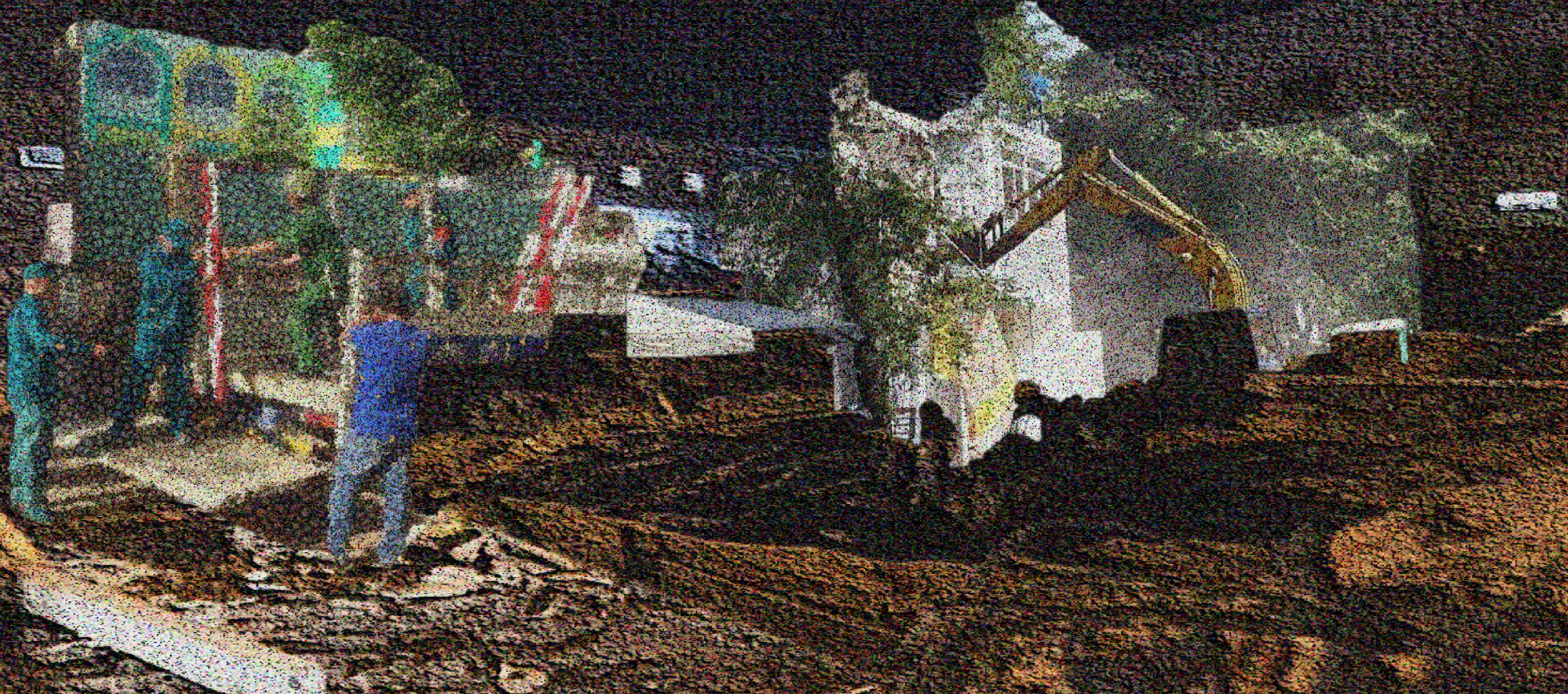
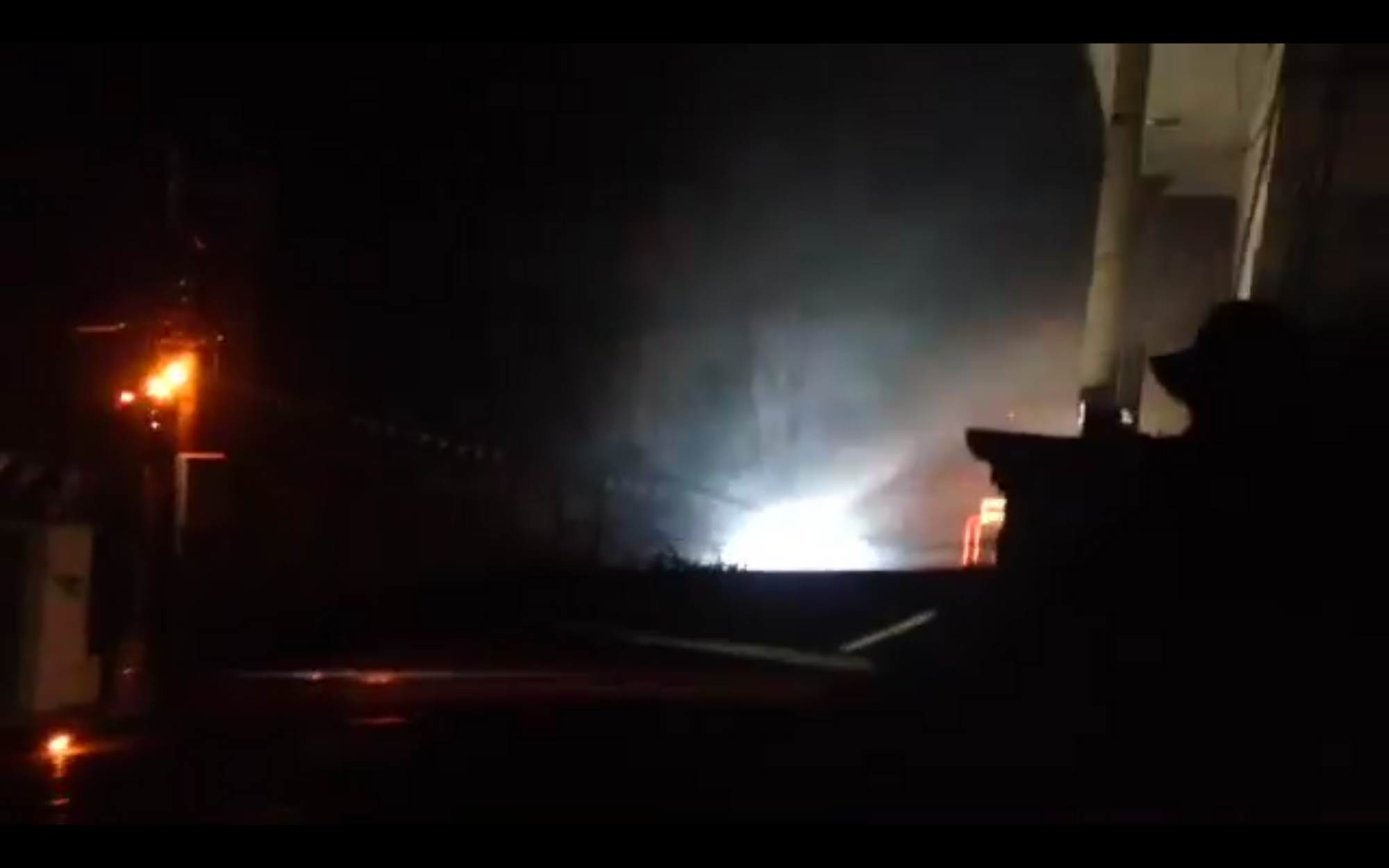
    Amid sounds of explosions, screams, and gunfire, the villagers of Dong Tam, a rural commune 35 km southwest of Hanoi, clashed with Vietnamese police in the early morning hours of January 9, killing three police and one civilian, state-controlled media reported this afternoon.

    According to the BBC, at 4 AM, police cordoned off Dong Tam in coordination with local ground forces and attacked villagers over a disputed piece of land. The villagers, who were never officially notified but had only heard through unofficial channels, declared in video recorded an hour before the attack that they would “fight to the death”.

    In a message to fellow Vietnamese citizens, a villager of Dong Tam states that the government is shooting at them. He declares that the villagers will “fight to the death”. Nguyen Anh Tuan

    The land had been earmarkedsince 1980 to form a part of the Mieu Mon military airfield, but in 2015, the plan was expanded to take up more nearby farming land and generalized to become an airport.

    Citizen-blogger social media reports say police burst into the village with tear gas and grenades filled with plastic ball bearings, and descended upon village leader Le Dinh Kinh’s house, shooting and killing one individual, who remains unidentified as of this report.

    Le Dinh Kinh and his son Le Dinh Cong have served as village representatives during repeated land disputes with the government. Media outlets have been unable to reach Le Dinh Cong for comment, but villagers say Cong’s family is in police custody and his father Kinh had gone into hiding a few days prior to the showdown. Prominent activist Anh Chi says those in custody include at least Cong’s daughter-in-law and two other family members.

    Village leaders direct statements to the country and to the world at 3 AM, January 9, an hour before police descend on Dong Tam village, demanding justice and protection against government oppression. Nguyen Anh Tuan

    Another witness describes “thousands of police officers rushing into the village” using flash grenades, firing tear gas, shooting rubber bullets, blocking off all pathways and alleys, and beating villagers indiscriminately, including women and old people. The witness stated that electricity to the village has not been cut, but the internet has.

    According to state media, which quotes an official statement from the Ministry of Public Security, it was villagers who attacked police with “grenades, petrol bombs, and knives” as officials tried to erect a wall delineating Mieu Mon airport. The statement accuses villagers of obstructing official duties and “disturbing public order”, a catch-all often used to describe anti-government actions in Vietnam.

    Dong Tam previously made international headlines in April 2017 when it held hostage 38 government officials and police officers in another land dispute with Viettel, a military-owned telecommunications company.

    Accordingto VNExpress, 46 hectares were granted to Viettel in March of 2015, only for villagers to complain to the government in June of 2016 that the land was being taken away from farming. Villagers were able to successfully fight off land reclamation from late 2016 until February 2017.

    The land dispute came to a head in April 2017 when villagers captured more than three dozen officials and police and held them hostage as leverage for government dialogue. All hostages were released by April 22, after the mayor of Hanoi, major-general Nguyen Duc Chung, came to negotiate with villagers personally.

    The villagers of Dong Tam, in a past meeting regarding the land dispute. Le Dinh Cong sits in green, first row, farthest right. His father Le Dinh Kinh sits two seats to the left, in peach. BBC Vietnamese

    Vietnamese activists and experts believethe central conundrum causing Vietnam’s land disputes lays in the country’s political regime: “how [does one] allocate land in a Communist country that allows quasi-private ownership rights but still considers all land to be state property”?

    Accordingto the NYTimes, “[i]n 2013, Vietnam tweaked its land law in ways meant to introduce more transparency into eminent domain [i.e. government land reclamation] cases. […] But experts say land disputes continue, in part, because the 2013 revisions do not allow private ownership or set clear definitions of what qualifies as the public interest in eminent domain cases.”

    Mike Ives of the NYTimes reports further: “[l]and disputes are common on the fringes of Vietnamese urban areas, where land values are often high; villagers are typically compensated at prices well below market rates for agricultural land that is later rezoned for other uses. John Gillespie, a professor at Monash University in Australia who is an expert on land reform in Vietnam, said in an interview that the disputes tended to be more violent when villagers perceived that business interests outweighed public ones.”

    Dong Tam, with a population of around 9,000, continues to be under siege, according to social media reports. All parties involved remain on edge, with activist Anh Chi stating that “Tuan Ngo, one of lawyers helping the villagers, came to Dong Tam but was stopped outside. He was threatened to be arrested by a man in plainclothes with aggressive words.”

    Images of one of the police officers killed in the clash have also begun circulating on social media, with those on both sides of the land dispute expressing sympathy. Nhu Quynh, whose 27-year old husband appears to have been involved at Dong Tam, inadvertently revealed in her caption that 3000 police officers were deployed. The image (screencaptured below) has since been taken down.

    Translated post: “Oh, my husband!!! Of 3 thousand officers, why did it have to be you?” The Vietnamese

    Le Dung Vova, a well-known activist and writer has stated of land disputes in Vietnam: “Things will not stop at Dong Tam. […] Similar incidents will keep happening everywhere [as in Loc Hung Garden], with different levels of intensity, especially as land resources become more scarce.”

    Update: BBC News has reported that Dong Tam’s leader Le Dinh Kinh has passed away January 10, after clashing with government forces in the early morning hours of January 9.
  • The Real Casualty of the Loc Hung Garden Incident: the People’s Trust

    The Real Casualty of the Loc Hung Garden Incident: the People’s Trust

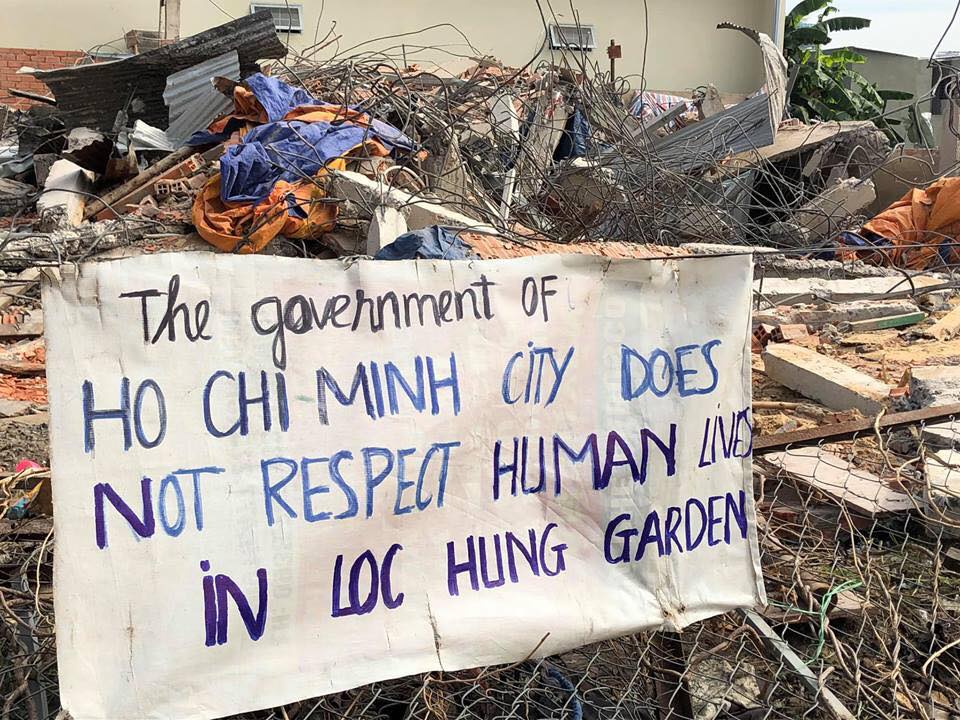
    When the officials of Tan Binh District in Ho Chi Minh City gathered over one thousand police officers and other forces to bulldoze some 200 houses at Loc Hung Garden, they destroyed not only the shelters of a few hundred people but something even more important.

    What also crumbled and laid buried deep in the rubble was the people’s trust in the current regime–or whatever was left of it.

    “I have to tell you honestly, the trust between the people of this community and the government has totally broken down over the decades. We cannot trust them after so many broken promises. They have told us that they would meet with us and provide us with documents about the projects, the plans. We’ve received nothing. There is no trust.”

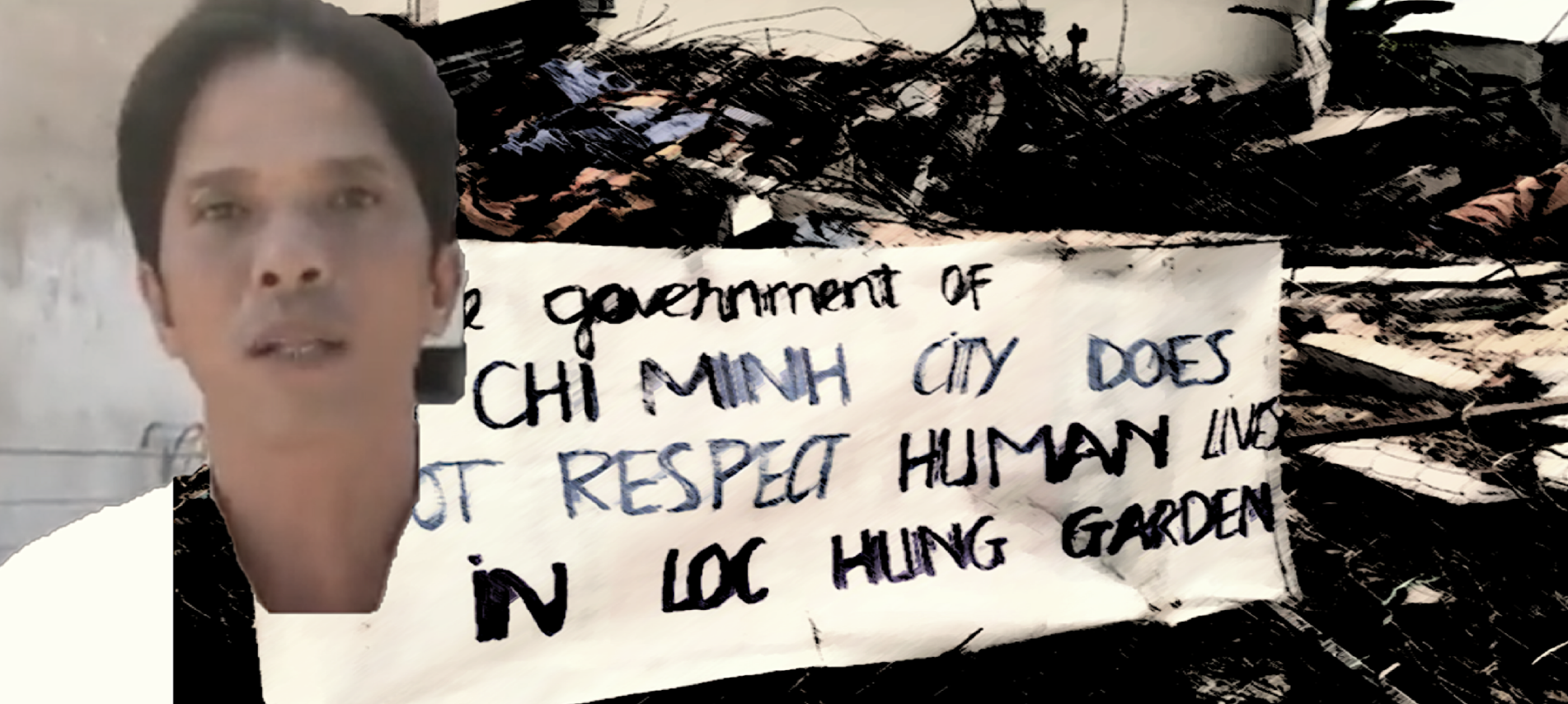
    Cao Ha Truc, one of the persons representing the 124 households living in Loc Hung Garden, spoke to me over the telephone on January 9, 2019, about 12 hours after he was released from the police station and came back to a home that was no longer there.

    Truc told me that he was a vegetable farmer until the local authorities engaged in what he called “shady tactics” a few years ago to stop him and others from continuing their farming.

    In a video clip recorded earlier in the day, he said:

    “They oppressed us by cutting off our means of survival, by letting water flood our vegetable fields, and we could not live (properly) for eight years.

    We could not raise cats and dogs because they would die when the land was submerged. The meter-high water took a month to drain, but then the environment became polluted. We had to find other means of living.

    We’ve lived here through three generations by farming vegetables, but now we have to flatten out the land and build the four-level houses to keep on living.”

    Truc was refuting the government’s claim that the residents living in Loc Hung were constructing houses illegally when it confirmed that some 112 homes were demolished on January 8, 2019.

    Loc Hung Garden is a complicated legal issue involving land rights and land possession, with the case beginning to beleaguer the Ho Chi Minh City government in the late 1990s.

    The Vietnamese government has faced increasing legal headaches concerning land disputes over the years, due to rapid nationwide development.

    Land Disputes Developing with and within Land Development

    Vietnam’s economy grew exponentially in the past three decades after the communist regime decided to “open up” and explore a “free market with socialist characteristics.” In big cities like Hanoi and Saigon, some investment and development projects crashed head-on with the former way of life: farming.

    As Vietnam has been an agricultural society for thousands of years, the fact that there were farmers in the big cities probably shouldn’t surprise anyone. However, the clash between the old and new ways of life – coupled with a lack of clear legal framework – has created long-lasting social, economic, and political problems.

    The Loc Hung Garden incident was not the first and definitely will not be the last of its kind.

    In Vietnam currently, there are hundreds of thousands of land-lost victims who are known as “dân oan” in Vietnamese, often translated as “victims of injustice” in English.

    As of January 8, 2018, some may want to add another 124 households from the Loc Hung area to this population.

    At the same time, the local government has not exactly been transparent about the legal basis to support their claim to the land.

    What the public knows thus far includes a still-pending development project for a public school system from K-12 on the land where Loc Hung Garden is located, and that this project was postponed numerous times during the last five years.

    Before that, both the city and the district’s officials had failed to carry out the other public construction projects they previously proposed for the area.

    In report No. 6035/UBND-NCPC sent to the Government Inspectorate dated October 20, 2016, the People’s Committee of Ho Chi Minh City admitted two critical matters:

    1) The public school development project has yet to be executed and was still only a prospect, and

    2) The land dispute with the residents at Loc Hung Garden would have continued to be classified as a “complicated and long-term petition” as the project had already started.

    The report and its conclusion indicate that the government always recognized the land dispute at Loc Hung Garden was not a matter of black-and-white and that it anticipated a lengthy legal battle with the residents once the project began.

    Information on the pending development project, as well as the proposal on compensation and relocation of the residents, is not made readily available to either the residents of Loc Hung or the public at-large as prescribed by law.

    Was There Due Process?

    The official reason given by the authorities (the People’s Committees of both the Tan Binh District and the 6th Ward) for tearing down the hundreds of homes was to enforce the order to remove illegal structures at Loc Hung Garden.

    For the enforcement and removal to take place, the law in Vietnam requires the authorities to provide three critical documents with sufficient public notice to the violating individuals or entities:

    1. The report conducted by the appropriate authorities on the violation
    2. The decision to penalize the violation, and
    3. The decision to enforce

    (Law on Land 2013, Law on Administrative Penalization 2012, Decision 166/2013/NĐ-CP on Enforcement of Judgment, and Decision 102/2014/NĐ-CP on Administrative Penalization Relating to Land – all links in Vietnamese).

    These documents should also be served to the violating individuals and entities, giving them an opportunity to remedy the violations voluntarily.

    Cao Ha Truc told me he did not receive any of the three required documents but cautioned that he could not speak for all others in the area.

    The state-owned newspaper that published the story about Loc Hung also did not enclose copies of these essential documents.

    When I called the office of the People’s Committee of Tan Binh District and asked for copies of the documents to be provided electronically according to law, I was turned down. The desk person stated that I would need to show up in person to make my request.

    The law prescribes a specific duty to the enforcing authorities, which is to establish that the required documentation exists and that the affected people are duly notified. When the government has yet to provide them, we cannot conclude that there was due process.

    Who Owns the Land in Vietnam?

    Land in Vietnam “belongs to the entire people with the State acting as the owner’s representative and uniformly managing land. The State shall hand over land use rights to land users in accordance with this Law.” (Article 4, 2013 Law on Land).

    I noticed the word “shall” was added in the English translation that I found online. Its addition makes a significant legal difference.

    The 2013 Law on Land provides in detail a long list of specific scenarios where the Vietnamese government would hand over land rights use to the people. At the same time, it also prescribes another list of situations where the government could perform land reclamation and land requisition.

    The main legal issues in the Loc Hung Garden case have always centered on the farmers’ right to possess the land and their land use rights from 1975 until now.

    The government claims they acquired the land and the other 1.2 hectares nearby from the now-defunct South Vietnam’s postal services under Government Council Decision No. 111/CP dated April 14, 1977.

    The residents claim that Decision No. 111/CP only covers the 1.2 hectares because the 4.8 hectares in question have been used for farming during the last 60 years in an undisrupted and undisputed manner. They also claim that the 4.8 hectares belong to the Catholic Church and the church gifted it to the farmers in 1954.

    All parties involved agree on the size of the disputed land and the fact that the current government did allow residents to continue living and farming on the property undisrupted since 1975.

    On January 8, 2019, the Tan Binh District’s division of the Central Propaganda Committee issued a publication, stating that the residents who had been living and farming at Loc Hung Garden would be entitled to compensation according to the policy for agriculture lands.

    What would be the justification to compensate the residents if there wasn’t any legal basis for them to live there in the first place?

    And more importantly, is any amount of monetary compensation enough to gain back the people’s trust in their government?

  • Loc Hung Garden Incident: Government’s Forced Eviction Is Without Legal Merits

    Loc Hung Garden Incident: Government’s Forced Eviction Is Without Legal Merits

    January 8, 2019| The forced eviction in the area known as Loc Hung vegetable garden in Ho Chi Minh City continued at daybreak today.

    At about 5:50 A.M., Facebookers in Vietnam reported that hundreds of police and plainclothes security police had resumed their demolishment at Loc Hung. By 6:00 A.M., the authorities have arrested Cao Ha Truc, one of the leaders representing the Loc Hung residents in their land dispute with the government during the last 20 years, along with his wife.

    Truc is among the group of people that have lived at Loc Hung all their life, beginning with his grandparents and parents who were migrating from the North of Vietnam after the Geneva Accord took effect and divided the country in half. The Catholics Church had given his family the land they lived on since 1954, and according to him, they have used it to farm vegetables all these years.

    In an interview conducted by an independent news media, Tin Mung Cho Ngươi Ngheo, on January 4, 2019, Truc openly challenged the government on their legal grounds to enforce the eviction of the Loc Hung residents’ homes, asserting that there was no land recovery decision from the authorities.

    A land recovery decision (quyết định thu hồi đất) is the first legal requirement to start the process of enforced eviction under Vietnam’s laws. (Article 71, Law on Land 2013).

    Attorney Trinh Vinh Phuc (who was one of the defense lawyers for Will Nguyen – a Vietnamese American convicted for inciting public disorder when joining the June 2018 protest), was among a few lawyers who openly supported the residents of Loc Hung.

    On his Facebook page, attorney Phuc agreed with Truc and the other residents that the enforcing authorities have yet to produce a land recovery decision to start the eviction process.

    Moreover, the law further requires that fair compensation must be provided for the affected residents and that the government must assist with relocation.

    Loc Hung residents repeatedly claim that the government did not comply with any of those requirements under the law.

    While the image of bulldozers tearing down homes in forced eviction has become a familiar scene in Vietnam’s land dispute cases, the legality of such conduct by the enforcing authorities is questioned. The Law on Land 2013 required that the enforcement team must move both the people and their property outside the enforced area, perform proper inventory, and notify the owners with information on how to reclaim them. The enforcement should also be carried out during regular business hours.

    However, according to human rights activist, Nguyen Ho Nhat Thanh, close to one thousand police officers have been mobilized throughout today to demolish Loc Hung garden. More news on social media indicated that the police were preparing for the demolishment throughout the night, turning on public speakers at maximum volume and asking the residents to leave the area.

    Other bloggers reported that there were at least five bulldozers at the scene, tearing down people’s houses. Cao Ha Truc and his wife were both arrested today because they have been recognized as the residents’ leaders.

    Like the days before, the local authorities also blocked off streets leading to Loc Hung and stopped people from entering the area. The security police of Ho Chi Minh City even surveilled the Church of Redemptorists and prevented the priests from leaving so that they could not go to Loc Hung to show support for the Catholic community there.

    Starting from last night, witnesses described Loc Hung’s residents were living in a war-like zone. People were panicking and beginning to move out their property throughout the night in fear that the forced eviction would soon resume.

    In the middle of the chaos, yet many residents still managed to gather for a candlelight vigil in front of Lady Mary statute and sang their prayers.

    The estimated value of the lost property which the residents will incur is going to be in the billions of VND.

    One of the most vulnerable groups living in Loc Hung is the community of some elderly veterans from the South of Vietnam’s army who do not have an immediate family. Most of these men received injuries during the war and because they were soldiers of the “old regime,” they were not given any opportunities or even proper healthcare under the current regime. Now facing homelessness, their already uncertain future appears to be even bleaker.

    The house of former political prisoners couple, Pham Thanh Nghien and Huynh Anh Tu, is also among those going to be soon torn down at Loc Hung garden. Both of them are well-known dissidents who remain critical of the government after their releases from prison. The couple has a one-year-old daughter with asthma conditions living with them.

    Southeast Asia and the Pacific office of Amnesty International has issued a call for action today, asking the public to contact the local enforcement authorities in Vietnam to demand them to cease their eviction activities in Loc Hung immediately.

  • Land-Grabbing In Vietnam Gets Serious In Urban Areas

    Land-Grabbing In Vietnam Gets Serious In Urban Areas

    January 4, 2018| In the early hours of the day, various police forces and their accompanying civil security (dân phòng) surrounded an area in Ward 6, District Tan Binh, Ho Chi Minh City known as Loc Hung vegetable garden with bulldozers, firetrucks, and paramedics to forcefully evicted about one hundred households from the land that they have been disputing with the local government for close to two decades.

    The residents have spent years on negotiations with the local government, starting from the time the price for their land skyrocketed and the area became desired for development in the early 2000s.

    The two sides could not agree on the price. It is estimated that with such a prime location, the value should be more than 100M VND per meter square, but the government rezoned the area and only offered the people around the range of a few hundreds of thousands VND per meter square. The millions of VND in the difference between the two prices eventually killed the talks, and the authorities declared they would use forced eviction in the last few days of 2018.

    Now, only less than a week into the new year, the police and security forces were barricading and blocking traffic and people from coming into the area so that they could begin demolishing the residents’ homes starting from around 9:00 A.M.

    Throughout the day, our editor, Pham Doan Trang, reported from the scene and stated on her Facebook page that the security police also stationed in front of many dissidents’ homes in Saigon and even arrested Nguyen Tri Dung, the son of blogger Dieu Cay (Nguyen Van Hai) at his home in District 3. Nguyen Tri Dung was later released in the evening of January 4, 2019.

    By 9:20 A.M. the authorities cut off electricity, 3G, and Wifi at Loc Hung. The police began to tear down people’s houses in the area with all means available, from shovel and hammer to bulldozer, while calling on the people to voluntary leave the area.

    88 households would become homeless without compensation for their land once the demolishment is finished.

    By 11:00 A.M., a large area surrounding the garden was completely sealed off by the police. Witnesses described on Facebook that they were asked to provide identification and not allowed to enter.

    Face-bookers continued to report the demolishment and the dispute between the local police and the residents with updates and even live-stream videos.

    Aerial view of Loc Hung. Sources: Facebook Nguyen Dat An.

    According to the residents, Loc Hung is a piece of land estimated to be in between four and six hectares, belongs to the Catholics Church of Vietnam since 1954 with proper documentation, including deeds and other recordings from the former South of Vietnam’s regime. Also, starting from 1954, there were Catholics who migrated from the North of Vietnam to the South after the Geneva Accord took effect that settled in the area. This community has been living in Loc Hung continuously for generations.

    In 1993, the residents were trying to register for their right to possess and use the land with the local government (in Vietnam, individual citizens do not own their land as all lands belong to “the people” and under the state’s management, but they can register for the right to possess and usage). The residents alleged that the government intentionally ignored their petitions to record land right’s usage.

    Unable to register their land, the people could not construct and develop the area, and instead, relied on vegetable farming to make a living. Their peaceful existence became the thorn in the eyes of the local authorities as the price for the land continued to increase.

    Nevertheless, to this day, Loc Hung garden has never been part of any development project, and it is also the most cogent argument the residents and their supporters have against the local government, that there is no imminent reason for the forced eviction and the destruction of hundreds of houses.

    By 6:00 P.M. it was reported that at least four people were arrested and some houses have been torn down. The residents strongly opposed the eviction and protested. One person even lay down in front of a bulldozer to protest.

    A man lay down in protest. Source: Amen TV

    As of press time, there were a total of at least ten people arrested and ten houses destroyed.

    The forced eviction came during the time Vietnamese people starting to get ready for the Lunar New Year which will be on February 5, 2019. Seeing hundreds of people become homeless from a land dispute in the middle of the largest urban city in the country has angered many users on Facebook. Information continued to be shared throughout the day, despite the new cybersecurity law went into effect on January 1.

    Land disputes and land-grabbing have always been among the most severe issues which test the government’s ability to govern since Vietnam embarked on the economic reform in the late 1980s.

    The government of Ho Chi Minh City is already in the middle of a heated controversy regarding land-grabbing and development started from the 1990s in the Thu Thiem peninsula. Forced eviction and ill-planning relocation plans of people living in the development area have dragged the government’s ambitious dream for Thu Thiem through the mud for over 20 years.

    Adding Loc Hung – and close to one hundred people living there – to the mix, raises even more concerns about Vietnam’s failure to handle development projects according to the U.N.’s Sustainable Development Goals.

    The Vietnamese communist government has been trying to demonstrate their ability to promote the 16 SDG’s goals with their development projects, especially during their negotiation with the EU for the EU-VN Free Trade Agreement. However, the reality of land-grabbing and forced eviction happening in the country throughout the past few decades cast severe doubts on the government’s claim.

    As of tonight, at least ten households in Loc Hung are homeless and without any compensation from the government.