Tag: land dispute

  • With Economic Development Comes Greater Government Oppression: Why the EU Must Reconsider Its Free Trade Deal with Vietnam

    With Economic Development Comes Greater Government Oppression: Why the EU Must Reconsider Its Free Trade Deal with Vietnam

    On the same day in 2020 that Vietnam chaired its first Security Council meeting in New York, just a few hours earlier and some 8000 miles away near its capital, Hanoi, the Communist Party of Vietnam directly attacked Dong Tam village for refusing to give up its land.

    The result? Police shot dead Dong Tam’s beloved leader and former Party village chief, Le Dinh Kinh, an 84-year-old veteran who had been a Party member for 57 years; three police officers also died after falling down a sky-light, ostensibly pursuing “suspects” who resisted the authorities. Twenty two villagers have subsequently been arrested, with twenty being charged with murder. If convicted, these villagers could face the death penalty.

    The Dong Tam land seizure event of last week is therefore a watershed moment in Vietnam’s post-war history for many reasons. First, it marks for the first time in the age of social media an open and deadly clash between the Party and its once loyal support base: villagers in northern Vietnam. According to a 2015 Bloomberg finding, almost 70% of Party members live in the north, even though the north is home to less than half of the country’s population of 96 million.

    Second, it shows the Party’s determination in ending the dispute, no matter the costs, and the great lengths it will go to muzzle public outcry afterwards, both on- and offline.

    Just two days after the incident, the Ministry of Information, which controls and censors all media content in Vietnam, called for Facebook – by far the most popular social media platform in Vietnam, used by some 55 million netizens – to be punished for ‘not following Vietnamese laws’ in allowing ‘distortion and fake news’ to be spread on its platform.

    Following official warnings and thanks to a large cyber-troop force the government employs, some users reporting on Dong Tam have been locked out of their accounts or had content taken down by Facebook, a fact Amnesty International has confirmed in recent days.

    Offline, the Party’s determination couldn’t be more clear. Less than 24 hours after the incident, the most senior member of the Politburo and Vietnam’s top leader, Party General Secretary Nguyen Phu Trong, posthumously awarded the officers killed the title of “martyr”, designating them as first-class heroes.

    A week later, in an elaborate ceremony held at the State Funeral House, the Prime Minister himself along with other Politburo members, including the powerful Minister of Public Security, attended the funeral, noting that the officers ‘sacrificed their lives to protect national security’.

    It is, indeed, not surprising that the Party views the incident as a matter of significant national security. After all, though land disputes are common in Vietnam because the government does not recognize private land ownership, never before has an entire village dared to resist government seizure of its land at all costs and announce its intentions accordingly on Youtube and Facebook.

    With Vietnam’s economy expected to grow faster in the next decade, land designated for development purposes and seized by the government will likely exacerbate the security situation on the ground if not dealt with decisively. In the case of Dong Tam, the land seizure was for Viettel Group, Vietnam’s military-run communications company. They had to act.

    But the timing could not have been worse. In the coming days, the EU Parliament’s Trade Committee is expected to vote on the EU – Vietnam Free Trade Agreement, worth 42 billion dollars annually and described by the EU as ‘the most ambitious free trade deal ever concluded with a developing country’. If passed, it will go to Parliament for a final vote on February 10.

    According to Human Rights Watch, already there is significant concern among some EU MEPs regarding Vietnam’s worsening human rights record. Just last month, they also discovered that the trade deal rapporteur, MEP Jan Zahradil, has institutional links with the Party, leading to his immediate resignation.

    With the latest incident in Dong Tam, it is also important for the 751 MEPs to realize that while the deal will bring more economic benefits to Vietnam, without clear and concrete human rights benchmarks, the deal will likely provide more incentives for the Party loyal and powerful to grab more land from the poor for developments without proper compensation and recourse.

    As a result, if passed in its present form, expect more land losses and tragic deaths in villages across Vietnam, not less. After all, 65% of Vietnam’s population still lives in rural areas.

    As for the Security Council of which Vietnam is the President this month, expect no resolutions on the matter. Dang Dinh Quy, head of Vietnam’s permanent mission in New York, is a Communist Party member himself.
  • Long-simmering Land Dispute in Hanoi Suburb Explodes in Violence, Killing 4

    Long-simmering Land Dispute in Hanoi Suburb Explodes in Violence, Killing 4

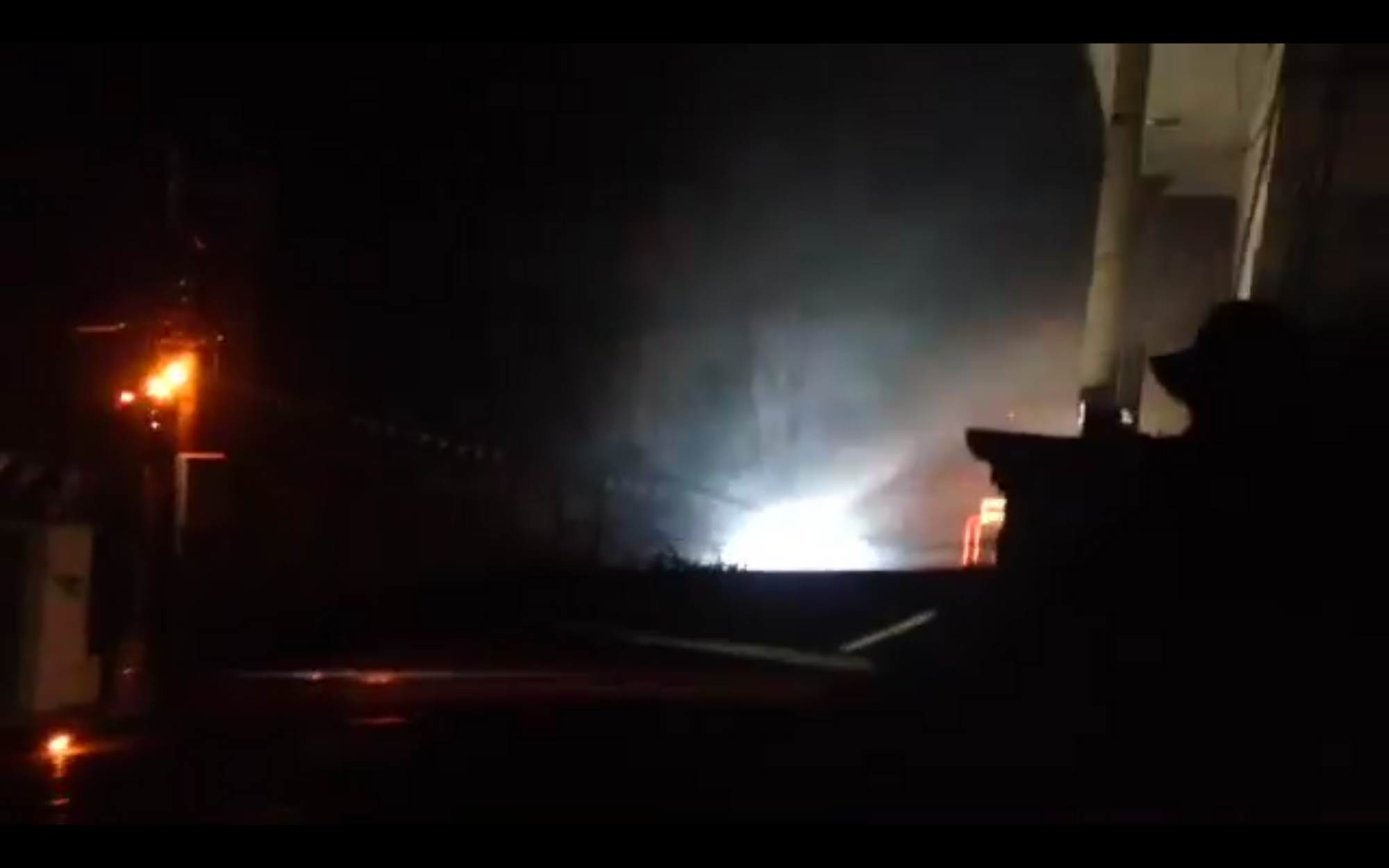
    Amid sounds of explosions, screams, and gunfire, the villagers of Dong Tam, a rural commune 35 km southwest of Hanoi, clashed with Vietnamese police in the early morning hours of January 9, killing three police and one civilian, state-controlled media reported this afternoon.

    According to the BBC, at 4 AM, police cordoned off Dong Tam in coordination with local ground forces and attacked villagers over a disputed piece of land. The villagers, who were never officially notified but had only heard through unofficial channels, declared in video recorded an hour before the attack that they would “fight to the death”.

    In a message to fellow Vietnamese citizens, a villager of Dong Tam states that the government is shooting at them. He declares that the villagers will “fight to the death”. Nguyen Anh Tuan

    The land had been earmarkedsince 1980 to form a part of the Mieu Mon military airfield, but in 2015, the plan was expanded to take up more nearby farming land and generalized to become an airport.

    Citizen-blogger social media reports say police burst into the village with tear gas and grenades filled with plastic ball bearings, and descended upon village leader Le Dinh Kinh’s house, shooting and killing one individual, who remains unidentified as of this report.

    Le Dinh Kinh and his son Le Dinh Cong have served as village representatives during repeated land disputes with the government. Media outlets have been unable to reach Le Dinh Cong for comment, but villagers say Cong’s family is in police custody and his father Kinh had gone into hiding a few days prior to the showdown. Prominent activist Anh Chi says those in custody include at least Cong’s daughter-in-law and two other family members.

    Village leaders direct statements to the country and to the world at 3 AM, January 9, an hour before police descend on Dong Tam village, demanding justice and protection against government oppression. Nguyen Anh Tuan

    Another witness describes “thousands of police officers rushing into the village” using flash grenades, firing tear gas, shooting rubber bullets, blocking off all pathways and alleys, and beating villagers indiscriminately, including women and old people. The witness stated that electricity to the village has not been cut, but the internet has.

    According to state media, which quotes an official statement from the Ministry of Public Security, it was villagers who attacked police with “grenades, petrol bombs, and knives” as officials tried to erect a wall delineating Mieu Mon airport. The statement accuses villagers of obstructing official duties and “disturbing public order”, a catch-all often used to describe anti-government actions in Vietnam.

    Dong Tam previously made international headlines in April 2017 when it held hostage 38 government officials and police officers in another land dispute with Viettel, a military-owned telecommunications company.

    Accordingto VNExpress, 46 hectares were granted to Viettel in March of 2015, only for villagers to complain to the government in June of 2016 that the land was being taken away from farming. Villagers were able to successfully fight off land reclamation from late 2016 until February 2017.

    The land dispute came to a head in April 2017 when villagers captured more than three dozen officials and police and held them hostage as leverage for government dialogue. All hostages were released by April 22, after the mayor of Hanoi, major-general Nguyen Duc Chung, came to negotiate with villagers personally.

    The villagers of Dong Tam, in a past meeting regarding the land dispute. Le Dinh Cong sits in green, first row, farthest right. His father Le Dinh Kinh sits two seats to the left, in peach. BBC Vietnamese

    Vietnamese activists and experts believethe central conundrum causing Vietnam’s land disputes lays in the country’s political regime: “how [does one] allocate land in a Communist country that allows quasi-private ownership rights but still considers all land to be state property”?

    Accordingto the NYTimes, “[i]n 2013, Vietnam tweaked its land law in ways meant to introduce more transparency into eminent domain [i.e. government land reclamation] cases. […] But experts say land disputes continue, in part, because the 2013 revisions do not allow private ownership or set clear definitions of what qualifies as the public interest in eminent domain cases.”

    Mike Ives of the NYTimes reports further: “[l]and disputes are common on the fringes of Vietnamese urban areas, where land values are often high; villagers are typically compensated at prices well below market rates for agricultural land that is later rezoned for other uses. John Gillespie, a professor at Monash University in Australia who is an expert on land reform in Vietnam, said in an interview that the disputes tended to be more violent when villagers perceived that business interests outweighed public ones.”

    Dong Tam, with a population of around 9,000, continues to be under siege, according to social media reports. All parties involved remain on edge, with activist Anh Chi stating that “Tuan Ngo, one of lawyers helping the villagers, came to Dong Tam but was stopped outside. He was threatened to be arrested by a man in plainclothes with aggressive words.”

    Images of one of the police officers killed in the clash have also begun circulating on social media, with those on both sides of the land dispute expressing sympathy. Nhu Quynh, whose 27-year old husband appears to have been involved at Dong Tam, inadvertently revealed in her caption that 3000 police officers were deployed. The image (screencaptured below) has since been taken down.

    Translated post: “Oh, my husband!!! Of 3 thousand officers, why did it have to be you?” The Vietnamese

    Le Dung Vova, a well-known activist and writer has stated of land disputes in Vietnam: “Things will not stop at Dong Tam. […] Similar incidents will keep happening everywhere [as in Loc Hung Garden], with different levels of intensity, especially as land resources become more scarce.”

    Update: BBC News has reported that Dong Tam’s leader Le Dinh Kinh has passed away January 10, after clashing with government forces in the early morning hours of January 9.

  • Land Dispute in Hanoi Prompted Police Officers To Protest, Is That Illegal?

    Land Dispute in Hanoi Prompted Police Officers To Protest, Is That Illegal?

    On the morning of  November 12, 2019, a protest over a land dispute broke out in the Vietnamese capital of Hanoi. However, unlike in other recent protests, the protesters were not beaten up and arrested by the local authorities. This is probably because the people protesting were police officers of Dong Anh District and so their protest was not deemed illegal by the Hanoi government. This scenario was rare and not the typical case for most of those who protest in Vietnam because in most cases protesters have been assaulted and arrested by local authorities.

    During the last few years, whenever I have had an opportunity to speak with foreigners, I have defended the right of the Vietnamese people to engage in peaceful assembly, which is protected by Vietnam’s Constitution. The problem is that the  government of Vietnam has always classified the right to demonstrate and gather for peaceful assembly as a “disruption of public order,” and so the authorities have arrested hundreds and thousands of its citizens over the years because they joined protests.

    As it turns out, many foreigners have the false belief that demonstrating is illegal in Vietnam and that people are not allowed to protest. The largest protest in Vietnam after our civil war ended in 1975  happened last year, in June 2018. And at that same time, The Vietnamese also clarified that the right to protest was not only legal, but it was a people’s constitutional right. Yet government officials continued to condemn the people’s right to demonstrate and have vowed that they will not allow any crowd to gather publicly. One of the most strident officials supporting the  banning of all protests is To Lam, the minister of public security – the head of the national police force of Vietnam.

    On November 12, 2019, social media and non-governmental media of Vietnam began to report that these police officers had gathered to protest a land dispute involving houses being constructed in Dong Anh district in Hanoi. The cause of the demonstration was very similar to the case of many farmers who had lost their land because of rapid plans for real estate developmental projects in recent years. Those protesting police officers had paid substantial amounts of money to purchase their homes some 17 years ago, but they had not yet received them. The police officers suspected corruption and went to protest against it. In Vietnam’s state-owned media, these protesters were classified as retired police officers who are not currently on active duty. It is likely that the government wants to soften up the fact that it was a case of actual, currently on duty went on protest for their land right to call these protesters as “retired.” However, the land dispute was confirmed to be true as was the fact that these officers did not receive their houses which they had already paid for.

    Whether these officers are retired or not, this is one of the very few incidents in which people who belong to a police unit have found themselves in the same position as other victims who have lost their land. In this case, it was the land rights of former police officers that had been violated and they could not find a proper way to resolve the problem. Protesting against alleged corruption was the only option for them to raise their voices and to address this issue.

    Police forces in Vietnam have always played a close role in carrying out the government’s actions and will. They have been cast as active members of the Vietnamese Communist Party (VCP)  who were assigned to fight opposition movements and the people who do not agree with the way the VCP leads. During the November 12, 2019 incident, the protest by these police officers was not abruptly stopped by the authorities. None of the retired officers got arrested and none were classified as “reactionary forces” in Vietnam’s state-owned media, as has been the  case with others who have protested.

    This is an indication of the big difference in how the government treats its own police officers versus how it treats Vietnamese citizens during protests. Nevertheless, the protest by police in Dong Anh district earlier this month has underpinned that land disputes are becoming a wild beast in Vietnam. This social problem will not exclude government workers and police who will soon join the masses of people in the country who have suffered the injustice of seeing their land taken from them.

    Earlier this year inJanuary, in the Loc Hung Garden Incident, local authorities wrongfully evicted and destroyed over 100 households in Tan Binh district in Ho Chi Minh City. The residents of Loc Hung have filed their petitions and they are continuing their legal struggle with the authorities right up until now. In a major city such as Ho Chi Minh City, the Loc Hung residents have only faced losing their homes and their land but in other remote areas, the victims have faced physical harm and some  have even lost their lives. That is the story of death-row inmate Dang Van Hien.

    Dang Van Hien and his neighbors from Village 1535, Quang Truc ward, Tuy Duc district, who come from different areas of the country, have become adjusted to living in poverty since the time they were born. They gradually saved up enough money and bought a small piece of land, but all they could afford was property in areas off the  beaten track or remotely placed in the jungle. They have been living as the modern “les miserables” in a remote area in Dak Nong province in the Central Highland of Vietnam.

    These farmers were there to farm and live peacefully until a private company – Long Son Investment & Commercial – came and disputed their land ownership. Tragedy struck when the government granted Long Son 1,079 hectares of forest land without first doing a proper land  survey, which resulted in the company’s claims overlapping the parcels of land owned by these poor farmers. Over the last 10 years, these farmers have tried everything they could to petition the government to correct the improper land assessment. At the same time, Long Son used force to destroy their crops and tried to kick them off their lands and out of their homes.

    On October 23, 2016, a deadly altercation happened involving Hien, his friends and the workers of Long Son. Hien fired a self-made gun killing three workers and injuring some others when workers invaded his farm with bulldozers and weapons. He was sentenced to death in 2018 and the highest court upheld his sentence this year. His life may be spared if President Nguyen Phu Trong grants him a reprieve. However, there is no indication that this will happen.

    The Vietnam Land Law has faced a lot of controversies and criticisms in public because its ambiguity has resulted in the many land disputes that people have been facing. Yet, because the state wants to securely own all of the land in the country, individuals and private entities cannot own land and can only receive land use rights from the state. As a socialist country, the Communist Party does not allow private property ownership, and yet the law defines nicely that land ownership in Vietnam “belongs to the entire people” “with the State acting as the owner’s representative and uniformly managing land.” The State also gives itself the power to “hand over land use rights to land users in accordance with this Law.” (Article 4, Land Law 2013). This clause that the state shall “hand over land use rights” has created land disputes in Vietnam over the past decades and continues to do so because of corruption.

    With the recent story of police officers protesting for their land rights this month in Hanoi, we can see that disputes involving land will continue to be a problematic social issue growing inside the country and that no one will be spared, including government workers and police officers. And if the president of Vietnam does not save the life of Dang Van Hien, Hien will be the first person to be executed due to a land dispute and his case may put more pressure on land administration in Vietnam.

    To protect their land rights everyone has to fight, from a poor farmer living in the Central Highlands to the police officers in Vietnam’s capital. The consequences each of them may face for protesting for their rights may be very different. But they all have no other choice but to oppose those who violate their rights. The people have waited patiently and petitioned for 10 or 20 years to protect their rights, but they still have not gotten any response from the judicial system. Corruption and secret deals between some local authorities and real estate developers coupled with an ambiguous law on land administration have worked together to prevent victims of land disputes from having their day in court and receiving justice.