Tag: labor rights

  • Persisting Issues In The Vietnamese Garment Industry

    Persisting Issues In The Vietnamese Garment Industry

    In March 2015, workers from Ho Chi Minh City gathered in protest. Despite a heavy police presence, they continued marching along Highway 1, blocking traffic along this main thoroughfare. The workers occupied a factory owned by Pou Yuen Vietnam, a firm that produces footwear for brands such as Nike, Adidas, Lacoste, Converse, and Reebok.

    These disgruntled workers were airing out their grievances against an upcoming social insurance law that would affect their lump-sum separation pay if they quit their jobs.

    This new law stated that those who resign earlier than the mandated age of retirement had to wait until they reached the actual retirement age to access their compensation. This demonstration led to the temporary closure of other factories in the area for safety purposes and led to local city officials engaging in dialogue with the workers.

    In the ensuing dialogue, former vice-minister for Labor, Doan Mau Diep, stated that his department would submit a proposal that would let the workers choose between getting one-time social insurance benefits when they quit or opting to receive benefits upon retirement.

    In a country infamous for its draconian policies that criminalize most forms of dissent, to even get government officials to address the issue is a small victory in itself. However, this situation is an outlier, and, sadly, other scenarios do not end in adequate or bloodless resolutions; Vietnamese laborers who work in the apparel or footwear industries face a slew of other hardships as well.

    In May 2013, the Workers Rights Consortium (WRC) released a paper that discussed the many workers’ rights issues present in the garment industry in Vietnam.

    The report stated that the government did not respect the right of Vietnamese workers to freedom of association and that the State had prosecuted those who attempted to form unions. The paper also argued that workers suffered from several forms of forced labor and were compelled to spend excessive hours at their jobs. Several also experienced some form of gender discrimination and were also paid inadequate wages. The report added that workers  also had to deal with a lack of job security because most were hired on a contractual basis rather than fully employed.

    The WRC report also highlighted several illegal or questionable practices present in the Vietnamese manufacturing industry. The authors claimed that some companies employed child labor and that some factories did not have safety measures that met minimum standards.

    Hence, WRC also stated that the Vietnamese government’s failure to “enforce labor laws leaves workers vulnerable to unlawful employment practices that deny workers earned wages and access to social insurance benefits.”

    Sadly, in the time that has passed since the release of the WRC paper, not much has changed in terms of the protection of workers’ rights. However, the same cannot be said about the evolution of the garments industry.

    In recent years, Vietnam has entered into several international trade agreements, 13 of which “were signed between 2013 and 2019, with more than 50 partners across Asia, Europe, and Latin America.”

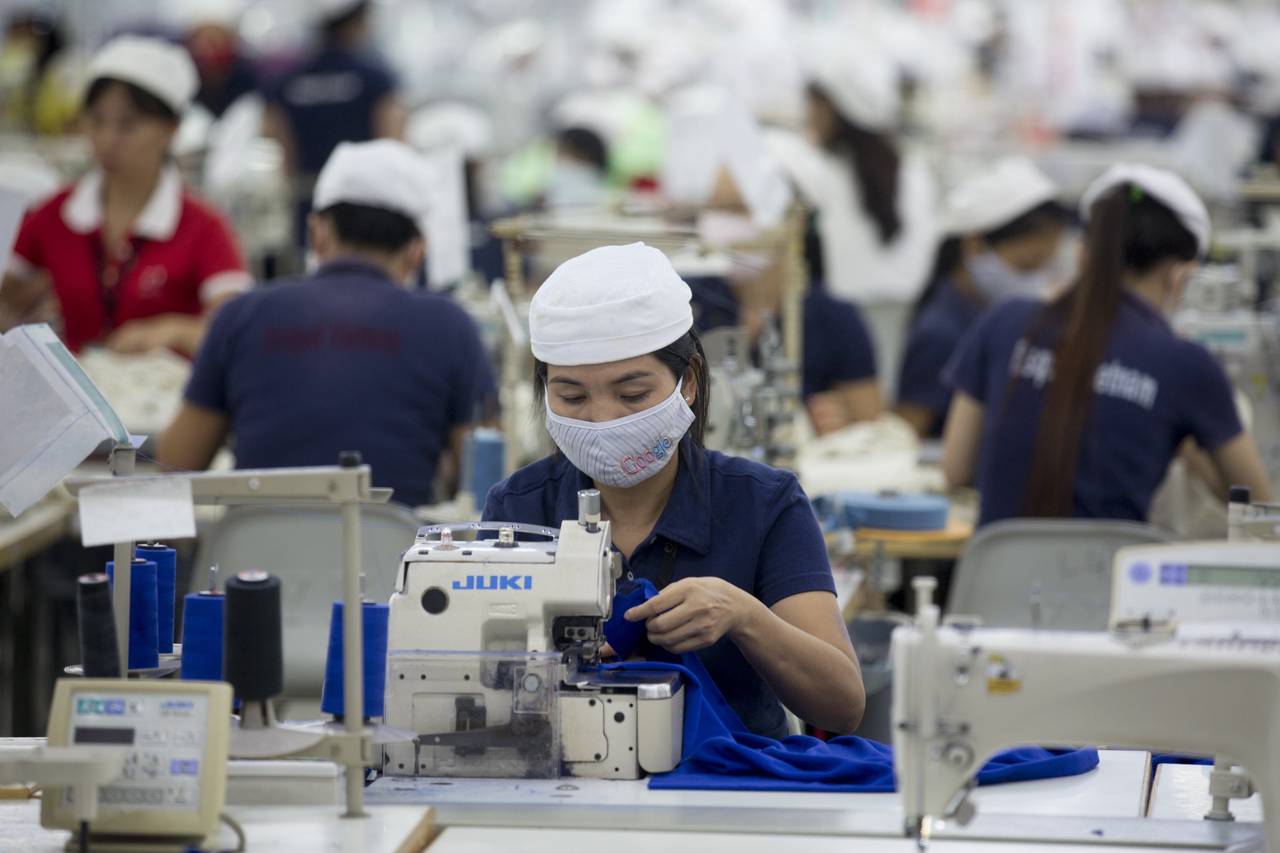
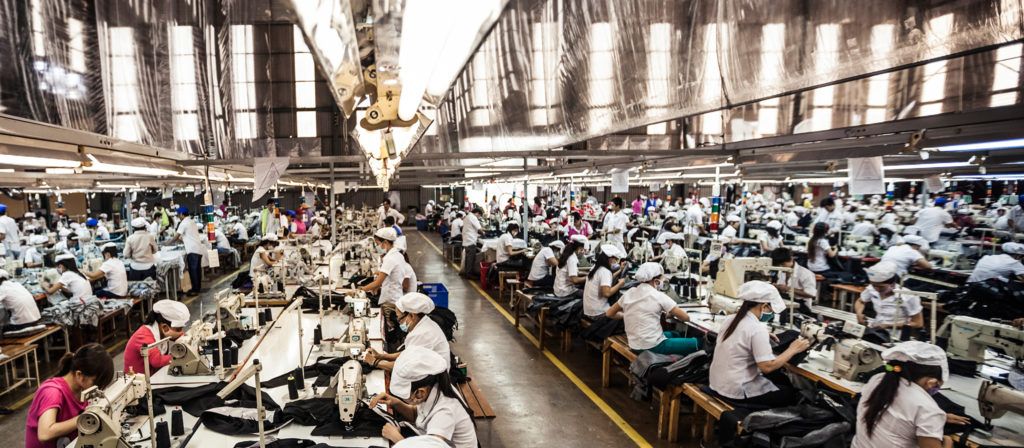
    Currently, Vietnam is the world’s 4th largest garments exporter and the 2nd largest footwear exporter. Nearly 6,000 apparel and 3,000 footwear companies comprise these industries, with approximately 80 percent of the workers employed in them being women and migrants from regional areas with no vocational training.

    Vietnam’s apparel and footwear industries continue to prosper and grow alongside the country’s general economy. Yet, while this may bring employment, poverty alleviation, and infrastructure development, it also comes with additional challenges to labor rights.

    On April 15, 2021, the Australian Human Rights Commission (AHRC) in collaboration with Australian Aid, and the Vietnam Chamber of Commerce and Industry (VCCI) published a set of guidelines in a primer entitled “Responsible business conduct and the apparel and footwear industry” to help these two industries in their operations in Vietnam.

    Their goal in releasing these rules was to “highlight some of the human rights challenges and issues that arise in the apparel and footwear industry in [Vietnam] and [to] provide practical steps grounded in international frameworks and principles.” These guidelines “[have]  been designed to assist businesses operating in [Vietnam] to understand and meet their responsibility to respect human rights.”

    These guidelines are based on UN Guiding Principles, which “operate on a three-pillar framework,” also known as the Protect, Respect, Remedy Framework. The three main tenets are:

    1. The duty of the State to protect human rights

    2. Corporate responsibility to respect human rights

    3. Access to an appropriate and effective remedy for victims of business-related abuse

    The UN Guiding Principles are intended to serve as “a global standard for preventing and addressing adverse human rights impacts related to business.” This primer serves as an attempt to apply these standards to Vietnam’s apparel and footwear industries.

    However, implementation is often much harder in practice.

    While there is a noticeable difference in overall choice of words and tone, both the WRC report and the AHRC’s primer discuss the same labor rights issues in Vietnam, despite being published eight years apart. Severe problems, such as child labor, restrictions on the right of freedom of association, and having unsafe working conditions, remain to this day.

    The AHRC’s guidelines also include several Vietnamese laws, which, at least on paper, show the government’s effort to address these persistent problems.

    All in all, the guidelines penned by the AHRC and the other organizations who contributed to the primer seem to be genuine; those involved seem to have the best interests of Vietnam and the garment workers in mind.

    In reality, however, this primer lacks any real force. It clearly states that this guide provides general information only and is not legally binding. The guidance is not intended to constitute legal advice.

    It goes on to say that “Organizations or individuals should seek their own legal advice if they have concerns regarding their compliance with domestic legislation or international standards. Any case studies or examples are included for educational purposes and do not constitute an endorsement of a company or organization.”

    In short, companies and businesses who are part of the apparel and footwear industries have no obligation to follow these guidelines aside from the threat of government intervention if they violate any existing statutes. Yet, with corruption being so widespread and rampant in Vietnamese society, it’s very easy to bribe the government to make officials look the other way.

    For there to be any real and tangible developments regarding labor and human rights in the apparel and footwear industries, change has to come from both directions, it has to come from both the business sector and the State.

    The guidance provided by the AHRC is a step in the right direction; there’s no contesting that. However, without shifts in the policies and the foundation of the government, no semblance of progress or improvement will ever be fully attained.

    Granted, the Vietnamese government has passed many laws which aim to tackle the working conditions in the garment industry. Yet, proper implementation is an entirely different beast compared to the simple passage of a law. And it is in the implementation itself that the Vietnamese State struggles the most as it is actively hindered by corruption and the short-sighted selfishness of politicians and the Party itself.

    Throughout the years, the Vietnamese apparel and footwear industries have grown to be very lucrative ventures for entrepreneurs, investors, and owners. However, it continues to come at the cost of its workers’ rights, lives, and liberties.

    Genuine change will only come if society, as a whole, wills it to happen. It would include not only the private and government sectors but also the people themselves.

  • Vietnam: When Workers’ Rights Face Resistance From A Socialist Government

    Vietnam: When Workers’ Rights Face Resistance From A Socialist Government

    Vietnam’s dismal human rights records in 2017 and 2018 could play a role in delaying the ratification of the much anticipated European Union-Vietnam Free Trade Agreement (EV-FTA) this year.

    A group of MEPs from across the EU Parliament’s political spectrum has repeatedly demanded that Vietnam improves its human rights conditions before they would vote on the trade deal.

    The latest demand was a joint letter to President Nguyen Phu Trong on February 1, 2019, sent by nine MEPs on the case of Hoang Duc Binh, an environmental and labor rights activist who was sentenced to 14-year-imprisonment in 2018.

    Releasing political dissidents and activists would indeed be a sensitive issue for the communist regime to compromise, even for the sake of clinching the ambitious EV-FTA deal where Vietnam could expect a 15% GDP gain.

    But there has always been another human rights condition which one would assume that it should have received natural cooperation from the socialists in Hanoi: the ratification of the remaining three ILO (International Labor Organization) conventions.

    That, however, has not been the case.

    Vietnam, while rejoined the ILO since 1993, to date, has yet to ratify the following three conventions:

    ILO Convention No. 87 – Freedom of Association and Protection of the Right to Organize Convention, 1948 (No. 87)ILO Convention No. 98 – Right to Organise and Collective Bargaining Convention, 1949 (No. 98)ILO Convention No. 105 – Abolition of Forced Labour Convention, 1957 (No. 105)

    In late 2018, Vietnam ratified the Comprehensive and Progressive Agreement for Trans-Pacific Partnership (CP-TPP) where a specific clause (Article 19) also addresses similar conditions regarding labor and workers’ rights.

    On the ground, the Vietnamese government is proposing a roadmap that could take almost five years to get all three ILO conventions ratified.

    It is not fast enough for the EU’s MEPs, and as of right now, these ILO conventions continue to be part of the obstacles to move the EV-FTA forward.

    Vietnam maintains that its current Labor Code and legal framework would protect the rights of workers in the country while waiting for the Draft of the amended Labor Code to be reviewed and passed by its Congress later in 2019, paving the way for the ratification of the ILO conventions to take place between now and 2023.

    In reality, impracticality contradicts the government’s claim.

    For example, it is not meaningful to discuss the right of association and the protection of the right to organize according to ILO Convention No. 87 when Vietnam, to date, has refused to pass laws on the freedom of association and the right to assemble and demonstrate although their Constitution of 2013 guarantees these rights to all of its people.

    Participation in demonstrations, moreover, could likely lead to arrest, detention, and conviction for “inciting public disorder” in Vietnam.

    In June 2018, mass protests broke out in a few major cities against the then pending draft bills of the cybersecurity law and the development of three special economic zones in Vietnam. In response, the police arrested and detained hundreds of people.

    One of the “hot spots” considered by the police of Ho Chi Minh City as reported by state-owned media at the time, was near the Taiwanese Pou Yuen factory in Binh Tan District where some workers did join in the protests between June 9 and June 13, 2018.

    According to the organization The 88 Project, more than 60 people were arrested, tried, and sentenced to between 24-36 months imprisonment due to their participation in those demonstrations. Some of them are believed to be factory workers from the outskirts of Ho Chi Minh City.

    The legal system continues to create hurdles in the registration processes for independent organizations. It is an issue which the UN Human Rights Committee has brought up with Vietnam before its upcoming CCPR (Covenant on Civil and Political Rights) review in March 2019.

    At the end of 2016, Vietnam had attempted – but failed – to pass the Law on Association when it faced a defiant opposition from civil society organizations, both registered and unregistered.

    One of the reasons which caused the majority of NGO workers in Vietnam to go against the proposed bill then, was because it attempted to criminalize the receiving of foreign funding and gave preferential treatment to GONGO(s) (Government-organized non-governmental organizations).

    The Vietnam General Confederation of Labour (VGCL) – the only labor union in Vietnam right now – is not only a GONGO but also takes directives from the Vietnamese Communist Party.

    During his speech in front of the National Assembly on November 2, 2018, the Vice-Chairman of the VGCL, Ngo Duy Hieu, cautiously reaffirmed that the ratification of the CP-TPP requires Vietnam to recognize independent unions while tried to cast doubts on their credibility.

    At the same time, the government has yet to legally recognize any organization – large or small – formed by private citizens that could remotely represent an independent union for workers.

    Vietnam, in 2017, reported an estimated population of approximately 26M workers in a variety of different industries.

    The possibility of getting arrested and jailed under the current legal scheme, however, did not seem to deter a portion of these Vietnamese workers from exercising their rights.

    Protests organized by workers continued to happen in Vietnam regardless, with the most common reason often linked to improving wages and working conditions – which ILO Convention 97 on collective bargaining could help.

    Indeed, the government probably has already anticipated that the ratification of the ILO conventions would encourage even more workers to come together and organize themselves, independent from the VGCL in the future, once the legal landscape changes.

    It is a slippery slope that Hanoi fears as it may spread to other sectors in society, which could explain the cautious approach in their proposed roadmap for the ratification of the three ILO conventions.

    Accordingly, Vietnam proposed that they will present the National Assembly with the Draft of the amended Labor Code in May 2019 and expected the new law would pass at the next congressional meeting in October 2019. Also in 2019, the President will present ILO Convention No. 98 to the National Assembly for ratification. Next, it would be ILO Convention 105 in 2020, and finally ILO Convention No. 87 to be presented in 2023.

    The proposed roadmap by the Vietnamese government, however, seems to have failed to convince the EU Parliament that workers’ rights are being protected, enough to move the EV-FTA forward.

    The European Council has delayed their vote for EV-FTA last month. With the deadline for amendments also get postponed indefinitely, it is unlikely that the current EU Parliament will vote on the EV-FTA before their upcoming election in May 2019.

  • Has Vietnam Already Violated the To-Be-Ratified Free Trade Agreement with the EU?

    Has Vietnam Already Violated the To-Be-Ratified Free Trade Agreement with the EU?

    After Hoàng Đức Bình’s 14-year sentence was affirmed by an appellate court in Vietnam on April 24, 2018, one of the state-owned newspapers, Người Lao Động (NLD), published a story about Bình’s case on the same day, explaining the government’s reasons behind his harsh sentence.

    In one paragraph, NLD wrote:

    “Taking advantage of the marine life environmental incident in the Central, and as the Vice-Chairman of Viet Labor Movement, Hoàng Đức Bình began to organize The Association of Fishermen in the Central with the intent to form an external organization, mobilizing forces, attracting Catholics, fishermen in the Central to join that organization; selecting ‘nucleus’ who could incite demonstration to disturb the peace and security.”

    Not only international human rights laws protect the right of the people to form associations and organize protests, Vietnam repeatedly acknowledges and agrees to not infringe on these rights of its people in various international treaties and agreements. One of the more recent ones is the free trade agreement (FTA) with the European Union (EU).

    About two and a half years before Bình’s trial, in October 2015, Vietnam and the EU have agreed on the text concerning the terms of the FTA between them.

    At the same time, EU and its member countries have repeatedly maintained, that they are “fully committed to implementing the 2030 Agenda and its Sustainable Development Goals into EU policies.”

    One of EU’s commitments to implementing the 2030 Agenda is to include in their free trade agreements, rules on trade and sustainable development as well as a human rights clause.

    In the case of the Vietnam-EU FTA, that language is under Chapter 15 of the agreement, entitles Trade and Sustainable Development.


    Article 3, Paragraph 2, Sub-paragraph (a) of Chapter 15 states:

    “Each Party reaffirms its commitments, in accordance with its obligations deriving from the membership of the ILO and the ILO Declaration on Fundamental Principles and Rights at Work and its Follow-up, adopted by the International Labour Conference at its 86th Session in 1998, to respect, promote and effectively implement the principles concerning the fundamental rights at work, namely:

    a) the freedom of association and the effective recognition of the right to collective bargaining;”

    The importance of this chapter and the human rights clause are also highlighted by the Chair of the European Parliament’s Committee for International Trade, Bernd Lange, during his visit to Hanoi in September 2017. That human rights and labor rights are at the center of the continued discussions about the FTA between Vietnam and EU.

    Many could imply that the criminalization of Hoàng Đức Bình’s conduct for organizing people and forming an association of fishermen in the Central of Vietnam appears to be in direct violation of the Trade and Sustainable Development Chapter and the human rights clause of the Vietnam-EU FTA.

    The European Parliament Think Tank assessed in February 2018, that the FTA with Vietnam “has been described as the most ambitious deal of its type ever concluded between the EU and a developing country. Not only will it eliminate over 99 % of customs duties on goods, but it will also open up Vietnamese services markets to EU companies and strengthen protection of EU investments in the country.”

    They also opined that the Vietnam-EU FTA is estimated to boost Vietnam’s economy as much as 15 % of GDP, with Vietnamese exports to Europe growing by over one third.

    The parties are hopeful that the FTA will be ratified by EU Parliament (and also by its member-states on issues involving investment) by the end of this year, or by 2019 at the latest.

    However, the recent affirmation of Vietnam’s court regarding Hoàng Đức Bình’s 14-year sentence for organizing and participating in protests against Taiwan’s Formosa Hà Tĩnh Steel Corporation raises questions over the good faith of Hanoi in keeping up their end of the bargain when it comes to human rights and labor rights.

    If Vietnamese government is sending people to prison with a very harsh sentence for exercising their freedom of association before the FTA is ratified, then what and how does EU plan to keep them in check once the dust is all settled?

    Perhaps, this is a legitimate question for the EU-Vietnam Human Rights Dialogue to provide the public with a more definitive answer later this year?