Tag: Journalists

  • June 21, 1925: Vietnam Revolutionary Press Day

    June 21, 1925: Vietnam Revolutionary Press Day

    What is this day about?

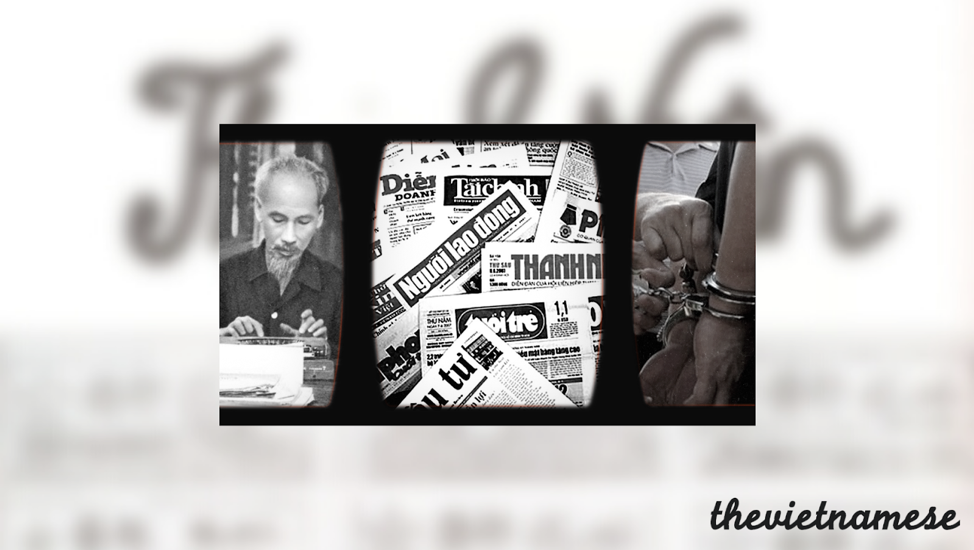
    Almost a century ago, a newspaper called Thanh Nien published its first issue[1]. Prior to the existence of Thanh Nien, other newspapers were existing in Vietnam. But Thanh Nien was not just any newspaper. It was a newspaper founded by Ho Chi Minh – the most important revolutionary figure of the Vietnamese Communist Party (VCP). Hence, the day Thanh Nien published its first issue became a day to celebrate “revolutionary reporters and the press” in Vietnam.

    This day is still celebrated annually in Vietnam, with articles coming from the state-controlled press commemorating how journalism in Vietnam has “propagated and spread the Party and the government’s paths, as well as reflecting the true will of people from all socioeconomic backgrounds.” [2]

    Because of the day’s history, it would be a mistake to think of this day as commencing the right of free speech or free journalism in Vietnam.

    How is the state of journalism in Vietnam?

    Despite the name “Revolutionary Press Day,” the state of journalism in Vietnam cannot at all be considered “free,” let alone “revolutionary.”

    Ranked 175 out of 180 countries by Reporters without Borders [3], the Socialist Republic of Vietnam does not allow freedom of expression or independent journalism. While journalism is usually understood as a tool to “speak truth to power,” journalism in Vietnam is rather a propaganda tool to speak the truth according to power.

    This is because journalism in Vietnam is all state-owned. While “official” journalists in Vietnam are sometimes allowed to report corruption, criticism of the Party is strictly forbidden, and those challenging it could face the consequences.[4]

    Even among the state-owned journalism platforms, if an article is just critical of either the Party or anyone in power, it would most likely be taken down silently. [5] In more extreme cases, the authorities may punish the newspaper itself. For example, the Phu Nu newspaper was suspended for a month last year because it published a critical investigative article about the Sun Group, one of the largest corporations in Vietnam. [6]

    This is further evident in the way journalism is taught in higher education. The most famous journalism school in Vietnam, the Academy of Journalism and Communication (Học viện Báo chí và Tuyên truyền), would actually be the “Academy of Journalism and Propaganda,” if the name was translated honestly from Vietnamese to English. Many university students jokingly call this school “a Party university” (trường Đảng), due to the school’s emphasis on the Party’s propaganda training.

    The state of free speech and free journalism in Vietnam is very telling when you look at the very existence of our own organization, which includes The Vietnamese Magazine and Luat Khoa Magazine. The fact is that we cannot work and register in Vietnam, people are blocked from accessing our sites and that we are one of the only remaining independent Vietnamese-run media organizations. One more fact is that other than our directors, Trinh Huu Long and Tran Quynh Vi, all of the organization’s staff writers and editors have to work in the shadows to ensure our own personal safety and the organization’s continuity.

    Since the beginning of the elections in 2021, the state has arrested independent bloggers and journalists almost every week, despite the chaotic situation with the COVID-19 pandemic. Many independent journalists have been detained. [7] Our own co-founder, Pham Doan Trang, an internationally recognized pro-democracy journalist, has also been arrested.

    Independent journalists are not the only ones arrested by the state. Sometimes, even ordinary Facebook users are detained for critical comments on social media [8]. It is estimated that since the beginning of 2021, at least 21 Vietnamese citizens have been arrested due to activities on social media.

    And there are many other examples of how independent and critical journalism in Vietnam has a very grim future [9].

    It is puzzling to think about how Ho Chi Minh, the founder of the Socialist Republic of Vietnam, advocated so much for the right to freedom of speech and journalism to see his successors doing the exact opposite.

    But why does the state have to go to such length to arrest independent journalists? Why is it so willing to damage its human rights records?

    It is because the system is so corrupted with power so concentrated in the hands of certain political and economic elites, which VCP leaders know better than anyone else. They also know that if independent journalism is allowed, the people would be better informed about the system’s flaws and failures, and sooner or later, the VCP will lose its monopoly of power as the only ruling party of Vietnam. They know that their un-innovative propaganda strategies cannot compete with honest and scientific arguments that can only be nurtured under independent journalism. They know that they cannot win in a free speech environment.

    So the VCP’s fight with independent journalism is actually a desperate fight to cling to power. Do not let their brand as a “socialist” government fool you. What the VCP is doing against independent journalists is anything but what their founder Ho Chi Minh advocated for during French colonial rule. Their monopoly as the only ruling party is so important that they are willing to arrest, suppress and surveil even the smallest seeds of independent journalism and critical thought.

    This is now an authoritarian Party suppressing independent journalists. And on this day, the Vietnam Revolutionary Press Day, we hope you remember that.

    Bibliography

    [1] Những mốc son của nền báo chí cách mạng Việt Nam. (2021, June 21). Báo Tin Tức. https://baotintuc.vn/infographics/nhung-moc-son-cua-nen-bao-chi-cach-mang-viet-nam-20210621071016833.htm

    [2] Nguồn gốc và ý nghĩa Ngày Báo chí Cách mạng Việt Nam 21/6. (2020, June 16). Báo Giao Thông. https://www.baogiaothong.vn/nguon-goc-va-y-nghia-ngay-bao-chi-cach-mang-viet-nam-216-d468998.html

    [3] World Press Freedom Index | Reporters Without Borders. (n.d.). Reporters Without Borders. Retrieved June 21, 2021, from https://rsf.org/en/ranking

    [4] Vietnam: State Violence v. Bloggers and Journalists. (n.d.). Reporters Without Borders. Retrieved June 21, 2021, from https://rsf.org/en/vietnam

    [5] Chính, Y. K. (2021, June 21). Nhân ngày nhà báo, gửi lời trân trọng đến những bài báo bị gỡ bỏ. Luật Khoa Tạp Chí. https://www.luatkhoa.org/2021/06/nhan-ngay-nha-bao-gui-loi-tran-trong-den-nhung-bai-bao-bi-go-bo/

    [6] Đình bản 1 tháng báo Phụ Nữ TP.HCM điện tử. (2020, May 28). Tuoi Tre Online. https://tuoitre.vn/dinh-ban-1-thang-bao-phu-nu-tp-hcm-dien-tu-2020052815202924.htm

    [7] Rees, S. (2021, May 3). Independent Journalists in Vietnam: The Clampdown Against Critics Continues. The Diplomat. https://thediplomat.com/2021/05/independent-journalists-in-vietnam-the-clampdown-against-critics-continues/

    [8] The Vietnamese Magazine. (2021, June 16). Vietnam Briefing: The Election Results Are In. Here Comes 5 More Years Of Party Domination. /2021/06/vietnam-briefing-the-election-results-are-in-here-comes-5-more-years-of-party-domination/

    [9] Human Rights Watch. (2020, January 23). World Report 2020: Rights Trends in Vietnam. https://www.hrw.org/world-report/2020/country-chapters/vietnam
  • Vietnam Briefing: Tet, COVID-19, Journalists, And The South China Sea

    Vietnam Briefing: Tet, COVID-19, Journalists, And The South China Sea

    COVID-19

    The COVID-19 situation continued to worsen throughout the Lunar New Year and serious measures have been put in place.

    • Hanoi has decided to temporarily close coffee shops, street restaurants, and historical sites from midnight, February 16.
    • Students in Hanoi will have to study online until February 28, following similar decisions by Hai Duong, Binh Thuan, Thanh Hoa, Binh Dong, and Binh Phuoc provinces.
    • Ho Chi Minh City’s students will continue to study online until February 28.
    • The chairperson of the Hanoi People’s Committee proposed that Prime Minister Nguyen Xuan Phuc close universities located in the capital until the end of February. These universities are under the authority of the central government, and not the local government.
    • Hai Duong, a northern province near Hanoi, will be locked down from February 16 for 15 days and citizens have been ordered to stay home. Only essential movements and businesses are allowed. Schools are closed until at least February 28.

    Vietnam – one of Asia’s top-performing economies during the pandemic

    Report from CNBC on February 10:

    “Vietnam was one of Asia’s top-performing economies in 2020 and among the few countries that managed to record growth last year as authorities globally scrambled in their battle against the coronavirus pandemic. It saw 2.9 percent growth in 2020, narrowly edged out by the Taiwan economy’s 2.98 percent growth.”


    A state-owned media journalist arrested for defaming provincial officials

    It’s not unusual hearing news stories about journalists being arrested in Vietnam. Mr. Pham Bui Bao Thy (Phạm Bùi Bảo Thy) – the head of the representative office of Giáo dục và Thời đại (Education and Era) newspaper in central Vietnam – was arrested and charged by Quang Tri provincial police with “abusing democratic and freedom rights to infringe on the State’s interests and rights and the interests of organizations and individuals” under Article 331 of the Penal Code, according to Tuoi Tre and the Vietnam News Agency.

    The provincial police have accused him of using anonymous Facebook accounts to spread baseless information and to defame some top government officials in the province.

    The police have put him under a two-month detention order.

    Another person named Le Anh Dung (Lê Anh Dũng) was also arrested in the same case. Voice of Vietnam (VOV) reported that Mr. Dung, 56, lived in Ho Chi Minh city and he is accused of administering the accounts.

    Article 331, previously Article 258 of the Penal Code, is widely condemned by rights groups such as Amnesty International and Human Rights Watch. Several human rights defenders and dissidents have been arrested and convicted of the crime, including well-known journalists such as Nguyen Huu Vinh, also known as Anh Ba Sam (2014), and Truong Chau Huu Danh (2020).


    Is a government-backed hacking group targeting dissidents?

    The lotus is seen as a symbol of Vietnam. Look at the national flagship airline’s logo and you will see it. And now, technology experts believe that a hacking group named OceanLotus, potentially linked to the Vietnamese government, is targeting dissidents and human rights organizations.

    The Committee to Protect Journalists, an international rights group, released an interview with Steven Adair, president and co-founder of Volexity, a US-based cybersecurity company that has studied OceanLotus, on February 1. Below is a part of the interview:

    “Question: Is it possible to say whether state actors are behind OceanLotus?

    Answer: We definitely believe it’s out of Vietnam, but whether it’s a government agency, a contractor working for them, or something else, we don’t claim that we know that. We look at the immense level of effort and resources to maintain all the infrastructure and identify the victims. It’s not something anyone’s going to do in their spare time.”


    Human Rights Watch: Vietnam among countries using COVID-19 to justify free speech violations

    A report released on February 11 by Human Rights Watch lists Vietnam among countries taking advantage of the COVID-19 pandemic to advance the governments’ agenda of suppressing human rights, especially the right of free speech.

    Quote:

    “Authorities in at least seven countries have blocked individual news reports or ordered online media or social media users to remove or edit Covid-19 related content. Vietnamese authorities summoned 650 Facebook users between January and March to question them about publishing false information relating to the pandemic, forced all of them to remove their posts, and fined over 160 of them. Vietnamese law does not only target incorrect information, but information that is deemed to defame or insult others’ reputation or honor.”


    France’s nuclear attack submarine patrols in the South China Sea

    On February 17, a lot of Vietnamese people inside and outside of Vietnam, as well as the state-owned media, will be speaking about the border war with China that started exactly 42 years ago. Anti-China sentiment has been strong in Vietnam, and many people wanted to see world superpowers harshly confront China on issues such as trade, human rights, security, and so on. Territorial disputes in the South China Sea are among them. Vietnamese people are desperate to see the United States and other countries on their side. Last week, France seemed to make a strong statement on the issue.

    Quoted from AFP:

    “The French nuclear attack submarine SNA Emeraude recently conducted a patrol in the South China Sea, Defence Minister Florence Parly announced this week, sparking questions over the timing and tensions in Asia’s hotly contested waters.”


    Xi Jinping urges Vietnam to “stand against the instigation of external forces” on the South China Sea issue

    It was Lunar New Year in Vietnam and China last week. The two countries’ top leaders, Nguyen Phu Trong of Vietnam and Xi Jinping of China, had a phone conversation on February 8 to exchange wishes and to discuss various issues, according to Xinhuanet, China’s state-owned media agency. Here are a few things to note from this conversation.

    Quote:

    “China, Xi added, is willing to work with Vietnam to accelerate the synergy of the Belt and Road Initiative with the ‘Two Corridors, One Economic Belt,’ promote the construction of cross-border economic cooperation zones between the two countries, and explore exchanges and cooperation in such fields as healthcare, digital economy and humanities.

    The two sides should strengthen coordination and cooperation on international and regional issues, firmly uphold the international system with the United Nations at its core, oppose protectionism and unilateralism, and support a fast entry into force of the Regional Comprehensive Economic Partnership agreement, Xi noted.

    China and Vietnam, he said, should properly manage the maritime differences and stand against the instigation of external forces to promote the development of regional peace and stability.”

    Vietnam’s major mainstream media outlets, such as The Government’s Portal, Nhan Dan, VOV, and Tuoi Tre, didn’t report the above-mentioned points of the conversation.