Tag: Internet Freedom

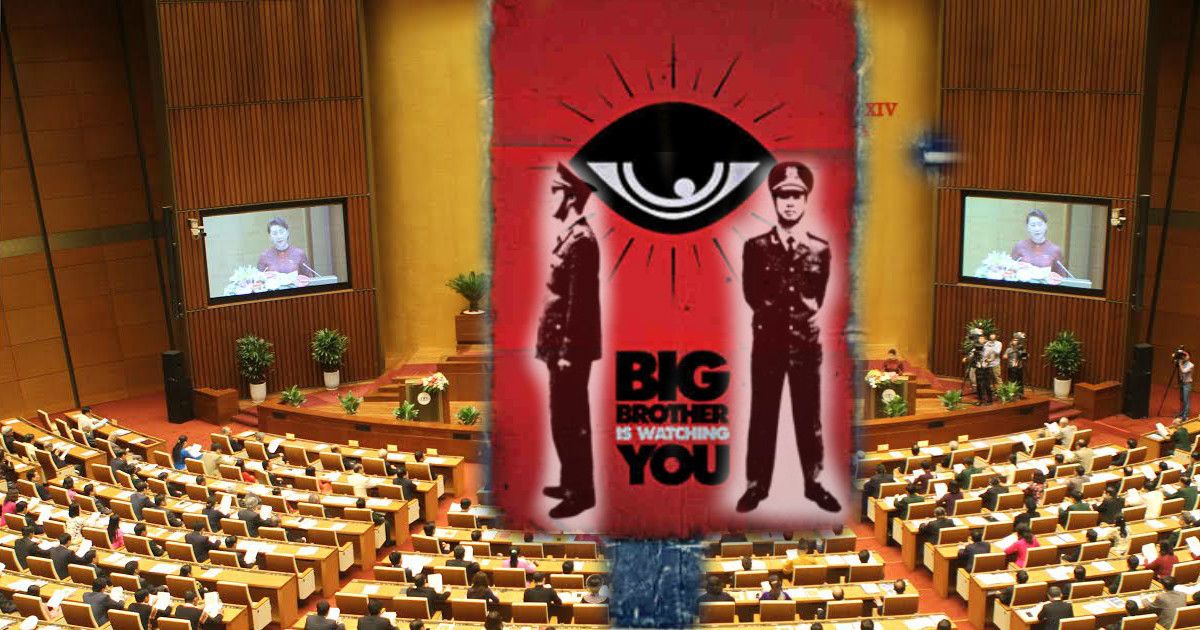
  • Vietnam Will Soon Follow China’s Social Credit System?

    Vietnam Will Soon Follow China’s Social Credit System?

    Nguyen Anh Tuan, CEO of Boston Global Forum, during his presentation at the Vietnam Internet Forum 2019 recently took place in Hanoi on March 20-21, 2019, proposed that governments should use AI technology to grade their citizens’ social credit.

    The online business newspaper Cafe Biz Vietnam reported, Nguyen Anh Tuan suggested that blockchain technology should be used to reward “good citizens.”

    And while his definition of a “good citizen” described those who uphold the universal values of human rights and the rule of law under such standards set by the United Nations, the very idea of proposing a “social credit system” to grade citizens in a country like Vietnam worried people that it would be the same model China is currently implementing.

    It is probably a bit unrealistic at the moment to expect the government of Vietnam – who is among the worst violators of citizens’ rights in the world – to uphold international standards on human rights and the rule of law.

    Reporters Without Border continuously ranks the country among the bottom five on its World Press Freedom Index, a fact that was raised by the members of the UN Human Rights Committee during the country’s review under the International Covenant on Civil and Political Rights (ICCPR) earlier this month.

    CIVICUS insists on continue listing Vietnam as a “closed” society where views of political dissents are not tolerated and severely punished.

    Right now, 218 political prisoners are serving a sentence in Vietnam.

    At the very same time that Nguyen Anh Tuan was presenting his speech, Vietnam sentenced another man, Le Minh The, to two-year-imprisonment for posting on Facebook and calling for democratization and separation of powers.

    Nguyen Anh Tuan was not a name unfamiliar to the Vietnamese public. He was the founder of Vietnamnet, a state-owned media online newspaper which, at one time, was the leading online news site in Vietnam. He was once considered by the government of Vietnam as one of its up and coming stars, especially in the field of information and technology.

    After leaving his post as the editor-in-chief of Vietnamnet in about 2011, Tuan moved to expand his career in the United States. He attended school at Harvard Business School, served on the boards of various foundations before founding his own Tran Nhan Tong Foundation, and later the Boston Global Forum in 2012.

    His introduction on the website of Boston Global Forum states:

    “Tuan is recognized globally for his pivotal role as a Vietnam Government reformist, who has successfully fostered freedom-of-expression, vigorous open debate and private enterprise in a nation that has become a leader in commerce, culture, and the innovation as well as a close ally of the West.

    Tuan served on the Harvard Business School Global Advisory Board from 2008 to 2016. He also serves on the Board of Trustees of the Free-for-All Concert Fund in Boston.”

    His accomplishments are well-praised by American scholars and politicians throughout the years. Curiously, however, not one of them mentioned even once the worrying human rights situation in Vietnam while discussing Tuan’s contributions to improving the quality of life for Vietnamese people.

    While Tuan no longer has any relationship with Vietnamnet, this very newspaper has been promoting heavily for the new cybersecurity law during the past year.

    A quick search on Google for Vietnamnet together with the term cybersecurity law in Vietnamese (luật an ninh mạng) will yield dozens of articles in a few seconds.

    Concerns grow day by day over the new cybersecurity law of 2018 which many people see as a direct violation of Article 19 – Freedom of Expression – under the ICCPR.

    This new law allows police authorities to request internet service providers, both international and domestic, to turn over users’ data as soon as they open an investigation without warrants and with no judicial oversight.

    Last summer, in protest of Facebook’s potential collaboration with the Vietnamese government and the new cybersecurity law, hundreds of thousands of Vietnamese Facebook users started to sign up for Minds, another social media platform.

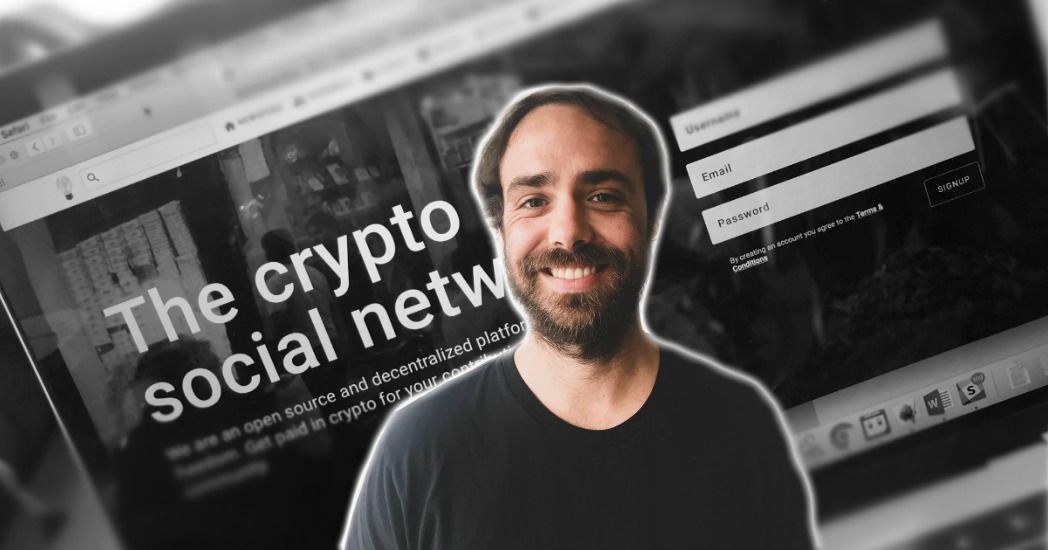
    However, once the Vietnamese users found out that Nguyen Anh Tuan of Boston Global Forum was among the members of Minds’ Advisory Board, they quickly grew cold of the new platform.

    Given the latest presentation from Nguyen Anh Tuan on AI technology and the proposed “social credit system,” it is, perhaps, that the Vietnamese users were correct in having their skepticism over any technology with his name on it all along.

  • MINDS’ CEO: Protect Free Speech, Will Only Respond to U.S Subpoenas

    MINDS’ CEO: Protect Free Speech, Will Only Respond to U.S Subpoenas

    In the past few days, thousands of social media users in Vietnam have relocated to Minds. At the same time, debates erupted where people questioned Minds’ technology, policies, and even the possibilities that Minds would cooperate with the Vietnamese authorities in the future to “sell out” its users.

    Luật Khoa magazine had conducted this interview with Bill Ottman – CEO and co-founder of Minds in response to the concerns mentioned above from the Vietnamese social media community. We are providing our readers with the English version of the interview here.

    ***

    Before this “exodus” of Vietnamese Internet users to Minds, what do you know about Vietnam? (the regime, the economy, the market, human rights situations, etc.)

    Vietnam is a beautiful country but unfortunately run by the Socialist Republic, a communist regime with overreaching power. I studied the Vietnam War pretty extensively and the anti-war movement in the US. I would very much like to learn more about Vietnam Pham Doan Trang, and it would be great to have a live conversation or stream together to discuss your perception of the country, both negatives and positives.

    What do you think of the newly-adopted cybersecurity law in Vietnam?

    I know that the law has disastrous implications for free speech and privacy. It gives the government excessive power to deem certain content ‘prohibited’, thus the ability to become a censorship machine. The law should be taken away before it goes into effect in 2019. It is destined to fail.

    What is Minds’ policy toward customers’ privacy rights?

    Please refer to our recent essay on how we protect user privacy. We are 100% committed to privacy. It is our core philosophy. Principles like ‘zero-knowledge’, end-to-end encryption and decentralization are all crucial for human rights. Our terms state that we comply with US law. If it is legal in the US it can be on Minds. We will not hand over user information to foreign governments or censor based on requests.

    What is Minds’ policy toward the balance between privacy rights and “public security” as the police in authoritarian societies put it?

    Public security is an Orwellian phrase similar to National Security. More privacy and encryption make a nation more secure, not less. More freedom of expression causes a healthy society, not less. Disinformation and propaganda are problems, but research shows that censorship makes these problems even worse. I recently wrote an article about this evidence. This has been proven by top cryptologists and cyber-security experts for a long time like Bruce Schneier and EFF.

    What is your opinion regarding the need to balance the people’s human rights and the state’s efforts against terrorism (both real threats and some imaginable threats)?

    Our general policy is that we require a warrant or equally compelled court order. Our general opinion is not to sacrifice freedom for safety because then we will have neither as Benjamin Franklin said.

    How can we, the Vietnamese Mindsers, as a newly-formed (and maybe, quite small now) community be sure that Minds will fight for our Internet freedom rather than cooperate with the tyrannical government?

    Continually ask questions, communicate with our team about concerns and hold us accountable!

    Inspect our code and have your developers help us make it more secure and uncensorable.

    We heard a lot about the technologies that Minds has been using. Is it true that Minds has been using decentralized, encrypted, and blockchain technologies? If yes, please describe them a little so that we the users learn more about your strength. If no, could you please tell me the difference(s) between Minds and Facebook?

    Yes, we are constantly working to become more decentralized which is why we are currently leveraging technologies like Ethereum and Webtorrent. We will be focusing much more on decentralization and p2p in the future.

    Facebook is plagued by surveillance, secrecy (proprietary software), manipulative algorithms, data scandals, demonetization, censorship and psychological abuse. Minds does the opposite.

    Regarding blockchain, it seems like Minds is now using it only for Token-related activities. Is that right?

    Yes. We use an ERC20 token on the Ethereum blockchain. Our whitepaper discusses how we publish a variety of transactions to smart contracts for our Boost and Wire products. We have an extensive reward system where top contributors earn tokens and can then use the tokens to “Boost” content for more views.

    Right now 1 token gives 1,000 extra views on the content of your choice. We built this in reaction to the suppressive algorithms on facebook which diminish your organic reach and voice. It is a soft form of censorship. Minds will always have 100% organic reach and reward users with more of a voice for participation. The reward system specs can be found here.

    Sorry for asking what seems like a silly question, but why did Minds create the Tokens system? What do you anticipate it to be?

    We created the token in order to reward users for the contributions to the network and move the ad network (consent-based) and peer-to-peer payment and crowdfunding systems to smart contracts on the blockchain. We also created it to battle the restrictive algorithms that have caused organic reach to drop so much on facebook. 1 token currently rewards a user with 1,000 extra impressions on their content by pressing the boost button on their post. We believe people’s voices should be amplified, not silenced. Expanded, not exploited.

    We saw a paragraph in Minds’ privacy policy which states that Minds “discloses potentially personally identifying and personally-identifying information only in response to a subpoena, court order or OTHER GOVERNMENTAL REQUEST [capital mine], or when Minds believes in good faith that disclosure is reasonably necessary to protect the property or rights of Minds, third parties or the public at large.” We are quite concerned about this because it implies that we the users can still have our personal information accessed by the government while the current Vietnamese government is a single-party, police-dominated one. What do you think?

    This does not apply to the Vietnamese government, and we will not hand over personal information to them. We will discuss with our legal team to potentially clarify this language. Essentially, we are founded upon the idea of free expression, and as you will quickly learn, Minds is more uncensored than any other network you will find.

    Is it true that Minds receives some support from the Anonymous?

    Yes, because we allow anonymous accounts. Though anonymous is a decentralized, leaderless group, so it has many branches and I would not want to speak for them all. I imagine not all support us, but some definitely do.

    We only endorse ethical hacking, as a side-note.

    What does Minds expect from Vietnam, or the community of Vietnamese Minders to be exact?

    We hope more thought leaders and netizens will continue to migrate to Minds for Internet freedom. We are dedicated to constantly evolving and improving the platform based on your feedback. This is why we are 100% open source.

    The best way to build the freedom network of the future is for influencers to use our tools like blogs, videos, posting, groups, wallet, tokens and bring their audiences over.

    Do you think of setting up a representative office in Vietnam and/or providing a Vietnamese version of Minds for the Vietnamese people? (English is not our second language, so most people may find it difficult to use Minds in English).

    Yes, this (the Vietnamese version) will be live within a couple of weeks. 🙂 Maybe sooner.

    What is Minds’ strategy regarding China and Asia, Vietnam included and also your worldwide strategy?

    Our strategy is to stick to our principles, continue building better tools and hopefully continue to connect with thought leaders all throughout Asia who can help migrate their audiences off of surveillance platforms.

    Can you tell us a bit more about your internet activism?

    I have been involved in alternative media, freedom of information and privacy activism for about a decade. To me, extreme transparency, open source philosophy, end-to-end encryption and digital rights are crucial for a free society. I helped start organizations on Facebook with millions of followers, but after Facebook’s algorithm and policies got so invasive, it was time to #deletefacebook.

    What is your opinion regarding the trend of large corporations acting in concert with the state/government to become one unified threat to the people’s rights in places like Vietnam?

    This is an unacceptable trend when the line between global corporation and government merges. The people need to activate on other social networks in order to disempower the corrupt corporations and empower emerging, ethical alternatives.

  • “Minds” over Facebook: Vietnamese Netizens’ Great Cyber Exodus?

    “Minds” over Facebook: Vietnamese Netizens’ Great Cyber Exodus?

    In the past two days, the “F-Generation” of Vietnam started what seems to be an online exodus when many well-known Facebookers announced that they are moving on to Minds.com – an alternate platform for social media.

    The “F” in F-Generation stands for “Facebook” as the online social media giant has a dominant presence in the country where some statistics raised the number of users to be between 50 to 60 million.

    For about two months, people had been protesting both online and offline against the latest Cybersecurity law which was passed by an overwhelming 86.86% of the National Assembly.

    The law raised concerns over Internet users’ privacy, people’s freedom of expression, and their right to access the Internet.

    Brad Adams, Asia director at Human Rights Watch, declared: “This bill, which squarely targets free expression and access to information, will provide yet one more weapon for the government against dissenting voices. It is no coincidence that it was drafted by the country’s Ministry of Public Security, notorious for human rights violations.”

    In less than two days, some of the prominent Facebookers have received thousands of subscribers over at their freshly minted Minds accounts.

    In the same time, reports of pages and personal accounts have been taken down by Facebook also surfaced.

    Trương Thị Hà, a victim of police brutality during the last “Black Sundays” protest, announced on Minds this morning that her account has been deactivated by Facebook.

    After she posted a letter to her university professor, asking him to explain why he stood there while the police brutalized her during her detention after the protest, that very post was deleted for “violating Facebook community standards” at about 8:30 a.m. Then, her entire account seemed to have disappeared by 10:40 a.m.

    According to author Claire Bernish who wrote about Minds back in June 2015, Facebook could finally meet its match. Minds gives users the familiarity with many features they have already accustomed to on Facebook while commits to protecting their privacy.

    “Minds takes the government’s eyes out of the equation by encrypting private messages and using open-source code that any programmer can check,” Bernish explained.

    “We are a free and open-source platform to launch your digital brand, social network, and mobile app. We are also a social network ourselves. It is a global social network of social networks,” the Minds team declared.

    The hacker collective Anonymous also backed Minds, citing the fact that the founders of the new online social media shared the same vision of those who use the Internet for activism.

    According to the Wired UK: “Two of those on the Minds team – Bill Ottman and Lori Fena – have strong backgrounds dealing with privacy and freedom of expression issues and are both known for their internet-related activism. It is likely these are the type of people that the company is hoping to attract – those with a cause, who want to build something and share it openly with others who may also have a cause.”

    President Trần Đại Quang signed the Cybersecurity bill into law on June 25, 2018, although some 27,000.00 signatures of citizens who had expressed their objection to the proposal of the law, were delivered to his office during the prior weekend.

    It seems as if the activists and human rights defenders from Vietnam might have found a friend in Minds because the reason they chose Facebook in the first place, was to use the platform as a tool to advance a cause: promoting human rights and democracy in the country.

    While not all of them agreed to the solution of leaving Facebook and saw that as a sign of defeat, the silence from Facebook during the last two months as the Cybersecurity law stormed the nation could force many activists to reconsider whether to continue to use it as their primary platform. Most are still using both platforms, but all seemed to agree that if Facebook agreed to comply with the new Cybersecurity, then it could mean they will have to leave for good.

    Vietnamese netizens are no strangers to such online “resettlement.” Back in 2009, when Yahoo 360 blog closed down its operation, Facebook quickly became the next best choice in the country.

    Almost ten years later, while Facebook could still enjoy its reign in the country as the most used online social media platform, the power of Vietnamese users should not be underestimated by anyone.

    Afterall, Vietnamese are a group of people whose contemporary history entwined with mass migration and exodus. They have a lot of experience with starting over, yet again, and they will not be afraid to do so.

  • Enhanced Restrictions In Cybersecurity Bill Shows Vietnam Is NOT Ready To Commit To EU-FTA’s Human Rights Clause

    Enhanced Restrictions In Cybersecurity Bill Shows Vietnam Is NOT Ready To Commit To EU-FTA’s Human Rights Clause

    In recent days, the people in Vietnam, again and again, have proven that social media was the most effective platform to express their discontent with various social and political issues in the country.

    Around the first week of May 2018, people’s outpoured anger over an appellate court’s decision which reduced the sentence for a convicted child molester had forced the country’s top court – the court of cassation – to swiftly responded and reaffirmed the original sentence.

    And just this week, when citizens discovered that their National Assembly was going to pass a law to create three Special Economic Zones (SEZ) at Vân Đồn, Bắc Vân Phong, and Phú Quốc, they again took to Facebook to express their objection to the government’s plan. Then, they used the social media to organize the actual demonstration.

    The call for a nationwide protest on one Facebook page received more than 160,000.00 shares and close to 140,000.00 reactions within days.

    Social media has proven that it still is the most effective tool to disseminate information in Vietnam and to raise awareness on a variety of issues.

    It was precisely seven years ago this summer that a nationwide anti-China’s aggression in the South China Sea – Vietnam’s East Sea – broke out because of a call to protest on Facebook by the page Nhật Ký Yêu Nước – Patriotic Diary.

    Since 2011, social media has witnessed the emerging democracy movement in the country where it served as the birthplace of many independent civil society organizations, online newspapers, and media agencies.

    With some current 30 million Facebook users in a recent statistics, neither the government or its people would underestimate the power of social media and Facebook in Vietnam.

    In both of the recent incidents, the people’s power prevailed, at least for now.

    By the early morning of June 9, 2018, the Vietnamese government officially announced the SEZ bill would be postponed until the fall session of the National Assembly.

    However, it does not mean that the government is ready to throw in the towel.

    Another bill is pending for approval by the National Assembly on June 12, 2018, and it is what would become the infamous Cybersecurity law with at least seven strikingly similar provisions when compares to China’s laws.

    More concerning is the fact that these provisions are more than “copy and paste” paragraphs from China’s laws. They are in direct violation of international human rights standards.

    Explicitly, in 2016, the Human Rights Council passed a resolution without a vote, to include an addition to Article 19 of the Universal Declaration of Human Rights, recognizing the right to Internet access is a human right.

    The goals and objectives of this Cybersecurity bill will violate Article 19 because it gives the government and the police power to demand readily accessible information to all citizens’ Internet usage data whenever they want and without any due process.

    Internet service providers will act as informants for the government, voluntarily give up users’ activities to police.

    Foreign corporations such as Google, Facebook, Microsoft, Apple, and so forth, will most likely comply with Vietnam’s request to have their servers – which contain Vietnamese users’ data – to be stationed in Vietnam and must have an operating office located inside the country.

    It would mean all of these companies’ stored data within Vietnam’s national territory will have to be given up to police once they demand it.

    The European Union, its parliament, and its member countries should take careful notes of this Cybersecurity bill when they consider the ratification of the EU-Vietnam Free Trade Agreement (EU-FTA) in early 2019.

    As in all EU trade agreements, the human rights clause have been maintained by EU officials and politicians as an essential condition, and that they reserve the power to suspend the agreement if there are going to be gross violations.

    The Chair of the European Parliament’s Committee for International Trade, Bernd Lange, during his visit to Hanoi in September 2017, even declared that human rights and labor rights are at the center of the continued discussions about the FTA between Vietnam and EU.

    If this Cybersecurity bill is passed, it will very well be in contradictions with the human rights clause of the EU-FTA. The U.S. government, Amnesty International, and Human Rights Watch all seem to have taken this view.

    The U.S. Embassy in Hanoi urged Vietnam in their statement issued late June 8, 2018, not to pass this bill, citing concerns that such law “may not be consistent with Vietnam’s international trade commitments.”

    At the same time, Amnesty International and Human Rights Watch both declared that if the Cybersecurity bill is passed and goes into effect, it would violate Vietnamese people’s freedom of expression and their privacy.

    Some Vietnamese are worrying that they might have spent too much time and efforts on the SEZ bill and neglect the one on Cybersecurity, letting it slips through.

    Undoubtedly, the main reason that many Vietnamese were willing to take their anger from Facebook to the streets regarding the SEZ bill and in a certain extent, direct such outrage at their government this past week, was the China factor.

    The people believed that the law would give Chinese investors and corporations an advantage as to the future development in those three locations.

    Tensions between Vietnam and China are historical facts that no regime could re-write. It does not help either that in recent years, China’s rising aggression in the East Sea would continue to remind the younger generations in Vietnam that China has been, still is, and will be a threat to their nation’s sovereignty.

    “Bringing the elephants home to demolish your ancestors’ grave” – an idiom that has been recited over and over again online during the past week – is probably the image many Vietnamese have in mind when they protest the SEZ bill.

    If the Cybersecurity bill passes, the government can construe this very phrase (when use to object any of its decision – such as the SEZ bill this time) as “information which propagandizes, misrepresents, and defames the People’s government” according to its Article 15, and that will be the reason for people to find themselves in trouble with the laws.

  • Vietnam: Increasing Cyber Attacks on Activists Portray A Shrinking Internet Freedom

    Vietnam: Increasing Cyber Attacks on Activists Portray A Shrinking Internet Freedom

    During the last week of November and in early December 2017, many of the independent media websites in Vietnam reported that access to their sites had been blocked. This includes The Vietnamese. Readers confirmed they could not access the attacked sites unless they installed VPN to get over the firewalls.

    Another independent news project also runs by The Vietnamese’s editorial board, Luat Khoa online legal magazine, was also blocked in Vietnam starting around December 4, 2017. Luat Khoa has been in operation for the past three years with over 90k likes on Facebook and an average of 500,000 pageviews per month. This is the first time Luat Khoa gets blocked in the country.

    In a more severe case, on December 5, 2017, Dan Luan – another well-known independent site – shared on Facebook that their website was under DDoS attack for about a week in late November. A DDos attack is defined as “an attempt to make an online service unavailable by overwhelming it with traffic from multiple sources”.

    Earlier last month, there were also failed attempts trying to inject Dan Luan’s website with malicious scripts via Cross-Site Scripting (XSS). Dan Luan frequently suffered cyber attacks, which they believed were the works of government-controlled hackers.

    Also in November 2017, a handful of popular Facebookers lost access to their accounts because they were reported by anonymous users to Facebook for violations of community standards. Among them was blogger Nguoi Buon Gio, who now lives in exile in Germany.

    It seems quite likely that the Vietnamese government would rely on cyber attacks as an important tactic for oppression in recent years when the numbers of Internet and social media users increased dramatically in the country.

    In July 2017, We Are Social, a social media marketing and advertising reported Vietnam had surpassed Thailand to become the 7th country with the most Facebook users worldwide.

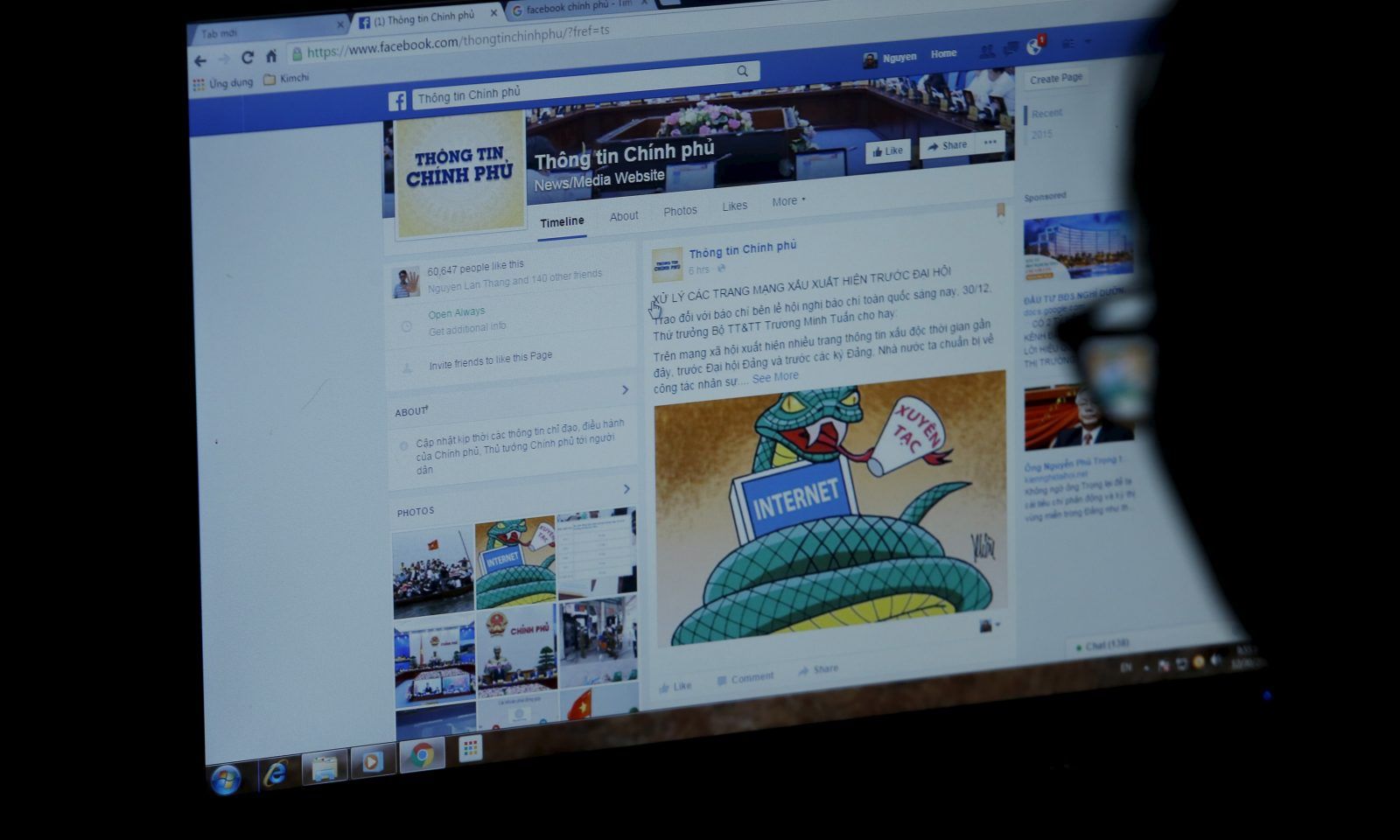
    The government has not exactly been shy in expressing the desire to tighten their grip on controlling the virtual world. As previously reported, Vietnam claimed to have worked with Facebook and Google to remove thousands of videos and accounts that allegedly contained anti-state materials.

    Earlier this year, in May 2017, Gen. Nguyen Danh Cong of the Ministry of Public Security stated during an intra-departmental meeting, that the MPS had successfully blocked thousands of websites which they deemed to be anti-state and reactionary contents.

    Four years before that, on May 5, 2010, Gen. Vu Hai Trieu, the then Deputy Director of the MPS, announced: “Our technical departments have destroyed 300 Internet web pages and blogs posting unsuitable contents.”

    Coincidentally, it was in early November 2017 that the Washington D.C.-based cybersecurity firm, Volexity, issued a report, confirming it has been – since May 2017 – monitoring an active operation of mass surveillance and cyber attacks operating out of Vietnam.

    This operation includes the maintenance of an active group of hackers whose mission is to target Vietnamese activists and dissidents, as well as foreign citizens, corporations, and governments with interests in Vietnam.

    It was not the first time that the international cybersecurity community had warned about hackers who seemed to have had a close tie with the Vietnamese government. In the past three years, besides Volexity, at least two other organizations, Electronic Frontier Foundation and FireEye, had issued similar reports.

    Vietnam’s government is believed to have been maintaining a cyber espionage group calls OceanLotus since at least 2014. OceanLotus (or SeaLotus) is also known as APT-C-00 or APT32 according to these organizations.

    There was also other information leading people to believe that OceanLotus was related to the hacker group Sinh Tu Lenh.

    Sinh Tu Lenh became famous among Vietnamese cyber community about a decade ago when it was named as the party responsible for the numerous cyber attacks, aiming at dissidents, activists, and independent news sites, including Dan Luan, Talawas, Xcafevn, Anh Ba Sam, and Mother Mushroom.

    Also recently, on November 14, 2017, Freedom House issued its Freedom on the Net report and named 30 countries where the government paid commentators and political bots to spread government propaganda. Vietnam was one of them.

    According to Michael J. Abramowitz, president of Freedom House: “The effects of these rapidly spreading techniques on democracy and civic activism are potentially devastating.”

    The report also quoted Sanjia Kelly, director of the Freedom on the Net project: “Governments are now using social media to suppress dissent and advance an anti-democratic agenda.”

    “Not only is this manipulation difficult to detect, it is more difficult to combat than other types of censorship, such as website blocking because it’s dispersed and because of the sheer number of people and bots deployed to do it.”

    But activists in Vietnam are not new to this form of government’s suppression. Back in 2014, our editorial board’s member, Pham Doan Trang, had met with Google and Facebook representatives in the U.S. where she forwarned them about the daily attacks these “paid opinion shapers” had fired at activists and bloggers in Vietnam and how such conducts affected democracy movement.

    During the summer of 2014 alone, over 40 accounts of activists were reported, and in turn, got shut down by Facebook.

    Calling themselves the government’s “cyber army forces”, these online bots repeatedly reported activists and bloggers’ Facebook accounts, effectively causing their shut-downs.

    Taking advantages of Facebook’s loosely defined rules and standards of conducts for the users’ community, the troop of “opinion shapers” would abuse the Facebook’s “Report Abuse Button” with thousands of reports a day on a specifically targeted activist’s account.

    Yet, to date, it seems that the activists and the democracy movement have proven their potential sustainability in Vietnam, because people are still actively promoting their causes and Facebook continues to be the main platform for advancing social changes, despite all odds.

    Back in March 2015, facing the city government’s immediate decision to cut down some 6,700 trees in Hanoi, activists created a Facebook group and organized people for peaceful protests. They were able to mobilize residents of Hanoi and successfully stopped the city government from going forward with the plan.

    In 2016, Facebook again proved its effectiveness, as it was one of the best platforms for informing the public about the Formosa environmental disaster in Central Vietnam. During the height of the weeks-long protests against Formosa Ha Tinh Steel Plant – the company responsible for causing the pollution – access to Facebook was blocked on a few weekends. But its popularity among the general public had caused the government to undo such decision almost immediately.

    This year, in the recent months, drivers who were passing through a BOT toll in Cai Lay Ward, Tien Giang Province have been protesting the improper location of said toll. Their acts of civil disobedience – through various forms of slowing down the process of paying toll fees and causing the toll to close down – were followed closely by the public on Facebook and other social media platforms.

    To protect themselves and fight back, Vietnamese activists have received technical assistance from organizations, such as Access Now, when they got reported by the government’s bots on Facebook or got struck by some other forms of cyber attacks.

    In the meanwhile, the Draft Law on Cybersecurity – which mirrored that of China – is now waiting for the National Assembly’s approval.

    And as such, the battle in the cyber world continues.

  • Vietnam’s Cybersecurity Draft Law: Made in China?

    Vietnam’s Cybersecurity Draft Law: Made in China?

    During the first part of last year’s November, the National Assembly of China passed the Law on Cybersecurity and established its effective date to be June 1, 2017.

    Then come June 2017, five days after said law went into effect in China, the Vietnam’s Ministry of Public Security (MPS) sent their own proposal regarding a draft of the Cybersecurity Law to the Vietnamese government. It has been claimed that this draft law was the result of a legislative process which began to take place since July 2016, when the National Assembly scheduled Cybersecurity Law as one of its agenda’s items then. The MPS then also established their own drafting team and an editing group to work on the drafts of Vietnam’s Cybersecurity Law in late March this year.

    After going through various collections of public comments and four draft versions of the law, the final draft (Draft Law) now is in the hands of the National Assemblymen and women. It would be among the items to be discussed when they meet at the end of 2017, and if all things go according to plan, Vietnam’s Cybersecurity Law will get approved and signed into laws by the middle of next year.

    Yet, whether purposefully or unintentionally, Vietnam’s Draft Law has shocked many people because it is almost identical to that of China’s.

    In their proposal submitted to the government, the MPS stressed that they have researched, and thus taken into considerations Cybersecurity laws from China, Japan, the Czech Republic, South Korea, and the U.S when drafting the Draft Law.

    I have to make it clear that I do not have any evidence to conclude the Vietnamese government has indeed copied China’s Cybersecurity Law. Moreover, if both countries are functioning under an identical political system, then the use of identical legislative tools would be very understandable. This is even more likely when the MPS openly admitted that they have considered Chinese laws as stated. Besides, copying or learning from other countries’ legislative experiences do not necessarily mean negative consequences.

    However, let’s just go straight to comparing Vietnam’s 4th draft of the Cybersecurity Law currently sitting on the desks of the National Assembly’s members and the English translation of the Chinese laws, to see how much they are alike to one another, and whether such similarities will bring negative consequences to Vietnamese people.

    1. Two documents, one technical term

    There is one technical term in the Vietnamese Draft Law that one should pay close attention to, which is the “critical information system regarding national security” in Article 9.

    In the China’s version, there is a similar technical term: “critical information infrastructure” in Article 31.

    Both laws centered on these two technical terms, and their definitions are also very much alike. Both are used to define any information, that if being under attack, they would bring harms to national security, social order and public safety.

    That information – as mentioned in both Vietnam’s and China’s Cybersecurity Law – would then include energy, finance, transportation, media, and publications, as well as electronic governance.

    However, the Draft Law of Vietnam also includes military-security, national secrets, banking, natural resources and environment, chemicals, medicine, and other national security structures.

    The Draft Law also does not distinguish between private companies and government agencies when applying the concept of “critical information system regarding national security”. Based on the context of said law’s wordings, the targeted entities are implied to be both of them. The government and the enforcing authorities could also interpret this law as broad as possible.

    Baker & McKenzie, in their analysis of the Chinese Cybersecurity Law, has warned all companies whose may have established relationships with those entities which fall under the regulatory perimeters of said law, that this law could very well be applicable to them.

    The agencies and enterprises who are within the application of this law shall abide the technical measures and regulations as set by the government, and submit themselves to be under the direct control and observation of the MPS. They will have to obtain all necessary business permits to operate and maintain their equipment while at the same time, must cooperate with the authorities in monitoring users’ information.

    These regulations between Vietnam and China are identical.

    2. Directly target information considered to be dangerous to the regime

    It is not surprising to learn that both Vietnam and China are extremely concerned about cybersecurity.

    As detailed in the proposal from the MPS, the Draft Law of Vietnam focuses on underlining the importance of “preventing, fighting against, and neutralizing all activities using cyberspace to intrude national security; subverting against the Socialist Republic of Vietnam; propagandizing to destroy the ideology, the internal affairs, and the common national unification; inciting mass protests; and obstructing cybersecurity, from the reactionary forces and those who are enemies of the State”.

    Further, Article 22 of the Draft Law clearly states that the Vietnamese government would apply all necessary technical methods to treat such information.

    Article 12 of the Chinese Cybersecurity Law has a similar provision when it prohibits Internet users from using “the network to engage in activities endangering national security, national honor, and interests, inciting subversion of national sovereignty, the overturn of the socialist system, inciting separatism, undermining national unity, advocating terrorism or extremism, inciting ethnic hatred and ethnic discrimination, disseminating violent, obscene or sexual information, creating or disseminating false information to disrupt the economic or social order, as well as infringing on the reputation, privacy, intellectual property or other lawful rights and interests of others, and other such acts”.

    3. Requiring all Internet users to provide true identity

    Article 47 of the Vietnamese Draft Law specifically demands all Internet service providers to require “users to provide true and correct personal information. If any user refuses to comply, the service providers shall have the responsibility to deny that user service”.

    At the same time, Internet service providers must establish their own verification system to ensure the accuracy and veracity of the information provided by the service users according to Article 33.

    Article 24 of the Chinese Cybersecurity Law has the same language as those contained in the Vietnamese Draft Law’s Article 47.

    Once businesses and the State can obtain users’ detailed personal information, there will be no guaranty that they would not use it for improper purposes, and would not harm such users.

    4. The server is required to be localized within Vietnam’s territory and the providers will have to transmit their data overseas

    This requirement has proven to be the most controversial in the past few days among the public in Vietnam.

    Article 34 of the Draft Law requires “foreign corporations and providers, in order to provide telecommunications and Internet services in Vietnam, must … obtain business permits to operate, maintain a local representative agency, and the server which manages Vietnamese users’ data shall be stored within the national territory of the Socialist Republic of Vietnam”.

    Article 48 further provides, all personal information and important data concerning national security shall be stored within the national territory of Vietnam. In the event that someone wants to transfer such information overseas, then a security assessment shall be performed according to the related governmental agencies’ requirements.

    These rules and regulations have caused many Vietnamese concerns, that Google, Facebook, other social media platforms, email providers, and cloud computing service providers will soon pack up and leave Vietnam’s market.

    Surprisingly, Article 37 of the Chinese version also provides for similar regulations as the two above-mentioned Draft Law’s articles.

    As recent as this past June, tech giant Apple had to cooperate with a Chinese corporation to invest in a database center to comply with this specific provision. Microsoft, IBM, and Amazon had complied as well.

    5. Forcing users and providers to act as informants

    If the Draft Law gets passed into law, Internet users, telecom and Internet providers must cooperate thoroughly with the government.

    Article 45 requires those who engage in activities using cyberspace must strictly comply with the government’s guidelines and shall allow the government to enforce their cybersecurity’s measures and safeguards.

    Moreover, all service providers must work with the government to provide actual identities of those Internet users, while at the same time, shall have the responsibility to fend off all information which is deemed to be detrimental to the State, according to Articles 46 and 47.

    Again, we find the same regulating language in China’s Cybersecurity Law. This time is located at Article 28, which demands that “network operators shall provide technical support and assistance to public security organs’ and state security organs; lawful activities preserving national security and investigating crimes”.

    6. Forcing tech companies to follow government’s technical standards

    Article 46 mandates all businesses involved in the production and putting in commerce digital products, as well as providing Internet services, shall be in accordance with the provisions of laws and with the “mandatory quality assurance of State standards”, before releasing their products to the market.

    The State also shall pass laws which set the standards for the hardware and software to be used with the above-mentioned technical measures, as well as make sure that the applicable entities shall comply.

    This provision also serves as the legal basis for the State to enact the necessary decrees and orders, regulating the specificity of the technical measures mentioned and how to enforce such measures.

    Compare to China, the Chinese government had required all new computers to be pre-installed with the automatic content-control software – Green Dam – and also forced businesses, including Google, to have this software installed on all their computers.

    The fact that the Vietnamese government had become increasingly more and more interfering with the technical measures regarding the high-tech market highlights the fact that it has opened the doors for corruption and abuse of power from the MPS, the Ministry of Defense (MOD), Ministry of Science and Technology, and other related governmental agencies.

    7. Forcing all entities that have relations with “critical information” to be evaluated by the State when buying hardware and software.

    Articles 11, 16, and 48 of the Draft Law gives the MPS, the MOD, and other State’s agencies, the authority to review equipment, networks products, and services which may be related to the national critical data system before they could be put into use or upgrade.

    This is similar to Article 35 of China’s Cybersecurity Law.

    Accordingly, this regulation means that any governmental agency or private business – who maintains an information system which related to energy, national finance, banking, transportation, chemicals, medicine, natural resources and environment, media, news and publishing, shall go through the MPS and/or the MOD when purchasing the necessary hardware, software, Internet service provider for their operation.

    It probably makes sense to see this regulation being applied to government’s agencies, but the fact that it is stepping into fields such as banking, medicine, news, and publishing, raises questions about the State’s ambition in controlling information in society at large.

    These regulations would grant the police and military the all-access key to both government’s agencies’ and private businesses’ hardware and software. This would be an opportunity for them to exert pressure on other agencies, businesses, as well as putting the whole society at risk for corruption and abuse of power.

    —

    The above were only seven strikingly obvious similarities between the Vietnam’s Draft Law and China’s Cybersecurity Law. With an in-depth reading of both documents, one probably finds, even though smaller, much more alike features.

    This article is translated into English by Tran Vi from the article “Dự luật An ninh mạng: Hàng Việt Nam ‘Made in China’?“ that was published on Luat Khoa magazine on November 4th, 2017.

  • Vietnam Government Claims to Work with Google and Facebook to Remove Thousands of Anti-government Content

    Vietnam Government Claims to Work with Google and Facebook to Remove Thousands of Anti-government Content

    Vietnam’s head of the Internet management authority, Nguyen Thanh Lam, has repeatedly claimed that the government has been working with Facebook and Google to remove thousands of videos and accounts from these tech giants’ platforms, according to the country’s mainstream media.

    During a press conference on July 7, 2017, the former prominent journalist made the announcement that Youtube, a Google’s product, had removed 3,000 video clips that contained “toxic content” and Facebook had also removed 600 accounts that were fake or contained information that distorted individuals and organizations.

    Among those 600 accounts are 132 accounts that frequently distorted or smeared the Communist Party, the government, groups, and individuals, VietNamNet reported.

    In an interview with VietNamNet, Nguyen Thanh Lam also expressed his appreciation to Google and Facebook for their cooperation with the Vietnam’s government.

    “They understand why we made such requests”, said Mr. Nguyen.

    Facebook sent Monika Bickert, Head of Global Policy Management, to Vietnam on April 26 to meet with the Minister of Information and Communication Truong Minh Tuan. According to the Vietnam News Agency, Ms. Bickert told the minister that Facebook was willing to cooperate with the Vietnamese government to block toxic content that violates the local laws.

    During the meeting, the Facebook’s representative also made a commitment that they would create a separate channel to process Vietnam’s requests.

    A month later, Eric Schmidt, the Chairman of Google’s parent company Alphabet Inc., met Prime Minister Nguyen Xuan Phuc in Hanoi. He reportedly said that “Google will cooperate with the government” to prevent and remove bad information on Youtube.

    Mr. Nguyen Thanh Lam noted that it had been easier to convince Youtube than Facebook: “There was toxic information that Youtube already removed or blocked but Facebook does not”.

    We found no information about Vietnam’s requests in 2017 on Google Transparency Report and Facebook’s Government Requests Report, potentially because they have only released reports until 2016.

    The Google’s report shows Vietnam has made five content removal requests to Google since 2010. It is not confirmed that Google has actually cooperated with the Vietnamese government to remove the mentioned contents.

    However, the tech giant’s website highlights two content removal requests made by the Vietnamese government. One is a blog that “allegedly contained information about the military and criticized the government”, and one is “to remove search results on a particular word that generated results that contained allegedly unflattering depictions of past Vietnamese leaders.” Google declined both requests.

    It has been 20 years since Larry Page and Sergey Brin created Google. It is the same period of which Vietnam has been connected to the Internet. The country currently has approximately 50 million Internet users which amount to more than half of the population, and 45 million Facebook users. Both platforms are the most popular search engine and social network in Vietnam respectively.

    Yet, the two tech giants are now considered as real threats to the government as they help people access uncensored information about the communist regime and generate political discussions.

    In October 2013, Dinh Nhat Uy – the brother of a jailed activist – was sentenced to one year and three months of probation only for using Facebook to criticize the government.

    A prominent human rights activist, blogger Nguyen Ngoc Nhu Quynh (Mother Mushroom), was also sentenced to 10 years of imprisonment in June 2017 partly for posting articles that “contain untruthful and baseless information” about the Communist Party and its sole-leadership over the political system of Vietnam.

    The government usually uses three internationally-condemned criminal provisions, Article 79, 88 and 258, to put dissidents and activists in jail.

    Not only criminalizing online expression, Hanoi also puts administrative sanctions on those who voice their dissents on the Internet. Websites’ owners, social networks, and Internet users may be fined up to US$4,700 for “criticizing the government, the Party or national heroes” or “spreading propaganda and reactionary ideology against the state”

    Many Facebook users and bloggers have been fined under these regulations, according to a Freedom House’s report.

    It is significant to note that the Vietnamese government has made claims about receiving cooperation from Google and Facebook since early 2017, in the middle of a new crackdown on the democracy movement that has led to at least 16 activists and dissidents being arrested or convicted.

    In 2014, Vietnam was named as an enemy of the Internet by Reporters Without Borders, a France-based human rights organization.