Tag: Hoàng Đức Bình

  • EU Parliament’s Members Ask Vietnam To Release Activist Hoang Duc Binh, Reiterate Human Rights Benchmark for EV-FTA

    EU Parliament’s Members Ask Vietnam To Release Activist Hoang Duc Binh, Reiterate Human Rights Benchmark for EV-FTA

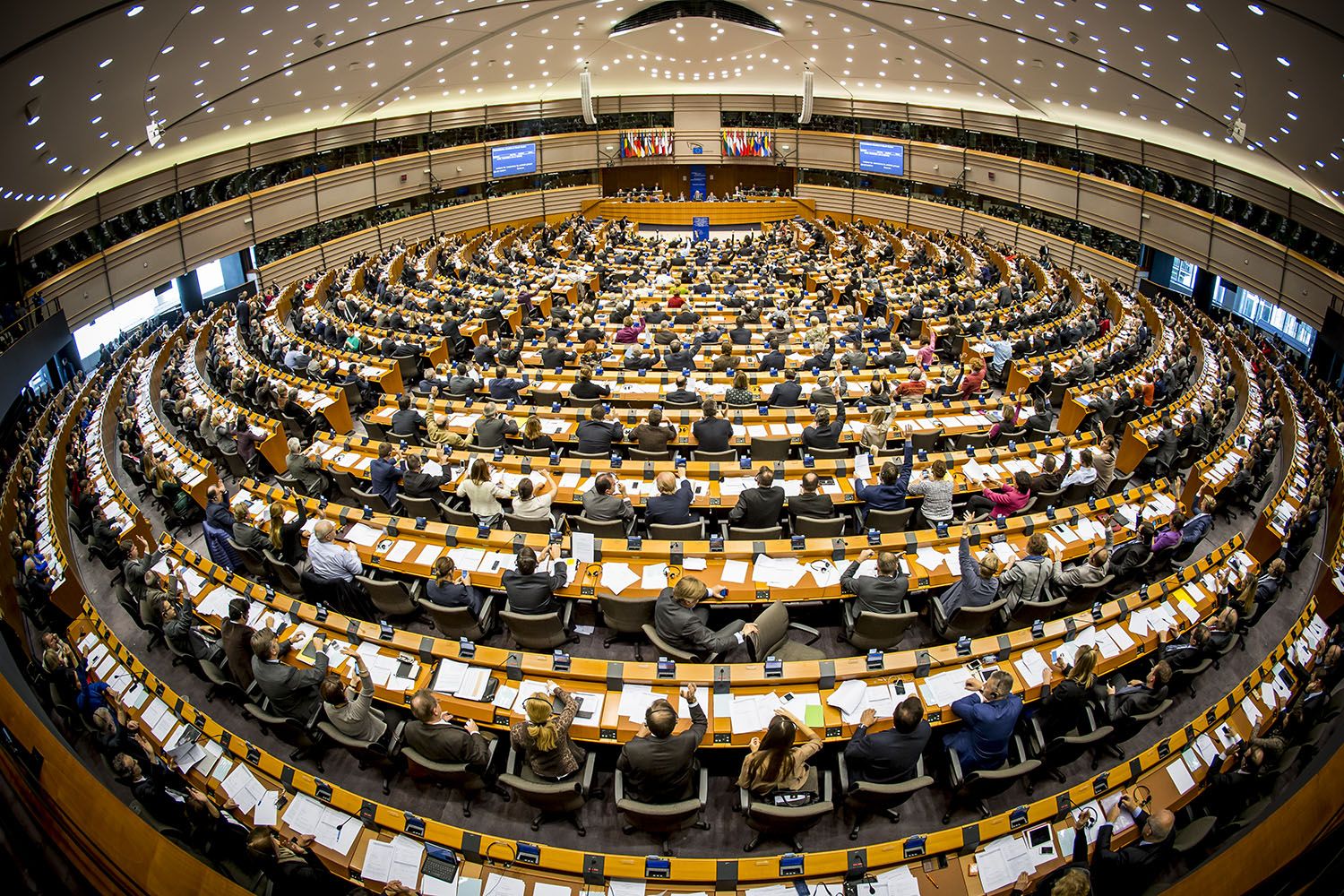
    February 1, 2019, a group of nine EU Parliament’s members from different political parties, jointly sent a letter to Vietnam’s President Nguyen Phu Trong, asking for the unconditional release of environment and labor rights defender, Hoang Duc Binh.

    The letter reminded Vietnam that “the promotion and protection of fundamental rights must remain a common benchmark” for the continuing negotiation of the Free Trade Agreement between the European Union and Vietnam.

    According to the MEPs’ letter:

    The EVFTA commits the European Union and Vietnam to respect and effectively implement such principles and fundamental rights as provided in the ICCPR.

    The European Council has delayed the EV-FTA’s ratification process due to “technical reasons” according to two other MEPs, Jude Kirton-Darling and Ramon Tremosa. They released a video clip on January 22, 2019, demanding that Vietnam improves its human rights records for the EV-FTA to proceed.

    Almost one year ago, on February 6, 2018, a court in Central Vietnam convicted Hoang Duc Binh on two separate charges, “resisting officers acting under their duty,” and “abusing freedoms and democratic rights to infringe upon the State’s interest or the rights and interests of other entities and individuals.” (Articles 257, 258 of the 1999 Penal Code, amended as 330, 331 under the 2015 Penal Code).

    Binh was sentenced to the maximum term of 7 years for each of the offenses, which meant that the court found his conduct to be “seriously harmful” to the public according to the sentencing guidelines.

    Binh maintained his innocence, stating that all he did was accompanying a group of fishermen and a Catholic priest to travel from Nghe An to Ha Tinh to file their civil suits against Formosa Ha Tinh Steel Corporation.

    Formosa Ha Tinh was the main culprit that had paid 500M USD to settle the damages they caused in the environmental disaster which affected four coastal provinces in Central Vietnam back in 2016.

    In recent months, Hoang Duc Binh’s family has raised concerns about his deteriorating health conditions after each visitation.

    The letter was signed by Barbara Lochbihler (Greens/EFA), Wajid Khan (S&D), Petras Austrevicius (ALDE), Anne-Marie Mineur (GuE), Ana Gomes (S&D), Karoline Graswander-Hainz (S&D), Reinhard Bütikofer(Greens/EFA), David Martin (S&D), and Marietje Schaake (ALDE).

    The MEPs asked that Hoang Duc Binh “to be immediately and unconditionally released” and that he will be “allowed to remain inside his home country, Vietnam, and not forced into exile as a precondition for his release.”

  • Has Vietnam Already Violated the To-Be-Ratified Free Trade Agreement with the EU?

    Has Vietnam Already Violated the To-Be-Ratified Free Trade Agreement with the EU?

    After Hoàng Đức Bình’s 14-year sentence was affirmed by an appellate court in Vietnam on April 24, 2018, one of the state-owned newspapers, Người Lao Động (NLD), published a story about Bình’s case on the same day, explaining the government’s reasons behind his harsh sentence.

    In one paragraph, NLD wrote:

    “Taking advantage of the marine life environmental incident in the Central, and as the Vice-Chairman of Viet Labor Movement, Hoàng Đức Bình began to organize The Association of Fishermen in the Central with the intent to form an external organization, mobilizing forces, attracting Catholics, fishermen in the Central to join that organization; selecting ‘nucleus’ who could incite demonstration to disturb the peace and security.”

    Not only international human rights laws protect the right of the people to form associations and organize protests, Vietnam repeatedly acknowledges and agrees to not infringe on these rights of its people in various international treaties and agreements. One of the more recent ones is the free trade agreement (FTA) with the European Union (EU).

    About two and a half years before Bình’s trial, in October 2015, Vietnam and the EU have agreed on the text concerning the terms of the FTA between them.

    At the same time, EU and its member countries have repeatedly maintained, that they are “fully committed to implementing the 2030 Agenda and its Sustainable Development Goals into EU policies.”

    One of EU’s commitments to implementing the 2030 Agenda is to include in their free trade agreements, rules on trade and sustainable development as well as a human rights clause.

    In the case of the Vietnam-EU FTA, that language is under Chapter 15 of the agreement, entitles Trade and Sustainable Development.


    Article 3, Paragraph 2, Sub-paragraph (a) of Chapter 15 states:

    “Each Party reaffirms its commitments, in accordance with its obligations deriving from the membership of the ILO and the ILO Declaration on Fundamental Principles and Rights at Work and its Follow-up, adopted by the International Labour Conference at its 86th Session in 1998, to respect, promote and effectively implement the principles concerning the fundamental rights at work, namely:

    a) the freedom of association and the effective recognition of the right to collective bargaining;”

    The importance of this chapter and the human rights clause are also highlighted by the Chair of the European Parliament’s Committee for International Trade, Bernd Lange, during his visit to Hanoi in September 2017. That human rights and labor rights are at the center of the continued discussions about the FTA between Vietnam and EU.

    Many could imply that the criminalization of Hoàng Đức Bình’s conduct for organizing people and forming an association of fishermen in the Central of Vietnam appears to be in direct violation of the Trade and Sustainable Development Chapter and the human rights clause of the Vietnam-EU FTA.

    The European Parliament Think Tank assessed in February 2018, that the FTA with Vietnam “has been described as the most ambitious deal of its type ever concluded between the EU and a developing country. Not only will it eliminate over 99 % of customs duties on goods, but it will also open up Vietnamese services markets to EU companies and strengthen protection of EU investments in the country.”

    They also opined that the Vietnam-EU FTA is estimated to boost Vietnam’s economy as much as 15 % of GDP, with Vietnamese exports to Europe growing by over one third.

    The parties are hopeful that the FTA will be ratified by EU Parliament (and also by its member-states on issues involving investment) by the end of this year, or by 2019 at the latest.

    However, the recent affirmation of Vietnam’s court regarding Hoàng Đức Bình’s 14-year sentence for organizing and participating in protests against Taiwan’s Formosa Hà Tĩnh Steel Corporation raises questions over the good faith of Hanoi in keeping up their end of the bargain when it comes to human rights and labor rights.

    If Vietnamese government is sending people to prison with a very harsh sentence for exercising their freedom of association before the FTA is ratified, then what and how does EU plan to keep them in check once the dust is all settled?

    Perhaps, this is a legitimate question for the EU-Vietnam Human Rights Dialogue to provide the public with a more definitive answer later this year?

  • Two Years Later, Formosa Toxic Pollution Still Sends People to Prison in Vietnam

    Two Years Later, Formosa Toxic Pollution Still Sends People to Prison in Vietnam

    April 24, 2018| After an approximate three-hour hearing, the Appellate Court of Nghe An Province, Vietnam, affirmed the 14-year sentence for blogger and human rights defender, Hoàng Đức Bình, in relation to the 2017 protests of Catholic fishermen in the areas affected by the Formosa environmental disaster.

    Hoàng Đức Bình, a member of the Viet Labor Movement, was sentenced earlier this year by a trial court in February.

    The story on the marine pollution caused by Taiwan’s Formosa Hà Tĩnh Steel Corporation broke out two years ago in Vietnam, prompting a nationwide protest in April and May 2016 where people demanded the company closed its steel mill business and ceased all of its operations.

    Formosa admitted in May 2016 that they were responsible for the toxic spill from their factory into the local sea in violations of Vietnam’s laws, and agreed to pay 500 million USD for damages in a confidential settlement with the Vietnamese government.

    The toxic pollution caused by Formosa is estimated to have affected the livelihood of people along more than 200 km of local seawaters in four coastal provinces of Central Vietnam.

    To date, the public in Vietnam still has very little information regarding the settlement agreement while many affected families have yet to receive their shares in the settlement.

    Thus, local people continued their protests against Formosa, and Hoàng Đức Bình was among them.

    One of the activities Bình participated in, was to travel with fishermen from Quỳnh Lưu District, Nghệ An Province to the local courts in Hà Tĩnh Province – where Formosa is located – to file their civil suits against the company in February 2017, and the authorities of Nghệ An Province arrested him after that.

    Attorney Nguyễn Khả Thành, one of Bình’s lawyers, announced the court’s decision on his Facebook today.

    According to his lawyer, Hoàng Đức Bình was convicted on two separate charges under Vietnam’s 1999 Penal Code. Article 257 is for “resisting officers acting under their duty,” and Article 258 is for “abusing freedoms and democratic rights to infringe upon the State’s interest or the rights and interests of other entities and individuals.”

    Bình was given the maximum sentence – 7 years – for each of the offenses, which implied that the court found his conduct to be “seriously harmful” to the public according to the sentencing guidelines of Articles 257 and 258.

    Hoàng Đức Bình maintained that all he did was to accompany the fishermen and a Catholic priest in traveling from Nghệ An to Hà Tĩnh to file their civil suits.

    Nghệ An Province was not among the list of the four provinces to receive compensation from Formosa’s 500M USD settlement, and hence, the need for fishermen there to file lawsuits to recover for their alleged damages arose.

    On September 25, 2015, just a few months before the story of Formosa marine life disaster broke the news, world leaders have agreed on what now is known as the 17 Sustainable Developmentment Goals. Among them, the seriousness of climate change due to humans’ activities is highlighted, and that countries have agreed, future economic development must go hand in hand with environmental protection and respect for human rights.

    After the trial court convicted Bình for a total of 14 years in February this year, UN experts and Special Rapporteurs issued a joint statement, condemning his arrest and sentence and demanded his release.

    “Imprisoning bloggers and activists for their legitimate work raising public awareness on environmental and public health concerns is unacceptable,” said Baskut Tuncak, Special Rapporteur for Human Rights and Hazardous Substances and Wastes.

    “We call on the authorities to release Hoang Duc Binh and Nguyen Nam Phong who were detained following their efforts to raise awareness and ensure accountability in relation to the spill of the Formosa Steel plant. Authorities must ensure that Viet Nam’s rapid economic expansion does not come at the expense of human rights, in particular those of local communities and workers.”

    Another lawyer of Hoàng Đức Bình, Hà Huy Sơn, also wrote on his Facebook today: Bình told him that before his trial in February 2018, he was beaten up by death-row inmates who were put in the same cell as his.

    Attorney Sơn also added in the same status, that the only witnesses participated in the trial were the traffic police officers involved in the alleged incident, and none of the video clips capturing the event were allowed to be introduced. He then concluded, the court has violated Vietnam’s criminal procedures and that the verdict is therefore unjust.