Tag: Ho Chi Minh City

  • Vietnam: In The Middle Of The COVID-19 Pandemic, They Are The Ones Being Left Behind

    Vietnam: In The Middle Of The COVID-19 Pandemic, They Are The Ones Being Left Behind

    Since the first infections were detected in the country, Vietnam has surpassed[1] 100,000 Covid-19 cases spanning 62 out of its 63 provinces and more than 1,000 deaths. As the pandemic shows no signs of vanishing anytime soon, especially in the southern provinces, this Southeast Asian country faces both a healthcare and economic crisis.

    The Vietnamese Communist Party, as usual, has been deploying propaganda, at maximum capacity, to placate the public. Vigorous slogans, from promises of “leaving no one behind” to “protecting people’s lives remain a top priority” [2], are dominating state media and pro-government online groups on social media.

    However, the reality is far gloomier than the Party’s political discourse.

    Besides revealing the darker side [3] of Vietnam’s epidemiological strategy, the pandemic also deepens the increasingly widening gap between the haves and have-nots and between the people with power and those without.

    The Workers

    According to the Vietnam General Statistics Office report, [4] nearly 13 million workers were negatively affected by the economic downturn caused by the third and fourth wave of Covid-19 outbreaks. This number includes [5] about 557,000 people who lost their jobs, 4.3 million people who had their working hours cut, those who had to take time off from work or had to rotate shifts, and another 8.5 million who had their income reduced.

    The pandemic has had an impartial effect on the Vietnamese labor market, but so far, freelance and manual workers are among those who got hit the hardest.

    In Vietnam, the term “freelance workers” has a very different connotation compared to the West. This workforce primarily consists of senior citizens, the impoverished, and college graduates, who lack physical health and certain skills that the average employer often deems necessary. They are known for doing various unskilled jobs, such as being street vendors, motorbike drivers, lottery ticket sellers, and the like.

    These freelance workers usually rely on their own labor to make ends meet daily while lacking health insurance and many personal savings, so they are at a greater risk of getting infected with the coronavirus or becoming financially strained under lockdown measures and other anti-coronavirus restrictions. Furthermore, stagnant economic activities, coupled with the government’s ineffective financial assistance schemes, seem to add [6] to their struggle.
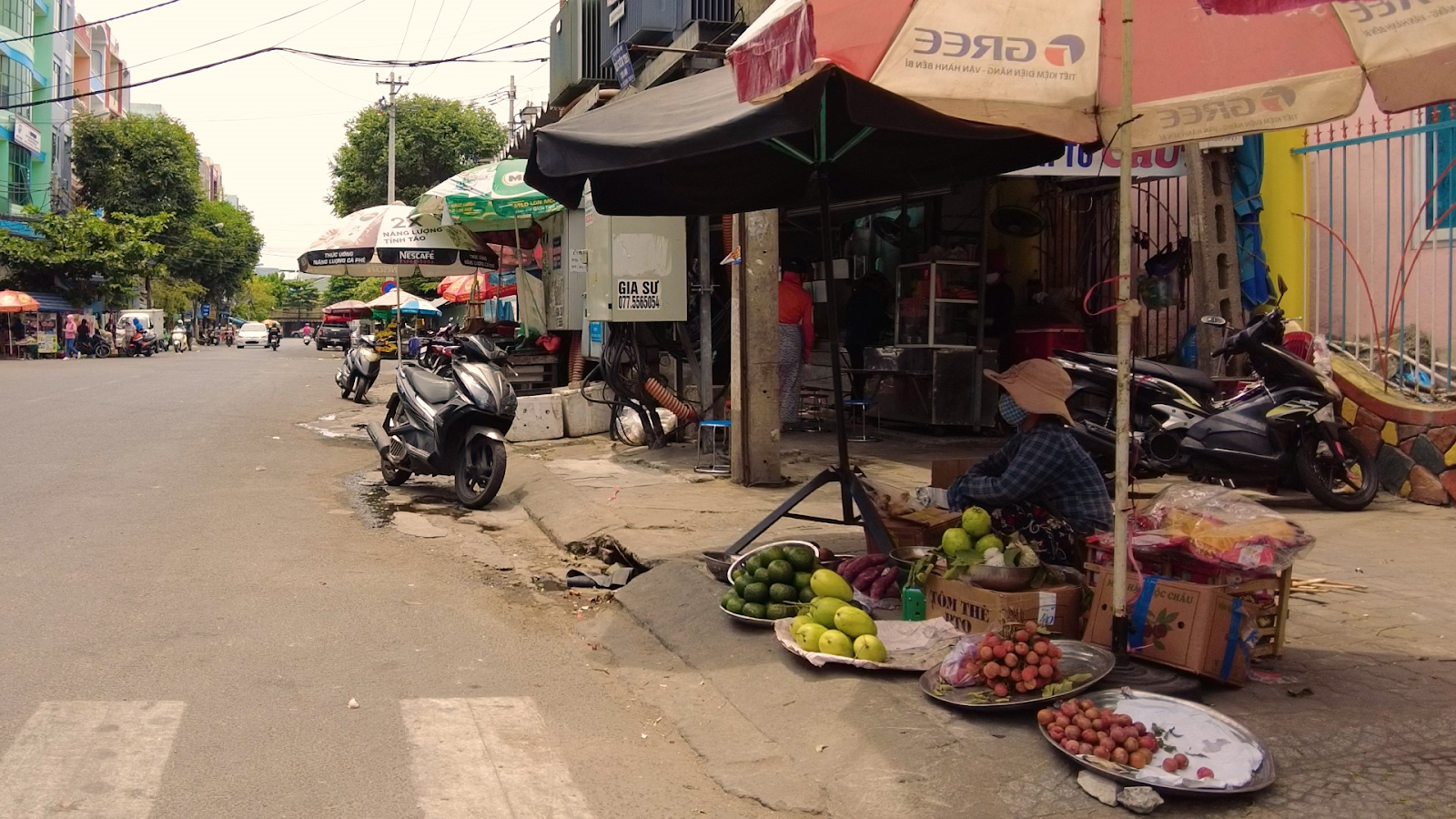
    A street vendor in Da Nang City. Photo: RFA.

    At the same time, factory workers, the backbone of Vietnam’s export-oriented economy, are also facing another set of challenges in the midst of the pandemic.

    When coronavirus infections started to spread inside many factories during the latest outbreak, most workers were required to be quarantined inside their workplaces while continuing production in a strategy known as “dual goal.” [7] This strategy aimed to control infections while at the same time maintaining industrial production.

    However, risky working environments and the factories’ poor accommodations have sparked anger among many workers, causing them to flee their workplaces. Meanwhile, on social media, many people have also expressed their disagreement with the decisions of local authorities, repeatedly condemning[8] them for compromising workers’ health for cash.

    Besides rigid anti-coronavirus measures, the “ho khau” system, a household registration scheme used in Vietnam, has created another burden for these unskilled workers, especially for migrants from poorer provinces seeking manual jobs in big cities and industrial zones.

    More specifically, this household registration system denies migrant workers the eligibility to receive public services and welfare assistance where they temporarily live and work, such as healthcare and education, unless they register with local police.
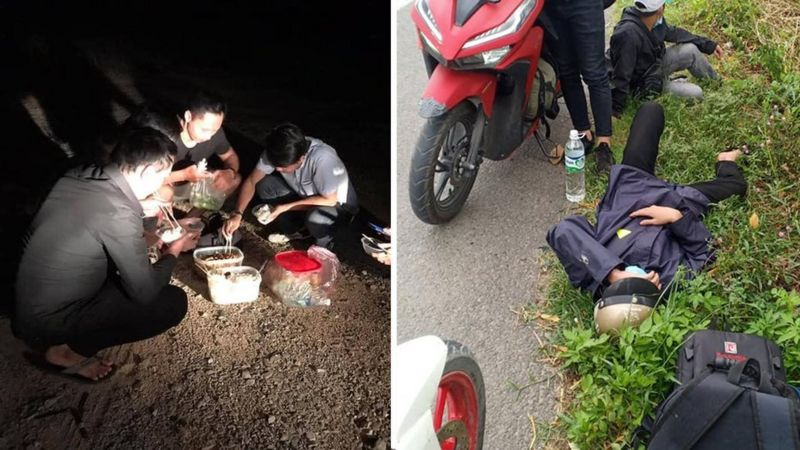
    Many migrant workers chose to return to their hometowns by motorbikes. Photo: Người Huế ở Sì Gòn (Facebook group)/ BBC Vietnamese.

    Nevertheless, Vietnam’s bureaucratic public services, alongside rampant corruption in the registration process, leaves many of them living illegally without legitimate status. As a result, when several southern industrial provinces and the economic hub of Ho Chi Minh City remained under lockdown to battle the latest outbreak of Covid-19, a large number of these employees were left with no choice but to return to their hometowns to avoid infection and to overcome the financial difficulties caused by their unemployment.

    Over the past few weeks, a massive exodus of migrant workers has been seen, with workers risking their lives on arduous journeys to go back home. Many choose motorbikes, and some attempted to make it on foot, [9] with several unfortunate souls losing their lives along the way. In response, several provinces have publicized official announcements citing the Covid-19 infection risk to urge migrant workers not to return home [10] or to “go back to where they started.” [11]

    This dire situation has led to an outcry on Vietnamese social media. Many users are questioning the government’s response and criticizing its failure to provide financial assistance to these people, secure safer means of homebound transportation, and provide housing in adequate quarantine facilities.
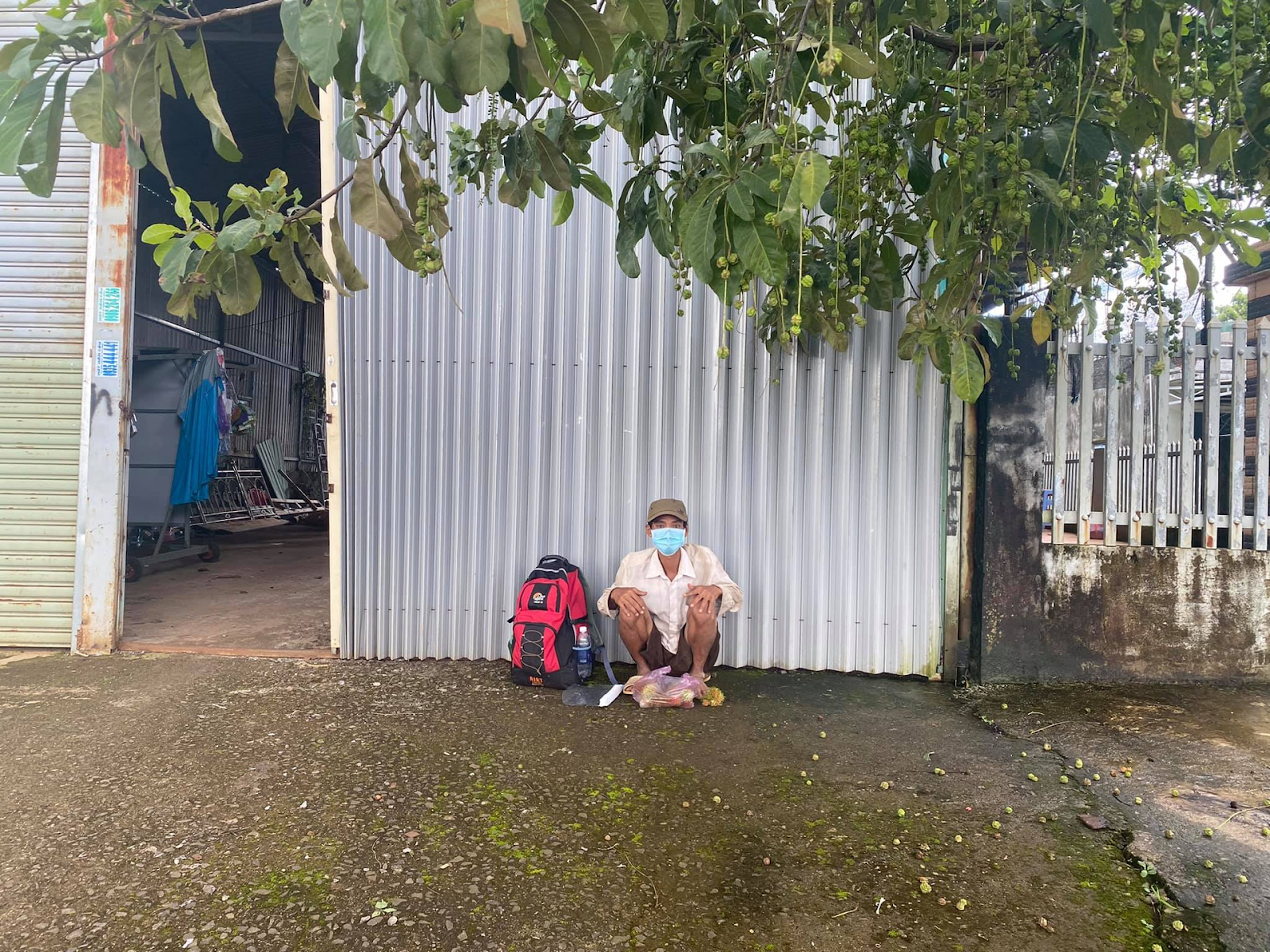
    A worker walked more than 180 km in 16 days from Dak Lak Province to his sister’s house in Binh Phuoc Province, as he did not have enough money for a bus ride. Photo: Zing News/ provided by the worker.

    Inmates, Prisoners of Conscience, and Addicts

    Multiple prisons and rehabilitation centers, especially in several southern localities, have also become new hotspots of infections during the fourth wave of the Covid-19 outbreak in Vietnam.

    On July 7, local authorities declared [12] that Chi Hoa Prison, a detention center located in Ho Chi Minh City, had recorded more than 80 people infected with Covid-19, including detainees and correctional officers. As the situation worsened, riots began to erupt [13] inside the facility as the rapid spread of coronavirus fueled fear among hundreds of inmates.

    A few weeks later, on July 23, all of the staff and addicts [14] at Bo La Rehabilitation Center, a facility located in the southern province of Binh Duong, tested positive for Covid-19. At the same time, a mental health hospital in Ho Chi Minh City also diverted a part of its functionality to treat Covid-19 patients, including many infected mental health patients, as surging cases overloaded healthcare capacity in the city.

    The infrastructure of detention and rehabilitation centers in Vietnam in general and other public facilities have long been infamously known for their degradation, poor living conditions, and maltreatment of prisoners and patients.

    Riot police vans were seen leaving the Chi Hoa Prison after reportedly being deployed to quell riots. Photo courtesy: Dinh Van/ VnExpress.

    Several family members of prisoners of conscience have also expressed their concerns over the safety of their relatives amid the Covid-19 situation. During interviews with RFA Vietnamese, [16] many expressed concerns that the proximity of sleeping quarters, poor living conditions, and limited information about the prisoners threaten the well-being of the people being kept inside the cells.

    Currently, prisoners, addicts, and mental health patients are not part of the official list [17] of 16 qualified priority groups to receive Covid-19 vaccinations, despite promises of future vaccination opportunities. However, given Vietnam’s ongoing vaccine shortage, these people will likely be the last to receive the vaccine.

    Other Vulnerable Groups

    The latest vaccination scandals [18] include a woman and her husband being prioritized to get vaccinated thanks to her father’s connections and a decision from Ho Chi Minh City authorities to lend Vingroup, a local conglomerate, 5,000 Moderna doses from the COVAX initiative to inoculate its staff, raise questions about equal access to the Covid-19 vaccine for all Vietnamese citizens.

    From a broader perspective, the political landscape in Vietnam is deepening the inequality in vaccine distribution. Government officials with strong connections or powerful corporations with economic clout can “cut in line” [19] to get vaccinated first, taking away inoculation opportunities from others, especially those who are most vulnerable once infected.

    As of July 19, [20] Ho Chi Minh City has officially begun vaccinating older adults and patients with underlying health conditions in the fifth phase of its inoculation campaign. Still, authorities have neither provided further information on the screening process nor medical assistance should side effects occur in these high-risk groups. Meanwhile, vaccination schedules for other vulnerable groups, such as the homeless, war veterans, and the disabled have remained undisclosed.
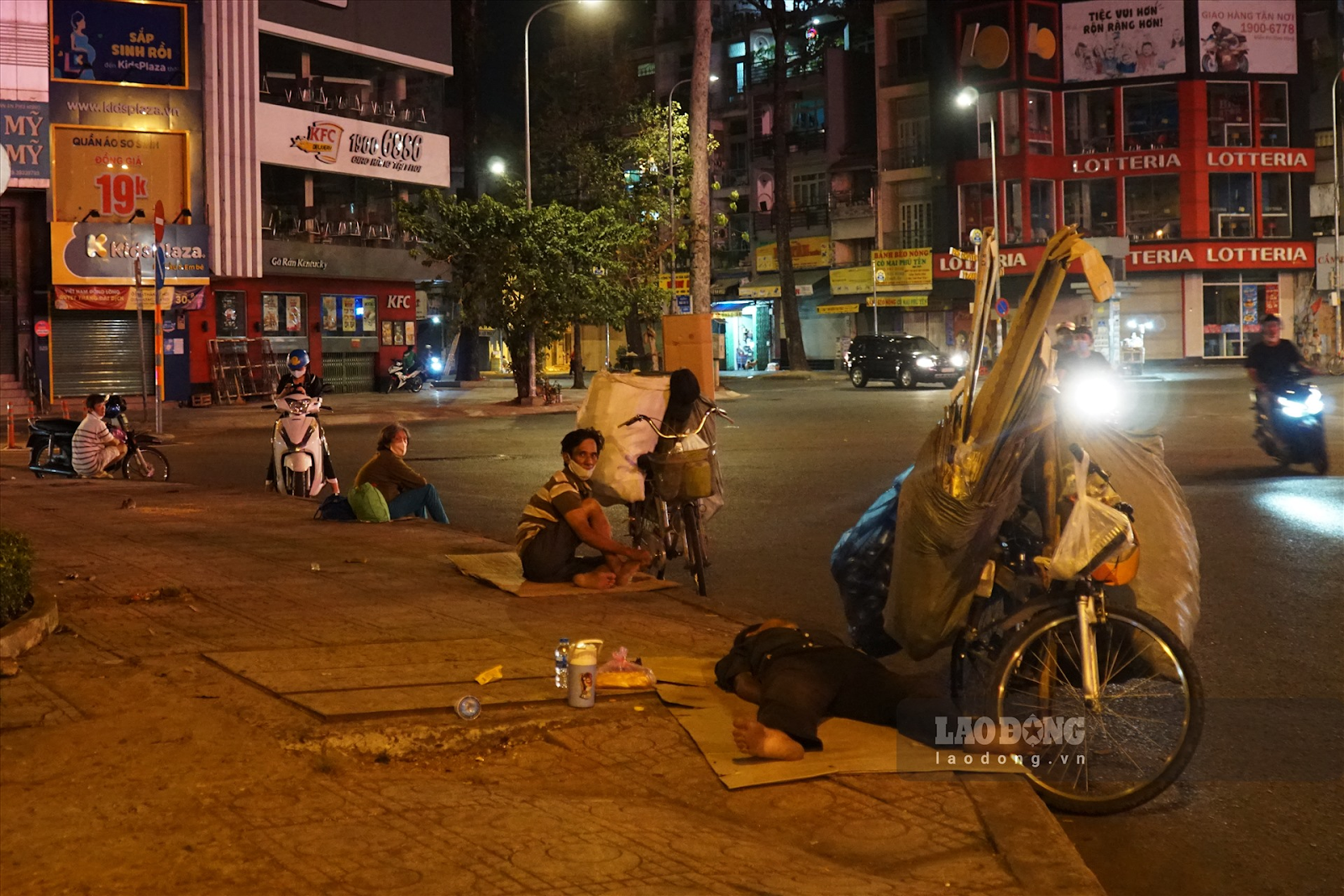
    Homeless people in Ho Chi Minh City amid the Covid-19 pandemic. Photo: Lao Dong.

    The Communist Party, since the very first days of its establishment, has prided itself on being “a Party of the people, of the working class.” [21] The Party manifests its ideology in the notion that their ultimate goals are “nothing other than the interests of the [working] class, the people and the nation” to build a more “democratic, wealthy and equal Vietnam.”

    Almost a century later, the Covid-19 pandemic has fully uncovered what the Party has been dedicating its whole lifespan to achieving benefits for itself and those living dependent on the corrupt system. Ironically, the poor, migrant workers or prisoners of conscience have never been of great concern to the Communist regime.

    As the dark clouds of Covid-19 continue to loom large over Vietnam, the tragic fates of those voiceless and powerless people mentioned above seem astoundingly more genuine than the Party’s empty promises.

    Bibliography:

    1. Số liệu Covid-19 tại Việt Nam. (2021, August 2). VnExpress. https://vnexpress.net/covid-19/covid-19-viet-nam
    2. Tiep, P. (2021, May 16). Quyết tâm đẩy lùi dịch COVID-19, bảo vệ sức khỏe nhân dân là trên hết. Báo Công An Nhân Dân. https://cand.com.vn/Su-kien-Binh-luan-thoi-su/Quyet-tam-day-lui-dich-COVID-19-bao-ve-suc-khoe-nhan-dan-la-tren-het-i605680/
    3. Jason, N. (2021, July 21). How The Latest Outbreak Reveals The Darker Side Of Vietnam’s Anti-Coronavirus Strategy. The Vietnamese Magazine. https://www.thevietnamese.org/2021/07/how-the-latest-outbreak-reveals-the-darker-side-of-vietnams-anti-coronavirus-strategy/
    4. Bang, L. (2021, July 7). Over 1.1 million people unemployed, nearly 13 million others affected by Covid-19 pandemic. Vietnamnet. https://vietnamnet.vn/en/society/over-1-1-million-people-unemployed-nearly-13-million-others-affected-by-covid-19-pandemic-753558.html
    5. VOA News. (2021, July 16). Vietnam Shops for Vaccines in Hopes of Avoiding More Lockdowns. VOA. https://www.voanews.com/covid-19-pandemic/vietnam-shops-vaccines-hopes-avoiding-more-lockdowns
    6. RFA. (2021, June 7). Lao động tự do chật vật trong đợt dịch COVID-19 thứ tư. Đài Á Châu Tự Do. https://www.rfa.org/vietnamese/in_depth/freelance-workers-struggle-during-the-fourth-covid-19-outbreak-06072021145713.html
    7. Việt Nam có nên vận dụng “mục tiêu kép” trong lúc này? (2021, May 27). Đài Á Châu Tự Do. https://www.rfa.org/vietnamese/in_depth/should-vietnam-maintain-dual-goal-now-05272021111728.html
    8. Ibid., [7]
    9. Nhi, T. (2021, July 26). Người đàn ông đi bộ 16 ngày từ Đắk Lắk về Bình Phước để tránh dịch. Zing News. https://zingnews.vn/nguoi-dan-ong-di-bo-16-ngay-tu-dak-lak-ve-binh-phuoc-de-tranh-dich-post1243231.html
    10. Nguyen, C. (2021, August 1). Xót xa cả gia đình gặp nạn trên đường về quê tránh dịch Covid-19. Người Lao Động. https://nld.com.vn/thoi-su/xot-xa-ca-gia-dinh-gap-nan-tren-duong-ve-que-tranh-dich-covid-19-20210801092125848.htm
    11. Ngoc, N. (2021, July 31). Từ 1/8, dân Quảng Ngãi buộc quay lại nơi xuất phát. Tiền Phong. https://tienphong.vn/tu-1-8-dan-quang-ngai-buoc-quay-lai-noi-xuat-phat-post1360999.tpo
    12. Tinh, D. (2021, July 7). TP.HCM: Ổ dịch tại Trại tạm giam Chí Hòa có 81 ca nhiễm Covid-19. Thanh Niên Online. https://thanhnien.vn/thoi-su/tphcm-o-dich-tai-trai-tam-giam-chi-hoa-co-81-ca-nhiem-covid-19-1410289.html
    13. Trại Chí Hòa: Hàng trăm phạm nhân nổi dậy sau khi 81 người nhiễm COVID-19 trong trại. (2021, July 7). Đài Á Châu Tự Do. https://www.rfa.org/vietnamese/news/vietnamnews/chi_hoa_riot-07072021052110.html
    14. Canh, N. (2021, July 23). Toàn bộ những người ở cơ sở cai nghiện ma tuý Bố Lá dương tính với SARS-CoV-2. Báo Công An Nhân Dân. https://cand.com.vn/y-te/Toan-bo-nhung-nguoi-o-co-so-cai-nghien-ma-tuy-Bo-La-duong-tinh-i621306/
    15. Anh, T. (2021, July 25). TP HCM lập bệnh viện điều trị người tâm thần mắc Covid-19. VnExpress. https://vnexpress.net/tp-hcm-lap-benh-vien-dieu-tri-nguoi-tam-than-mac-covid-19-4330137.html
    16. Son, T. (2021, July 7). COVID-19 xâm nhập trại giam: lo lắng cho an nguy của các tù nhân. Đài Á Châu Tự Do. https://www.rfa.org/vietnamese/in_depth/families-of-prisoners-of-conscience-worry-as-covid-spreads-in-prisons-07072021080636.html
    17. Thanh, A. (2021, July 11). [Infographic] Những nhóm mở rộng được ưu tiên tiêm vắc-xin Covid-19. Người Lao Động. https://nld.com.vn/thoi-su/infographic-nhung-nhom-mo-rong-duoc-uu-tien-tiem-vac-xin-covid-19-20210711011752387.htm
    18. The Vietnamese Magazine. (2021, July 26). Vietnam Briefing: COVID-19 Crisis Deepening While The National Assembly Convened To Elect State Leadership. The Vietnamese Magazine. https://www.thevietnamese.org/2021/07/vietnam-briefing-covid-19-crisis-deepening-while-the-national-assembly-convened-to-elect-state-leadership/
    19. Minh, N. (2021, July 22). Có bao nhiêu “cháu ngoại” đã trót lọt chen hàng để tiêm vaccine trước? Luật Khoa Tạp Chí. https://www.luatkhoa.org/2021/07/co-bao-nhieu-chau-ngoai-da-trot-lot-chen-hang-de-tiem-vaccine-truoc/
    20. L.Đ.O. (2021, July 19). Người già, người có bệnh nền tại TPHCM được tiêm vaccine tại bệnh viện. Người Lao Động. https://laodong.vn/y-te/nguoi-gia-nguoi-co-benh-nen-tai-tphcm-duoc-tiem-vaccine-tai-benh-vien-932236.ldo
    21. L.Đ.O. (2020, January 28). Đảng của dân tộc, Đảng của giai cấp công nhân. Người Lao Động. https://laodong.vn/thoi-su/dang-cua-dan-toc-dang-cua-giai-cap-cong-nhan-778528.ldo
  • The Intertwining Of Science, Politics, And Ideology In Vietnam’s COVID-19 Crisis

    The Intertwining Of Science, Politics, And Ideology In Vietnam’s COVID-19 Crisis

    Amidst the COVID-19 crisis, a moment for science

    The escalation of COVID-19 in Vietnam, especially in Saigon (officially known as Ho Chi Minh City), is sending millions of people into crisis. They have struggled on multiple fronts, from healthcare and making sense of varying isolation requirements to obtaining food and necessities amidst strict yet incoherent travel bans and supply shortages.

    The double target of trying to contain COVID-19 while simultaneously continuing economic activities that the government persistently defended and adhered to since the start of the pandemic has been abandoned. This is indicative of how serious the situation has become. Over the past few weeks, Saigonese have experienced life in a way they could never have imagined.

    In this grim picture, Tuoi Tre Online reported on July 10, 2021, that Ho Chi Minh City’s Party Committee Secretary Nguyen Van Nen is now looking to scientists for advice.[1] The secretary’s words were quoted widely in the news:

    I feel that we need to consult the scientists…. At any time, I want specialists and scientists to see flaws in our strategy to fight the pandemic and contact me; I will consider their advice and respond timely.

    A Facebook influencer reacted to this news with a sense of irony and bitterness:[2]

    So what expertise have you relied on to fight the pandemic? Anything but science? Have you been kidding your citizens all along? For one and a half years now, have you been playing with the life and death of millions of people? So, after all, is it true that the tools you have taken to fight a pandemic are simply government decrees and [the manpower of] the Communist Youth League? I feel so ashamed of being led by national leaders who are both blind and arrogant.

    It is rather apparent that in a pandemic, one had better look to the scientists. So, why is a government official only bringing them to the table now? The next question is, how critical can scientists be, with a government that does not like criticism? At the highest level, one must wonder where science and scientists are in the decision-making concerning public matters in non-democratic Vietnam? A look into the Vietnamese Communist Party’s (VCP) ideology that it has followed and its practices could explain this conundrum.

    In ideology: the suppression of civil society and communicative rationality

    In the United Kingdom, at the start of the pandemic, the Scientific Advisory Group for Emergencies was activated. Since then, it has been working closely with the government as an external body to advise on making appropriate decisions regarding COVID-19 in the country. The importance and weight of scientific advice cannot be underestimated; UK scientists successfully convinced Prime Minister Boris Johnson and his cabinet to abandon their herd immunity strategy and adopt a nationwide lockdown in March 2020.

    Without this lockdown, the United Kingdom could have seen 80 percent of its people infected and 500,000 deaths.[3] On the other side of the Atlantic Ocean, the physician-scientist and immunologist Anthony Fauci, in his role as the chief medical advisor to the US president, has been a pillar in handling COVID-19 in the United States.

    Liberal democracy entails the practice of taking advice from scientists and not restraining those who deliver honest yet uncomfortable truths to people in positions of power. The two hallmarks of liberal democracy that shape this practice are civil society and communicative rationality.[4]

    Civil society in a liberal democracy comprises actors and institutions that are supposed to be independent of the state and who act to balance state power. Therefore, universities and the myriad of civil associations in democratic countries are autonomous and can freely critique the conduct of the government or oppose laws and policies they view as problematic without fear of punishment.

    On the other hand, communicative rationality, an ideal of liberal democracy, means that people arrive at a collective agreement about something via genuine, intelligible conversations. Thus parliamentary debate and rebuttal in classroom discussions are part and parcel of a healthy democratic life and politics.

    Nowhere in the ideological textbook of the VCP can one find any sign of friendliness towards the idea of an autonomous, independent civil society, nor communicative rationality in the way the state relates to other estates in society. The Vietnamese government condemns independent civil society as a strategy of ‘hostile forces’ to undermine political stability.[5] Following the Marxist-Leninist ideology, the Communist leaders control civil society and use civil society organizations, such as the press, schools, and mass associations, to garner consent from the people for its rule.[6] Likewise, the Party believes in ‘self-criticism,’ rather than opposition or open, genuine debate in the National Assembly or in other venues where the state and citizens can talk to each other.[7]

    In practice: the strategic mobilization of scientists while confining them within governable spaces

    Since 1975, the Vietnamese State could be described as developmental. In the pursuit of economic growth and technological and social development, the state needs the expertise of scientists and intellectuals. This is evidenced by the existence of a wide range of research and scientific centers and institutions funded by the State that operate within the scope prescribed for them by the government. However, the system ensures that scientists and intellectuals employed in these research centres do not threaten the state.[8]

    Despite these state-employed scientists and intellectuals, the Vietnamese government rarely describes its style of governance as “evidence/science-based.” This suggests that the VCP still aspires to be a good disciple of Marxism-Leninism when it comes to organizing the political system and governance. “The Party knows best” is apparently its motto. In other words, the Party sees itself as the supreme source of authority and expertise. This also makes Vietnam’s developmentalism different from, for example, Japan’s.  Japan’s developmentalism is based on rationality, whereas Vietnam’s is based on ideology.[9]

    Speaking of rationality, communicative rationality still has no place in Vietnam’s politics nor in the civil sphere. The National Assembly has shown little sign of becoming a place for open, genuine debate about public matters. Critical thinking is still lacking in the way students are educated. The free press is still a wild dream for Vietnam.

    I interviewed the head of Luat Khoa Tap Chi not long ago. He described the prominent culture in Vietnam as a “culture of obedience and singular thinking” rather than critical thinking and genuine, intelligible debate. Last but not least, we shall not forget that in 2007, when the Institute of Development Studies was established by renowned intellectuals and scientists of the country to speak truth to power, it went into so much trouble with the government and was eventually disbanded.[10]

    Prospects of the VCP democratizing itself?

    Not so much. In Saigon, what the Party Committee Secretary Nguyen Van Nen said about consulting scientists is most likely just a moment of him forgetting the Party’s line he should be toeing. Indeed, just a week after his statement, a Facebook influencer reposted on his Facebook page a VNExpress interview with Vu Thanh Tu Anh of Fulbright University Vietnam, which reportedly was removed from VNExpress’s website immediately after it was posted.[11] In this interview, Tu Anh discusses some failures in the government’s strategy to contain COVID-19.[12]

    In conclusion, for scientists to speak truth to power, or at least to save Vietnam from this deadly pandemic, they require a change in both ideology and politics, which the VCP seems to be neither willing nor ready to take.

    Bibliography:

    1. Bí thư Thành ủy TP.HCM gặp gỡ các chuyên gia, nhà khoa học cùng bàn cách chống dịch COVID-19, 10 July 2021. Tuổi Trẻ Online. Available at: https://tuoitre.vn/bi-thu-thanh-uy-tp-hcm-gap-go-cac-chuyen-gia-nha-khoa-hoc-cung-ban-cach-chong-dich-covid-19-20210710120636333.htm
    2. Thai Hao’s Facebook page, 10 July 2021. The full post is available at: https://www.facebook.com/permalink.php?story_fbid=1029231357886052&id=100023975920044
    3. Grey, Stephen & MacAskill, Andrew, 7 April 2020. Special Report: Johnson listened to his scientists about coronavirus – but they were slow to sound the alarm. Reuters. Available at: https://www.reuters.com/article/us-health-coronavirus-britain-path-speci-idUSKBN21P1VF
    4. The background of my understanding of liberal democracy in this paragraph comes from Alexis de Tocqueville (on civil society) and Jurgen Habermas (on communicative rationality).
    5. See, for example, an article in Cong an Nhan dan, available at: http://cand.com.vn/Chong-dien-bien-hoa-binh/Canh-giac-thu-doan-loi-dung-xa-hoi-dan-su-de-chong-pha-che-do-581991/; another one in Nhan dan, available at: https://nhandan.vn/tin-tuc-su-kien/xa-hoi-dan-su-mot-thu-doan-cua-dien-bien-hoa-binh-392081/
    6. The reality of ‘state-led civil society’ in Vietnam, most prominent before the late 1980s, is discussed widely in the academic literature. For example, I suggest Landau, I. (2008). Law and civil society in Cambodia and Vietnam: A Gramscian perspective. Journal of Contemporary Asia, 38(2), 244–258; and Salemink, O. (2006). Translating, interpreting, and practicing civil society in Vietnam: A tale of calculated misunderstanding. In D. Lewis & D. Mosse (Eds.), Development Brokers and Translators: The Ethnography of Aid and Agencies (pp. 101–126). Kumarian Press.
    7. See, for example, a discussion session organized by a mass organization, in Tortosa, A. (2012). Grassroots democracy in rural Vietnam: A Gramscian analysis. Socialism and Democracy, 26(1), 103–126. https://doi.org/10.1080/08854300.2011.645661
    8. See Morris-Jung, J. (2017). Reflections on governable spaces of activism and expertise in Vietnam. Critical Asian Studies, 49(3), 441–443. https://doi.org/10.1080/14672715.2017.1339448
    9. For more on developmentalism and plan-rationality versus plan-ideology, see Johnson, C. (1993). The Japanese miracle. In MITI and the Japanese miracle: The growth of industrial policy, 1925-1975 (pp. 1–34). Stanford University Press; and Woo-Cumings, M. (Ed.). (1999). Introduction: Chalmers Johnson and the politics of nationalism and development. In The developmental state (pp. 1–31). Cornell University Press.
    10. Morris-Jung, J. (2015). The Vietnamese bauxite controversy: Towards a more oppositional politics. Journal of Vietnamese Studies, 10(1), 63–109.
    11. Thanh Nguyen’s Facebook post, 17 July 2021. Available at: https://www.facebook.com/paulothanhnguyen/posts/4395856270458582
    12. On 20 July 2021, another scientist, Vu Hong Nguyen, also shared on his Facebook page that his contribution to a TV program in Vietnam about COVID-19 vaccines was abruptly removed. He explains that his skeptical view of the Chinese vaccine Sinopharm, which he planned to talk about in the TV program, was not welcome. He titles this post on his Facebook page as ‘Do not let politics interfere with science’. Nguyen’s Facebook post is available at: https://www.facebook.com/vu.nguyen.758/posts/4726456800701987
  • Vietnam’s Unprecedented COVID-19 Challenge Compounded By A Deficit Of Trust In The Government

    Vietnam’s Unprecedented COVID-19 Challenge Compounded By A Deficit Of Trust In The Government

    Vietnamese people are no strangers to natural disasters or political calamities that demand personal sacrifice and collective effort. Yet, why is the government’s‘COVID-19 Vaccine Fund’ being met with so much public backlash? A closer look into these criticisms reveals a deficit of trust in the government, in more ways than one, with nobody taking the initiative to deal with this problem.


    June 2021 saw Vietnam facing a massive COVID-19 outbreak, especially in Saigon (Ho Chi Minh City). By the end of the month, the number of cases remained relatively high. The implications of the government’s difficulty in containing COVID-19 in Saigon are considerable.

    First, it is the largest city in Vietnam and the economic flagship of the country. Thus, placing the entire city of Saigon under lockdown is arguably not an option the government would want to entertain. This is evidenced by government officials still stubbornly clinging to their “double target” goal [1] of attempting to suppress COVID-19 while at the same time maintaining economic activities. Time will tell if Vietnam will pull through or if this “double target” will turn into a “double failure.”

    Second, the bitter history between Saigon, South Vietnam’s former capital during Vietnam War, and the Communists from Hanoi often resurfaces at times like this. This has cultivated a persistent lack of trust between many Saigonese and government leaders in Hanoi. Thus, it is not surprising to see many angry comparisons by Saigonese. They speak of the government’s unfair treatment of Saigon, as they perceive that less support has been given to the city to cope with the outbreak than was the case with northern provinces. When economic and political concerns are put together, they believe that Saigon is merely seen by the government as a cash cow – heavily milked yet poorly treated by Hanoi leaders.

    However, this troubled past between the north and south regions is far from being the only reason for the lack of trust between the state and the people in Vietnam. With the unprecedented high number of daily cases and deaths, the Vietnamese finally realize the urgency of acquiring vaccines. Yet, the government’s COVID-19 Vaccine Fund, which calls for voluntary donations from individual citizens and the corporate sector to buy vaccines from overseas, has been met with strong criticism.

    As expressed on social media, these objections seem to boil down to “I can’t trust the government with my money” or “I don’t trust the government to act in my best interest.” This lack of faith in the state is situated against a backdrop of multiple corruption scandals and a lack of transparency throughout the 2010s and taxpayers’ increasing scrutiny of public spending in recent years, which has resulted in their frustration.

    To wit, the government announced in late June its plans to build more public statues, with the one in Thanh Hoa province alone costing approximately 255 billion dong (US$11 million).[2] The government could not have chosen a better time, or a better way, to add fuel to the fire.[3]

    In a country where anti-China sentiment runs high, the government’s approval of the Sinopharm vaccine and putting it into use only worsens the situation.[4] Skeptics of the VCP and China have every reason to be worried about the money in the COVID-19 Vaccine Fund being used to purchase only the Sinopharm vaccine.

    With this perfect opportunity for public intellectuals to speak truth to power, economists Vu Thanh Tu Anh (from the Fulbright School of Public Policy and Management) and Vu Tu Thanh (deputy regional managing director and Vietnam representative for the US-ASEAN Business Council), regrettably miss the point. Tu Anh’s Facebook post on June 8 rightly explained that the COVID-19 Vaccine Fund is a way to correct “government failure.” [5]

    However, he mainly focused on the technical workings of the government’s budgeting related to COVID-19. Likewise, Tu Thanh’s post on his own Facebook page, posted on the same day, defends the COVID-19 Vaccine Fund, stating that no vaccine manufacturer in the world can sell its vaccines to non-state actors at the moment and that the government is still responsible for the lion’s share of the amount used to purchase them.[6]

    Mistaking politics for policy, both Tu Anh and Tu Thanh fail to address the issues underlying the criticisms of the COVID-19 Vaccine Fund, which are the deficit of trust between Saigon and the north, the lack of confidence of the Vietnamese people towards their government, the bitter irony of billions of Vietnamese dong going to statue-building amidst a pandemic, and concerns about China’s vaccine. They also miss how the government should be held accountable for the “failure” Tu Anh mentioned, a failure of the government’s own making. While these issues are not dealt with, the deficit of trust remains and could worsen over time.

    June 2021 has seen Saigon’s neighbourhoods barricaded, one after another, as more and more new cases emerged. A local man poetically, but sadly, called the city, “Thương thành” (City of Pain).[7] Meanwhile, other cities and provinces are nervously watching. The shortage of vaccines alone is challenging to deal with. Yet this summer sees the Vietnamese government running short of both vaccines and the trust of many of its people.

    Bibliography:

    [1] T.H. (2021, June 3). Sáng tạo trong thực hiện “‘nhiệm vụ kép.’” Hanoi Moi. https://hanoimoi.com.vn/tin-tuc/Doanh-nghiep/1001503/sang-tao-trong-thuc-hien-nhiem-vu-kep

    [2] L.H. (2021a, June 25). Thanh Hóa chọn mẫu xây tượng đài, khu lưu niệm 255 tỷ đồng. VNExpress. https://vnexpress.net/thanh-hoa-chon-mau-xay-tuong-dai-khu-luu-niem-255-ty-dong-4299756.html

    [3] Facebook user’s criticism of the government’s handling of COVID-19 in Saigon, including its spending on building statues amidst. (2021, June 25). [Status]. Facebook. https://www.facebook.com/manhcuongvu/posts/10208783322656000

    [4] Facebook user’s criticism of the Ministry of Health’s approval of the Sinopharm vaccine. (2021, June 4). [Status]. Facebook. https://www.facebook.com/photo?fbid=4596848240329511&set=a.121001917914188

    [5] Có nên lập quỹ vaccine phòng covid-19. (2021, June 7). [Status]. Facebook. https://www.facebook.com/permalink.php?story_fbid=5787526994651583&id=100001830205620

    [6] Hiểu đúng về Quỹ vắc xin phòng chống COVID-19. (2021, June 8). [Status]. Facebook. https://www.facebook.com/vututhanh/posts/10222662130960010

    [7] Thương Thành (2021, June 13). [Status]. Facebook. https://www.facebook.com/le.h.lam/posts/10220397389070232