Tag: Free Trade Agreement

  • With Economic Development Comes Greater Government Oppression: Why the EU Must Reconsider Its Free Trade Deal with Vietnam

    With Economic Development Comes Greater Government Oppression: Why the EU Must Reconsider Its Free Trade Deal with Vietnam

    On the same day in 2020 that Vietnam chaired its first Security Council meeting in New York, just a few hours earlier and some 8000 miles away near its capital, Hanoi, the Communist Party of Vietnam directly attacked Dong Tam village for refusing to give up its land.

    The result? Police shot dead Dong Tam’s beloved leader and former Party village chief, Le Dinh Kinh, an 84-year-old veteran who had been a Party member for 57 years; three police officers also died after falling down a sky-light, ostensibly pursuing “suspects” who resisted the authorities. Twenty two villagers have subsequently been arrested, with twenty being charged with murder. If convicted, these villagers could face the death penalty.

    The Dong Tam land seizure event of last week is therefore a watershed moment in Vietnam’s post-war history for many reasons. First, it marks for the first time in the age of social media an open and deadly clash between the Party and its once loyal support base: villagers in northern Vietnam. According to a 2015 Bloomberg finding, almost 70% of Party members live in the north, even though the north is home to less than half of the country’s population of 96 million.

    Second, it shows the Party’s determination in ending the dispute, no matter the costs, and the great lengths it will go to muzzle public outcry afterwards, both on- and offline.

    Just two days after the incident, the Ministry of Information, which controls and censors all media content in Vietnam, called for Facebook – by far the most popular social media platform in Vietnam, used by some 55 million netizens – to be punished for ‘not following Vietnamese laws’ in allowing ‘distortion and fake news’ to be spread on its platform.

    Following official warnings and thanks to a large cyber-troop force the government employs, some users reporting on Dong Tam have been locked out of their accounts or had content taken down by Facebook, a fact Amnesty International has confirmed in recent days.

    Offline, the Party’s determination couldn’t be more clear. Less than 24 hours after the incident, the most senior member of the Politburo and Vietnam’s top leader, Party General Secretary Nguyen Phu Trong, posthumously awarded the officers killed the title of “martyr”, designating them as first-class heroes.

    A week later, in an elaborate ceremony held at the State Funeral House, the Prime Minister himself along with other Politburo members, including the powerful Minister of Public Security, attended the funeral, noting that the officers ‘sacrificed their lives to protect national security’.

    It is, indeed, not surprising that the Party views the incident as a matter of significant national security. After all, though land disputes are common in Vietnam because the government does not recognize private land ownership, never before has an entire village dared to resist government seizure of its land at all costs and announce its intentions accordingly on Youtube and Facebook.

    With Vietnam’s economy expected to grow faster in the next decade, land designated for development purposes and seized by the government will likely exacerbate the security situation on the ground if not dealt with decisively. In the case of Dong Tam, the land seizure was for Viettel Group, Vietnam’s military-run communications company. They had to act.

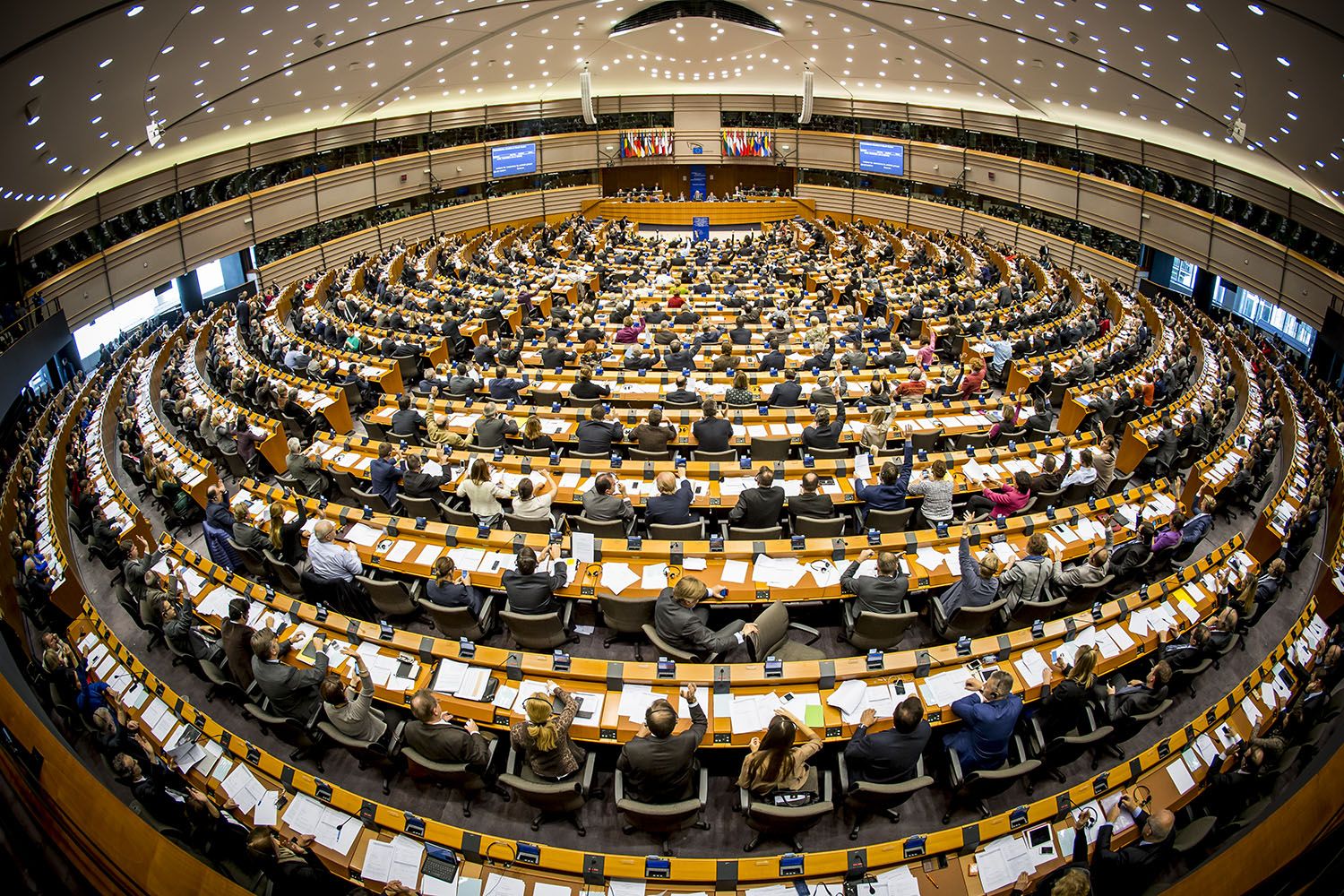
    But the timing could not have been worse. In the coming days, the EU Parliament’s Trade Committee is expected to vote on the EU – Vietnam Free Trade Agreement, worth 42 billion dollars annually and described by the EU as ‘the most ambitious free trade deal ever concluded with a developing country’. If passed, it will go to Parliament for a final vote on February 10.

    According to Human Rights Watch, already there is significant concern among some EU MEPs regarding Vietnam’s worsening human rights record. Just last month, they also discovered that the trade deal rapporteur, MEP Jan Zahradil, has institutional links with the Party, leading to his immediate resignation.

    With the latest incident in Dong Tam, it is also important for the 751 MEPs to realize that while the deal will bring more economic benefits to Vietnam, without clear and concrete human rights benchmarks, the deal will likely provide more incentives for the Party loyal and powerful to grab more land from the poor for developments without proper compensation and recourse.

    As a result, if passed in its present form, expect more land losses and tragic deaths in villages across Vietnam, not less. After all, 65% of Vietnam’s population still lives in rural areas.

    As for the Security Council of which Vietnam is the President this month, expect no resolutions on the matter. Dang Dinh Quy, head of Vietnam’s permanent mission in New York, is a Communist Party member himself.

  • Facilitator in EU-Vietnam Free Trade Agreement Fails to Disclose Links to Vietnamese Communist Party, Possibly Violating Code of Conduct

    Facilitator in EU-Vietnam Free Trade Agreement Fails to Disclose Links to Vietnamese Communist Party, Possibly Violating Code of Conduct

    Member of European Parliament (MEP) Jan Zahradil, who is currently the rapporteur (or facilitator) for a free trade agreement (EVFTA) and an investment protection agreement (IPA) between the European Union and Communist Vietnam, has failed to disclose his links to the Vietnamese Communist Party, in possible violation of the European Parliament Code of Conduct, a letter to the President of the European Parliament (EP) has revealed.

    The letter, sent by Philippe Lamberts, one of the co-presidents of the Greens/European Free Alliance Group, cites a recently published article by the EU Observer which accuses Zahradil of a “conflict of interest” after it was revealed that Zahradil failed to disclose that he was chairman of the Advisory Council to the Federation of Overseas Vietnamese Associations in Europe (FOVAE).

    The FOVAE is itself set up under the guidance of the Vietnamese Fatherland Front (VFF), a broad-based political organization controlled by the Vietnamese Communist Party. The Vietnamese Fatherland Front has been comparedto China’s United Front in its influence operations, and a 2016 official report from the Czech government confirmsthat the VCP uses the FOVAE as a means to control overseas Vietnamese communities.

    The EU Observer reports that Zahradil is also chair of a parliamentary “friendship group” to Vietnam, which is “[o]ften billed as a means to increase cultural understanding, promote values, and better inform the public […but is] in fact often backdoor entries for pariah governments seeking greater access to the European Parliament.”

    In response, Zahradil sought to downplay the FOVAE and friendship group’s significance, citing the former’s inactivity and the latter’s informality.  Ample evidence found by the EU Observer calls both of these assertions into question.

    In particular, the EU Observer cites examples from Vietnam’s own state-run media which show a healthy relationship between Zahradil and active FOVAE chairman Hoang Dinh Thang (who is also on the Presidential Committee of the VFF). Another articlefrom the Vietnam People’s Army website touts the efficacy of the parliamentary “friendship group” in advocating for the EVFTA.

    Regardless of these two groups’ relevance, Zahradil’s failure to disclose his links may directly violate Article 3 of the European Parliament’s Code of Conduct, which requires that “Members shall disclose, before speaking or voting in plenary or in one of Parliament’s bodies, or if proposed as a rapporteur, any actual or potential conflict of interest in relation to the matter under consideration”.

    Jan Zahradil is of Czech origin and has been an MEP since 2004. He is a member of the Civic Democratic Party and part of the rightwing Eurosceptic group “European Conservatives and Reformists” (ECR) in the EP. In addition to rapporteur for the EVFTA and IPA, he is also vice-chair of the EP’s International Trade Committee (INTA).

    Although the EVFTA and IPA have both been signed by Vietnam and their EU counterparts, the agreements (and their amendments) must be formally ratified by the European Parliament at its plenary session in February 2020 in order to take effect. NGOs and democracy groups insist Vietnam’s deteriorating human rights record must be improved before the EU proceeds with these agreements.

    Update: Jan Zahradil has resigned from his position as rapporteur for the EVFTA, effective December 10th.

  • EU Parliament’s Members Ask Vietnam To Release Activist Hoang Duc Binh, Reiterate Human Rights Benchmark for EV-FTA

    EU Parliament’s Members Ask Vietnam To Release Activist Hoang Duc Binh, Reiterate Human Rights Benchmark for EV-FTA

    February 1, 2019, a group of nine EU Parliament’s members from different political parties, jointly sent a letter to Vietnam’s President Nguyen Phu Trong, asking for the unconditional release of environment and labor rights defender, Hoang Duc Binh.

    The letter reminded Vietnam that “the promotion and protection of fundamental rights must remain a common benchmark” for the continuing negotiation of the Free Trade Agreement between the European Union and Vietnam.

    According to the MEPs’ letter:

    The EVFTA commits the European Union and Vietnam to respect and effectively implement such principles and fundamental rights as provided in the ICCPR.

    The European Council has delayed the EV-FTA’s ratification process due to “technical reasons” according to two other MEPs, Jude Kirton-Darling and Ramon Tremosa. They released a video clip on January 22, 2019, demanding that Vietnam improves its human rights records for the EV-FTA to proceed.

    Almost one year ago, on February 6, 2018, a court in Central Vietnam convicted Hoang Duc Binh on two separate charges, “resisting officers acting under their duty,” and “abusing freedoms and democratic rights to infringe upon the State’s interest or the rights and interests of other entities and individuals.” (Articles 257, 258 of the 1999 Penal Code, amended as 330, 331 under the 2015 Penal Code).

    Binh was sentenced to the maximum term of 7 years for each of the offenses, which meant that the court found his conduct to be “seriously harmful” to the public according to the sentencing guidelines.

    Binh maintained his innocence, stating that all he did was accompanying a group of fishermen and a Catholic priest to travel from Nghe An to Ha Tinh to file their civil suits against Formosa Ha Tinh Steel Corporation.

    Formosa Ha Tinh was the main culprit that had paid 500M USD to settle the damages they caused in the environmental disaster which affected four coastal provinces in Central Vietnam back in 2016.

    In recent months, Hoang Duc Binh’s family has raised concerns about his deteriorating health conditions after each visitation.

    The letter was signed by Barbara Lochbihler (Greens/EFA), Wajid Khan (S&D), Petras Austrevicius (ALDE), Anne-Marie Mineur (GuE), Ana Gomes (S&D), Karoline Graswander-Hainz (S&D), Reinhard Bütikofer(Greens/EFA), David Martin (S&D), and Marietje Schaake (ALDE).

    The MEPs asked that Hoang Duc Binh “to be immediately and unconditionally released” and that he will be “allowed to remain inside his home country, Vietnam, and not forced into exile as a precondition for his release.”