On the same day in 2020 that Vietnam chaired its first Security Council meeting in New York, just a few hours earlier and some 8000 miles away near its capital, Hanoi, the Communist Party of Vietnam directly attacked Dong Tam village for refusing to give up its land.
The result? Police shot dead Dong Tam’s beloved leader and former Party village chief, Le Dinh Kinh, an 84-year-old veteran who had been a Party member for 57 years; three police officers also died after falling down a sky-light, ostensibly pursuing “suspects” who resisted the authorities. Twenty two villagers have subsequently been arrested, with twenty being charged with murder. If convicted, these villagers could face the death penalty.
The Dong Tam land seizure event of last week is therefore a watershed moment in Vietnam’s post-war history for many reasons. First, it marks for the first time in the age of social media an open and deadly clash between the Party and its once loyal support base: villagers in northern Vietnam. According to a 2015 Bloomberg finding, almost 70% of Party members live in the north, even though the north is home to less than half of the country’s population of 96 million.
Second, it shows the Party’s determination in ending the dispute, no matter the costs, and the great lengths it will go to muzzle public outcry afterwards, both on- and offline.
Just two days after the incident, the Ministry of Information, which controls and censors all media content in Vietnam, called for Facebook – by far the most popular social media platform in Vietnam, used by some 55 million netizens – to be punished for ‘not following Vietnamese laws’ in allowing ‘distortion and fake news’ to be spread on its platform.
Following official warnings and thanks to a large cyber-troop force the government employs, some users reporting on Dong Tam have been locked out of their accounts or had content taken down by Facebook, a fact Amnesty International has confirmed in recent days.
Offline, the Party’s determination couldn’t be more clear. Less than 24 hours after the incident, the most senior member of the Politburo and Vietnam’s top leader, Party General Secretary Nguyen Phu Trong, posthumously awarded the officers killed the title of “martyr”, designating them as first-class heroes.
A week later, in an elaborate ceremony held at the State Funeral House, the Prime Minister himself along with other Politburo members, including the powerful Minister of Public Security, attended the funeral, noting that the officers ‘sacrificed their lives to protect national security’.
It is, indeed, not surprising that the Party views the incident as a matter of significant national security. After all, though land disputes are common in Vietnam because the government does not recognize private land ownership, never before has an entire village dared to resist government seizure of its land at all costs and announce its intentions accordingly on Youtube and Facebook.
With Vietnam’s economy expected to grow faster in the next decade, land designated for development purposes and seized by the government will likely exacerbate the security situation on the ground if not dealt with decisively. In the case of Dong Tam, the land seizure was for Viettel Group, Vietnam’s military-run communications company. They had to act.
But the timing could not have been worse. In the coming days, the EU Parliament’s Trade Committee is expected to vote on the EU – Vietnam Free Trade Agreement, worth 42 billion dollars annually and described by the EU as ‘the most ambitious free trade deal ever concluded with a developing country’. If passed, it will go to Parliament for a final vote on February 10.
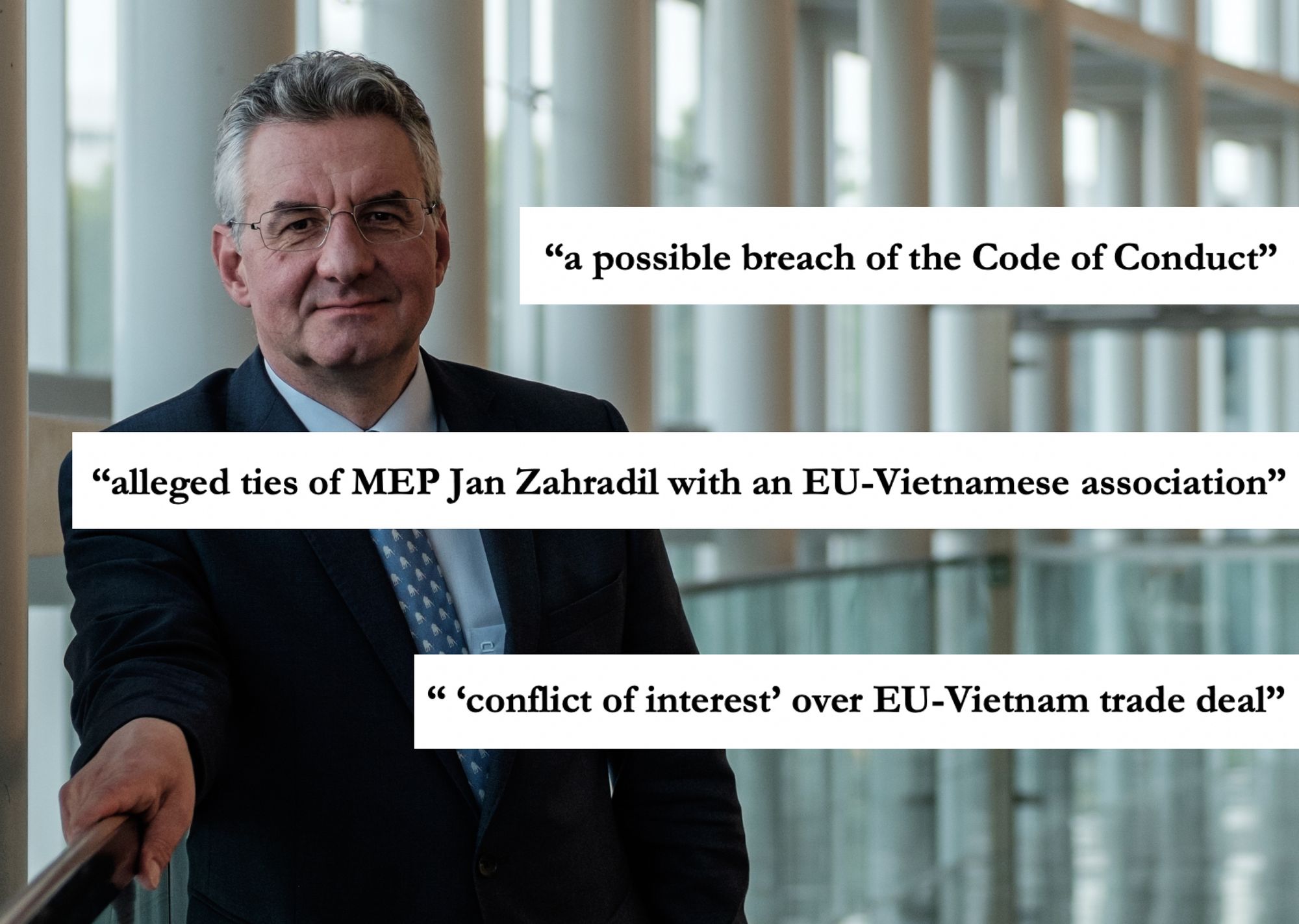
According to Human Rights Watch, already there is significant concern among some EU MEPs regarding Vietnam’s worsening human rights record. Just last month, they also discovered that the trade deal rapporteur, MEP Jan Zahradil, has institutional links with the Party, leading to his immediate resignation.
With the latest incident in Dong Tam, it is also important for the 751 MEPs to realize that while the deal will bring more economic benefits to Vietnam, without clear and concrete human rights benchmarks, the deal will likely provide more incentives for the Party loyal and powerful to grab more land from the poor for developments without proper compensation and recourse.
As a result, if passed in its present form, expect more land losses and tragic deaths in villages across Vietnam, not less. After all, 65% of Vietnam’s population still lives in rural areas.
As for the Security Council of which Vietnam is the President this month, expect no resolutions on the matter. Dang Dinh Quy, head of Vietnam’s permanent mission in New York, is a Communist Party member himself.