Tag: EV-FTA

  • Vietnam Briefing: The Military Faces Crisis Over The Death Of A Young Officer. More Arrests And Charges Against Civil Society Actors

    Vietnam Briefing: The Military Faces Crisis Over The Death Of A Young Officer. More Arrests And Charges Against Civil Society Actors

    The Vietnam Briefing, which is released every Monday morning Vietnam time, looks at Vietnam’s political developments of the past week.


    A young military officer found dead

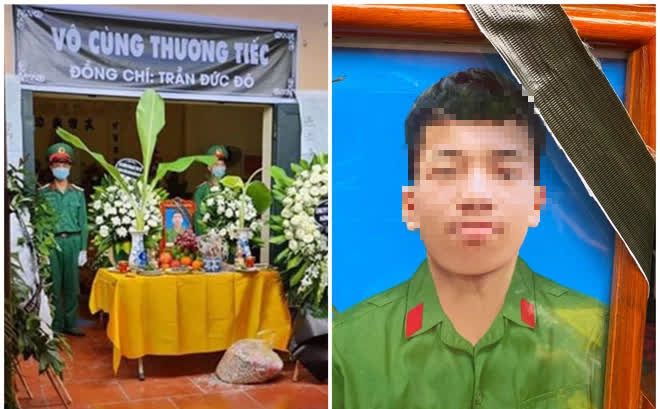
    On June 28, a 19-year-old military officer, Tran Duc Do, was found dead while undergoing compulsory military service. Both the military and the state-controlled media push the narrative that the young officer committed suicide and that no abuse or misconduct happened. The officer’s family has been contesting this narrative, as they said that bruises were found on his body, and their son had told them not long before his death that he was being bullied in the military.

    The death of the young military officer has caused an uproar on the internet.

    The Vietnamese military has a lot to answer for in recent months. This started in January with the military’s violent involvement in the Dong Tam land dispute near Hanoi, followed by the exposure of the military’s ties with the military junta in Myanmar through its telecommunications company, Viettel.

    However, unlike these two stories, the general public in Vietnam is particularly concerned with this case of the young military officer, and seems to be more critical of the military regarding this incident.

    The young officer’s family has been very vocal about his death, particularly to international press platforms like BBC Vietnamese. The officer’s mother said to the BBC, “If my son’s murderer is not found, the Vietnamese people will not trust the Communist Party anymore.”

    On Facebook, some activists also told stories of how the military has been mistreating the family of Tran Duc Do. Activist Nguyen Anh Tuan wrote on his Facebook that the military had been pressuring hospitals from Bac Ninh to Hanoi not to agree to preserve Tran Duc Do’s corpse when the family wanted to delay the funeral so an autopsy could be performed. The internet was also cut in the entire street of Do’s family. According to the activist, Do’s family had to purchase their own refrigerator to preserve his body before his funeral.

    On July 1, Tran Duc Do was finally put to rest as his family buried him. However, it seems that his family is still fighting to find the true cause of his death.


    Questionable arrests and charges against civil society actors

    Last week witnessed the arrest of prominent independent blogger Le Dung Vova, captured by the police a month after an official warrant was issued for his arrest. He was arrested for his “anti-state” writings on social media, a legal offense based on Article 117 of the 2015 Penal Code, one of the typical charges against independent journalists and bloggers.

    Previously, he had also been detained twice in 2019: when he and his colleagues at the independent platform CHTV live-streamed about the US-North Korea summit in Hanoi, and when they attended a workshop on the South China Sea, though he was released on both occasions.

    Last week also saw the ruling to detain journalist Mai Phan Loi and lawyer Dang Dinh Bach. They were both charged with tax fraud. These two were involved in the VNGO-EVFTA Network, a network of non-governmental organizations (NGOs) founded earlier this year in Vietnam to promote the involvement of NGOs in the implementation of the European Union-Vietnam Free Trade Agreement. They were both the Executive Board members of the VNGO-EVFTA Network.

    Loi was the chair of the Scientific Council of the Center for Media in Educating Community. At the same time, Bach was the Law and Policy Research Center for Sustainable Development director. Loi was also a member of civil society activists who met with President Obama in Hanoi during his May 2016 trip. Previously in June 2016, Mai Phan Loi’s journalist ID was revoked by the authorities for conducting a poll on Facebook about the accidents involving Vietnamese naval aircraft.


    Former premier of the Republic of Vietnam passes away at 95

    Tran Thien Khiem, second in command to President Nguyen Van Thieu of the former South Vietnamese regime, passed away recently on June 23 in California at the age of 95.

    During his time as a politician and a prominent military general in the former Republic of Vietnam, Khiem was considered the right-hand man of President Thieu. He was the regime’s premier from 1969 to its last days in 1975, and he was involved in many military coups, particularly the one leading to the death of former President Ngo Dinh Diem. After the war ended, he immigrated to the United States, where he lived a quiet life. Read more about his life here.


    Netflix removes movie showing nine-dash line map

    Last week, Netflix had to remove a movie from its service in Vietnam due to complaints from the Vietnamese authorities that the movie showed the nine-dash line map, which is China’s map for territorial claims in the South China Sea.

    This was not the first time either the Vietnamese authorities or the public were concerned about commercial products due to their showcasing of the nine-dash line map. In April, there was a widespread call to boycott the clothing brand H&M in Vietnam over the speculation that the brand supported the nine-dash line map.

    The conflict of territorial claims between China and Vietnam is particularly interesting as the country witnessed the rise of contemporary anti-China nationalism, in contrast to the Communist Party’s propaganda on China’s ideological brother. Read more about this topic in The Vietnamese Magazine’s article published last week, “Why Did The Vietnamese Communist Party Suppress Anti-China Nationalism?”


    COVID-19 in Vietnam

    New vaccination approval: Moderna was recently approved for emergency use in Vietnam. The other vaccines that have been approved include AstraZeneca, Sputnik V, and Sinopharm.

    Vaccination sites are causing fear of superspreaders, according to Nikkei Asia. The situation is leading to calls for better organization of mass vaccination during outbreaks in Vietnam.


    Learn more about Vietnam

    The U.S. Risks Losing Out From Its Own Trade Push in Vietnam

    Sheridan Prasso/Bloomberg/July 1, 2021

    “With China making a territorial grab in the South China Sea, American LNG shipments—which would be protected by the U.S. Navy—will continue to hold appeal for the Vietnamese. But without guarantees for U.S. companies, Vietnam could just as easily turn to cheaper and closer LNG sources, such as from Qatar, Australia, and Malaysia. Since President Joe Biden came into office, Vietnam is no longer being pressured by the U.S. the same way on trade. Signaling a less confrontational approach to trade policy, the Treasury Department in April declined to designate Vietnam a “currency manipulator,” as the Trump administration had done in December. U.S. Trade Representative Katherine Tai merely mentioned the concern in an April call with her Vietnamese counterpart.”

    Vietnam, Singapore Begin Negotiations on Digital Trade Agreement

    Linh Tong/The Diplomat/June 30, 2021

    “It is still too early to hail a digital economy agreement between Singapore and Vietnam. And it will be an even longer road before Vietnam can align itself with Singapore’s digital trade standards so that both nations can reap the full benefits of any potential agreement. But in agreeing to begin discussions, the two nations mark a recognition of the benefits of a liberalized approach in dealing with the emerging challenges of digital trade. At the very least, by taking the first steps along this road, Vietnam and Singapore have recognized that no single nation can fully enjoy digital trade benefits by imposing protectionist regulations, separating itself from the global digitalization standards. There must be win-win cooperation in order for digital trade to fulfill its full potential.”

    A Confused Biden Team Risks Losing Southeast Asia

    James Crabtree/Foreign Policy/June 27, 2021

    “The region should matter in Washington. It contains two U.S. allies: the Philippines and Thailand. There are other major partners, too, including Indonesia, Singapore, and Vietnam. Yet, economic ties in all these countries have shifted toward China as of late. Closer diplomatic ties are likely to follow in many cases, absent concerted U.S. action. Few regional policymakers relish a possible future under China’s sway and mostly want to maintain a balance between the two superpowers—which means they want the United States to stay closely engaged in regional affairs. But it is for precisely this reason that Southeast Asia is so attuned to signs of distraction or muddled thinking in Washington.”
  • How Can The EU Parliament Convince Us That Vietnam Will Improve Its Human Rights Record When Dissidents Continue To Get Jailed For Exercising Their Rights?

    How Can The EU Parliament Convince Us That Vietnam Will Improve Its Human Rights Record When Dissidents Continue To Get Jailed For Exercising Their Rights?

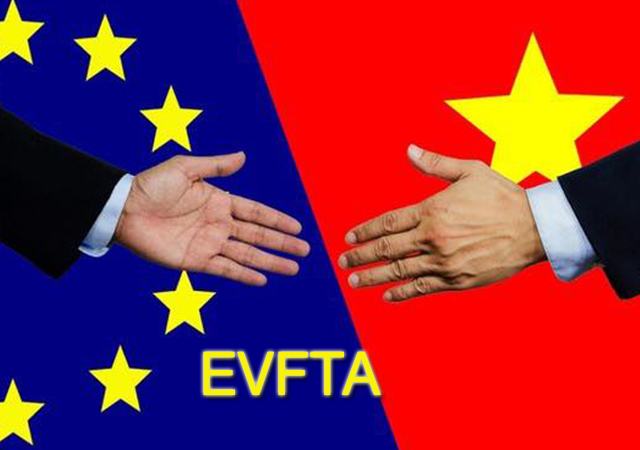
    The European Union – Vietnam Free Trade Agreement (EV-FTA) is expected to be a comprehensive win-win deal for both sides, ambitiously seeking to improve trade and boost mutual economic growth. As with all free trade agreements to which the EU is a party to, a human rights clause is built into this FTA with Vietnam. Many EU officials and parliament members that I have met in the past two years through my advocacy for Vietnam’s human rights situation earnestly believe that Vietnam will improve its record once the FTA takes effect.

    In the past, these friends have asked me to have some faith in the current regime, assuring me that our Vietnamese human rights activists and defenders will have better days in the future. It is a very typical “give them more time” argument that they expect me to accept. Yet the record shows that Vietnam’s aggression against human rights activists increases every year while government-controlled courts continue to hand out harsh sentences. I often wonder how EU officials still want to convince me to have such faith?

    In March 2019, I met with an EU official who was participating in the negotiations of the EV-FTA. She expressed great sympathy for human rights defenders in Vietnam and even realized the situation for human rights there was worrying. And yet, towards the end of our conversation, she asked me what I thought about one of Vietnam’s ministers, whose name I will not disclose. She seemed to be fond of the guy and praised him for belonging to a “progressive group in the Vietnamese Communist Party (VCP)” that she said hopefully would one day push for an improvement in human rights in the country.

    As a democracy activist, I personally think that regardless of whether a person is progressive or not, none of the VCP members right now would dare to inch away from the Party’s political monopoly inside the country. And I frankly stated that the Ministry of Public Security – the national police – would never allow any official to raise his or her voice over the human rights situation in Vietnam. Asking for political pluralism, an improvement in the human rights situation, and democracy would place anyone in danger of being sent to prison for more than a decade, as the latest political trials have shown this year.

    I met with the official right after attending the United Nations Human Rights Committee’s 125th session in Geneva, Switzerland where the Committee completed its third periodic report on Vietnam’s implementation of the International Covenant on Civil and Political Rights (ICCPR). Vietnam submitted its report after a 13-year delay in December 2017–the original deadline was set for August 2004. The Committee sadly acknowledged that in Vietnam’s review “less information was provided on the actual implementation of ICCPR and application of domestic laws in practice, where concrete data was crucially lacking.”

    Vietnam ascended to the ICCPR in 1982, but with regard to complying with the international covenant on human rights, it didn’t actually provide any opportunities for people to learn and exercise their rights. More than that, the government did not allow the Vietnamese people to use the ICCPR in courts to defend themselves when such rights were being violated.

    The point is that more than three decades after Vietnam joined the ICCPR, the human rights situation in Vietnam remains hopeless and people’s rights are being violated on a daily basis. How can we believe that the EV-FTA will improve such a situation when the ICCPR has so far failed so miserably?

    I began to write this article after receiving the news that a close friend, an activist from Vietnam, had been detained upon arrival at the Noi Bai International Airport, where she was put into detention by 10 security police. Dinh Thao is an environmental and human rights activist who left Vietnam to study and work abroad as an advocate for human rights more than three years ago. She was a medical doctor before becoming an activist and I am sure some of the EU parliament members must remember her because she advocated for Vietnam’s human rights situation in Brussels a few years ago and may have met some of them.

    Thao is non-violent and even created a project to educate people about peaceful demonstrations. Yet she was detained by the police immediately after her arrival in Vietnam. What crime did she commit to deserve such treatment? Or is it just simply the fact that the government violated her rights in retaliation for her advocacy internationally for more human rights in Vietnam?

    On the same day that Dinh Thao was detained, November 15, 2019, another Vietnamese was sentenced to 11 years imprisonment and five years of house arrest. Nguyen Nang Tinh, a  music teacher who also advocated for human rights and democracy for Vietnam, was accused by the state of “propagandizing against the government” via his Facebook posts. Tinh denied that the alleged Facebook account belongs to him, but if you read the posts in that account you’ll see that there was nothing that called for a violent overthrow of the regime. If you search for him online, you will see videos of him teaching young children patriotic songs, songs that demand human rights for the people. How could his activities be called “propaganda against the state”?

    As I have worked to protect the human rights of activists in Vietnam for many years, I have often recounted their stories to many Western politicians and officials. The activists I have met are people who had the opportunity to learn about the concept of human rights and who then started to defend such rights for others and also sometimes for themselves. They are the people who believe in the spirit and the universal values of human rights and they also believe that international laws, such as the ICCPR, will protect them. They probably had hoped that the ICCPR would be implemented in Vietnam at their trials. But that hope was never realized because we have never seen arguments articulating any of the articles of the ICCPR, such as Article 19, which protects the freedom of expression, presented in Vietnamese courts.

    And as a result, human rights activists and defenders have often typically been sentenced in rushed one-day trials without an independent judiciary. Sometimes the decisions handed down include lengthy jail sentences, as in the case of Nguyen Nang Tinh, which happened this month.

    In response to the EU officials who asked me to “have faith” in the regime, I point to a database built by the independent civil society organization The 88 Project, which catalogues the arrest and detention of political prisoners in Vietnam. A representative of that organization informed me a few days ago that in 2018, the Vietnamese government had arrested 145 people. These arrests showed the authorities’ blatant violation of the human rights of citizens. That number was greater than the number of arrests Vietnam made in 2017, 2016, and 2015 combined. In 2018, the number of arrests went up because the government detained and sentenced many people after large demonstrations happened in June 2018, in protest against the new cybersecurity law and the development of special economic zones with Chinese investment.

    It is not only human rights activists who are being treated unfairly and who are suffering mistreatment in Vietnam. There are also other groups, such as the workers, for whom the EV-FTA probably has some aspirations to improve their work environment and living standards. Many EU Parliament members have urged the Vietnamese government to quickly ratify the remaining three International Labor Organization (ILO) conventions prior to EU voting on the trade deal. Vietnam has promised to ratify the three ILO conventions over a time period of five years beginning in 2018. However, ratification of international laws is one thing, while the reality of how the Vietnamese authorities have failed to improve workers’ lives is another story.

    In Taipei, Taiwan, legal migrant workers from Vietnam went on a protest this month to demand the abolition of broker fees that each of them had to pay to be able to work in Taiwan. These broker fees are considered to be part of the most exploitative system of all of the countries in Southeast Asia from which these workers come from. What does the Vietnamese government know about this system and why does it allow such a broker fee system to continue to exploit their people? Would the EV-FTA be able to eradicate that system to improve the lives of these workers? How can I have the faith to believe that the Vietnamese government will ever take care of these people?

    Recently, Prime Minister Hun Sen of Cambodia released 70 opposition activists in order to improve his country’s human rights image after the EU threatened the withdrawal of special trade preferences. Cambodia’s political system has many aspects that are far better than in Vietnam. That country at least has an opposition political party – the Cambodian National Rescue Party (CNRP). On the contrary, the Vietnamese Communist Party has a political monopoly and we don’t have a single other political party.

    Running for office as an independent candidate will not lead to any success as the 2016 elections have demonstrated. Being a member of a political party that was formed overseas was the reason that Vietnam sentenced a 70-year-old Vietnamese-Australian man, Chau Van Kham, to 12 years in prison earlier this month.

    And yet, the EV-FTA provides for a lot more benefits for Vietnam than compared the trade preferences that Cambodia would get from the EU. How can Cambodia demonstrate a greater willingness to improve its human rights record while Vietnam just keeps getting worse? How can I have faith that Vietnam will eventually improve?

    During these days, police brutality in Hong Kong has increased dramatically as we see from the recent news coming out from universities there. And as we support and pray for young people there, I hope none of the international politicians and officials will say “give China more time” so that they can resolve their human rights problems.

    In my personal capacity, despite all my efforts, I have yet to make Vietnam’s human rights situation become more well-known in the world. However, I can not look at all of my human rights activists friends in Vietnam and tell them to be patient and to give the government more time.

    We need to raise our voices and demand right now that the Vietnamese government make an effort to improve its human rights record. Should Vietnam make some improvements prior to the EU Parliament vote on the FTA trade deal? Yes, absolutely. Vietnam has to show its good faith by releasing the more than 200 political prisoners who are currently serving time and by allowing the emergence of political pluralism with fair and free elections.

  • EU Officials Raised Concern Over Worrying Human Rights Situation In Vietnam

    EU Officials Raised Concern Over Worrying Human Rights Situation In Vietnam

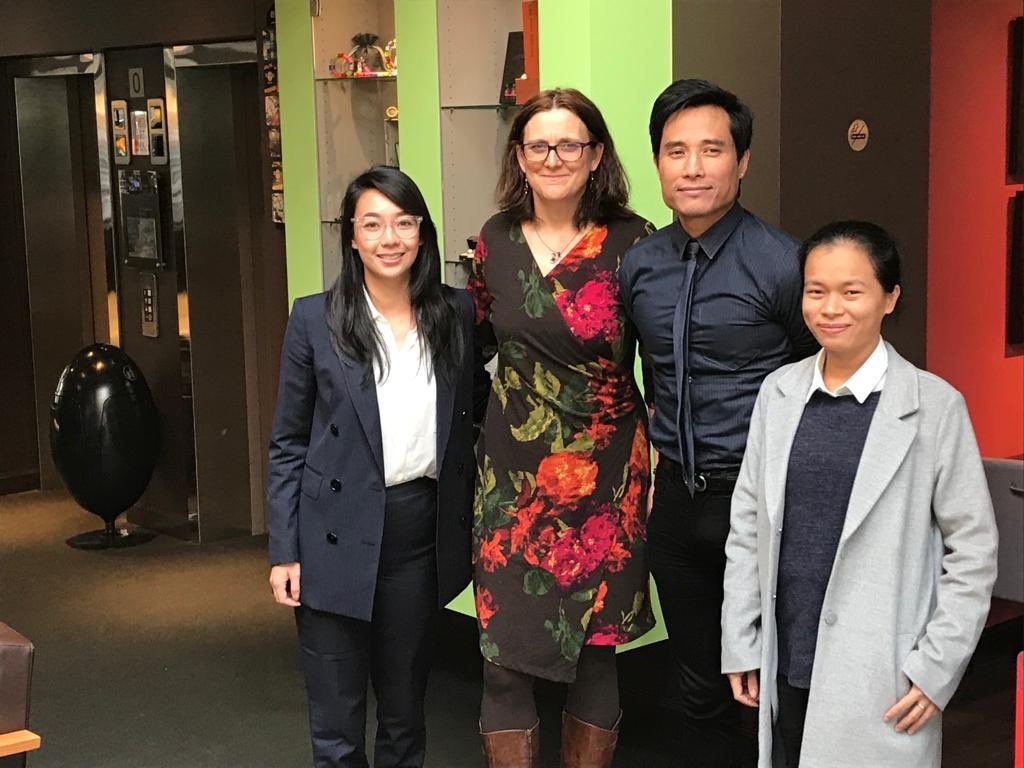
    “The human rights situation in Vietnam is worrying,” according to Commissioner for Trade of the European Union, Cecilia Malmström, after her meeting with independent Vietnamese civil society organizations on March 14, 2019.

    When announcing the adoption of the EU-Vietnam trade and investment agreements (EV-FTA) in October 2018, Commissioner Malmström had hoped that such agreements would “help spread European high standards and create possibilities for in-depth discussions on human rights and the protection of citizens.”

    However, during recent months, the human rights situation in Vietnam did not improve.

    Instead, it became more concerning.

    Commissioner Malmström is not the only EU official who has expressed concerns over the worrying trend of suppression on human rights in Vietnam in recent months.

    32 MEPs from across the political spectrum of the EU Parliament signed a letter back in September 2018, calling on the EU to demand specific human rights improvements from Vietnam before the ratification of the EV-FTA.

    EU Spokesperson on Foreign Affairs and Foreign Policy, Maya Kocijancic, also confirmed in an interview with Radio Free Asia earlier this month, that during the 8th EU-Vietnam Human Rights Dialogue held in Brussels on March 4, 2019, the EU had addressed specific cases of prisoners of conscience with the Vietnamese delegation.

    Ms. Kocijancic also stated during the same interview that the annual dialogue “raised a wide range of issues related to freedom  of expression, cybersecurity, the death penalty, environmental and labor rights, cooperation within the United Nations framework.”

    As of today, The 88 Project’s database documented 21 Vietnamese activists are held in pre-trial detention. There are 218 other activists currently serving a prison sentence; among them, 30 are female activists and 51 indigenous political prisoners.

    According to VOICE (Vietnamese Overseas Initiative for Conscience Empowerment), one of the organizations attended the meeting with Commissioner Malmström, the unconditional and in-country release of Vietnamese prisoners of conscience must be the first human rights benchmark before the ratification of the EV-FTA.

  • Vietnam: When Workers’ Rights Face Resistance From A Socialist Government

    Vietnam: When Workers’ Rights Face Resistance From A Socialist Government

    Vietnam’s dismal human rights records in 2017 and 2018 could play a role in delaying the ratification of the much anticipated European Union-Vietnam Free Trade Agreement (EV-FTA) this year.

    A group of MEPs from across the EU Parliament’s political spectrum has repeatedly demanded that Vietnam improves its human rights conditions before they would vote on the trade deal.

    The latest demand was a joint letter to President Nguyen Phu Trong on February 1, 2019, sent by nine MEPs on the case of Hoang Duc Binh, an environmental and labor rights activist who was sentenced to 14-year-imprisonment in 2018.

    Releasing political dissidents and activists would indeed be a sensitive issue for the communist regime to compromise, even for the sake of clinching the ambitious EV-FTA deal where Vietnam could expect a 15% GDP gain.

    But there has always been another human rights condition which one would assume that it should have received natural cooperation from the socialists in Hanoi: the ratification of the remaining three ILO (International Labor Organization) conventions.

    That, however, has not been the case.

    Vietnam, while rejoined the ILO since 1993, to date, has yet to ratify the following three conventions:

    ILO Convention No. 87 – Freedom of Association and Protection of the Right to Organize Convention, 1948 (No. 87)ILO Convention No. 98 – Right to Organise and Collective Bargaining Convention, 1949 (No. 98)ILO Convention No. 105 – Abolition of Forced Labour Convention, 1957 (No. 105)

    In late 2018, Vietnam ratified the Comprehensive and Progressive Agreement for Trans-Pacific Partnership (CP-TPP) where a specific clause (Article 19) also addresses similar conditions regarding labor and workers’ rights.

    On the ground, the Vietnamese government is proposing a roadmap that could take almost five years to get all three ILO conventions ratified.

    It is not fast enough for the EU’s MEPs, and as of right now, these ILO conventions continue to be part of the obstacles to move the EV-FTA forward.

    Vietnam maintains that its current Labor Code and legal framework would protect the rights of workers in the country while waiting for the Draft of the amended Labor Code to be reviewed and passed by its Congress later in 2019, paving the way for the ratification of the ILO conventions to take place between now and 2023.

    In reality, impracticality contradicts the government’s claim.

    For example, it is not meaningful to discuss the right of association and the protection of the right to organize according to ILO Convention No. 87 when Vietnam, to date, has refused to pass laws on the freedom of association and the right to assemble and demonstrate although their Constitution of 2013 guarantees these rights to all of its people.

    Participation in demonstrations, moreover, could likely lead to arrest, detention, and conviction for “inciting public disorder” in Vietnam.

    In June 2018, mass protests broke out in a few major cities against the then pending draft bills of the cybersecurity law and the development of three special economic zones in Vietnam. In response, the police arrested and detained hundreds of people.

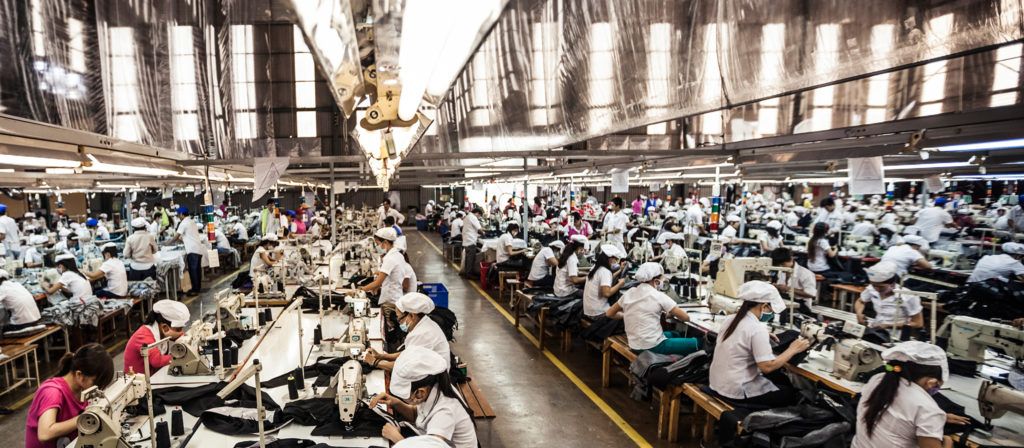
    One of the “hot spots” considered by the police of Ho Chi Minh City as reported by state-owned media at the time, was near the Taiwanese Pou Yuen factory in Binh Tan District where some workers did join in the protests between June 9 and June 13, 2018.

    According to the organization The 88 Project, more than 60 people were arrested, tried, and sentenced to between 24-36 months imprisonment due to their participation in those demonstrations. Some of them are believed to be factory workers from the outskirts of Ho Chi Minh City.

    The legal system continues to create hurdles in the registration processes for independent organizations. It is an issue which the UN Human Rights Committee has brought up with Vietnam before its upcoming CCPR (Covenant on Civil and Political Rights) review in March 2019.

    At the end of 2016, Vietnam had attempted – but failed – to pass the Law on Association when it faced a defiant opposition from civil society organizations, both registered and unregistered.

    One of the reasons which caused the majority of NGO workers in Vietnam to go against the proposed bill then, was because it attempted to criminalize the receiving of foreign funding and gave preferential treatment to GONGO(s) (Government-organized non-governmental organizations).

    The Vietnam General Confederation of Labour (VGCL) – the only labor union in Vietnam right now – is not only a GONGO but also takes directives from the Vietnamese Communist Party.

    During his speech in front of the National Assembly on November 2, 2018, the Vice-Chairman of the VGCL, Ngo Duy Hieu, cautiously reaffirmed that the ratification of the CP-TPP requires Vietnam to recognize independent unions while tried to cast doubts on their credibility.

    At the same time, the government has yet to legally recognize any organization – large or small – formed by private citizens that could remotely represent an independent union for workers.

    Vietnam, in 2017, reported an estimated population of approximately 26M workers in a variety of different industries.

    The possibility of getting arrested and jailed under the current legal scheme, however, did not seem to deter a portion of these Vietnamese workers from exercising their rights.

    Protests organized by workers continued to happen in Vietnam regardless, with the most common reason often linked to improving wages and working conditions – which ILO Convention 97 on collective bargaining could help.

    Indeed, the government probably has already anticipated that the ratification of the ILO conventions would encourage even more workers to come together and organize themselves, independent from the VGCL in the future, once the legal landscape changes.

    It is a slippery slope that Hanoi fears as it may spread to other sectors in society, which could explain the cautious approach in their proposed roadmap for the ratification of the three ILO conventions.

    Accordingly, Vietnam proposed that they will present the National Assembly with the Draft of the amended Labor Code in May 2019 and expected the new law would pass at the next congressional meeting in October 2019. Also in 2019, the President will present ILO Convention No. 98 to the National Assembly for ratification. Next, it would be ILO Convention 105 in 2020, and finally ILO Convention No. 87 to be presented in 2023.

    The proposed roadmap by the Vietnamese government, however, seems to have failed to convince the EU Parliament that workers’ rights are being protected, enough to move the EV-FTA forward.

    The European Council has delayed their vote for EV-FTA last month. With the deadline for amendments also get postponed indefinitely, it is unlikely that the current EU Parliament will vote on the EV-FTA before their upcoming election in May 2019.

  • EU Parliament’s Members Ask Vietnam To Release Activist Hoang Duc Binh, Reiterate Human Rights Benchmark for EV-FTA

    EU Parliament’s Members Ask Vietnam To Release Activist Hoang Duc Binh, Reiterate Human Rights Benchmark for EV-FTA

    February 1, 2019, a group of nine EU Parliament’s members from different political parties, jointly sent a letter to Vietnam’s President Nguyen Phu Trong, asking for the unconditional release of environment and labor rights defender, Hoang Duc Binh.

    The letter reminded Vietnam that “the promotion and protection of fundamental rights must remain a common benchmark” for the continuing negotiation of the Free Trade Agreement between the European Union and Vietnam.

    According to the MEPs’ letter:

    The EVFTA commits the European Union and Vietnam to respect and effectively implement such principles and fundamental rights as provided in the ICCPR.

    The European Council has delayed the EV-FTA’s ratification process due to “technical reasons” according to two other MEPs, Jude Kirton-Darling and Ramon Tremosa. They released a video clip on January 22, 2019, demanding that Vietnam improves its human rights records for the EV-FTA to proceed.

    Almost one year ago, on February 6, 2018, a court in Central Vietnam convicted Hoang Duc Binh on two separate charges, “resisting officers acting under their duty,” and “abusing freedoms and democratic rights to infringe upon the State’s interest or the rights and interests of other entities and individuals.” (Articles 257, 258 of the 1999 Penal Code, amended as 330, 331 under the 2015 Penal Code).

    Binh was sentenced to the maximum term of 7 years for each of the offenses, which meant that the court found his conduct to be “seriously harmful” to the public according to the sentencing guidelines.

    Binh maintained his innocence, stating that all he did was accompanying a group of fishermen and a Catholic priest to travel from Nghe An to Ha Tinh to file their civil suits against Formosa Ha Tinh Steel Corporation.

    Formosa Ha Tinh was the main culprit that had paid 500M USD to settle the damages they caused in the environmental disaster which affected four coastal provinces in Central Vietnam back in 2016.

    In recent months, Hoang Duc Binh’s family has raised concerns about his deteriorating health conditions after each visitation.

    The letter was signed by Barbara Lochbihler (Greens/EFA), Wajid Khan (S&D), Petras Austrevicius (ALDE), Anne-Marie Mineur (GuE), Ana Gomes (S&D), Karoline Graswander-Hainz (S&D), Reinhard Bütikofer(Greens/EFA), David Martin (S&D), and Marietje Schaake (ALDE).

    The MEPs asked that Hoang Duc Binh “to be immediately and unconditionally released” and that he will be “allowed to remain inside his home country, Vietnam, and not forced into exile as a precondition for his release.”