Tag: Dong Tam

  • Vietnam Briefing: Dong Tam And The General Election

    Vietnam Briefing: Dong Tam And The General Election

    It’s a new week and Vietnam Briefing’s mission is to keep our readers up to date on developments in Vietnam. As we missed the briefing last week, here is the key news of the past two weeks.


    Vietnam has started to roll out COVID-19 vaccines

    The Vietnamese government started administering the first COVID-19 vaccinations doses on March 8. Frontline workers, including doctors, nurses and technicians at designated hospitals combatting COVID-19 are among the first to receive the vaccines produced by Oxford University and AstraZeneca.


    High court affirms verdict on Dong Tam case

    The appellate trial of the Dong Tam case (March 8-9) went just as everyone expected: no overturning of any sentences and no amendment to the lower court’s verdict. The sentences of the six defendants remain the same, including two death penalties.

    A fair trial? It’s hardly a thing in Vietnam. Take the word of Phil Robertson of Human Rights Watch:

    “There are still many unanswered questions about what happened during the Dong Tam raid that authorities have never been willing to clarify.”

    “We are also deeply troubled by the information brought out in the defense lawyers’ report, stating that police used torture on some defendants to force them to confess, raising fundamental concerns about the fairness of the entire trial.”

    A historic case, yes. The Dong Tam case is undoubtedly one of the most important and consequential events in Vietnam’s post-1975 history. Those who wish to study the country’s history of land struggles and party-controlled judiciary should take a very close look into the case as it is among the most well-documented events and it provides an intensive account of the issues.

    Learn more about the case:


    The National Assembly is in the final days of its current term. Yet, it may elect new state leaders just before the election.

    In an unexpected, but not unprecedented, move, the Communist Party’s Central Committee is sending three candidates to the National Assembly’s last session of the term for confirmation of three top state positions: president, prime minister, and chair of the National Assembly.

    The Party and state media provided no information about who the candidates are, but you don’t need them to name names in order to know who these people are. Vietnamese people often read between the lines and listen to internet influencers – some they believe have inside information – to know what’s going on.

    So who are they? Current Prime Minister Nguyen Xuan Phuc for president, Pham Minh Chinh for prime minister, and Vuong Dinh Hue for National Assembly chair. VCP General Secretary Nguyen Phu Trong is not seeking reelection for the presidency, although he is now running for a National Assembly seat.

    What’s special about that? It’s not about who for what, it’s about timing. If elected in April during the last session of the current National Assembly, which is almost certain, the candidates will only serve a few months until the end of the current term. After the general election on May 23, the new National Assembly will convene in July and repeat the same process of electing the same people to the same positions. That’s what happened in April 2016, right before the last general election, which was held more than a month later. And we don’t think there are many people who can explain why the VCP has to rush to do such a repetitive process. The logic behind this remains a mystery to the public.


    Man arrested after declaring intention to run for office

    This is not something that happened the last time we had an election in 2016 (yes, I know how hard it is to call it an election, but let’s use the word for now). A 61-year-old man named Tran Quoc Khanh was arrested on March 9 and accused of “making, storing, spreading information, materials, items for the purpose of opposing the State of Socialist Republic of Vietnam” under Article 117 of the Penal Code.

    He is known for his frequent Facebook activities including live-streaming on human rights and corruption in Vietnam. The arrest was conducted by Ninh Binh Provincial Police shortly after Mr. Tran declared his intention of running for a National Assembly seat.

    Something to note: Unlike the exciting election season in 2016 when dozens of activists and independent candidates campaigned for office, despite all failing, there are almost no independent candidates running for office this time.


    Here is what the incoming National Assembly may look like

    Remember what we mentioned about this two weeks ago? Here is an infographic from the state news agency’s article titled “Expected structure of deputies of the 15th National Assembly.” Yes, the election is more than two months away, but the government has already “expected” the results.


    Freedom House drops Vietnam’s freedom score

    This time every year, the US-based human rights group Freedom House announces its widely-cited work: Freedom in the World Index. And unlike the recent years, Vietnam’s score dropped 1 point in the 2021 index, down to 19/100 and remains in the “Not Free” group of countries.

    What was Vietnam’s response to this? Ministry of Foreign Affairs spokesperson Le Thi Thu Hang said on March 11 that Vietnam has consistently protected and promoted human rights. That’s the government’s usual way of dealing with such queries from reporters who work for the international media. We have no knowledge of any reporter from the Vietnamese media asking about such issues, and we doubt anybody ever does.


    Vietnam joins China, Russia and India to block UN Security Council’s condemnation of Myanmar’s coup

    The United Nations, especially its Security Council, has been reluctant to make any strong statements on the military coup in Myanmar. On March 9, they failed to agree on such a statement, and Vietnam, as a non-permanent member of the council, jointly blocked the effort with China, Russia, and India.

    Context:

    • Vietnam is the fourth biggest foreign investor in Myanmar as of January 2021, with 19 projects and approximately US$1.5 billion invested there.
    • Vietnam’s military has close ties to Myanmar’s military businesses, such as Mytel.

    Vietnam commemorates the 33rd anniversary of the Gac Ma incident

    March 14 has been a sensitive date in Vietnam over the past 12 years since the public started to learn about the bloody incident of Gac Ma.

    The Gac Ma incident happened on March 14, 1988, when Chinese warships fired on a group of mainly unarmed Vietnamese troops in Gac Ma Reef (Johnson South), killing 64 of them. Gac Ma (Johnson South Reef), Colin and Len Dao (Lansdowne) Reefs are part of the Truong Sa (Spratly) Islands where the two countries both claim sovereignty. It’s rumored that Vietnam’s then-Minister of National Defense ordered that there be no resistance to the Chinese.

    Why sensitive? Not many things in Vietnam are as sensitive as the country’s relations with China. The Vietnamese government censored information about the Gac Ma incident for over 20 years until the early 2010s. Even now, many state media outlets do not mention China in their stories about Gac Ma Reef, although the government has increasingly tolerated open discussions about the topic.

    What to watch? Citizens, mostly dissidents and activists, spread information about the Gac Ma incident on social media, criticizing the government’s handling of China, and they also go to cemeteries and temples to commemorate the soldiers who lost their lives on that day. They often face government harassment due to these activities.

    Go deeper: Here is some useful material to understand more about the issue, including a video clip of the 1988 incident.


    French warship visits Vietnam

    Shortly after completing a patrol in the South China Sea in February, the French Navy sent a warship to Vietnam on March 9, where it spent four days in Cam Ranh Port (southern Vietnam) for helicopter repairs.

    The South China Sea is certainly a place global superpowers can’t afford to ignore due to its strategic position in terms of security and trade, especially when China has aggressively claimed sovereignty over most parts of the sea with its nine-dash line.

    Cam Ranh Port is a familiar name to those who study security in the region. It is a strategic deep water bay in the south of Vietnam and it played a crucial role in the Vietnam War. This is where the Soviet Union, and later Russia, stationed troops from 1979 to 2002.


    Events to watch:

    Mainland Southeast Asia: power, protest and participation

    March 23, 2021 3 pm, Auckland, Wellington

    Three expert scholars will contextualise developments in Thailand, Myanmar and Vietnam, followed by a discussant response and Q&A

    Speakers: Thitinan Pongsudhirak (Thailand), Wai Wai Nu (Myanmar), Nguyen Khac Giang (Vietnam). Discussant: Natasha Hamilton-Hart. Chair: Emeritus Professor Roberto Rabel

    Hosted by the Centre for Strategic Studies: NZ


    Learn more about Vietnam:

    Vietnam: Successfully Navigating the Pandemic | IMF, 10 March 2021:

    Despite COVID-19, Vietnam’s economy has remained resilient, expanding by 2.9 percent in 2020—one of the highest growth rates in the world—and with growth projected to be 6.5 percent in 2021, thanks to strong economic fundamentals, decisive containment measures and well-targeted government support, according to the IMF’s latest annual assessment of the country’s economy.

    How Economic Reforms of the 1980s Changed the Face of Vietnam | National Interest, 12 March 2021:

    “Back when the Heritage Foundation published its first index [of Economic Freedom] in 1995, Vietnam scored 41.7 points. By 2005, this had risen to 48.1 points and in 2010 it climbed further to 49.8 points. What is remarkable is the huge increase in economic freedom since 2015, when Vietnam was awarded a score of 51.7. Since then, Vietnam has added another 10 points to reach 61.7 points today—an increase of 20 points since 1995!”

    Vietnam, ASEAN, and the US-China Rivalry in the Indo-Pacific | The Diplomat, 13 March 2021:

    “China may not feel comfortable if Vietnam pursues stronger security ties with the U.S. and its allies, but it is China’s aggressive behaviors in the South China Sea that have pushed Vietnam into this course of action. China should adjust its approach or risk pushing Vietnam and other regional countries further toward the United States.”

    “Politically, certain reforms may also be explored, but mainly to streamline and increase the efficiency of the political system, not to democratize it. Vietnamese leaders believe that political stability is a precondition for economic development, and they will not tolerate any developments that may destabilize the political system.”
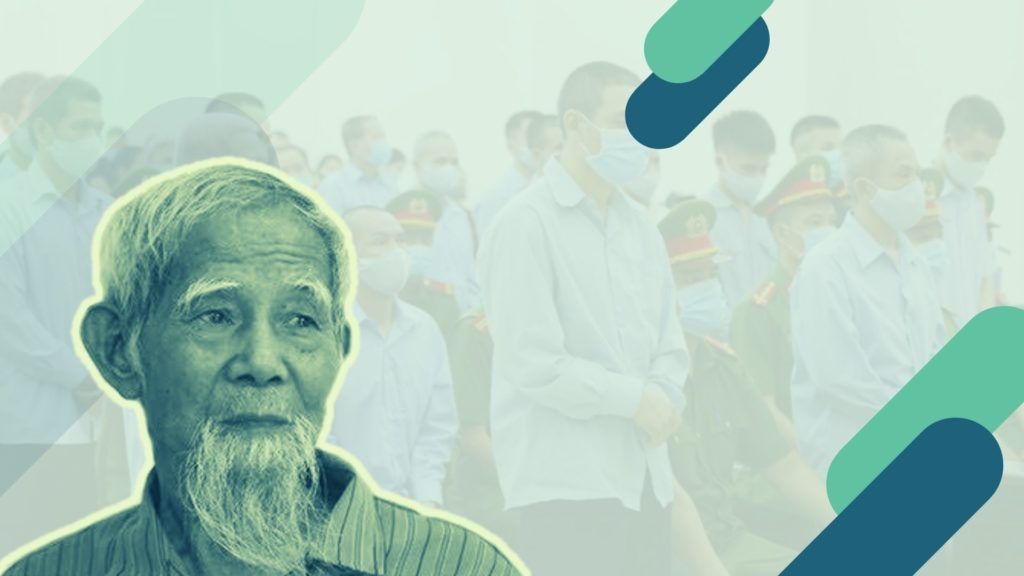
  • Recap: Sentencing in the Dong Tam Trial

    Recap: Sentencing in the Dong Tam Trial

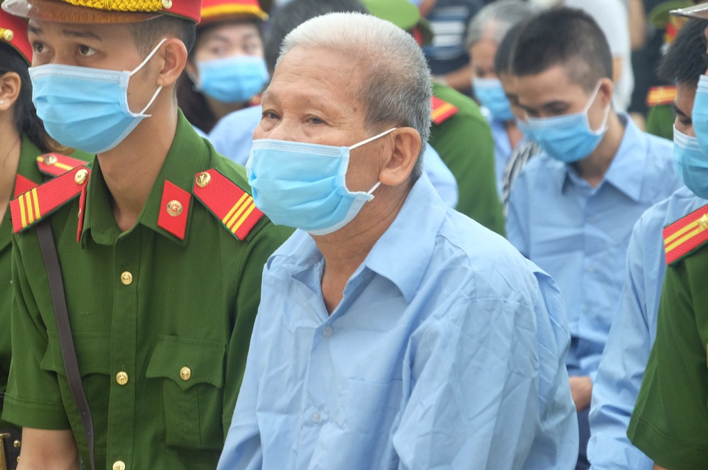
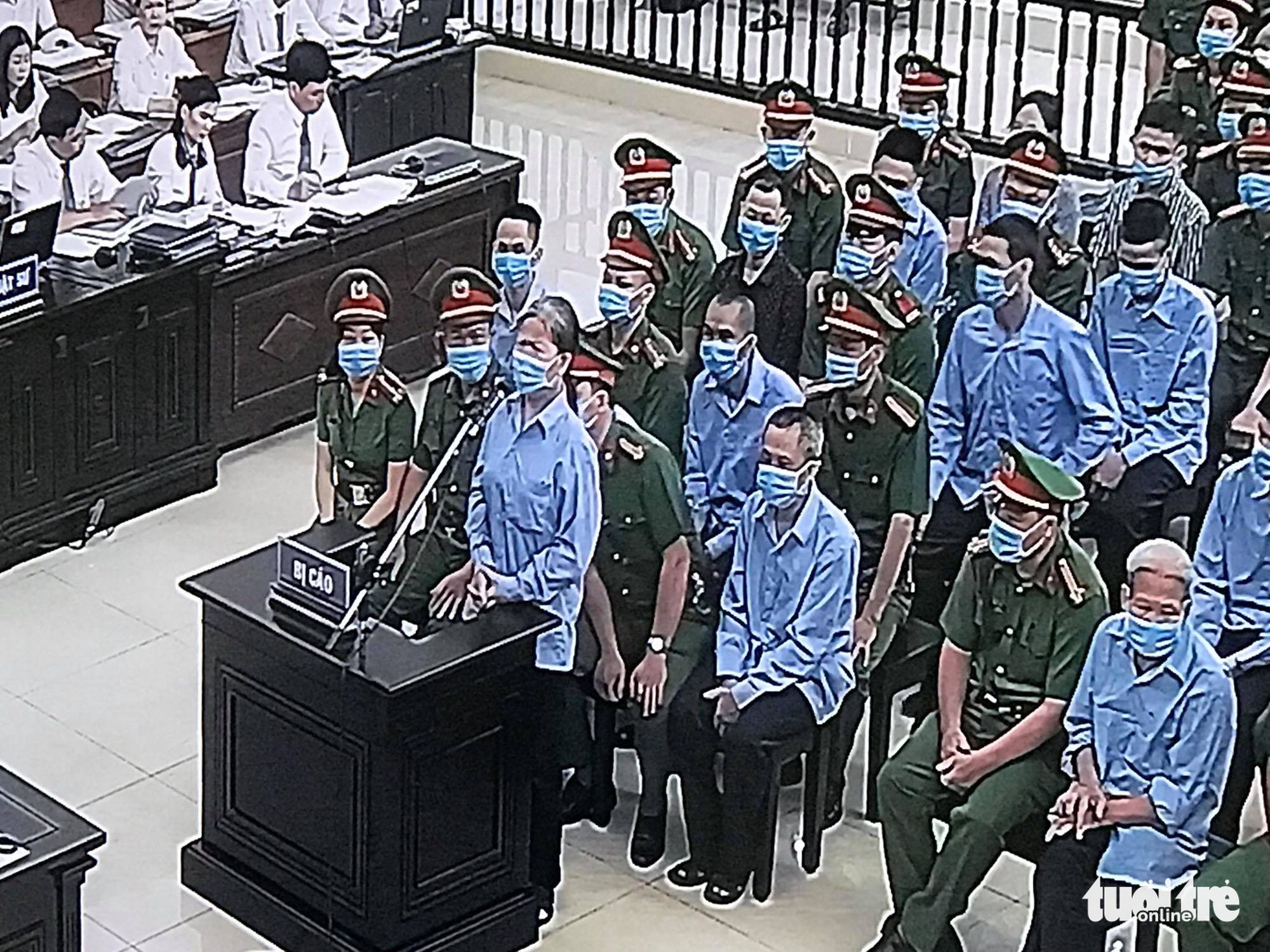
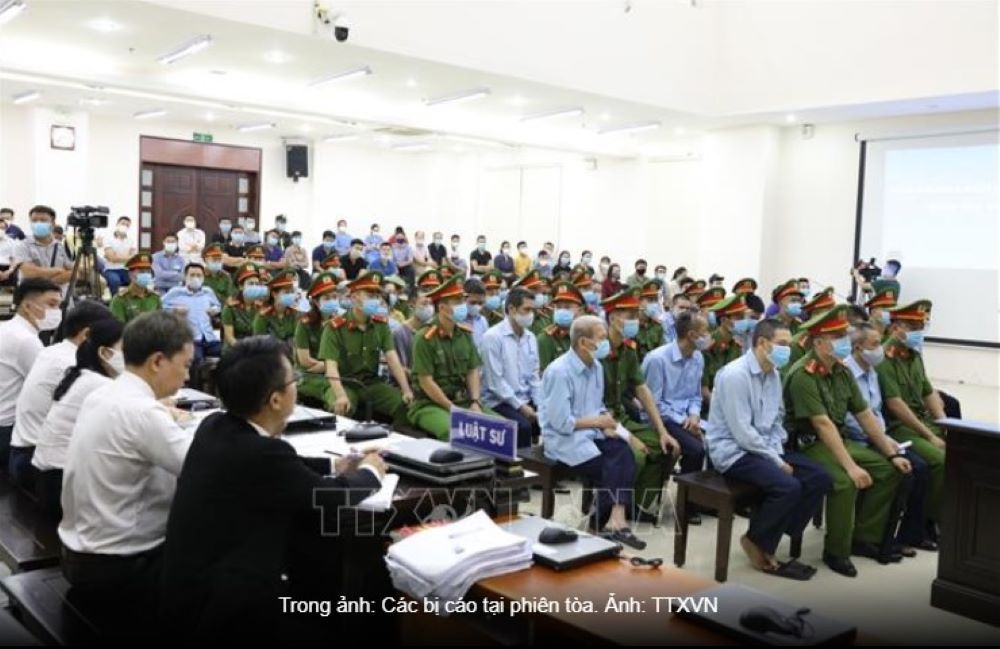
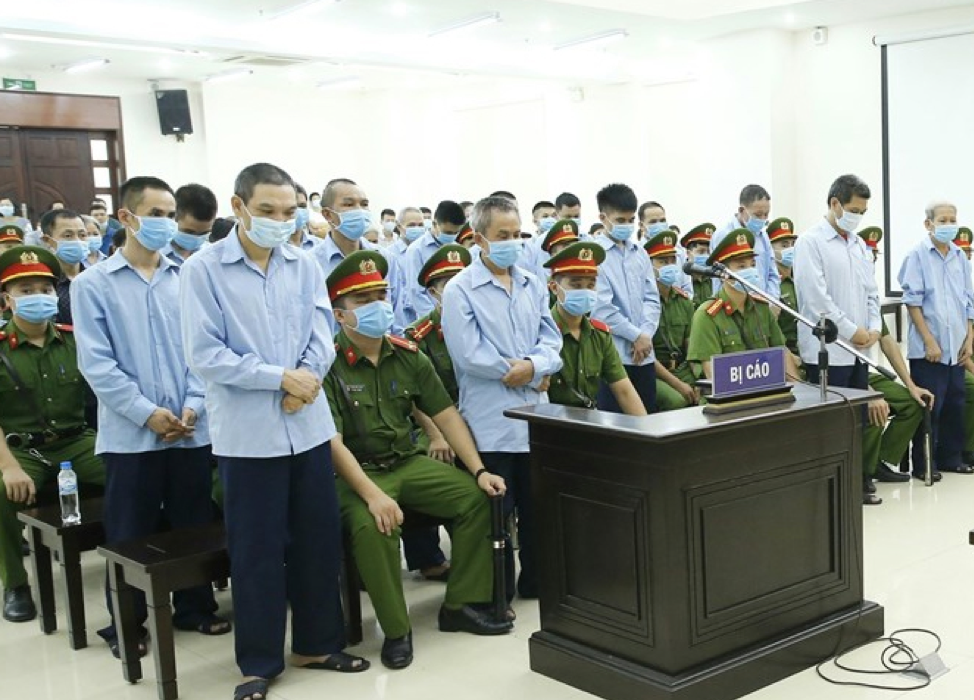
    As reported earlier, after four days of a predicted 10-day trial, the Hanoi People’s Tribunal took a recess beginning on the afternoon of September 10 to deliberate. At 3 pm on September 14, 2020, an initial verdict was announced.

    These are the details of the sentencing and the developments surrounding them:

    The range of initial sentences

    The Tribunal sentenced Le Dinh Cong and Le Dinh Chuc to death for the crime of murder.

    Also prosecuted for murder was Le Dinh Doanh, who was sentenced to life in prison. Three other defendants who were charged with murder received prison sentences ranging from 12 to 16 years.

    The 23 remaining defendants were prosecuted for obstruction of officials. Among them, nine received prison sentences ranging from three to six years, and the remaining 14 were sentenced to between 15 to 36 months of probation.

    Compared to the recommendations by the Hanoi People’s Procuracy, the Tribunal’s sentencing only differed in granting 7 defendants probation instead of prison time.

    Noteworthy is that while nearly all of the defendants received sentences equal to or lesser than the Procuracy’s recommendations, Bui Thi Noi received a heavier sentence than what was recommended.

    The Procuracy recommended 4 to 5 years of prison for Bui Thi Noi. The Tribunal sentenced her to 6.

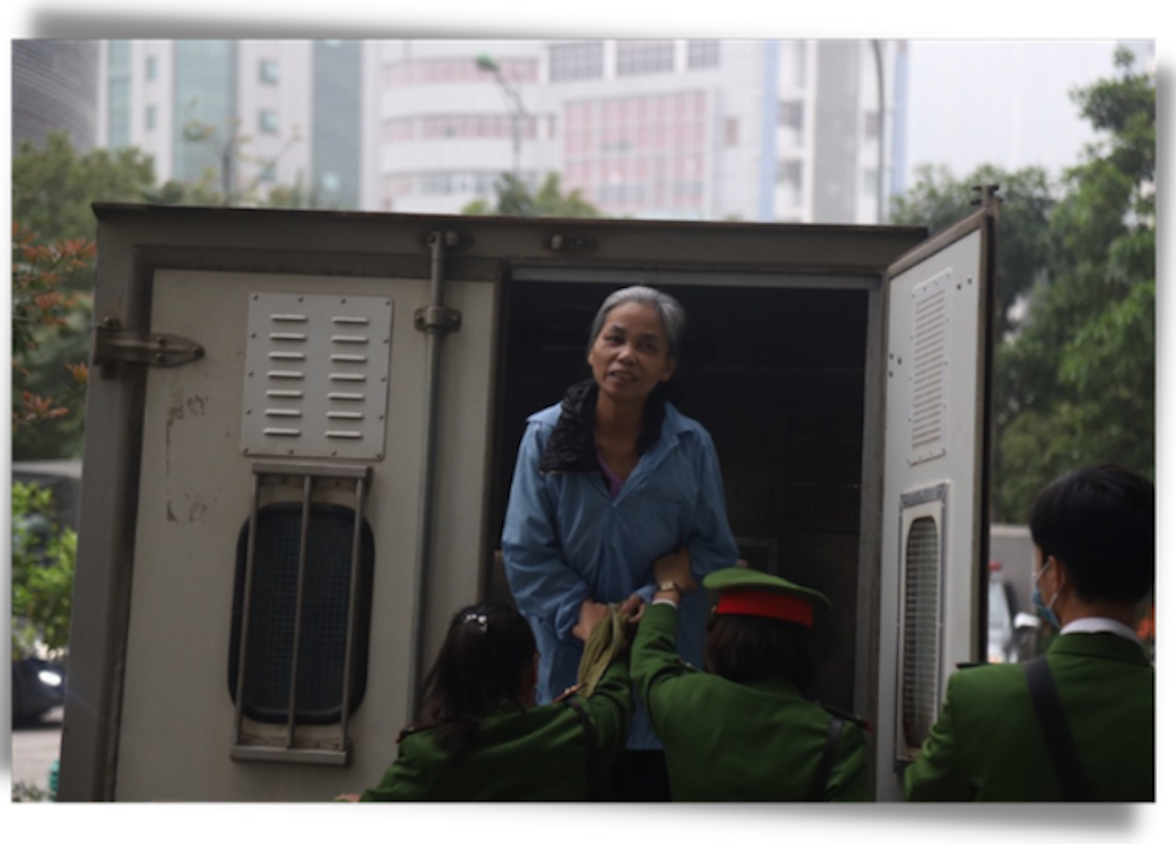
    Bui Thi Noi, adopted daughter of Mr. Le Dinh Kinh, who died in the early morning attack on January 9, directly challenged the Tribunal during questioning on the second day of the trial, asking: “We have laws, but why are they not carried out? Why was my father (Le Dinh Kinh) lured out to a field and his leg broken, instead of being arrested properly…?”

    When the presiding judge asked Noi three times why she bought gasoline, Noi responded “I bought gasoline to burn the corrupt!”

    The court’s determinations

    As reported by Thanh Nien, the Tribunal determined “This was a serious criminal case that [was] particularly dangerous, denigrating the law and human life.” Judges assessed that “the defendants’ behaviors were extremely barbaric, cruel, and inhumane.”

    According to information from Zing, the Tribunal also required the ring-leading defendants to compensate each victim’s family 116 million dong (US$5000) and provide child support to the deceased police officers’ children until they all reach the age of 18.

    Responses from lawyers and relatives of the defendants

    Speaking with RFA, Mrs. Nguyen Thi Duyen, Le Dinh Kinh’s granddaughter-in-law, stated: “To be honest, I’m not very surprised and had already mentally prepared myself. I knew for certain they would keep the sentencing as is.”

    “The next steps must be taken gradually; there’s simply no way to change [the government’s] hearts or minds,” she continued. “It will most certainly force [those] Dong Tam residents to suffer through long prison sentences.”

    Lawyer Nguyen Van Mieng, on the other hand, asserted: “There is not enough evidence to conclude that those three [police officers] died because of Chuc, Cong, and the others. Handing out two death sentences and a life imprisonment is completely unreasonable!”

    Mieng shared the view that all four deaths must be re-investigated.

    Appeals and future developments

    Le Dinh Cong and Le Dinh Chuc, who were both sentenced to death, stated that they would appeal.

    We have provided an analysis here regarding the next possible developments in this case.

    If at any point, a defendant, victim, or his or her representative appeals, the case will be forced into retrial. The entire case will be presented and re-tried in a higher court, which in this instance is the People’s Supreme Court in Hanoi.

    According to the law, the deadline for retrial ranges approximately from December 2020 to January 2021.

    In the meantime, the Procuracy, defendants, and lawyers have the right to provide additional evidence.

    Lawyers and relatives still have the right to see the defendants. Other individuals and organizations (journalists, social organizations, international organizations) are also able to submit requests to see the defendants.

    ***

    This article was written in Vietnamese by Y Chan and previously published on Luat Khoa Magazine. The translation is done by Will Nguyen.

  • The Dong Tam Case: What Happens Next?

    The Dong Tam Case: What Happens Next?

    On September 14, 2020, the Hanoi People’s Court delivered the judgments in the trial of the Dong Tam case.

    What will happen next?

    First of all, we need to understand this is a first-instance trial and the judgments have not yet come into force. The enforcement of criminal judgments therefore is not yet initiated.

    Appeal

    Within 15 days of the first-instance trial’s verdict, which is from September 14-29, 2020, there are two possible scenarios.

    (Note: According to the instruction from the Supreme People’s Court, the time limit for appeal is calculated from the day after the verdict is delivered, which is September 15, 2020.)

    1. If the rulings are not appealed, they will automatically come into force on the 16th day after the verdict was delivered, which will be on September 30, 2020. The sentence enforcement procedure will also be initiated on that day.

    2. If the rulings are appealed:

    • Appeal by the defendants: If any of the defendants, victims or their representatives appeal against the rulings, the case will move into the appellate trial phase. The whole trial will be restarted. In this case, the time limit for making an appeal is September 29, 2020.

    If an appeal is filed beyond the 15-day limit, the appellate court can still consider it permissible “on condition that the appellant has been obstructed by force majeure or objective obstacles from lodging an appeal within the time limit as defined by this Law.” (Article 335, 2015 Criminal Procedure Code)

    • Appeal by the Procuracy: If the Hanoi People’s Procuracy appeals against all or parts of the judgments, the case will also move into the appellate trial phase.
    • Appeal by the Supreme People’s Procuracy in Hanoi: according to law, they have a 30-day limit to appeal the rulings after the verdict was delivered.

    What is an appellate trial?

    According to Article 330, 2015 Criminal Procedure Code, “Appellate trial means that the immediate superior Court re-tries a case or re-considers the decisions passed by the first instance trial, whose judgments and rulings pronounced for the case are appealed before coming into force.”

    In other words, all or parts of the rulings will be re-considered by the immediate superior court.

    What is the superior court in this case?

    The People’s High Court in Hanoi

    When will the appellate trial take place?

    At the moment, there is no detailed instruction document on how to calculate the time frame to open the appellate trial, but based on the 2015 Criminal Procedure Code, we can estimate a number of markers for what happens next:

    • Within 75 days upon the admission of a case, the People’s High Court in Hanoi has to issue a decision to hear the appellate case. Therefore, we can estimate in case of appeal, that the last day to issue the decision will be December 13, 2020 (Sunday). Since it is a non-working day, the time limit can be extended to December 14, 2020 (Monday).
    • Within 15 days upon issuing the decision to hear the appellate case, the court has to start the appellate trial. Therefore, we can estimate in case of appeal the last day to start the appellate trial will be December 29, 2020 (Monday).
    • Within 10 days upon issuing the decision to hear the appellate case, the court has to send this decision to the Procuracy–which is on an equal level of hierarchy–and to the defense counsels, crime victims, litigants and protectors of legitimate rights and benefits of crime victims, litigants, appellants, persons incurring interests and duties from the appeal. The last day of this time frame will be December 23, 2020 (Monday).
    • The court can delay the appellate trial for no more than 30 days, which means the last day in this case could be on January 28, 2021 (Wednesday).

    In practice, however, the court can violate the time limit regulations. The appellate trial therefore can be delayed to a much later time than the above estimated number of days.

    While awaiting the appellate trial, what can happen?

    • The People’s High Court can make decisions on changing or terminating preventive measures such as detention. Although practically, there is no possibility some defendants will be released on bail awaiting the appellate trial, yet it is still an available legal option.
    • If the appellants withdraw the appeals, the court will suspend the appellant trial. In practice, this is also unlikely.
    • The Procuracy, the defendants and their lawyers can submit additional evidence.
    • The lawyers and family members are entitled to meet the defendants. Other individuals, organizations (the media, social organizations, international organization, etc.) can file proposals to meet with the defendants.

    In order to better understand this case, we need to study thoroughly the Law on temporary detention and custody.

    What are the possible outcomes of the appellate trial?

    According to Article 355, 2015 Criminal Procedure Code, the possible outcomes of an appellate trial could be:

    • Reject appeals and sustain the first-instance court’s judgments;
    • Alter the first-instance trial’s judgments;
    • Annul the first-instance court’s judgment and send the case back for re-investigation or retrial;
    • Annul the first-instance trial’s judgments and dismiss the case;
    • Terminate the appellate trial if the appellants withdraw their appeals.

    In case of altering the first-instance trial’s judgments, if the appeals are filed by the defendants, the appellate court cannot deliver a harsher sentence than what has already been given to the defendants.

    In case of altering the first-instance trial’s judgments, if the appeals are filed by the procuracy or the crime victims, the appellate court can deliver rulings that are disadvantageous to the defendants.

    What may happen after the appellate trial?

    The rulings from the appellate trial will come into force immediately.

    If the appellate court sustains the first-instance trial’s judgments, or alters the judgments but sustains the sentences, the enforcement procedure will be initiated. The defendants become convicts (serve jail sentences, face death penalties). In this case, one must study thoroughly the Law on execution of criminal judgments.

    The convicts with death sentences still have a chance to file pardon petition for commutation of death sentence with the state president (within 7 days after the appellate rulings were delivered), petition for a cassation trial, or file for a retrial of the case.

    If the appellate court chooses to delivers other outcomes, then there are corresponding legal options for each scenario.

    ***

    This article was written in Vietnamese by Tran Ha Linh and previously published on Luat Khoa Magazine. The translation is done by Y Chan.

  • Dong Tam Trial – Day 4

    Dong Tam Trial – Day 4

    On the afternoon of September 10, after four days of a predicted 10-day trial, the Hanoi People’s Court took a recess and is expected to announce sentencing at 3 pm Monday, September 14, 2020.

    Here are the latest events from the fourth day of the Dong Tam trial (September 10, 2020):

    Defense session shortened

    In an interview with the BBC, defense lawyers stated that during today’s trial, the tribunal shortened the defense portion of the 29 defendants.

    Lawyer Nguyen Van Mieng said, “It appeared the tribunal wanted to limit today’s trial to the morning, pressuring us on time and seemingly not wanting procurators to counter argue with (defense) lawyers.”

    “Normally, the procuracy must debate in full all matters the lawyers have petitioned, such as the request to send the case back for re-investigation in order to confirm that shortcomings have been addressed, that forensics have been conducted at the scene of the crime, that Hanoi police’s plans for maintaining the security of the Mieu Mon Airport construction project should have been provided to determine if they included a plan to attack Le Dinh Kinh’s residence. The tribunal simply responded that these matters were ‘already clear’.”

    Lawyers petitioned the return of files, asked investigators to clarify content

    Le Van Hoa, the defense lawyer for Le Dinh Cong, Le Dinh Chuc, Le Dinh Uy, and Tran Thi La, posted his entire defense argument on Facebook.

    In it, he requested the tribunal review and return case files to prosecutors for supplementary investigation to clarify the imperative matters below:

    1.    The legal status of the 59-hectare parcel of land at Senh Field, Dong Tam Commune, My Duc Suburban District, Hanoi.

    According to Attorney Hoa, the ambiguity regarding whether the disputed parcel is agricultural land that belongs to the Dong Tam Commune, the local authorities or national defense land belonging to the Air Defense – Air Force Arm (of the Ministry of Defense), is the direct and root cause of events that led to the Dong Tam incident in April 2017 and January 9, 2020.

    2.    The legal status of the deployment into Dong Tam of thousands of Hanoi riot police in conjunction with another police force fell under the Ministry of Public Security on the night of January 8 and early morning of January 9, 2020. Which office decided this deployment? And was this decision right or wrong?

    3.     A forensic investigation to clarify the deaths of three police officers; documentation in case files put together by investigators is not yet convincing.

    4.     The mysterious circumstances surrounding Le Dinh Kinh’s death must be clarified.

    5.     A request that the tribunal carry out criminal proceedings for the murder case according to the petition filed by Mrs. Du Thi Thanh (wife of Le Dinh Kinh).

    The lawyers participating in today’s trial. Photo courtesy: Lawyer Le Van Hoa’s Facebook account.

    Lawyer of three police officers killed opposes a forensic reassessment of the crime scene

    According to state-run Laborer Newspaper, lawyer Nguyen Hong Bach, who is defending the rights of the three police officers “sacrificed (in the line of duty)”, opposes a forensic reassessment of the case’s crime scene because it will “re-emphasize the pain and loss for the victims’ families”.

    After defense lawyers pointed out a number of issues (with the forensic case), Bach stated that he “felt deeply hurt”.

    Bach explained his view: “Could we really recreate such a gruesome murder scene? Who would dare to climb down that sky-well, for others to pour gasoline on?”

    He argued that not every part of the crime or the crime scene needs to be recreated for the forensic investigation to be conducted. In this situation, a forensic investigation should not be conducted, said, arguing that doing so would only bring pain to the officers’ families.

    Plans to protect Dong Tam are top-secret documents?

    On top of opposing a forensic investigation, lawyer Nguyen Hong Bach – who represented the three deceased officers – also rejected the demands to publicize Plan 419A of the Hanoi City Police regarding the maintenance of order and security surrounding Dong Tam Commune.

    Lawyer Ngo Anh Tuan had earlier requested the publicizing and clarification of this plan and entering it into the record in order to evaluate the legality and objectives of those on duty the night the incident took place.

    According to Attorney Tuan, “The people and lawyers can be skeptical and do not believe that this Plan 419A exists in reality or it can be illegal since it is not publicized. It can be determined that the consequences that happened on such a day (January 9, 2020) were the responsibilities of the leaders of the Hanoi Police Department towards their officers.”

    In response, Attorney Bach stated that these plans were “top-secret documents”, and that defense lawyers “had no right to demand (their publicizing)”.

    Is participating in a “Consensus Group” formed by the Dong Tam farmers a crime?

    On his Facebook profile page, lawyer Nguyen Van Mieng posted an excerpt from his defense argument emphasizing that the presiding judge frequently asked each defendant “the same question” about their participation in the “Consensus Group,” a group formed by the farmers, and headed by Mr. Le Dinh Kinh to deal with land dispute with the government.

    According to attorney Mieng, the indictment did not criminalize the establishment of the group. But during its questioning, the tribunal was especially concerned with whether the defendants had participated in the Consensus Group, in order to evaluate their other alleged crimes.

    This is a violation of human rights, and the fundamental rights and obligations of citizens, as stipulated in Article 25 of the (Vietnamese) Constitution.

    According to Article 25, “Citizens have the right to freedom of speech, press, information, assembly, association, and protest. The exercise of these rights shall be regulated by law.”

    “Accordingly, to participate or not in the Consensus Group is a citizen’s right, and no one can use a constitutionally-guaranteed right as the basis of criminalization,” Mieng stated.

    The lawyers participating in today’s trial. Photo courtesy: Lawyer Le Van Hoa’s Facebook account.

    Defense lawyers manhandled and tailed after leaving court

    Lawyer Nguyen Ha Luan relayed that a shoving match broke out after police officers attempted to confiscate a USB drive and refused to let lawyer Ngo Anh Tuan copy data; another plainclothes police officer shoved lawyers Dang Dinh Manh and Nguyen Van Mieng.

    Recounting the incident, lawyer Dang Dinh Manh stated that in the afternoon, after they had left the trial, the three (lawyers Tuan, Manh, and Mieng) were brutally dragged to the gate by the underarms and then straight-arm shoved down the steps, after arguing with police officers to return the USB drive so the lawyers could copy the data over to their laptops.

    Afterwards, while traveling on the road, the lawyers discovered that there were four individuals on two motorcycles closely following them. When the lawyers stopped their vehicle, these individuals also stopped onto the sidewalk; when the lawyers continued moving, so did they.

    Did the Propaganda Committee issue instructions to journalists on how to cover the Dong Tam case?

    On social media, a number of notable figures, such as journalist Nguyen Manh Kim (of The New Viet magazine), disseminated detailed information regarding a document from the Vietnamese Communist Party’s Central Propaganda Committee. The document contained detailed instructions on how state journalists should cover “sensitive issues” related to the trial.

    In the section regarding the Dong Tam case, the document directed journalists to:

    – Affirm that the suspects had “refused dialogue, reconciliation”.

    – Recount the idea that suspects had “attacked [officials] first” (this phrase was emphasized).

    – Criticize the “depravity of suspect Le Dinh Kinh.”

    – Affirm that the need for the officials to suppress people (at the crime scene) was “pressing” and done “according to regulations.”

    – Reflect that the public opinion is in “consensus” with the government regarding the matter, the “support” of citizens regarding the court’s sentencing, and the tribunal’s “fair sense of justice.”

    – Report information “in moderation”; do not report “details” or “negative news” regarding “admissions of guilt” or the “repentance” of defendants.

    Note that these instructions appeared before the trial began.

    Sources of this information publicly stated that they could not post pictures of the document because each instruction form sent to publications has a specific “marking” to help Vietnam’s security forces trace leaks.

    We have yet been able to verify this information.

    Court to announce sentencing on Monday, September 14

    After this afternoon’s session, the trial will temporarily recess for the tribunal to deliberate. It is expected that the tribunal will announce sentencing at 3 pm, Monday, September 14.

    ***

    This article was written in Vietnamese by Y Chan and previously published on Luat Khoa Magazine. The translation is done by Will Nguyen.

  • Dong Tam Trial – Day 3

    Dong Tam Trial – Day 3

    The latest events from the third day of the Dong Tam trial (September 9, 2020):

    Procuracy recommends two death sentences

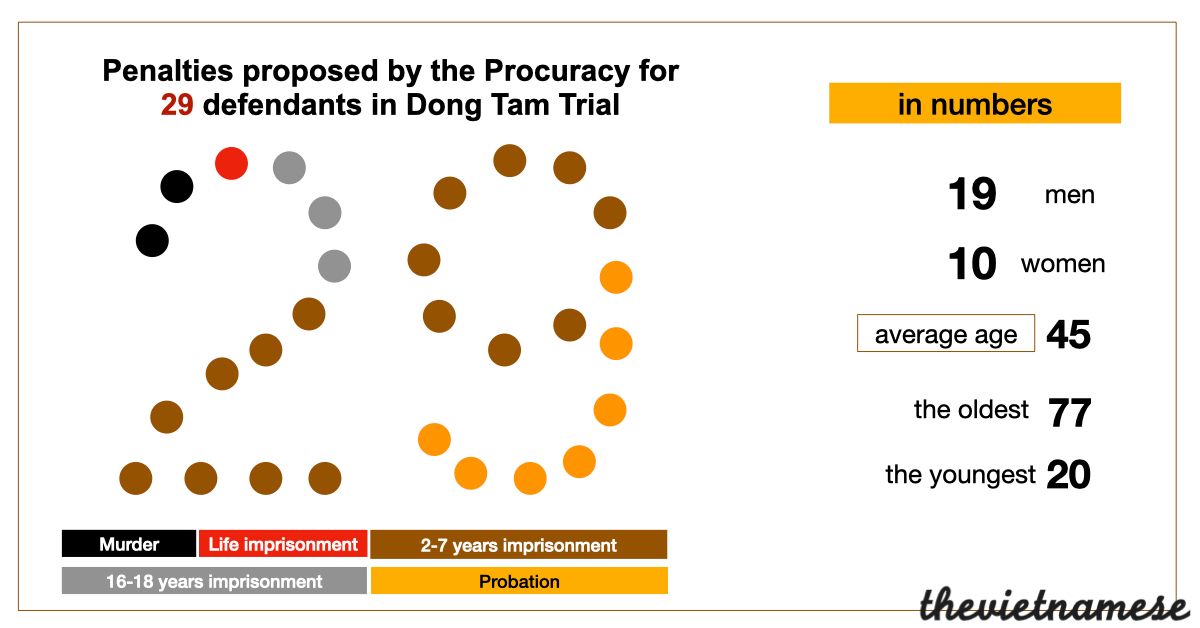
    According to state-run Zing e-newspaper, the Hanoi People’s Procuracy recommended to the court that Le Dinh Cong and Le Dinh Chuc receive the death penalty. The recommended sentences for the remaining 27 defendants ranged from 15 months of probation to life in prison. Le Dinh Cong and Le Dinh Chuc were both prosecuted for murder.

    Also prosecuted for murder was Le Dinh Doanh (who was recommended a life sentence), Bui Viet Hieu and Nguyen Quoc Tien (recommended sentences of 16-18 years in prison), and Nguyen Van Tuyen (a recommended sentence of 14-16 years in prison).

    Nineteen other defendants had their original charge of murder downgraded by investigators to obstruction of officials. In total, 23 defendants were charged with the latter crime and were recommended sentences ranging from 15 months probation to 7 years in prison.

    A speedy cross-examination of defendants

    Prior public information estimated that the trial would last 10 days, but after only two days, the procuracy has already arrived at recommended sentencing for the defendants.  This is due to the speediness of the trial, with each defendant questioned for only a few minutes and lawyers racing to keep up, unable to record all responses in full.

    In a BBC interview, lawyer Ngo Anh Tuan spoke of Tuesday’s trial highlights, when every single defendant pleaded guilty.

    According to Tuan, this development could be due to the fact that the defendants were facing heavy sentences and felt that even if they had retracted their previous statements, it would not stop the inevitable; as such, they chose to plead guilty in hope of a lesser sentence.

    Lawyers interrupted

    During the third day of the trial, lawyer Le Van Luan recounted how the prosecution repeatedly interrupted him as he debated the legality and legal value of the submitted electronic materials (unsourced videos broadcast in court, video confessions of the defendants recorded during the period of investigation that were never mentioned in case files).

    Noteworthy is that during this time, the presiding judge “left the room”, and the judge sitting next to him took his place, warning the lawyers to “defend what is before you, no more expounding on the law, no more utilizing the law”; if they continued, he warned,  they would be found  “in contempt of court” and “asked to leave the trial”.

    “No need” – episode two

    During the first day of trial, court security prevented lawyers from speaking with their clients. When lawyers objected, the presiding judge declared that there was “no need” for lawyers and defendants to speak with one another in court – in complete violation of the law.

    After lawyers forcefully responded by sending a complaint to the presiding judge of the Hanoi People’s Court during their midday recess, the next morning, on the second day of trial, the court agreed not to block contact and to abide by legal statutes.

    But as lawyer Dang Dinh Manh told the BBC, by the afternoon of the second day, the court reversed direction, asking lawyers to register before speaking with their clients and mandating that they stand two meters away from their clients. By the third day of the trial, “they no longer allowed us to see (our clients) at all,” he said.

    Manh believed that this reversal may be due to the fact that as the trial progressed, lawyers questioning defendants allegedly resulted in  “a lot of information being disclosed unexpectedly”.

    In addition to single-handedly deciding that lawyers had “no need” to speak with their clients, the trial’s presiding judge also decided on the second day that there was “no need” to respond to lawyer requests for the court to provide the “video evidence” it was planning to show, so that all parties would have access to and understand the materials.

    Accordingly, the prosecution stated that it would not provide the sources or any information regarding the evidence because there is “no need”.

    Two of the trial’s defense lawyers: Nguyen Van Mieng and Dang Dinh Manh. Photo courtesy: Facebook Manh Dang.

    Were the defendants tortured during the investigation?

    Lawyer Dang Dinh Minh relayed that at the end of the second day of the trial, he turned to the row of defendants and asked the 29: “Those who WERE tortured during your investigation, do nothing; those who WERE NOT tortured during your investigation, please raise your hand”. Ten raised their hands, 19 did not.

    What do the residents of Dong Tam think of the defendants and their families?

    Responding in an interview with Luat Khoa Magazine, Mrs. Nguyen Thi Duyen – wife of defendant Le Dinh Uy and granddaughter-in-law of Le Dinh Kinh – affirmed:

    In our village, we Dong Tam residents strongly mourn the death of elder Le Dinh Kinh, as well as the enormous losses our family has suffered and the many relatives who were arrested on the night of January 9. It brings us great anguish.

    But many cannot express this for fear of immediate retaliation by police and village security. Intimidation, there is intimidation. That’s the truth because many have been called to the police station and the village committee and told that they were not allowed to come to my house. They wanted to burn incense for elder Le Dinh Kinh but were prevented by security forces, who construed burning incense with some kind of involvement in the matter. So residents were very afraid and didn’t dare come, though they mourned Kinh dearly.

    They were able to express themselves more quietly by going to his gravesite and burning incense there, rather than coming to our house. If they came, they would be recorded and followed on camera, and possibly be immediately denounced; security would definitely summon them right away.

    We can’t even burn incense freely for someone who’s already passed away; as such, I certainly do not hold the security forces of Dong Tam in high regard.

    But I affirm to everyone that Dong Tam’s residents care for and support those in custody. Villagers have conveyed themselves through text messages and they encourage us whenever they get a chance. They do not isolate my family or any other relative who’s been arrested, and I feel very happy living with the residents of Dong Tam.

    ***

    This article was written in Vietnamese by Y Chan and published on Luat Khoa Magazine. The translation is done by Will Nguyen.

  • Dong Tam Trial – Day 2

    Dong Tam Trial – Day 2

    Second day of trial of the Dong Tam Incident – Summary

    Below is a summary of the main events that happened on the second day of the trial.

    Court allowed direct contact between attorneys and defendants – for now

    According to attorney Le Van Luan, the court granted attorneys direct contact with their clients this morning.

    As reported, during the first day of the trial, security at the courtroom prevented the attorneys from interacting with the defendants. When the attorneys demanded the trial panel respect the rights of the defendants and the attorneys, the chairman rejected their request and publicly announced that “it is not necessary” for the attorneys and the defendants to have contact during the trial.

    Controversy over “video evidence” presented at the trial

    Attorney Dang Dinh Manh pointed out two puzzling issues about the presentation of the “video evidence” on the first day of the trial.

    In the questioning section, the court showed a video that was produced in documentary style, telling the story from the state’s viewpoint and depicting how the villagers had wrongfully protested and claimed the disputed land, and how that led to the confrontation which resulted in the death of three police officers. The video ended with miserable scenes of the families of the three police “victims”, showing suffering widows and children.

    According to attorney Manh, this was an unprecedented offering of evidence. Everything presented at court during a trial must be evidence related to the case and it has to be real, original, intact and unedited, and not include doctored videos.

    In a separate post on social media, independent journalist Pham Doan Trang  quoted a source who said that the attorneys objected to the presentation of the doctored “evidence” and demanded hard evidence instead. But the court rejected the objection and instead instructed the attorneys to “just watch the video”.

    The second issue was the “confession videos” shown during the questioning of each defendant. These videos were not mentioned in the case files. The attorneys, therefore, had no idea of their existence and had no chance to review them beforehand. Attorney Manh considered this “a trick played on the attorneys,” causing them surprise and anger when they tried to defend their clients during the trial.

    The attorneys later co-signed a request submitted to the trial panel and the People’s Procuracy Office in Hanoi, demanding a complete list of this alleged video evidence.

    Video clips of defendants admitted to guilt were shown at trial by the prosecution. Photo courtesy: ANTV

    State media: The defendants showed remorse and asked for leniency

    Reports on the trial from state media like Dan Tri, Tuoi Tre, etc. all followed the same direction: the defendants pleaded guilty.

    Dan Tri reported that “In the court, all defendants admitted their crimes as stated in the indictments, showed their remorse, asked for leniency and at the same time sent their apologies to the families of the three sacrificed police officers.”

    Meanwhile, Tuoi Tre reported that defendant Bui Viet Hieu voluntarily “raised his hand asking to speak.” Hieu “apologized to the trial panel” for his statement made the day before and admitted his lack of understanding of land policies.. Hieu then “appealed for leniency since no one should punish a man who already admits his guilt”. In a statement issued on the first day of the trial, Hieu had defended the position of the Dong Tam people regarding the land dispute.

    Tuoi Tre also reported that defendant Mai Thi Phan took part in the years-long protest because “Le Dinh Kinh (the head of Dong Tam Village who was killed in the incident) had promised to give a piece of the disputed land to her and the people involved.” The paper depicted the defendant as “shamefully stuttering” while admitting “We know what we did was wrong, we see our guilt now.”

    One defendant counter-questioned the trial panel

    State media buried other events in the trial, specifically a defendant who questioned the trial panel.

    Information published by attorney Dang Dinh Manh told a story about defendant Bui Thi Noi. When the court questioned her, she responded with a request to the trial panel, demanding it answer a series of her questions.

    She asked, “Why do you have law but don’t respect the law? Why didn’t the government arrest Noi’s father (Mr. Le Dinh Kinh adopted her as his child) according to the law? Instead, the government tricked him to go to an open field and broke his leg ….” (Bui Thi Noi was referring to the incident that happened in April 2017. It was when the authorities tricked Le Dinh Kinh out of the village and assaulted him, breaking his leg.)

    When the chairman of the trial panel repeated his question for the third time, “What did you buy the gasoline for?” defendant Noi answered “To burn the corrupt officials!”

    The chairman later ordered the police to escort her out of the courtroom.

    Civil society organizations: Request to treat Mr. Bui Viet Hieu as a special witness

    A group of civil society organizations initiated an urgent petition addressed to state leaders and collected signatures for the campaign.

    Part of the petition requested:

    “Treating Mr. Bui Viet Hieu as a special witness with the most special protection measures; it is best to transfer him to another incarceration facility that is not under police control.”

    They explained their reason:

    Mr. Bui Viet Hieu had directly witnessed a police officer shoot and kill Mr. Le Dinh Kinh in a face-to-face confrontation. This account matches forensic evidence showing two bullets hitting Mr. Kinh from the chest through to his back (completely contradicting the investigation conclusion which stated the shots were fired from the back). Mr. Hieu himself was the second senior member of the Dong Thuan Group (a group formed by Le Dinh Kinh to protest to the authorities on the land dispute).

    Mr. Hieu was also shot at the same place and same time, according to his statement: “After they shot and killed Mr. Kinh, they turned their flashlight on my position and fired two shots, aiming at my heart. But the police missed the target and the bullets hit my ribs instead, exploding and causing three wounds in my duodenum and two wounds in my colon. The police left me lying there for hours, from very early in the morning until 11:00 am on January 9, 2020 (the day the incident happened). Only when it was obvious that I was still alive, did the authorities decide to take me to the hospital.”

    Defendants’ family: If there are death penalties in the sentence, we will not sit and watch our loved ones die unjustly

    Luat Khoa Magazine interviewed Ms. Nguyen Thi Duyen – the wife of defendant Le Dinh Uy and the granddaughter-in-law of Mr. Le Dinh Kinh. Here are some extracts from the interview:

    I am very scared that my loved ones will have to endure extremely harsh punishment, despite the fact that it was not us villagers who initiated the attack. It was the authorities who launched the attack on us.

    Our relatives and I have heard a lot of rumours that there will be death penalties in this trial. Many people predicted that three members of our family, my father Le Dinh Cong, my uncle Le Dinh Chuc and my brother Le Dinh Doanh, will face the death penalty.

    If the people holding power in their hands decide to tear apart  our family in this way, they clearly have no conscience. An old man like Mr. Kinh had already died in such a cruel manner in this January 9 incident. I hope the people who are on the trial panel will mull over things before making any decisions because the truth about Dong Tam villagers is far more complicated than many people have depicted.

    If there are death penalties, we will never stop fighting to save our loved ones. We will not sit and watch the people we love die in such an unjust manner.

  • Dong Tam Incident: “My Husband Was Loyal To The Party Until His Death”

    Dong Tam Incident: “My Husband Was Loyal To The Party Until His Death”

    (This version was updated on September 12, 2020.)

    Hoanh Village, a few days before the historic Dong Tam trial, is a place where the green rice fields are flowing beside country roads under the hot autumn sun. Vietnam’s national flag and banners commemorating the 75th anniversary of its National Day crowd the village gate.

    I equipped myself quite well before I arrived in Hoanh Village, in both my mind and my technological tools.

    “That place has many security police. Be careful!” – I was warned in a text message.

    I have wanted to go to Hoanh Village during these days to be a journalist and practice the most basic ethical responsibility of our profession. I wanted to report the complete story about a historical event that will happen soon. I wanted to learn about the defendants’ families and what they yearned for, besides justice.

    The village welcomed me with the typical peaceful beauty that many northern rural villages offer: a traditional market, big old banyan trees, rice fields, and winding roads. It was as calm as if it had never gone through the recent chaos it had experienced. There were no skeptical eyes staring at a stranger when I accidentally met villagers, or when  they wholeheartedly showed me the directions to Mr. Kinh’s house.

    They whispered to me, “So pitiful that house now, with only women and children left.”

    There were no security police there; at least that was how I saw it. Yet, there were a few surveillance cameras placed on the awnings of opposite houses, which surprised me a little.

    I met Mrs. Du Thi Thanh, the wife of Mr. Le Dinh Kinh, and Mrs. Le Thi Thoa, the fourth daughter of the couple, and their group of little grandchildren. In the house, which was pockmarked by police bullets, they told me stories about their father and husband. My questions were overwhelmed by their memories. The  wife and daughter, and at times, both of them, unwittingly reliving stories about their husband and father as a man from their past. They told me the stories in tears, and there were moments of silence, and even some smiles. Before the attack, there were the peaceful times they had spent in the village.

    The wall is used to hang Mr. Le Dinh Kinh’s portrait and his medals, as well as the evidence of bullet fire. Photo courtesy: May/Luat Khoa Magazine.

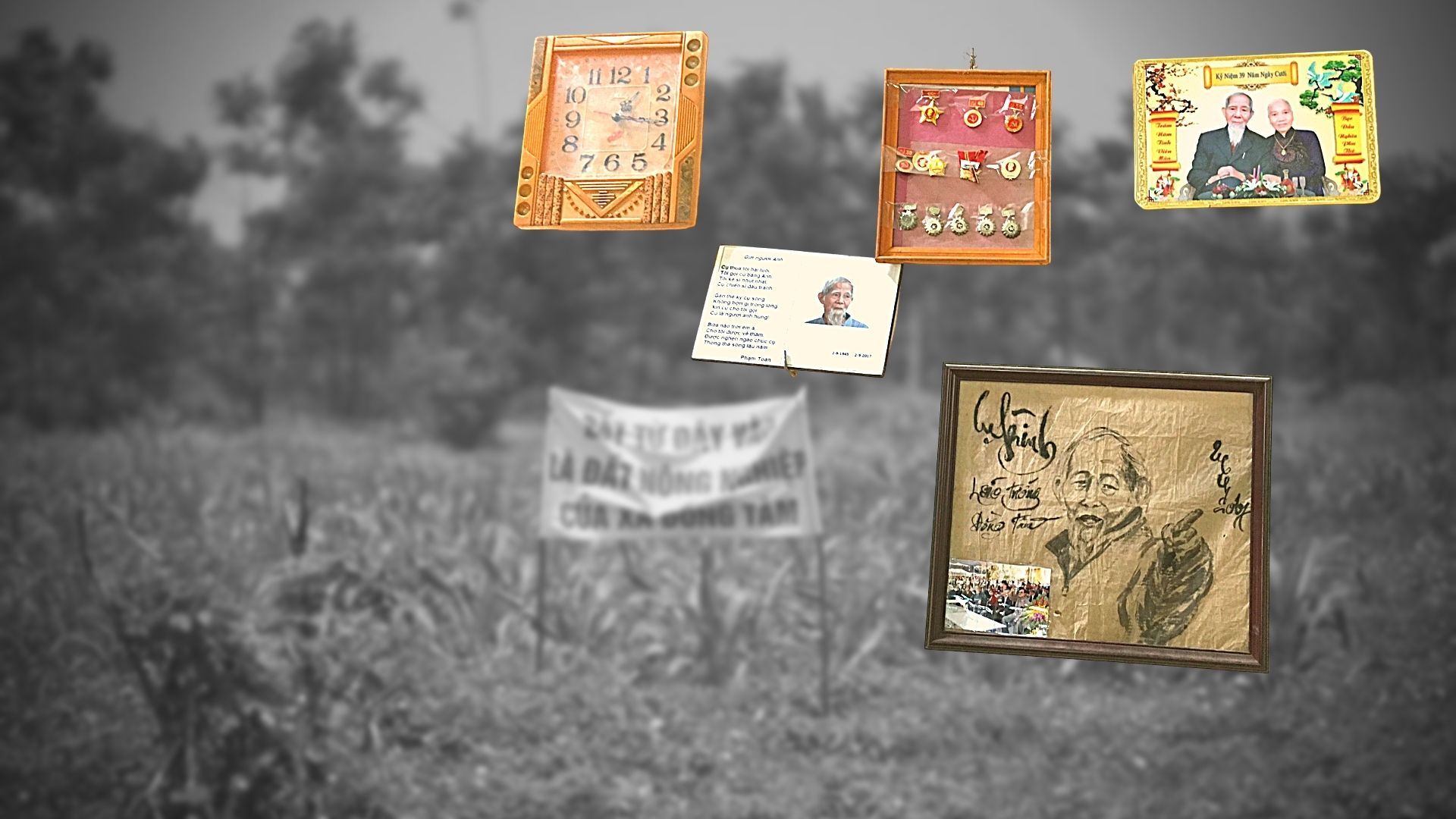
    Mr. Le Dinh Kinh’s portrait and the medals that the government and the Vietnamese Communist Party awarded to him were hung on the wall opposite the main door. The same wall was marked by bullet holes, evidence of the attack one dawn last winter.

    “These things, when he was alive, he treasured them so much,” Mrs. Thanh said, looking up at the medals. “He was given an award when he reached his 55th year as a Communist Party member.”

    “What are your memories of him?” I asked the two women.

    Du Thi Thanh:

    Our house always needed a lot of upkeep, but he always forced me to take him to attend the Communist Party meetings in our ward. Before, he could go by himself, but starting in 2017, after his leg was broken during an assault by the police, he had to use a wheelchair. The first wheelchair was a gift from Mr. Chung (Nguyen Duc Chung – the former chairman of the Hanoi People’s Committee). Later, the Disabilities Association gave him another wheelchair. I remember when he tested out the second wheelchair, which he praised: ‘This one is smoother, my wife,’ he told me. ‘The first wheelchair came from Chung, I heard it was expensive, but the wheels were wobbly.’

    I used the wheelchair to take him to his meetings, waited for him, and we would go back home together. People kept talking, one after another, which made me anxious because I could not know when the meeting would be adjourned.

    More than that, the people did not obey any rules because when one person spoke, another would go outside to chat with others. It was just like the chatting done in the market. But it was only my husband and a few others who were thorough. I remember that he proposed to do roll calls to make sure the Communist Party’s meetings in our ward would have sound principles.

    When we got home I was annoyed, and I told him if the Communist Party’s meetings were just like that, we should not go because we just sat there and did not benefit from anything. I told him that we were old and we should stay home to rest. However, he was angry with me. He said: ‘Why  would  you say that?  I do not care if there were improper people there. I came because I want to be proper and exemplary.’

    If you offer comments about his Communist Party carelessly, then you are bound to be berated.. From then on, if he asked me to take him to such meetings, I would go with him, and I stopped asking him to stay home.

    Le Thi Thoa:

    There are now only regrets…. Our father-daughter relationship had so many fights …. (She cried.)

    I was never close to my father when he was alive. Among his children, I was the child that had so many opposite perspectives from him. I could not sit down and have a proper talk with him without us having a clash of opinions because we would fight right away after exchanging a few sentences. My father whole-heartedly trusted the Communist Party, and he believed in the Communist Party’s Secretary General Nguyen Phu Trong without condition. I warned him and told him: ‘Father, many officials nowadays have become corrupt.’ But my father scolded me and said we can’t tar the whole brush because the corrupt officials were only a small group and that they were the lower officials that covered their faults and smeared the Party.

    I had wanted him to let go of the land dispute everytime I witnessed my father face grave danger. I cried and told him that I was scared. I stated that the Party had too many factions, and they could turn against each other to eliminate  the opposition. My father responded to me that he was doing the right thing so he should not be afraid. He said the land of Senh field, where we had disputes with the government, belonged to the people of this ward. He also assured me that if he already made a mistake, the Party would have kicked him out a long time ago.

    When he was in the hospital in 2017, some people gave him money when they visited him. He then gave the money to a policewoman and asked her to keep it for him. He always said: ‘(Nguyen Duc) Chung already said so (that the government would never prosecute Dong Tam villagers). Or, he would say ‘the people from the city had promised me already (to not prosecute),’ and that ‘things have to be reported to Mr. (Nguyen Phu) Trong because the Party would then be transparent.’ I was so mad, I stopped talking to him, ignoring the old man’s ideology.

    From the time when he was still a local official right up until to his retirement, I saw him as a person who spent so much time volunteering for the community. I felt uneasy. He only cared about the ward and the village’s everyday issues, leaving my mother to take care of our household alone.  As years passed , the Mieu Mon land dispute documents passed  through the  hands of many leaders , but he stored them all in his head. He memorized all of them, line by line, without fail, without a  need to look at the papers.”

    Mrs. Du Thi Thanh shows the bullet hole in the glass door. Photo courtesy: May/Luat Khoa Magazine.

    Du Thi Thanh:

    When he was an official, he only focused on his position and worked for the ward and the village. Even when his wife and kids suffered, he took no notice . When he retired, he began to farm the field. I guess he farmed to compensate his family because there had been so many years that he neglected us. The village people passed by our field and would tease him: ‘Oh, Mr. Kinh, Mr. Kinh. You were an official, why are you only now putting your head to the field?’

    Le Thi Thoa:

    Other people who were government officials had so much land. My father worked at the top positions in this ward, but my family didn’t even have a rice field when he retired. I remember that my parents would come to some undocumented land that nobody cared to claim . From dawn to dust, they would go there to work on that land, clearing, ploughing, digging, furrowing and cultivating the land till it was ready to be used for planting food crops. . They worked so hard and spent so much time on that field only to have their sweat and blood rewarded by a call from the government to donate all the cultivated land to the ward when harvesting time came. Is that reasonable? But then I have never heard my father blame the Party or curse  the government. He only scolded me. (She smiled.)

    I was irritated and slightly annoyed at the absurdity when I read online that people cast doubt on the source of money my father received from overseas, indicating it was from the reactionary forces.  Truth be told,  my father would forever continue believing in the Communist Party until his last dying breath.

    If he truly believes that something is right and is not against his conscience, my father would fight to protect it till the very end. He used that mentality to protect the Senh field and the Communist Party.

    Du Thi Thanh:

    Until his last days, even after witnessing so many city officials do an about-face, he still believed in his Party. I worried for his safety, but he chided  me: ‘You do not need to worry about me. I am a Communist Party member. A Party member must stand up and take care of the people. If we ignore the truth and  don’t speak up, we are guilty in front of the people.’

    I remember when he was young, he would pedal with only one leg, but he  was incredibly fast. He would bike across the fields to go to the town center for a meeting. He was disabled in one leg, but he was talented so it helped him to become the head of the ward police force. He could only stand up on one leg, but he took care of all of the ward’s work thoroughly. The people in this ward respected and loved him.

    Le Thi Thoa:

    I recall that he told us he had played soccer when he was young and sprained his leg. Unfortunately, he did not receive proper treatment, which led to a permanent disability later on in life. My father was always so busy with work. When he was riding his Thong Nhat branded bicycle or when he got a ride on a motorbike to go to the district office, he always had to stretch out his disabled leg.  Even having his  meals or a cup of  tea, he could not fold that leg. When he walked, it seemed as if  he was dragging it along.

    Du Thi Thanh:

    But they shot and blasted his disabled leg.

    Le Thi Thoa:

    Dad died such an inconsolable death.. What is there left when  all of the men in this house have been arrested. We can only pray to Heaven. We looked up at the sky and cried our hearts out about the injustice. When we fixed part of our home after the assault and repaired the damage caused by the police attack , our mother wept until she passed out because she was so heart-broken that our family now was left with only women and young children. My father’s belief caused all of that. If I knew in the end that our family would be this broken, I would have made more of an effort to stop my dad from disputing the land with the government. You should throw away everything, dad!” (Le Thi Thoa sobbed)

    Mrs. Du Thi Thanh shows the bullet holes in the wall. Photo courtesy: May/Luat Khoa Magazine.
    Another bullet hole in the home of Mr. Le Dinh Kinh. Photo courtesy: May/Luat Khoa Magazine.

    “We will walk (to court) from our village”

    Du Thi Thanh:

    My sons, my grandsons, are all in prison. It has been more than eight months, and our family did not receive any news about them. My son Chuc, did the wound on his head heal? Ten days after he was arrested, his wife gave birth to a son. His wife sent him a picture of the newborn baby, but the prison officials did not allow him to receive it. I believe that Doanh got shot in the arm, how is he now? Uy, and then Cong. My sons and my grandsons are all working people.  They each have their own family . Their wives now have to raise their children alone and unsupported. If I knew this in advance,  I’d rather kept my mouth shut . I would have forced all of them to be silent. How could any piece of land be more precious than having a peaceful family life?”

    Le Thi Thoa:

    The rental car company did not accept our reservation (or that of any of the villagers) to rent cars to go to the trial. The company told us that the police had forewarned them. An official in our ward advised us to stay home because we would not be allowed to enter the Hanoi courthouse. But regardless, we will go there. We will walk from our village to Hanoi and attend the trial. My mother wants to see her sons and grandsons. The  young  children in our house want to see their fathers; the wives want to see their husbands. No one should be able to prevent us from doing that.

    Du Thi Thanh:

    What do I expect at the trial? I just want to meet my sons and grandsons. I want them to issue a death certificate for my husband. He passed away more than eight months ago, but we have yet to receive the death certificate. The officials from our ward forced me to state the reason for his death as ‘died at home.’ No. That was not right. Mr. Le Dinh Kinh was shot to death at home. A bullet entered near his heart. Two bullets were fired into his head. His left knee was shattered. That was how my children’s father died. The bloodstain is still in our room, how could they lie like that?

    The bloodstain is right here. It is very stubborn though, I could not wash it off.

    “Just stay still here, I will go downstairs and get you a wet cloth to help  you  breathe better.” That was my last sentence  to my husband. The fumes were so heavy. I was going back to his side  when someone took my arms and dragged me away. When I came back home, the room was covered in blood. Our home was shattered. Can you see this door jamb protruding out? A bullet is stuck in it.

    ***

    Mrs. Thanh relived the story as she walked me around her house.

    I could see the remnants of bullets fired through their glass door. Their closets were also shot up, and the wall had a massive crack. There were  areas of newly patched cement, but others were  left untouched. Evidence of bullets was everywhere, substantial bullet holes, smaller holes, on the first floor and the second floor. They were also in the kitchen and the living room. There were also black stains on the floor, which Mrs. Thanh suspected it came from the tear gas.

    She was walking with her hunched shoulder, her hair all white. Just like her daughter, she doesn’t believe in anyone because “only Heaven could help my sons and grandsons” during the trial starting next Monday. The two women did not say words like “justice”, “righteousness”, or “fairness” when they referred to the trial as I had imagined they might. They did not expect too much, just the simple wish to be able to see their loved ones and to somehow brush each other’s hands at the trial hearing.

    I just wanted to write down their stories, documenting ordinary farmers who unfortunately have family members caught in the justice of law and now tried as defendants. Although I guaranteed that I would not write  about the land dispute issues or give speculation on which side is right or wrong, not a single newspaper in Vietnam accepted to publish this article.

    On September 7, 2020 when the Dong Tam trial begins, where would we see the faces of the mother, wives, and children of the 29 defendants from Hoanh Village and the Mit Village, both located in Dong Tam Ward?  Broadcast on television? Captured on cameras or on the cover of newspapers? Would the state-owned media specifically describe these women as who they are and not as people from the reactionary force?

    I hope that my imagination about their fate during the Dong Tam trial will not turn real. I also hope that there will be a place, a time to safely and freely tell their stories. Their voices have been silenced for so long.

    ***

    The original article was written in Vietnamese by May and published in Luat Khoa Magazine. The English translation was done by Karie Nguyen.

  • Dong Tam Trial – Day 1

    Dong Tam Trial – Day 1

    First day of trial of the Dong Tam Incident – What we have learned

    The 10-day trial of the Dong Tam Incident promises to be a long and tedious process, not only for the people involved but also the concerned audience. If you don’t have time to follow live updates, below is a summary of the main events throughout the day.

    Luat Khoa and The Vietnamese magazines will produce summary reports at the end of each day until the end of the trial.

    There are 29 defendants to be tried in the course of 10 days

    Of the 29 defendants, 25 are accused of “Murder” under Article 123, section 1, clauses (a), (d), (n), and (o) of the 2015 Penal Code.

    Another four individuals are being tried for “Obstructing officers in the performance of their duty” under Article 330, section 2, clause (a) of the 2015 Penal Code.

    There are 15 attorneys representing the defendants, hired by the defendants and their families. The other 18 attorneys were appointed by the court.

    The trial is expected to last 10 days.

    Tightened security, family members not allowed to enter the courtroom

    Top level security measures were applied in the so-called public trial. Police imposed blockades and restricted access around Pham Van Bach Street where the People’s Court of Hanoi is located. The police put up barricades preventing defendants’ family members and citizens from approaching the court area.

    One family member told Luat Khoa that more than 20 policemen had surrounded her house since yesterday. This morning, she had to lie to the surveillance police to get through their siege and head to the courthouse.

    A few family members of the defendants were outside the courthouse in the morning of September 7, 2020. Photo courtesy: Luat Khoa Magazine.

    Attorneys barred from direct contact with defendants at the trial

    During the lunch break of the trial, a collective of attorneys lodged an urgent protest to the chief justice of the People’s Court of Hanoi, demanding the trial panel respect the defendants’ right to defense and the attorneys’ right to represent the defendants, including the right of the attorneys to have direct contact with the defendants.

    In the morning session of the trial, when the trial panel paused to conduct private discussions, the security force at the courtroom prevented the attorneys from interacting with the defendants.

    As the trial panel resumed, attorney Dang Dinh Manh demanded the attorneys’ right to have direct contact with the defendants whom they were representing in court.

    However, the chairman of the trial (Judge Truong Viet Toan) publicly announced “since the attorneys had time to work on the case files, had time to meet with the defendants in prison, now it is no longer necessary for the defendants and their attorneys to have any further contact at the court during the trial.”

    Despite one attorney pointing out this pronouncement fundamentally violated section 4 article 256 of the Criminal Procedure Code, the chairman of the trial ignored the protest.

    The trial panel in Dong Tam trial. Photo courtesy: Doan Tan/Vietnam News Agency.

    Petition from attorneys before the trial

    On September 3, 2020, a group of 13 attorneys representing the defendants co-signed a petition to the chairman, the chief justice of the People’s Court of Hanoi, and the chief procurator of the People’s Procuracy of Hanoi.

    The petition called for attention to many incorrect and false details in the indictment by the People’s Procuracy of Hanoi, including distorted information and statements that are contradictory to the many versions of the event published by the Ministry of Public Security after the incident.

    The petition also raised various and constant obstacles met by the attorneys during the whole process, from investigating, prosecuting and final preparation stages for the trial. The attorneys were not allowed to hold private meetings with their clients and were barred from accessing the case files until the very last minute.

    At the courtroom, the chairman of the trial when responding to the petition only granted permission for the attorneys to watch videos in the case files during the trial, rejecting their request to obtain copies of the photographs and videos mentioned in the prosecutor’s files regarding the case.

    The defense lawyers for Dong Tam trial. Photo courtesy: Vietnam News Agency.

    NGOs voice concerns and call for a fair trial

    On September 6, Phil Robertson, deputy Asia director of Human Rights Watch, issued a statement on the case:

    “There are major concerns about due process and the right to a fair trial for the 29 villagers facing charges for incidents in Dong Tam. Use of torture and forced confessions are common in police custody in Vietnam. The courts are far from independent and predetermined outcomes dictated by the ruling communist party are trademarks of Vietnam’s so-called justice system. Defendants’ access to their lawyers is extremely limited and occurs only after the police have completed their interrogations and finished their investigation.

    There are still many unanswered questions about what happened during the Dong Tam raid that may never be answered in Hanoi’s rush to convict these defendants. Quite clearly, the authorities want to hit them with very harsh penalties to warn off others who might dare to challenge state authority in the future. Given the widespread interest in this case, Vietnam should allow independent international observers including diplomats, journalists and NGOs to observe the trial, and end harassment and surveillance of the family members of the accused.”

    Meanwhile, on September 4, 2020, 11 civil society organizations penned an open letter addressed to Elisabeth Tichy-Fisslberger, president of the UN Human Rights Council, calling on the UN to demand that Vietnam conduct a “fair and open trial” in this case.

    Arresting one observer of the trial

    According to information published by Ms Do Thu on her social media, her father, Trinh Ba Khiem, was arrested this morning while attempting to attend the trial, only to be released later in the evening of the same day.

    Mr. Khiem’s sons, Trinh Ba Phuong and Trinh Ba Khiem, and his wife, Can Thi Theu, who had been posting information about the Dong Tam Incident on social media and showing support for the Dong Tam villagers, were all arrested on June 24 2020 in a separate case.

  • “Dong Tam Report” – Trying to Find Transparency

    “Dong Tam Report” – Trying to Find Transparency

    On September 7, 2020, at 9:00 A.M. Hanoi Time, a trial will be held against 29 people who are farmers of Dong Tam village. The defendants were being alleged with “homicide” and “oppose officials who were on duty.” The maximum punishment for homicide in Vietnam could be the death penalty.

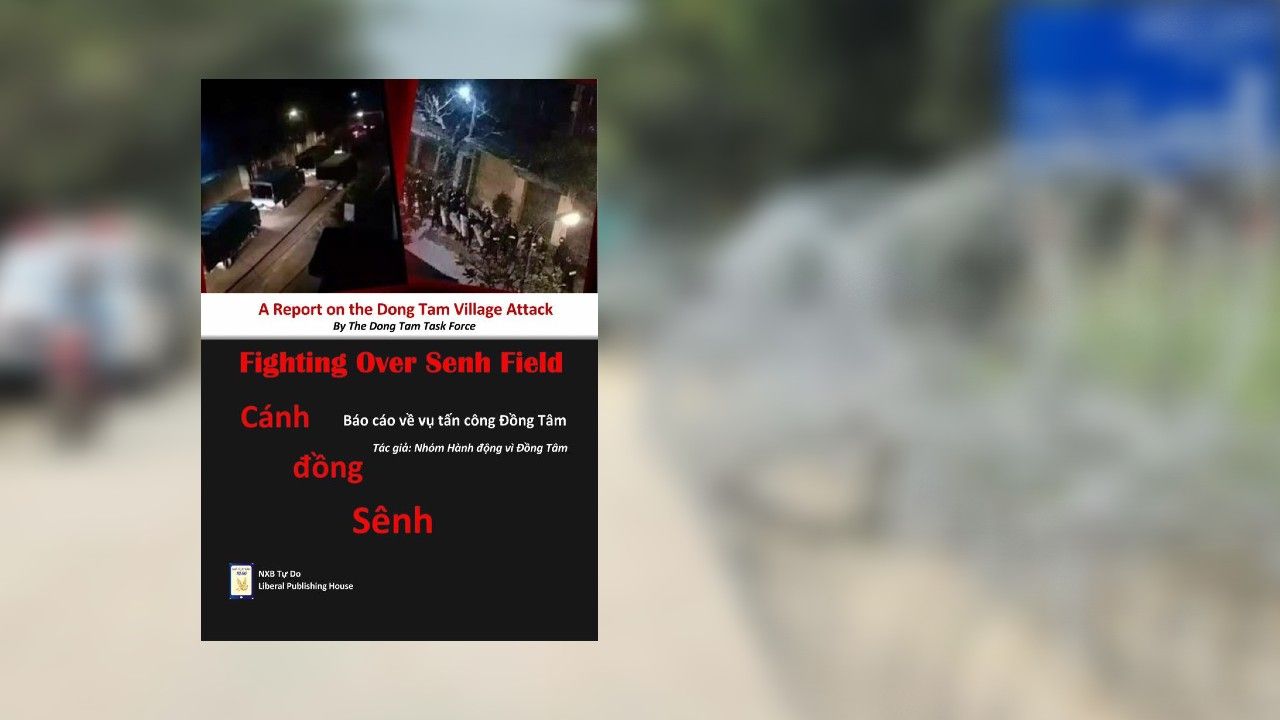
    The protracted dispute over the land between Dong Tam villagers and the government simmered over the last few decades, and a group of activists compiled a report and published it here.

    There were four people killed when the police bursted into the village, including Le Dinh Kinh, the 85-year-old village’s leader.

    The trial will expectedly last for ten days. We will continue to update it in our [News] section throughout.

  • With Economic Development Comes Greater Government Oppression: Why the EU Must Reconsider Its Free Trade Deal with Vietnam

    With Economic Development Comes Greater Government Oppression: Why the EU Must Reconsider Its Free Trade Deal with Vietnam

    On the same day in 2020 that Vietnam chaired its first Security Council meeting in New York, just a few hours earlier and some 8000 miles away near its capital, Hanoi, the Communist Party of Vietnam directly attacked Dong Tam village for refusing to give up its land.

    The result? Police shot dead Dong Tam’s beloved leader and former Party village chief, Le Dinh Kinh, an 84-year-old veteran who had been a Party member for 57 years; three police officers also died after falling down a sky-light, ostensibly pursuing “suspects” who resisted the authorities. Twenty two villagers have subsequently been arrested, with twenty being charged with murder. If convicted, these villagers could face the death penalty.

    The Dong Tam land seizure event of last week is therefore a watershed moment in Vietnam’s post-war history for many reasons. First, it marks for the first time in the age of social media an open and deadly clash between the Party and its once loyal support base: villagers in northern Vietnam. According to a 2015 Bloomberg finding, almost 70% of Party members live in the north, even though the north is home to less than half of the country’s population of 96 million.

    Second, it shows the Party’s determination in ending the dispute, no matter the costs, and the great lengths it will go to muzzle public outcry afterwards, both on- and offline.

    Just two days after the incident, the Ministry of Information, which controls and censors all media content in Vietnam, called for Facebook – by far the most popular social media platform in Vietnam, used by some 55 million netizens – to be punished for ‘not following Vietnamese laws’ in allowing ‘distortion and fake news’ to be spread on its platform.

    Following official warnings and thanks to a large cyber-troop force the government employs, some users reporting on Dong Tam have been locked out of their accounts or had content taken down by Facebook, a fact Amnesty International has confirmed in recent days.

    Offline, the Party’s determination couldn’t be more clear. Less than 24 hours after the incident, the most senior member of the Politburo and Vietnam’s top leader, Party General Secretary Nguyen Phu Trong, posthumously awarded the officers killed the title of “martyr”, designating them as first-class heroes.

    A week later, in an elaborate ceremony held at the State Funeral House, the Prime Minister himself along with other Politburo members, including the powerful Minister of Public Security, attended the funeral, noting that the officers ‘sacrificed their lives to protect national security’.

    It is, indeed, not surprising that the Party views the incident as a matter of significant national security. After all, though land disputes are common in Vietnam because the government does not recognize private land ownership, never before has an entire village dared to resist government seizure of its land at all costs and announce its intentions accordingly on Youtube and Facebook.

    With Vietnam’s economy expected to grow faster in the next decade, land designated for development purposes and seized by the government will likely exacerbate the security situation on the ground if not dealt with decisively. In the case of Dong Tam, the land seizure was for Viettel Group, Vietnam’s military-run communications company. They had to act.

    But the timing could not have been worse. In the coming days, the EU Parliament’s Trade Committee is expected to vote on the EU – Vietnam Free Trade Agreement, worth 42 billion dollars annually and described by the EU as ‘the most ambitious free trade deal ever concluded with a developing country’. If passed, it will go to Parliament for a final vote on February 10.

    According to Human Rights Watch, already there is significant concern among some EU MEPs regarding Vietnam’s worsening human rights record. Just last month, they also discovered that the trade deal rapporteur, MEP Jan Zahradil, has institutional links with the Party, leading to his immediate resignation.

    With the latest incident in Dong Tam, it is also important for the 751 MEPs to realize that while the deal will bring more economic benefits to Vietnam, without clear and concrete human rights benchmarks, the deal will likely provide more incentives for the Party loyal and powerful to grab more land from the poor for developments without proper compensation and recourse.

    As a result, if passed in its present form, expect more land losses and tragic deaths in villages across Vietnam, not less. After all, 65% of Vietnam’s population still lives in rural areas.

    As for the Security Council of which Vietnam is the President this month, expect no resolutions on the matter. Dang Dinh Quy, head of Vietnam’s permanent mission in New York, is a Communist Party member himself.