Tag: demonstration

  • June 5, 2011 – The Beginning Of The Longest Anti-China Protest Movement In Vietnam

    June 5, 2011 – The Beginning Of The Longest Anti-China Protest Movement In Vietnam

    Our newest section on The Vietnamese Magazine, the “On This Day” series, aims to introduce contemporary Vietnamese history of the twentieth and twenty-first centuries by explaining political events that occurred today in the past.


    What happened on June 5, 2011?

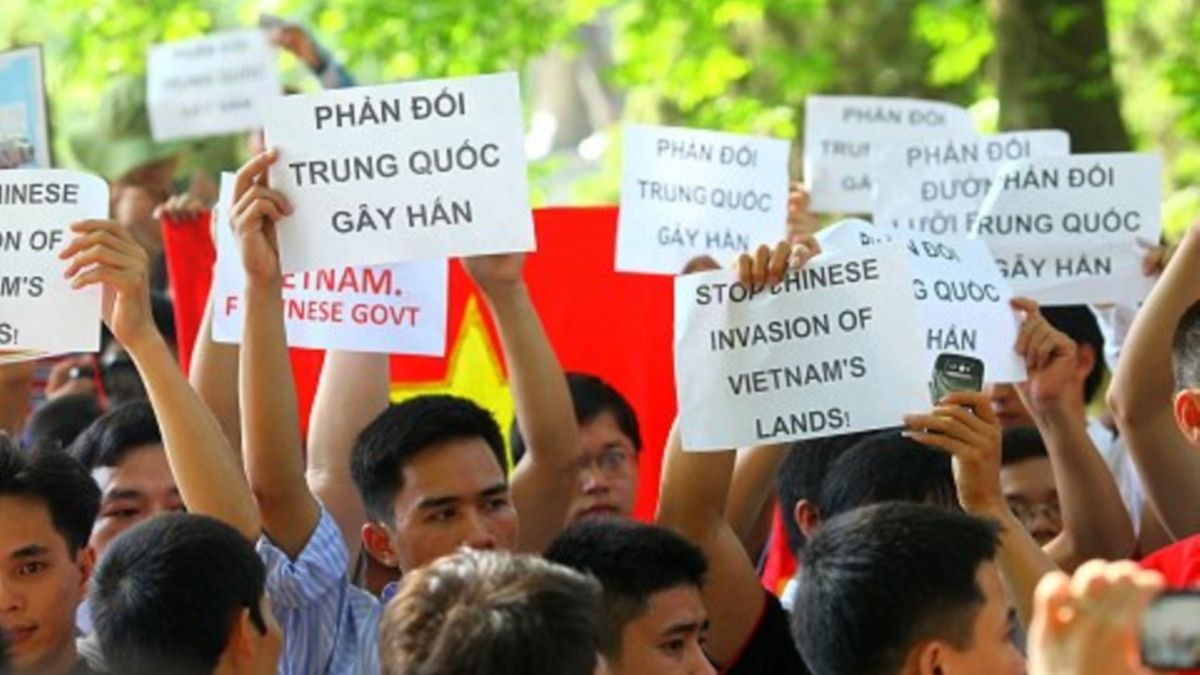
    Public demonstrations and protests are sporadic in Vietnam. But on this day, 10 years ago in 2011, it was the beginning of the longest anti-China protest movement in Vietnam after 1975.

    For almost three months of the summer of that year, a total of 11 protests happened across Vietnam every Sunday, primarily conducted in Hanoi and Saigon, where the Chinese embassy and consulate were placed. Many people call this movement “The Flaming Summer” (Mùa Hè Đỏ Lửa).

    Why were people protesting on that day?

    Since China established the eleven-dash line map (now the nine-dash line map) claiming sovereignty of various regions in the South China Sea, the Vietnamese people have always been angered by China’s claims to the Paracel and Spratly islands, known as the Truong Sa and Hoang Sa islands by the Vietnamese.

    In the summer of 2011, people especially felt provoked by the actions of Chinese vessels in the contested sea. In late May, the news reported that the Chinese vessels were harassing Vietnamese survey vessels and disrupting the Vietnamese vessels’ activities. Later in early June, Chinese ships once again harassed Vietnamese survey ships.

    What was the regime’s response to the protests?

    After supposedly tolerating the protests for a short period of time, the regime nevertheless decided to crack down on the protestors. In late August, the police began to detain people who participated in the protests, forcing 40 protestors onto two buses right after the last rally started on August 21. It was confirmed that at least 47 protestors were arrested. The Hanoi local government warned people against protesting any further.

    What is the legacy of the protests during that summer?

    The waves of anti-China protests in 2011 were not the first nor the last. Earlier in 2007 and 2008, there were also anti-China protests by many bloggers and pro-democracy activists, which also resulted in the government’s crackdown. Later in 2014 and 2018, there were also new anti-China protests.

    However, the protests in 2011 were significant because of their duration, scope, and effect on Vietnam’s pro-democracy discourse. In many ways, it was an unprecedented movement.

    Compared to other anti-China protests, the 2011 protest movement had the most prolonged duration, lasting the entire summer. The demonstrations were also massive compared to others, with the participation of hundreds of people. Some of the rallies were estimated to have around a thousand people. This fact is exceptionally significant for a country infamously known for repressing protests.

    Although the government repressed the protests, they still demonstrated to the Vietnamese government that the people could disagree with the government and willingly show it. Additionally, the protests also sowed the seeds of government criticism among the people. The movement provoked many intellectuals and highly-credited ex-government officers to speak out against the Communist Party and demand democracy.

    Many participants of these protests, such as The Vietnamese Magazine’s co-founder and editor Trinh Huu Long, would later become pro-democracy activists.

    The protests in 2011 were the beginning of “a prolonged civil society movement that still exists nowadays,” said Long.
  • Saigon Is Under De-facto Martial Law

    Saigon Is Under De-facto Martial Law

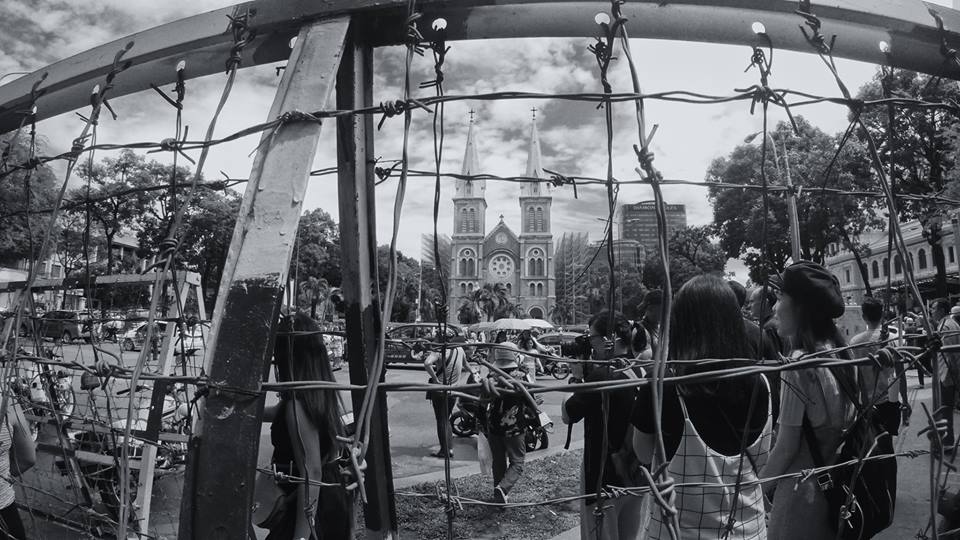
    June 17, 2018| Hundreds of people were stopped, detained, searched, and later taken to a temporary holding center set up in the heart of Saigon (aka Ho Chi Minh City) for apparently no reasons.

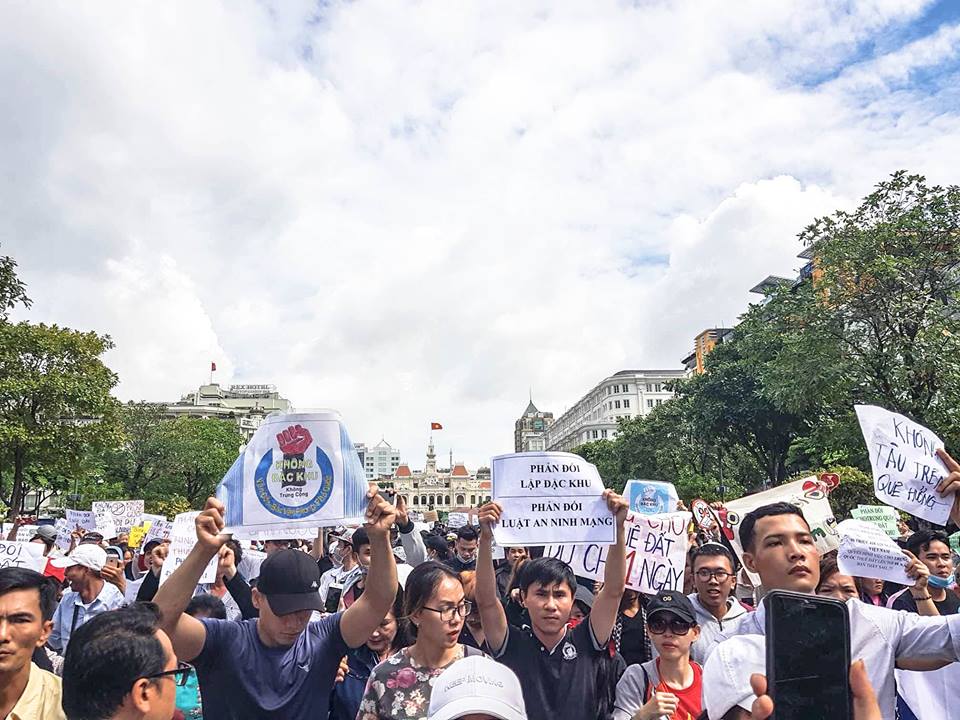
    The government, this time, did not even announce that there were any “illegal” public gatherings as in the previous weekend where thousands of people protested against the cybersecurity and Special Economic Zones draft laws.

    What they have done instead, was to preemptively take a strike at all of the citizens who were happened to be in those hot spots of last week’s protest. Some did go out to the streets with the intent to participate in a demonstration, but they could not even start.

    From the early morning, all types of police, secret police, and security forces have filled up various areas in Saigon. Many coffee shops near the Notre Dame Cathedral Basilica were asked to close by the authorities.

    One witness reported that police were arresting people at a McDonald’s nearby. The only group that acted provocatively was the police and other security forces, this person wrote on Facebook.

    The security forces watched every single bystander, people who happened to pass through the area. Anyone who looked “suspicious” to them would get stopped, asked for identification, searched, and demanded to show their phones where any pictures that were taken would get deleted.

    All were done without any probable cause and of course, without a warrant.

    It seemed as if the law no longer existed there. The city was under siege by its police force, and the people lived under martial law.

    Worse, there would likely be no recourse in a court of law for the victims, even if some of them could gather enough courage to file a complaint against the authorities.

    One person who was arrested while working near Nguyễn Văn Bình Books Street and detained until that evening said on Facebook, that she felt the experience eerily reminded her with words from Anne Frank’s Diary.

    She also recalled that others were taken into separate rooms and some got beaten up by the police. The beatings must be very violent because everyone at that detention center could hear the screams. When they tried to run towards the room to help, the police stopped them with threats of physical violence, recalled by another witness.

    The victim – who later got identified as Trinh Toan – was taken to the hospital for head injuries and reported to be in a coma since.

    Those who got released were cited for “disrupting public disorder,” ironically.

    Another witness live-streamed to tell her story after her release. She described how she and other Catholics got picked up by the police on their way to church. They were taken to that very same detention center in Tao Dan Park and later were both beaten and abused verbally.

    A Vietnamese overseas detailed how the security forces physically subdued him and assaulted him while he was strolling near his house close to Hoang Van Thu Park. The police only released him after he screamed out some profanity in English and revealed his foreign nationality.

    Some other people were already taken into police custody with no warrant a few days before last Sunday.

    One of them was Nguyen Tin. He described the police physically assaulted him, smacking his face repeatedly when he refused to speak and answer questions while in custody. The right to remain silent does exist in Vietnam, but in this case, it failed to protect the citizen.

    Almost all of the pro-democracy activists in Vietnam had plainclothes officers surveilled their homes this past week to prevent them from leaving the house and joined the protest.

    On social media, many more people were reported missing in the past 48 hours, and efforts by civil society groups are ongoing to document and identify those who were arrested, detained and/or suffered abuse.

    Phil Robertson from Human Rights Watch tweeted today:

    “Brutality of #Vietnam authorities attacking activists opposed to new internet surveillance law is really off the charts! Time for #Hanoi to be called out by U.N. Human Rights Council, U.N. General Assembly for their rights crimes!”

    From the June 10, 2018 protest, the authorities might have arrested about 300 people in Saigon alone. One of them was an American citizen, Will Anh Nguyen, whose story made headlines internationally. Vietnam police filed charges against Nguyen for “disturbing public order” on June 15, 2018, and continued to hold him in detention.

    This past weekend, Saigon was the city that got suppressed the hardest. It is estimated that over 100 people arrested and detained and the number of injuries caused by police brutality is still being counted.

  • The Right to Protest In Vietnam Is Not Only Legal, It’s Constitutional

    The Right to Protest In Vietnam Is Not Only Legal, It’s Constitutional

    On June 14, 2018, AFP reported, the spokesperson of Vietnam’s Ministry of Foreign Affairs, Le Thi Thu Hang, told reporters that Vietnam was holding an American citizen of Vietnamese descent, Will Anh Nguyen, under the suspicion of “disrupting public order.”

    Online video clips showed Nguyen being dragged away by several men with his head covered in blood, and that he was thrown into the back of a police car. Later that day, news surfaced on Vietnam’s social media that he was arrested for being part of the demonstration.

    One probably would stop and wonder: Is protesting illegal in this country?

    Simply put, the right to protest is not only legal in Vietnam, but it is also the people’s constitutional right.

    Article 25 of Vietnam’s 2013 Constitution prescribes:

    The citizen shall enjoy the right to freedom of opinion and speech, freedom of the
    press, of access to information, to assemble, form associations and hold
    demonstrations. The practice of these rights shall be provided by the law.

    Not only that, Article 166 of the 2015 Penal Code makes it a crime to infringe upon the human rights of others with the maximum sentence of up to five years in prison.

    Nguyen very likely did not violate any law when participating in a march in Ho Chi Minh City while on vacation; the problem was: he had exercised his universal human rights in the wrong country.

    His arrest is now making international headlines where most of the major media outlets have covered the story, and it also brings many people’s attention to the right to protest in Vietnam.

    As in all of the protests that happened before, this time, again there were allegations that the police used excessive force to suppress the peaceful demonstrators.

    Yes, in one province – Binh Thuan – riots broke out between the protestors and the police, but everywhere else, they were mostly peaceful, including the one that Will participated.

    The UN Human Rights Office for South-East Asia stated on June 14, 2018: “We are particularly concerned about allegations that some protesters were beaten by law enforcement authorities.”

    Any seasoned pro-democracy activists and human rights defenders will tell you what has happened to Will Anh Nguyen this past weekend is the same routine violation of human rights in Vietnam when people dare to exercise the right to demonstrate.

    First, Vietnam still has no law providing for the practice of any of the rights stated in Article 25 of the Constitution.

    While the legislative body of the nation kept delaying passing such a law, the government in March 2005 issued Decree 38/2005/NĐ-CP to regulate “public gatherings”.

    Accordingly, a public gathering of more than five people must be approved by the Provincial People’s Committee, unless it was organized by the government or social and/or political organizations belong to the government.

    This Decree has been quite effectively used by the government to wrongfully break up protests and to arrest people in the past. Nevertheless, its language has been denounced by both legal experts in Vietnam and the international community because of human rights violations.

    It is worth noting that the Decree does not mention the word “demonstration” anywhere, so it can be argued that legally, it cannot be used to regulate protests.

    Thus, in 2011, during the height of another wave of protests across the country, a group of activists and lawyers petitioned the National Assembly’s Standing Committee for a review of Decree 38.

    Vietnam does not have a constitutional court. Instead, the National Assembly has the power to interpret the Constitution, but to date, they have not responded to the petition filed back in 2011.

    In fact, the National Assembly of Vietnam has never exercised this power to interpret the law.

    In a nutshell, the law on the practice of demonstration seems to have been strategically delayed while an allegedly unconstitutional government’s decree will act as the only official tool to round up peaceful protesters and arresting them.

    The nation-wide protests broke out in Vietnam last Sunday, June 10, 2018, against the proposed Special Economic Zones (SEZ) and the cybersecurity draft laws, were estimated to have had thousands of people marching.

    Some sources believed around 300 people were later arrested in Ho Chi Minh City alone, and one of them was Will Anh Nguyen.

    Since his detention on Sunday afternoon, his family has been actively working with the U.S embassy to get him released.