Tag: death-row inmates

  • A Spark Of Hope For Ho Duy Hai’s Family As New Alibi Emerges

    A Spark Of Hope For Ho Duy Hai’s Family As New Alibi Emerges

    On June 24, 2021, Attorney Tran Hong Phong, the lawyer for Ho Duy Hai and his family in their petition for his wrongful death penalty case, published a letter on his Facebook account, providing a new alibi regarding the case. Five lawyers (including Phong), two journalists working for a law newspaper, and Ho Duy Hai’s family jointly signed the letter.

    The letter, which had been previously sent to the Procurator of Supreme People’s Procuracy of Vietnam and the Vietnamese authorities, provides convincing proof [1] to demonstrate that Ho Duy Hai was not the murderer of two post office workers in Long An Province in 2008.

    Alternatively, the new evidence shows that on the evening of January 13, 2008, Ho Duy Hai actually did not go to Cau Voi Post Office, where the murder took place, but rather attended the funeral of Ho Chi, also known as Tu Lan, a neighbor who lived just 500 meters from Hai’s house.

    Furthermore, the new evidence also shows that Ho Duy Hai was at the funeral from 7:50 pm until 9 pm, which coincides with the time the Long An Police investigative agency alleged he had entered the Cau Voi Post Office, at around 7:30 pm, to murder the two victims at around 8:30 pm allegedly. Seven witnesses, who also attended the funeral, including the deceased’s wife, have confirmed this fact.[2]

    Ho Duy Hai received a death penalty for his convictions of homicide and robbery, despite “serious procedural shortcomings”[3] and violations of the defendant’s right to a fair trial.

    This controversial and invalid case has set his family and their attorney on a decade-long journey [4] of calling for the suspension of his execution. They finally reached a cassation trial [5] in 2020, but Ho Duy Hai was once again declared guilty of the crimes and sentenced to death.[6]

    Although the presumption of innocence has been recognized [7] in its 2015 Criminal Procedures Code, Vietnam has fallen short of actually practicing this principle in its criminal proceedings. Quite commonly, the number of cases and the speed at which a case must be solved dwarf the importance of proper due process to uphold a fair and just trial.

    A local lawyer explained [8] that investigative agencies could deploy “professional” methods to extract forced confessions from people since these agencies “often hold prejudices” against the accused. Also, earlier this month, the People’s Court of Dak Song District, in Dak Nong Province, held [9] nearly 60 “pretend” trials, to meet its quota for a local judge to be reappointed, without any real defendants or victims.

    However, the new evidence provided by his attorney might prove that Ho Duy Hai was wrongfully convicted, which would be a spark of hope for both the defendant and his family as the possibility of retrial could be high.

    To strengthen the validity of the new proof, Attorney Phong confirmed that all seven witnesses “voluntarily provided the information and confirmation letters to affirm that their testimonies are true and vowed to take full responsibility under the law […].”

    In their letter, the attorney and the signees demanded Vietnamese government officials expeditiously verify the evidence, review the cassation decision, release defendant Ho Duy Hai on bail while awaiting verification; and review and resolve their previous petitions and demands.

    The case of Ho Duy Hai has drawn wide attention from both national and international audiences, as he was convicted of murder and later sentenced to death via an opaque and unfair trial.

    Bibliography:

    [1] RFA. (2021, June 25). Vụ án Hồ Duy Hải: Luật sư cung cấp bằng chứng ngoại phạm mới. Đài Á Châu Tự Do. https://www.rfa.org/vietnamese/news/vietnamnews/ho-duy-hai-case-lawyer-provides-new-proof-06252021081856.html

    [2] HCMC Reporters. (2021, June 25). Vụ án tử tù Hồ Duy Hải: Luật sư cung cấp tình tiết bất ngờ. Dân Việt. https://danviet.vn/vu-an-tu-tu-ho-duy-hai-luat-su-cung-cap-tinh-tiet-bat-ngo-2021062515064789.htm

    [3] Will, N. (2019, December 3). After Decade of Petitions, Vietnam to Re-consider Case of Death Row Inmate Ho Duy Hai. The Vietnamese Magazine. /2019/12/after-decade-of-petitions/

    [4] Vi, T. Q. (2019, September 29). Wrongful Death Penalty Cases And The Families That The Inmates Left Behind. The Vietnamese Magazine. /2019/09/wrongful-death-penalty-cases-and-the-families-that-the-inmates-left-behind/

    [5] Thereporter. (2020a, May 7). Ho Duy Hai’s Cassation Trial. The Vietnamese Magazine. /2020/05/ho-duy-hais-cassation-trial/

    [6] Thereporter. (2020b, May 9). Ho Duy Hai’s Case Reaffirmed, Sentenced to Death Again. The Vietnamese Magazine. /2020/05/ho-duy-hais-case-reaffirmed-sentenced-to-death-again/

    [7] V.L.L.F. (2018, June 1). Legal experts discuss presumption of innocence, due process principles in criminal proceedings. Vietnam Law and Legal Forum. https://vietnamlawmagazine.vn/legal-experts-discuss-presumption-of-innocence-due-process-principles-in-criminal-proceedings-6244.html

    [8] Thi, D. (2021, June 25). Liệu có tái thẩm vụ án Hồ Duy Hải với chứng cứ ngoại phạm mới? Đài Á Châu Tự Do. https://www.rfa.org/vietnamese/in_depth/will-the-ho-duy-hai-case-be-retrial-with-new-alibi-dt-06252021114054.html

    [9] Duong, D. (2021, June 6). Tòa huyện lập gần 60 vụ án “ảo” để. . . một thẩm phán được bổ nhiệm lại? Dan Tri. https://dantri.com.vn/xa-hoi/toa-huyen-lap-gan-60-vu-an-ao-de-mot-tham-phan-duoc-bo-nhiem-lai-20210606162322706.htm
  • Ho Duy Hai’s Case Reaffirmed, Sentenced to Death Again

    Ho Duy Hai’s Case Reaffirmed, Sentenced to Death Again

    On May 8, 2020, around 15:30 Hanoi’s time, the 17 members-committee of the Supreme People’s Court of Vietnam reaffirmed Ho Duy Hai’s lower courts’ decisions and again sentenced him to death. They have also denied the petition for a cassation trial from the Supreme People’s Procuracy of Vietnam.

    Hai’s death sentence has been affirmed

    In its statement denying the petition from the Judicial Committee of the Supreme People’s Procuracy of Vietnam, the committee even though agreed there were prosecutorial mistakes. Still, its members believed those mistakes did not change the character of the case. Accordingly, the Judicial Committee of the highest court believed that the lower courts have duly convicted Hai and sentenced him to death. Therefore, they affirmed the lower courts’ decisions, effectively sentenced Hai to death again.

    Ho Duy Hai’s family and his lawyer after the decision was announced. Photo courtesy: Nguyen Xuan Dien

    The Judicial Committee of the Supreme People’s Court believed these prosecutorial mistakes did not change the character of the case. Yet, if we look at them from an international law perspective, they might have violated the defendant’s right to a fair trial. The errors admitted by the government were among the followings:

    • No murder weapons. The alleged “weapons” were purchased at a market by the police.
    • Hai’s DNA, fingerprints were not found at the crime scene.
    • Hai also was convicted of ‘robbery’ in the same case, but the police could not find any of the items alleged to be robbed by him.
    • No eyewitness identified Hai at the crime scene.

    Technically, there was no physical evidence. The only evidence in the case was Hai’s confession. Under Vietnam’s laws, the confession could not be the sole evidence used to convict defendants.

    Would Hai’s life be saved under Vietnam’s laws?

    The cassation trial is the highest court’s proceeding in a case in Vietnam. But Hai still has three options (link is in Vietnamese) under Vietnam’s laws to save his life.

    1. The National Assembly could intervene and request the Judicial Committee of the Supreme People’s Court to conduct a meeting to review the cassation trial’s decision.
    2. The Head of the Supreme People’s Procuracy of Vietnam petitioned, or the Chief Justice of the Supreme People’s Court requested the Judicial Committee to review their decision in the cassation trial.
    3. The President of Vietnam pardons the death sentence.

    The cassation trial of Ho Duy Hai during the past three days has created a lot of public discussion in Vietnam. People have discussed the case because many of them saw the injustice of Ho Duy Hai’s judgment during the last twelve years.

    Representative Le Thanh Van at the National Assembly. Photo courtesy: Bao Moi

    One of the National Assembly’s members, Mr. Le Thanh Van, a representative Ca Mau province, has also expressed his opinion on his Facebook account. Mr. Le said that he would do all that he could to push for Vietnam’s Congress to intervene with this case. He stated that the decision of the cassation trial is unconvincing and not persuasive enough.

    Numerous attorneys and journalists also expressed on social media that the decision of the cassation trial’s decision was not fair. They believed that Ho Duy Hai should have been released. One of them was Huy Duc, the author of the book The Winning Side (Ben Thang Cuoc).

  • Ho Duy Hai’s Cassation Trial

    Ho Duy Hai’s Cassation Trial

    On May 6, 2020, a cassation trial started for Ho Duy Hai – a death-row inmate in Vietnam. His mother has been requesting the courts to review his wrongfully convicted case for the past decade. In one of our previous articles, we detailed the facts of his wrongful conviction in 2008.

    This trial is expected to last for three days at the Supreme People’s Court of Vietnam in Hanoi which is the highest court of the country. It is led by Mr. Nguyen Hoa Binh, the current Chief Justice of Vietnam.

    Below is the summary of the first day of Hai’s cassation trial.

    What is a cassation trial?

    The Supreme People’s Court of Vietnam on May 6, 2020. Photo courtesy: Justice Newspaper

    The cassation trial is a special court proceeding in Vietnam to review the lower court’s decisions. There must be a petition asking the highest court for a review because of irregularities or illegal conduct in the lower court’s proceedings.

    This proceeding does not review the facts of the case. Rather, the review only focuses on whether there have been prosecutorial mistakes which influence the decision of the lower courts.

    The decision from a cassation trial could result in six different ways:

    1. Affirm the lower courts’ decisions and deny the petition for a cassation trial;
    2. Void the lower courts’ decisions and order a new investigation of the case;
    3. Void the lower courts’ decisions and order a new trial;
    4. Void the lower courts’ decisions and halt the case;
    5. Amend the lower courts’ decisions, and
    6. Halt the cassation trial.

    What is the stand of the Supreme People’s Procuracy of Vietnam on this case?

    In Ho Duy Hai’s case, after receiving a request for a petition in his case from Hai’s family, the Supreme People’s Procuracy of Vietnam petitioned for a cassation trial at the end of 2019. At the cassation trial on May 6, 2020, the Supreme People’s Procuracy of Vietnam stated its decision to request this trial as follows:

    Accordingly, as reported by Justice newspaper in Vietnam, the decisions from both the trial court and appellate court in Ho Duy Hai’s case were inconsistent with the objectivity of the case; the gathering and examining of evidence and data were not completed, and the case contained a lot of conflicting issues but was not clarified. The Supreme People’s Procuracy of Vietnam requested “the highest court to void both the trial and appellate decisions in Ho Duy Hai’s case for ‘robbery’ and ‘murder’, as well as issue an order for a new investigation.”

    Ho Duy Hai’s Lawyer, Tran Hong Phong, is the first attorney to attend a cassation trial in the history of Vietnam

    Attorney Tran Hong Phong. Photo courtesy: VNExpress

    Cassation trial is a review court, not for arguing facts or procedures. In Vietnam, cassation trial does not allow lawyers for the defendant. However, from Tuoi Tre newspaper, the highest court has made an exception in this case to invite Ho Duy Hai’s attorney to attend.

    Attorney Tran Hong Phong is the first lawyer for a defendant to attend the cassation trial. From Mr. Phong, the court invited him because it saw him as a person with related responsibility in the case as he got some evidence. The evidence raised by Mr. Phong and Hai’s family included the testimony of an eyewitness. The eyewitness had told the police at the time that he saw a young man at the crime scene, but that person was not Ho Duy Hai. The eyewitness did not know Ho Duy Hai at the time and he did not recognize the person he saw was Hai.

    However, after the morning session of the first day of the cassation trial, Mr. Phong was asked to not come to the other sessions of the case. The court will continue the case with discussions of the court and the other governmental entities.

    Ho Duy Hai’s family believes justice will come when Hai is exonerated

    Hai’s younger sister, Ho Thi Thu Thuy, stated: “I desperately hope that this trial will happen in a transparent, equal manner and that it will practice justice. If this trial exonerates my older brother Hai, then I will believe justice is still present in Vietnam. If it concludes like the other previous decisions to deem him guilty, then Vietnam does not have justice and the law in Vietnam would not worth our respect to upholding.”

    Some pictures during the first day of Ho Duy Hai’s cassation trial

    Ho Duy Hai’s family, including his aunt, his mother, and his younger sister and attorney Tran Hong Phong
    Chief Justice Nguyen Hoa Binh began the trial. Photo courtesy: Vietnam News Agency
    Member of the Supreme People’s Procuracy of Vietnam. Vietnam News Agency
  • After Decade of Petitions, Vietnam to Re-consider Case of Death Row Inmate Ho Duy Hai

    After Decade of Petitions, Vietnam to Re-consider Case of Death Row Inmate Ho Duy Hai

    After more than 10 years of petitioning the Vietnamese government, Nguyen Thi Loan (pictured above) says a huge weight has been lifted off her shoulders. Her son, Ho Duy Hai, who had been found guilty of murder in 2008 and was sitting on Vietnam’s death row for eleven years, now has another chance at life.

    On November 30, 2019, the country’s highest prosecutor’s office (the Supreme People’s Procuracy, or SPP) announced that “Ho Duy Hai’s case suffered from serious procedural shortcomings that affected the quality of evidence gathered” to prosecute him.

    As such, the SPP has requested that Vietnam’s Supreme Court toss out all previous rulings, including the original 2008 conviction by a Long An provincial court, as well as a 2009 appellate judgment by the Ho Chi Minh City Supreme Court of Appeals which upheld the death sentence. The SPP’s latest request also supersedes its own October 2011 refusal to halt the sentence after repeated petitions from Loan.

    Ho Duy Hai’s 2008 case involves the murder of two sisters, Nguyen Thi Thu Van, 22, and Nguyen Thi Anh Hong, 24, who were killed at Cau Voi Post Office in Long An province, which borders Ho Chi Minh City to the southwest. The women, who both lived and worked at the post office, were found at the foot of a set of stairs, two meters apart, with their necks slit and their heads showing signs of blunt force trauma. The robbery and double murders occurred on the evening of January 14, 2008, about 4.5 kilometers from Hai’s house. It was not until two months later that Hai was implicated. He had known the two employees and could not provide an alibi the night of the murders. Police subsequently arrested him and charged him with murder on March 21, 2008.

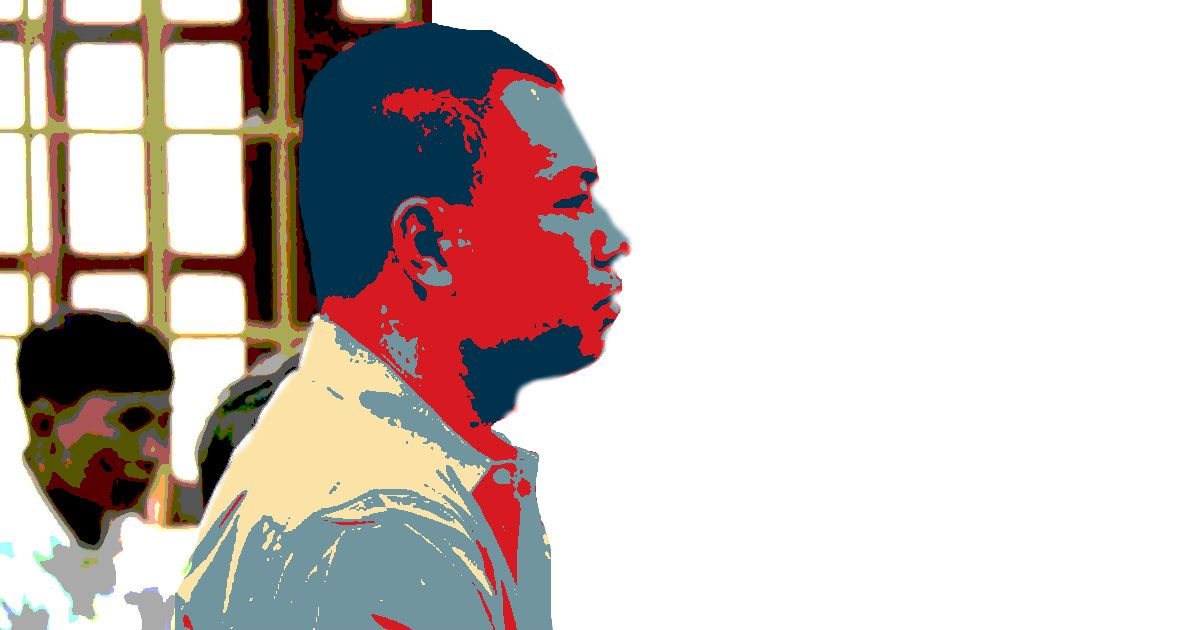
    Ho Duy Hai during his trial on December 1, 2008. Photo: Hoang Phuong / Thanh Nien.

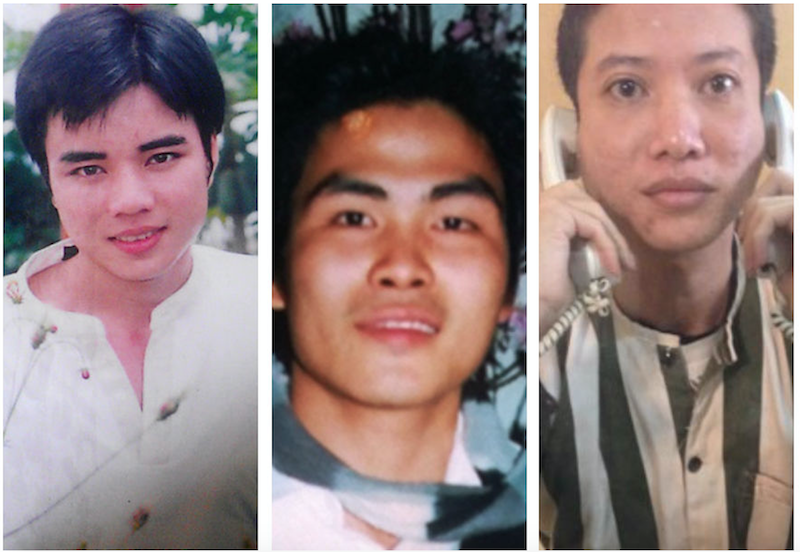
    Hai was only 23 when he was sentenced to death on December 1, 2008, but both he and his mother have consistently proclaimed his innocence. Though Hai could not remember clearly what he was doing the night of the murders, he claimed police beat and tortured him into falsely confessing.

    Other cited shortcomings in the investigation included a lack of fingerprints at the scene of the crime to corroborate Hai’s “confession”, an inability to confirm the murder weapon(s), purchased items used to replace “lost” evidence at the scene of the crime, inconsistent witness testimonies, and a lack of time of death for the two victims to corroborate Hai being at the scene, among others.

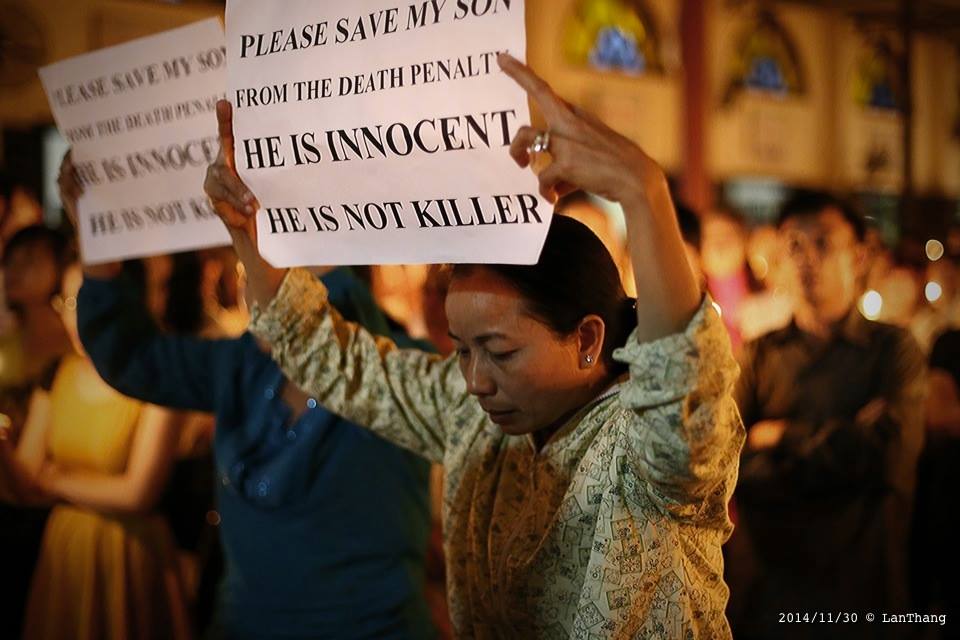
    For more than a decade, Hai’s mother petitioned all levels of government to intercede in her son’s case, even holding banners in front of the General Secretary, Prime Minister, and the President’s offices. She also enlisted the help of activists, dissidents, and human rights groups on social media to spread awareness. In December 2014, when Hai was only a day away from lethal injection, the Long An provincial court decided to temporarily suspend his sentence due to uproar over the nagging inconsistences in Hai’s case.

    The case became so high-profile that National Assembly (NA) representative Le Thi Nga, who was the deputy head of the NA’s Judicial Committee at the time, became involved. She personally investigated the case’s inconsistencies, confirming that “there were serious violations committed by the police and prosecution in Hai’s case.” Her tenacity, attention to detail, and personal care for Hai’s mother has earned her praise on social media, who have held her up as a model NA representative.

    Ms. Le Thi Nga, National Assembly representative, and deputy head of the NA’s Judicial Committee from 2007-2016. She is currently head of the Judicial Committee. Photo: Hoang Long / Vietbao

    If the Vietnamese Supreme Court accepts this latest SPP request, then there are two possible outcomes for Hai: his case will either be suspended and all charges dropped or he will be re-investigated and re-tried.

    If the Supreme Court decides the former, then Hai will walk away from death row a free man. If it decides the latter, then Hai’s case is essentially back to square-one, as if he had just been arrested. Hai would remain in police custody (i.e. virtually imprisoned, as is Vietnamese custom for those who have been arrested but not yet charged with a crime). The murders for which he was convicted would be re-investigated by police, after which the Long An prosecutor’s office would decide whether to charge Hai with a crime. If they do, then the trial, sentencing, and appeals process would repeat itself. If they don’t, then Hai has yet another path to freedom.

    Regardless of the outcome, Hai’s mother is all gratitude for what has been achieved so far: “I want to thank every soul, both inside and outside the country, for caring so deeply for Hai. I will be grateful to you all for the rest of my life, for supporting my family and walking together with us on this long path.”

  • Wrongful Death Penalty Cases And The Families That The Inmates Left Behind

    Wrongful Death Penalty Cases And The Families That The Inmates Left Behind

    Mrs. Loan began to cry softly as she spoke to me one afternoon in late March, when I called to ask if there were any updates on her son Ho Duy Hai, who is sitting on death row in Long An province on a wrongful conviction.

    “He is so young, and yet already has suffered over a decade of imprisonment,” she told me over the phone. “I want him to come back home and live a normal life. I want him to get married, and have a child. Sometimes, I just really wish to have a paternal grandchild and that both of my children could live with me like in those happy days before.”

    I have been in contact with the Hai family for the past four years, since I first joined the community of Vietnamese bloggers and activists calling for the suspension of Hai’s execution in December 2014, after then President Truong Tan Sang issued an order to stop his execution. It was  then that I began studying his case a bit more and learned that the evidence submitted for his conviction was invalid, and quite frankly, illegal.

    For example, the local authorities wanted to ensure Hai was found guilty and so they purchased a knife at a market and marked it as “similar” to the weapon that they alleged Hai had used in committing the robbery and murder of two women. And with such “evidence,” Hai was convicted and sentenced to death in 2008, when he was a recent college graduate, and just 23-years-old.

    Throughout these years, I have also gotten closer to two more families of Vietnamese who have been handed wrongful death penalties. Those include the families of Nguyen Van Chuong and Le Van Manh. These two men also were convicted and sentenced to death in their 20s with no evidence and following alleged torture by police officers. These three groups of parents meet every month in Hanoi and go together to petition the government to overturn the wrongful conviction of their sons. Each month, if they saved enough money to buy supplies, they will also visit their sons in prison. All of the men were convicted and have been kept behind bars for more than a decade.

    Yet, visiting their sons is not quite an easy task because of the financial strain on these families. The words of Le Van Manh’s mother – Mrs. Viet – broke my heart during our most recent telephone call, also in March this year. “If I manage to earn enough money, then I will go to see my son, but making money to support my family is quite difficult given my age,” she told me. “So for some months, I have not been able to see Manh.”

    My colleague based in Vietnam told me that catching fish and other aquatic creatures at the river near Mrs. Viet’s house was the main source of her income. Yet, her determination to fight against his unjust conviction has been so powerful.

    I asked her if she was able to talk about his case when she visited him in jail. “The officers don’t like me to talk about it, but I tell Manh anyways,” she said. “Manh needs hope and the information that people have not forgotten him and are fighting for him gives him hope.”

    Mr. Chinh, Nguyen Van Chuong’s father, also has the same fighting spirit. He sends me documents and updates me on Facebook about his son’s case. This year, Mr. Chinh shared with me that the Supreme People’s Procuracy Office in Hanoi contacted him and invited him to go see them. The office told Mr. Chinh that they had sent a request for a trial for cassation in Nguyen Van Chuong’s case. However, the Supreme People’s Court of Vietnam denied such a request without giving any apparent reason. The Procuracy Office used that excuse and the denial to tell Mr. Chinh to stop contacting them. However, that was not a legally sound argument. First, the office recognized that the case needed to be reviewed. Second, the law allows the office to continue sending their request, even after the denial. In fact, the Procuracy Office should continue to submit their requests for Nguyen Van Chuong and not tell his father to forget about the case.

    The cost for discussing the details of their cases with their family members during visitations has been quite severe for Nguyen Van Chuong and Le Van Manh. Both of them claimed that they were shackled 24 hours a day a few times. Nguyen Van Chuong’s father also told me that Chuong was being beaten up by other inmates in his prison and being forced to sign a letter for the local authorities confessing to the murder he was convicted of. Yet, the families and the inmates did not yield in front of these pressures and they kept on petitioning for a review of their cases.

    Different than Ho Duy Hai, both Chuong and Manh already had children before their conviction. But their wives could not withstand the pressure of having a spouse that was given a death penalty conviction and so they left their children to be raised by Chuong’s and Manh’s parents. The responsibility to raise the children while still trying to exonerate the two men greatly added to the burden of the two families, who are already straining to survive. The grandparents are elderly and cannot find jobs that provide a fair and reasonable income. But at the same time, they have to provide support for a lot of people in their families.

    In Vietnam, there is no organization that really focuses on the issue of the anti-death penalty or that assists people with wrongful convictions. And even though I work on this issue, my non-profit organization is not recognized by the Vietnamese government and our work is classified as “reactionary” conduct. More than that, none of the death row inmates would be allowed visitations by an organization or non-family persons, not even the International Committee of the Red Cross. The inmates are shut off from society entirely and can not have any contact with  people and organizations that care about their cases. In fact, visitations by independent organizations working on behalf of inmates, including those sitting on death row, was a request made by the Committee Against Torture  in its concluding observations for Vietnam in 2018.

    As the person who has brought these three cases before the different international law reviews, such as the Committee Against Torture and the Universal Periodic Review of Vietnam, where specific inquiries were asked about them, it is very frustrating for me that international law – such as the International Covenant on Civil and Political Rights (ICCPR) – had not been used for the benefit of the wrongfully-accused inmates. The Human Rights Committee (a body of independent experts that monitors implementation of the ICCPR) sadly acknowledged the fact that the covenant could not actually be implemented by the people of Vietnam in its third periodic report on Vietnam early in 2019.

    The families of Hai, Chuong, and Manh don’t really have support from the public or civil society organizations that operate in Vietnam. They are almost alone during their monthly petitioning to the authorities in Hanoi. They need to find some financial resources to buy supplies to visit their sons each month. More than that, no one actually assists them with funds to buy paper and pay postage fees to send their monthly petitions. And yet, none of the parents will call for financial support from the public for their families when I spoke to them. Instead, they all told me that they just want a review of the cases in an independent court of law.

    Their determination and belief in justice and rule of law always encourages and inspires me to continue to bring their cases to more people, which I will do until the day that these cases are  fairly reviewed and rightfully settled.

  • Death-Row Inmate Dang Van Hien May Get A Second Chance At Life

    Death-Row Inmate Dang Van Hien May Get A Second Chance At Life

    On February 18, 2019, the defense attorneys for Dang Van Hien – a farmer in Dak Nong Province who was sentenced to death in January 2018 – received a letter from the People’s Supreme Court in Hanoi, asking them to supplement further information in support of Hien’s request for a trial by cassation.

    The letter is a good sign. It indicates that Hien’s case may get a review of both the law and the facts by the highest court in Vietnam.

    It gives him hopes that his life could be saved.

    Dang Van Hien killed three men and injured 13 others during a physical altercation between him and the workers of Long Son Investment & Commercial Company in October 2016.

    The call to save Hien, whose death sentence was confirmed by an appellate court in Ho Chi Minh City last July, surprisingly, received a significant amount of public sympathy in Vietnam.

    Right after the appellate court’s decision was announced, in five days, 3,500 people signed an online petition, asking the President of Vietnam to spare his life.

    On July 17, 2018, the Presidential Office demanded the Chief Justice of the Supreme People’s Court, the Chief Procurator of the Supreme People’s Procuracy Office, and the Ministry of Public Security to review and report back the details of the case.

    The public seemed to side with Hien and agreed that while he committed murder, there were extenuating circumstances that should save his life from execution.

    Long Son had been involved in a bitter land dispute for almost a decade with the farmers living in Hien’s village, Village 1535 in Quang Truc Ward, Tuy Duc District, a remote area deep into the forest of Dak Nong Province.

    Dang Van Hien’s case was an agonizing tale of a farmer who started from scratch, trying to build a life on a piece of land which representing the hard-earned money that he and his wife had worked so hard for.

    He was a member of the Nung ethnic minority in Vietnam who had very limited education.

    But Hien believed in working hard and to this day, believed in the legal system.

    He tried to petition to the central government to resolve the dispute between him and Long Son company for almost ten years.

    He was not the instigator of the deadly event happened on October 23, 2016.

    He earnestly believed that he was protecting his land and his family when they were attacked by the company’s workers, with bulldozers and self-made weaponry.

    He turned himself into the police, believing that the law would be fair to him. He and his family tried to compensate the families of the victims for their losses.

    Those were the extenuating circumstances that 3,500 Vietnamese people believed should spare Dang Van Hien’s life.

    But their sympathy could have also come from the fact that land disputes have become one of the most pressing social and political problems in Vietnam during the past three decades, ever since the Vietnamese Communist Party (VCP) started to implement their economic reforms under the Doi Moi policy in the late 1980s.

    The growth of both the private sector and quasi-government enterprises crashed head-on with landowners across the country in many development projects throughout the years.

    On top of that, the legal framework involving land rights in Vietnam is extremely complicated, yet still could not resolve the most important issue confronting the authorities.

    How to balance the communist concept that all lands supposedly belong to the people and still be able to justify the granting of the right to occupy and use the land to preferably private companies over a regular person?

    In recent years, story after story continuously exposed incidents of local government in Vietnam giving the conglomerates a more favored treatment when granting them land use rights in real estate development projects.

    The victims of the wrongful, forced removals under the Thu Thiem Project in Ho Chi Minh City had spent over 20 years in petitioning their cases to no avail.

    Just last month, Sun Group – one of the largest real estate development companies in Vietnam – faced an accusation from environmental activists that they are building a resort in the heart of the country’s famous national park, Tam Dao.

    Land-grabbing has become the reality that the majority of Vietnamese people acknowledges. When conflicts happen, it would be somewhat natural for them to act more sympathetic towards the land-lost victims.

    There is always the possibility that anyone in Vietnam could be the next victims of land-grabbing activities, as seen in the case of Loc Hung Vegetable Garden this year, which may also explain this sympathetic reaction from the public as seen in Hien’s case.

    In Hien’s case, their sympathy may get him a second chance at life.