
This article was written in Vietnamese by Vo Van Quan and previously published in the Luat Khoa Magazine on October 6, 2020.
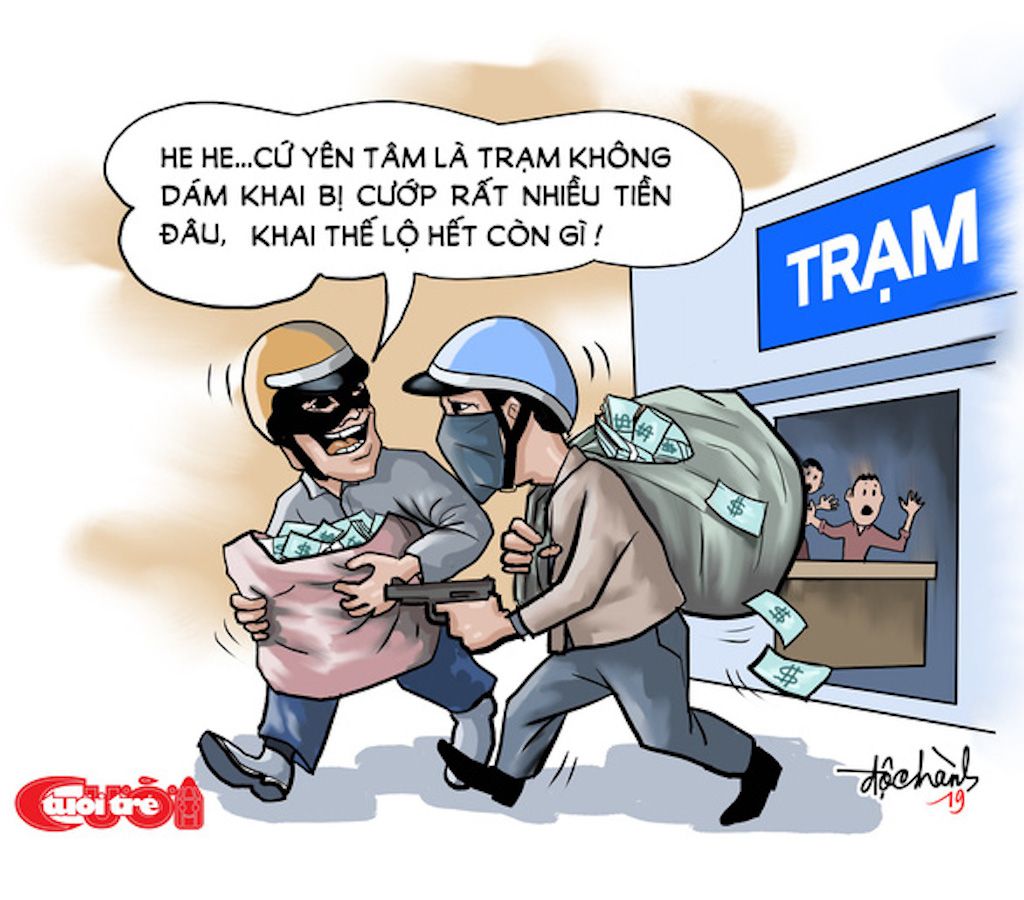
The term burning furnace (đốt lò in Vietnamese) is a frequently used term in Vietnam to describe the anti-graft campaign that Nguyen Phu Trong pledged would eliminate corruption in the country.
After nearly ten years of the Vietnamese Communist Party (VCP) being under the leadership of General Secretary Nguyen Phu Trong, many people seem to be proud that the Vietnamese government has done well in its political task of purging the moral degradation that affects the people’s trust in the Party and the State.
For instance, in the first six months of 2020, Nguyen Phu Trong ordered several investigations of senior party officials: a member of the Politburo, a former member of the Politburo, four current and former members of the Party Central Committee, and 186 other members of the Party who were under the Central Committee’s management. These investigations seem to affect a broad number of Party members.
Big-name politicians such as Hoang Trung Hai, Dinh La Thang, Le Thanh Hai, Nguyen Duc Chung, Truong Minh Tuan, Nguyen Bac Son, and Tat Thanh Cang, all seem to have either been brought to justice, have been reprimanded for their actions, or have lost any chance for a long-term political position in the future. Since the beginning of the VCP’s Doi Moi policy in 1986, it can be seen as one of the unprecedented successes for the Party.
However, after the new Party Congress concluded in early 2021, it immediately became apparent that all of these achievements would have been for nothing if another faction becomes the majority in the Party’s leadership.
If the ruling faction’s victories against corruption under Trong’s leadership have been so triumphant, why are they at risk of falling apart after just one new congress?
Philosophical or social science discussions related to corruption in Vietnam are sparse. On the rare occasion that they do take place, they are mainly carried out by members of the VCP themselves to serve their interest.
This article will introduce another perspective on anti-corruption science and explain why the “blazing furnace” of Nguyen Phu Trong does not have any significant value over the long term.
The concept itself and the philosophical problems associated with corruption are innumerable. Great philosophers from ancient times, such as Plato and Aristotle, to the more modern era, such as Machiavelli and Montesquieu, all discussed this topic in great detail.
Hence, to prove the lack of current anti-corruption policies in Vietnam, this article will only focus on these two concepts: individual corruption and institutional/systemic corruption.
Individual corruption, in the simplest sense, pertains to the selfish actions of a specific person while they work in public service. Such behavior may involve accepting bribes, abusing power, or giving special consideration to family or friends in government deals, contracts, or bidding.
Personal corruption is at the lowest level in terms of organization and state functions. This concept is often used when corruption is the exception and not the norm of the system.
Because of this, individual corruption can be present in any country regardless of its development and level of democracy. Individual corruption is inevitable, but it is also the easiest to deal with. Several laws, ethical appeals, and judicial campaigns are aimed at limiting or eliminating it.
We can immediately recognize that this is the VCP’s current approach to fighting corruption in Vietnam. However, the success rate of stopping individual corruption greatly depends on stopping this form of government misconduct at this level.
At this point, we need to discuss institutional corruption.
Professor Dennis F. Thompson of Harvard University, one of the first academics who introduced the concept of institutional corruption, suggests that corruption becomes an integral part of a system in three ways:
1. Corruption benefits the system’s survival while at the same time undermining it.
2. Corruption is of an impersonal passive nature.
3. Corruption becomes a phenomenon that can be generalized to the whole society.
However, Professor Thompson was speaking about the political situation in the United States, and it would be difficult to apply his theoretical archetype to Vietnam. That said, his ideas can be used as the foundation for analysis.
Regarding his first point, it can be said that corruption in Vietnam has reached a level of coexistence with the political system because of the close relationship of objective and subjective factors, such as a cumbersome state apparatus, meager wages and benefits, and the overwhelming power of state authority.
The need to align government interests with those of a large population in Vietnam is not something new.
Recently, many people in Vietnam were surprised when the Ministry of Public Security announced that the Civil Defense force and the other grassroots security forces had a combined number of 1.5 million people, equivalent to nearly 1.5 percent of the Vietnamese population. And these 1.5 million people are on the government payroll.
But the story does not stop there. In 2017, official government statistics recorded up to 11 million workers receiving direct salaries from the state budget.
The number of officials at the commune level is stated to be 1.3 million.
Units belonging to the public non-business sector, such as education, health, culture, and sports, have more than 73,600 units and employ 2.5 million people. This is a 14.7 percent increase compared to 2012. The number of political organizations, unions, and associations is at 35,100 units, and they employ more than 237,000 people.
A cumbersome state apparatus keeps the budget in a condition of exhaustion, even though wages and benefits are generally meager. In effect, when people decide to work for the state, they expect something else when they join, and that is power. They can then use this power to generate other sources of income.
A pattern starts to form. People spend money to gain access to the state apparatus. Then, they use this newly acquired power to participate in various corrupt practices, that become an integral part of maintaining and operating the government machinery of Vietnam.
Running for office has also become so popular that the head of the Party Inspection Committee of Hanoi had to admit, “Comrades, now people say less than 100 million dong cannot buy a position.”
Therefore, even though abuse of power, corruption, bribery, budgetary overspending, and the like have become problems and seriously affect the reputation of state agencies, they have become essential in maintaining the existence of the status quo.
Thus, in Vietnam, corruption has gradually become universally accepted into the system. This means that the decision to commit an act of corruption no longer depends on the rationality or morality of an individual. It has become an instinct of those who participate in the system.
This phenomenon has also been argued to have become integral to the Vietnamese political apparatus through many studies by both Vietnamese and international scholars.
For example, in a short study conducted by the Anti-corruption Resources Center, between 2005-2010, 95 percent of the public saw the police force as degenerate and corrupt. The same study also noted that 59 percent of businesses consider the bribes that they have to pay as “additional operating expenses”.
A more recent study by Nguyen Thai Hoa confirms that corruption and informal fees are some of the biggest drivers of developing the informal economy in Vietnam.
There is also no mechanism for citizens and civil society organizations to denounce, criticize, and intervene in an organized manner. The process of dealing with corruption depends heavily on the political will of the local Communist Party’s internal forces. Corruption has become a mindset, a culture, or a thought that permeates the entire Vietnamese society, whether in the public or private sectors.
The above features are consistent with the warnings of Roberto Laver, a guest researcher at the Center for Ethics in Harvard Law School. He said that once corruption becomes ingrained and widespread, the system itself will nurture, or even encourage, corrupt behavior.
Those who do not participate in acts of corruption or abuse of power quickly discover that they cannot survive in such a system and are often left to fend for themselves. They realize that they must sacrifice their values and ideals and compromise if they want any chance of promotion in their chosen career.
Looking back at the “blazing furnace” project of General Secretary Nguyen Phu Trong, from central government to local government, from administrative agencies to non-business agencies, from state-owned companies to party committees, we can finally say with certainty that corruption is no longer just a peculiar phenomenon that revolves around an individual’s morality or behavior. It is a type of cancer, festering and growing at the core of Vietnamese society.
***
Due to the above-mentioned nature of institutional corruption, we have grounds to believe that Nguyen Phu Trong’s blazing furnace will end very quickly.
He can remove one Politburo member or even five Politburo members.
He can arrest 100 or 200 members of the Party Central Committee.
He can even purge all Party members of a city if conditions permit.
But these are merely superficial solutions that fail to address the sickness at the heart of the issue.
The anxiety of the supporters of the blazing furnace movement in the future is not without basis. In the end, the furnace only burns individual corruption.
Yet, the corruption that thrives in the veins of the Vietnamese government itself requires more vigorous efforts to excise. And this is something the Communist Party may never dare to do because it will call for an end to the monopoly of the VCP’s political power in Vietnam and replace the authoritarian regime with pluralism.