Tag: Chinese Communist Party

  • Why Did The Vietnamese Communist Party Suppress Anti-China Nationalism?

    Why Did The Vietnamese Communist Party Suppress Anti-China Nationalism?

    Since the beginning of its history, the Vietnamese Communist Party (VCP) has been portraying itself as a group of nationalists who liberated the country from foreign intervention. History textbooks, propaganda, and official VCP narratives were all dedicated to showing that the VCP is the true heir of Vietnam and that the path to socialism is the destined path of the country.

    However, this nationalistic sentiment contrasts with the Party’s cherished Marxist-Leninist Communist ideology, which states that nationalism is a bourgeoise illusion[1] that distracts people from their struggle with the bourgeoisie and that only international class struggle matters.[2] Such an ideological paradox is even more puzzling as we examine the regime’s responses to the rise of contemporary anti-China nationalism in Vietnam.

    Anti-China nationalist sentiments have been rampant in Vietnam since the late 2000s, as expressed through various protests, demonstrations, and online debates. These sentiments are popular among the anti-communist Vietnamese diaspora and among the people residing in the country who were enraged by China’s territorial claims in the South China Sea. Since 1947, the Chinese Communist Party (CCP) has established an eleven-dash line map (now the nine-dash line map), claiming various islands in the South China Sea, including the Paracel and Spratly islands – or in Vietnamese, the Hoang Sa and Truong Sa islands.[3]

    For years, the CCP has not relinquished claims to what Vietnamese nationalists insist are Vietnam’s rightful territories. Ten years ago, in 2011, anti-China nationalism manifested itself in the form of demonstrations, when hundreds of Vietnamese people protested in front of the Chinese Embassy in Hanoi, demanding China stay out of the Paracel and Spratly islands.[4] However, these demonstrations were met with repression from the Vietnamese regime.[5]

    On the one hand, the VCP faces widespread nationalist criticism from its citizens for depending on China. Such criticism presented a considerable threat for the regime’s long-established narrative as nationalists fighting foreign influence and as the only legitimate ruler of the country.

    On the other hand, the VCP faces the CCP, whom they have relied on for ideological and policy guidance and economic and military aid during wartime. Distancing itself from the CCP would also betray Marxism-Leninism’s internationalist agenda.

    In a research essay, political scientist Tuong Vu, professor at the University of Oregon, examines contemporary anti-China nationalism in Vietnam as well as the Vietnamese regime’s responses. In a research essay titled “The Party v. the People: Anti-China Nationalism in Contemporary Vietnam,” Professor Vu argues that the suppression of anti-China nationalism is in line with the VCP’s international communist ideology, despite the Party’s nationalist image.[6] This article focuses on explaining the VCP’s repressive actions by analyzing their understanding of communism and nationalism.

    Tuong Vu is a professor and head of the Political Science department at the University of Oregon. His research focuses on state formation, nationalism, ideology, and revolutions in East Asia.

    The Construction of Communist Nationalism

    In order to understand why the VCP suppressed anti-China nationalism, we must first grasp the VCP’s understanding of nationalism itself. The VCP sees nationalism as communism, with an emphasis on communist internationalism that promotes solidarity among socialist states. This suggests that opposition to other socialist states – in this case, China – is not seen as nationalism.

    Since its foundation during the French colonial period, the VCP has always pursued two goals simultaneously: achieving national independence, which concerned the French and other foreign intervention, and carrying out a socialist revolution in the country.

    To achieve the former goal,  the VCP has always portrayed itself as a nationalist faction. Even foreign scholars seem to push the popular narrative that VCP leaders like Ho Chi Minh were nationalists first and communists second and that communism was a mere tool for them to achieve national liberation.[7]

    However, Tuong Vu disagrees with this narrative. He thinks that the VCP has always been devoted to communism, even when it pushes a nationalist propaganda. But how did the VCP reconcile being both nationalist and communist, since being the latter means condemning nationalism?

    Tuong Vu offers a simple explanation. Communism has always been portrayed as the best path to achieve liberation as well as decolonization for Vietnam. It was not just regarded as a tool for nationalism, but instead both the means to achieve independence, as well as the end goal for building the nation. Therefore, anyone who does not support communism is deemed unpatriotic.

    In other words, the VCP ties nationalism or patriotism with being loyal to its own causes. This was demonstrated by the former Prime Minister Pham Van Dong, who declared that “to be patriotic is to build socialism.”[8]

    Communist leaders such as Ho Chi Minh and Le Duan have also consistently tried to incorporate nationalism into communism by demonstrating that communist internationalism, solidarity with workers and communists worldwide, is a part of Vietnamese nationalism. [9]

    As Le Hong Phong and Ha Huy Tap, leaders of the Indochinese Communist Party, the predecessor of the VCP, explained in 1936: “We believe in internationalism, not nationalism, but…we should raise the spirit for national liberation while tying it to the interests of the working masses….”

    So nationalism for the VCP is communism. The VCP’s nationalism is particularly tied to its belief in internationalism, which says that “socialist brothers” around the world should find solidarity together instead of fighting each other like capitalist countries.

    Additionally, the VCP also distinguished communist-nationalist movements from the other nationalist movements that it deemed to be bourgeoisie, and as a result it prioritized the former.

    For instance, the VCP endorsed China in the Sino-Indian border war in 1962, even though the Communist Party of India criticized China and supported the Indian government. The VCP saw the Communist Party of India as having “sunken deeply in the bourgeois nationalist mud by colluding with the Indian bourgeoisie to slander a brother communist party,” based on archival materials collected by Tuong Vu.

    This is important because it marks the VCP’s tactic when confronted with a reality that does not fit into their view of communist internationalism.

    The VCP’s actions of justifying reality by creating more theoretical arguments to support its action do not stop there, as its idea of nationalism based on communist internationalism was further challenged by the fact of infighting among communist states the Sino-Soviet split (1956-1966), in which China was at odds with the Soviet Union, and the Sino-Vietnamese border war in 1979, in which China assaulted Vietnam’s border after Vietnam attacked the China-backed Khmer Rouge regime.

    Justifying Reality

    Accommodating reality, the VCP shifted its own narrative on nationalism by focusing more on domestic communist propaganda. Nevertheless, this new narrative still links Vietnamese nationalism with communism and internationalism. This shows that even when Vietnam was threatened by China, the VCP was still following communist internationalism instead of endorsing a more nationalist approach.

    This is evident in the way the VCP has never acknowledged the Sino-Vietnamese border war as a war between socialist brothers. Just as when it justified endorsing China over India in 1962, the VCP argues that the border war was not about communist infighting. The conflict, argues the VCP, was “a fierce struggle between national independence and socialism on the one hand and aggression, expansionism, and chauvinism on the other, between Marxism-Leninism on the one hand and Maoism on the other.” This denial of reality demonstrates a deeply rooted ideological loyalty to Marxism-Leninism.

    In order to demonstrate how the VCP justified the Sino-Soviet split, Tuong Vu looked into the VCP’s construction of historical narratives through the most basic and widespread document: the First-Grade Reader (Tập Đọc Lớp Một), a textbook used to teach first-grade children to read. He compared the two editions of the textbook, the one published in 1956, which was before the Sino-Soviet split, with the one published in 1972, after the split.

    Data by Tuong Vu. Graphic by The Vietnamese Magazine. 

    Firstly, there was significantly more content on communist heroes and less content on other socialist countries in the latter edition. This was due to the prolonged war, which produced more “heroes”, and because the VCP seemed to focus more on glorifying internal communist mobilization after the Sino-Soviet split. Additionally, these communist heroes were portrayed as both nationalist and communist – their struggle was seen as both contributing to the country and the international construction of communism worldwide.

    Secondly, the content on non-communist heroes and patriotism not linked to the VCP was consistently low in both editions, and particularly low compared to the amount of content on communist heroes.

    This reaffirms that the VCP constructed nationalism not based on ethnic lines but rather on political ideology, which suggests that the Party is more likely to align with a foreign communist force than to align with Vietnamese nationalists who reject communism.

    Protests and Deconstruction of Communist Nationalism

    The VCP’s loyalty to communist internationalism as a part of its nationalism was fiercely challenged by the wave of anti-China nationalism in 21st Century Vietnam due to China’s territorial claims in the South China Sea.

    Anti-China opposition in Vietnam is expressed through two main channels: protests and debates on alternative understandings of nationalism. Both of these channels pose significant threats to the VCP’s legitimacy.

    Ten years ago, in 2011, massive anti-China protests broke out on the streets of Hanoi and Ho Chi Minh City, especially in the areas where the Chinese embassy and consulate were located, to protest China’s harassment of Vietnamese fishermen in the Spratly and Paracel islands.[10]

    The protests did not happen just once, but rather multiple times throughout the summer of 2011 for almost three consecutive months. While these protests were significant, they were not the first. In 2008, many democracy activists and bloggers were also arrested or detained for protesting China’s claims in the South China Sea.[11]

    Alongside the protests, many Vietnamese intellectuals started to question the legitimacy of the VCP as Vietnam’s only ruling party and its construction of communist nationalism. Many retired, high-ranking government officials joined in these debates.

    For example, Tong Van Cong, former editor of the state-controlled newspaper Lao Dong, argued that the true wish of the late Ho Chi Minh was to establish democracy for Vietnam rather than achieving socialism at any cost, thus questioning the Party’s nationalism based on ideology, as well as its refusal to institutionalize democracy.[12]

    The late Le Hieu Dang, former vice-president of the Vietnam Fatherland Front in Ho Chi Minh City, a strong umbrella association of communist organizations, also expressed his dissatisfaction with the VCP’s ideological relationship with China.[13]

    While he joined the communist movement during wartime due to his love for his country, Dang argued that the VCP had failed to pay back the debt it owed the Vietnamese people after they fought for and supported the Party. This debt was piled on to the Party’s failed policies based on China’s policy advice, resulting in misery for many Vietnamese people. In contrast, he argued that the VCP owes China nothing. This argument contradicted the Party’s narrative that the country owed China for its generous support for Vietnam in wartime.

    Joshua Kurlantzick, senior fellow on Southeast Asia for the Council on Foreign Relations, believes that the protests did not merely demonstrate anti-China sentiments, but also showed the protesters’ frustration with the government’s repressive actions towards dissents over the years, and the government’s failure to deliver democracy.[14]

    This further explains why the VCP oppressed anti-China protests and saw the protesters as a threat. These protests were seen as opposing a foreign regime and opposing the VCP, the only “legitimate” ruling body in Vietnam.

    Further Problems for the VCP

    Currently, the VCP’s policies towards China are once again being challenged, this time by the COVID-19 pandemic, especially when it comes to vaccines. After resisting China’s vaccine diplomacy for a while, the government has recently approved the Chinese Sinopharm vaccine, and it was met with opposition and hesitation from a lot of Vietnamese people.[15] The VCP’s late approval was either because of its distrust of China’s vaccine diplomacy, or because the public opinion in Vietnam has been strongly anti-China.

    In a survey conducted by the ISEAS-Yusof Ishak Institute in 2021, individuals from Vietnam are the most disapproving of China’s leadership in the pandemic among 10 ASEAN countries, significantly more disapproving than others.[16] In contrast, Vietnam is the most approving of US leadership in the pandemic among these countries, much more so than the average ASEAN country.

    Vietnam is the most disapproving of China among the 10 nations. Data by the ISEAS-Yusof Ishak Institute. Graphic by The Vietnamese Magazine.
    Vietnam is the most approving of the US among the 10 nations. Data by the ISEAS-Yusof Ishak Institute. Graphic by The Vietnamese Magazine. 

    When it comes to the South China Sea, Vietnam also shows the most concern with China’s actions – its encroachment and military activities – rather than the US military presence or an escalation of the situation between the US and China.

    Once again, this is a rather ironic situation, as the ideological doctrine of the VCP has been consistently promoting solidarity with other socialist countries while condemning capitalist and imperialist states such as the United States.

    Data by the ISEAS-Yusof Ishak Institute. Graphic by Son Nguyen/The Vietnamese. 

    This shows that the VCP’s communist internationalism is not working. Arguably, it is even backfiring because Vietnamese public opinion is shifting towards supporting the United States – a capitalist and imperialist superpower according to Vietnam’s propaganda – instead of supporting China – a socialist brother.

    Conclusion

    On the surface, increasing anti-China sentiments among the Vietnamese people seem to be in the VCP’s favor, as it hopes to reclaim the Paracel and Spratly islands.

    However, this anti-China nationalism also presents a great threat to the VCP establishment that is loyal to communist ideology which promotes solidarity among socialist states. It also presents a deeper ideological threat to the VCP, as Vietnamese nationalists begin to question the VCP’s version of nationalism that correlates being a patriot to being a communist.

    The anti-China protests and data on popular opinions suggest that despite the VCP’s efforts, the Vietnamese people are feeling more and more detached from the socialist solidarity with China that the VCP has consistently promoted.

    If the VCP continues to refuse to change its ideological approach to China, and if it continues to repress anti-China nationalism, it runs a grave risk of getting its own Marxist-Leninist legitimacy further questioned and challenged.

    Bibliography

    [1] Crawford, T. (1923, August 15). Bourgeois Nationalism. Marxists Internet Archive. https://www.marxists.org/archive/roy/1923/08/15a.htm

    [2] McLellan, D. T. (1998, July 20). Marxism – Class Struggle. Encyclopedia Britannica. https://www.britannica.com/topic/Marxism/Class-struggle

    [3] Xu, B. (2020, July 15). China’s Maritime Disputes. Council on Foreign Relations. https://www.cfr.org/timeline/chinas-maritime-disputes

    [4] Ide, B. B., & Orendain, B. S. (2011, June 4). Hundreds of Vietnamese Stage Anti-China Protest. Voice of America. https://www.voanews.com/east-asia/hundreds-vietnamese-stage-anti-china-protest

    [5] Vietnam breaks up anti-China protests. (2012, December 9). The Guardian. https://www.theguardian.com/world/2012/dec/09/vietnam-breaks-up-anti-china-protests

    [6] Vu, T. (2014). The Party v. the People: Anti-China Nationalism in Contemporary Vietnam. Journal of Vietnamese Studies, 9(4), 33–66. https://doi.org/10.1525/vs.2014.9.4.33

    [7] Buttinger, J. (1977). The Journal of Developing Areas, 11(3), 423-425. Retrieved June 11, 2021, from http://www.jstor.org/stable/4190492

    [8] Le, H. N. (2016, February 29). Phạm Văn Đồng – Nhà Chính trị, Nhà Văn hóa lớn của Đảng và Dân tộc. Báo Nhân Dân. https://nhandan.vn/tin-tuc-su-kien/pham-van-dong-nha-chinh-tri-nha-van-hoa-lon-cua-dang-va-dan-toc-256438

    [9] Nguyen, C. T. (2018, July 31). Tư tưởng Hồ Chí Minh Về Tinh Thần Yêu Nước. Tạp Chí Quốc Phòng Toàn Dân. http://m.tapchiqptd.vn/vi/theo-guong-bac/tu-tuong-ho-chi-minh-ve-tinh-than-yeu-nuoc-12158.html

    [10] Vandenbrink, R., & Nguyen, A. (2011, June 5). Anti-China Protests in Vietnam. Radio Free Asia. https://www.rfa.org/english/news/vietnam/protests-06052011165059.html

    [11] Human Rights Watch. (2020, October 28). Vietnam: New Round of Arrests Target Democracy Activists. https://www.hrw.org/news/2008/09/12/vietnam-new-round-arrests-target-democracy-activists

    [12] Tong, V. C. (n.d.). Nhân Ngày sinh lần thứ 120 Chủ tịch Hồ Chí Minh: Vì Sao Hồ Chí Minh Đặt Dân Chủ Trước Giàu Mạnh? Bauxite Vietnam. Retrieved June 11, 2021, from https://boxitvn.blogspot.com/2010/05/nhan-ngay-sinh-lan-thu-120-chu-tich-ho_19.html

    [13] Le, H. D. (n.d.). Suy Nghĩ Trong Những Ngày Nằm Bịnh. . .. Bauxite Vietnam. Retrieved June 11, 2021, from https://boxitvn.blogspot.com/2013/08/suy-nghi-trong-nhung-ngay-nam-binh.html

    [14] Kurlantzick, J. (2014, May 16). Vietnam Protests: More Than Just Anti-China Sentiment. Council on Foreign Relations. https://www.cfr.org/blog/vietnam-protests-more-just-anti-china-sentiment

    [15] Nguyen, S. (2021, June 7). Vietnam Briefing: Busy With The Pandemic, But The Government Still Cracks Down On Free Speech. The Vietnamese Magazine. /2021/06/vietnam-briefing-busy-with-the-pandemic-but-the-government-still-cracks-down-on-free-speech/

    [16] Seah, S., Hoang, T. H., Martinus, M., & Pham, T. P. T. (2021, February). The State of Southeast Asia: 2021 Survey Report. ISEAS-Yusof Ishak Institute. https://www.iseas.edu.sg/articles-commentaries/state-of-southeast-asia-survey/the-state-of-southeast-asia-2021-survey-report/
  • Is The VCP “More Democratic” Than The CCP?

    Is The VCP “More Democratic” Than The CCP?

    This article was written in Vietnamese by Bui Cong Truc and previously published in Luat Khoa Magazine on January 20, 2021. The translation was done by Luu Ly.

    * * *

    How is the VCP “more democratic” than the CCP?

    Most of the active communist parties today are more or less based on the Soviet Communist Party model.

    The system originated with the majority power of the Party National Congress. This congress elects a minority group called the Communist Party Central Executive Committee (the Central Committee, for short).

    Theoretically, the Central Committee is the governing body that decides most of the important issues in terms of policies and personnel in the Communist Party organization. However, the organs elected by this body have certain privileges, and can completely surpass the power of the Central Committee itself, depending on the time period.

    These agencies include the Political Bureau (aka the Politburo), the Secretariats, or a typical body of the Soviet Union Communist Party, the Organizational Bureau.

    So are the power structures of both Communist parties similar? How has the individual history of each party, the Chinese Communist Party of China (CCP) and the Vietnamese Communist Party (VCP), affected each country’s economic and social development? This article will  provide readers with more information about the fundamental differences between these two Communist brothers.

    Two leaders of the two Communist parties, Xi Jinping and Nguyen Phu Trong. Photo taken during Nguyen Phu Trong’s visit to China in 2017. Photo: Xinhua News Agency.

    Conflicts between the Central Committee and the Politburo

    Many people accept, as common sense, that the Politburo is the central power for both the VCP and the CCP. However, the party rules of these two brothers have many differences.

    The first notable point is that the Central Committee of the CCP has only been  required to meet once a year since Deng Xiaoping reformed and re-institutionalized the political apparatus. Many Chinese observers assert that this was an intentional effort to limit the frequency of the CCP Central Committee’s meetings so that the authority of the body would be reduced as much as possible.

    The pressure to democratize within this Party is not insignificant and not recent, but for many reasons, these proposals have been unsuccessful. Arguably, the CCP’s Central Committee only plays a behind-the-scenes role, compared to the main playerr, the Politburo.

    Regulations in Vietnam are different. According to Article 16 of the VCP Charter, the Central Committee of the Party must meet at least twice a year.

    The fact that the Central Committee of the VCP meets more than once a year does not seem to say much about the different power structures of the two parties. However, in reality, the most important issues require a decision of this body. If we compare the total number of meetings and resolutions of the Party’s central organs in the two countries, especially since Deng Xiaoping’s faction took power, the VCP’s Central Committee has twice as many meetings as its Chinese counterpart.

    For example, only in 2016 did the VCP Central Committee convene the conference four times, with important contents including redefining the working regulations of the Central Committee, the Politburo, and the Secretariats; the working regulations of the Central Inspection Committee; regulations on the implementation of the Party Charter; and the regulations on the inspection, supervision and discipline of the Party. These were all important meetings to help Nguyen Phu Trong’s political coalition gain the upper hand. Once he was the leader of the control group within the VCP, his famous “anti-corruption” campaign followed and it has been the most controversial issue in Vietnam in  recent years.

    Another feature that is also noticed by many international commentators when comparing the two parties is the number of times that resolutions of a party’s central body are referred to in official legal documents.

    According to statistics cited by three experts, Regina Abrami (Harvard), Edmund Malesky (Chicago), and Yu Zheng (Connecticut), the percentage of legal normative documents promulgated by competent state agencies that cited Central Committee resolutions by the VCP Central Committee was quite high, averaging 23 percent. Meanwhile, this rate in China was only 5.5 percent.

    This statistic shows the direct influence of the VCP’s Central Committee on the policy making process. The difference of more than 17 percentage points is also an indication that the VCP’s Central Committee plays a greater role than its Chinese counterpart, at least on a legislative basis.

    https://2xjs7y10oiyz26vqxu2hok6y-wpengine.netdna-ssl.com/wp-content/uploads/2021/01/image1-3-1024x605.jpg
    This table compares the powers of the CCP and VCP Central Committees through two criteria: the number of meetings and the proportion of legal documents that quote the agency’s resolutions (Abrami, Malesky, & Zheng, 2008).

    The differences in the real power of the Central Committee of the CCP and the VCP are not limited to the numbers. In some specific political events, the power of the VCP’s Central Committee is also more clearly shown.

    For example, in 1997, when General Secretary Do Muoi decided to retire before the end of his term, his replacement Le Kha Phieu, was selected after an unusual meeting of the entire Central Committee.

    This approach is in stark contrast to the cases of Hu Yaobang and Zhao Ziyang in China. Finding replacements for these two to take the seat of general secretary was a private matter decided in Politburo secret meetings. In these meetings, there were also many retired “revolutionary elders” who did not have a role in deciding the next generation of leaders, according to the Party Charter.

    Not only that, in 2001, the Central Committee of the VCP even vetoed the Politburo’s request to allow Le Kha Phieu to continue holding the position of general secretary. Instead, the Central Committee elected Nong Duc Manh, who was the president of Vietnamese National Assembly at that time, to fill the most powerful seat.

    In 2006, former Prime Minister Vo Van Kiet also wrote an open letter to the Politburo requesting it to respect collective intelligence and the democratic decision of the Party’s Central Committee, and not make the Politburo the “superior” body.

    On the Chinese side, there has never been any case where the Central Committee directly and flatly opposed a proposal by the Politburo.

    So far, many people have questioned whether the VCP’s Central Committee still has real power over the Politburo, as well as if it has followed in the footsteps of it’s elder brother in the north.

    There is still reason to believe that the traditional competition between the 176 members representing various factions and schools within the Central Committee of the Communist Party still exists.

    The historical path of the two political parties

    So what is the reason for the difference between the VCP and the CCP? Many scholars often point to the history of the two political parties.

    For China, although Mao Zedong was seen as the CCP’s supreme leader for a long time, the power rivalry between factions within the party remained fierce, until Deng Xiaoping restored order according to his wishes.

    First, the policies of political and economic reform after the dire consequences left behind by Mao were enacted from the top down, and specifically from the Politburo. In a time when the Party’s political bodies were mostly ragged and lost across China, the top-down orientation seemed to make things easier to manage. This increased the legitimacy of a few powerful individuals in the Politburo.

    Not only that, but the Tiananmen Incident in 1989 created more controversy between the groups of “hard players” and “soft players” towards the protesters. The controversy further fueled the desire of Deng Xiaoping and the elites to concentrate more power, and to limit the mass discussions, of the Central Committee – which they saw as an impediment to the process of fast decision making and effective policy enforcement.

    https://2xjs7y10oiyz26vqxu2hok6y-wpengine.netdna-ssl.com/wp-content/uploads/2021/01/China-Deng-Xiao-ping-005-1-1024x819.jpg
    Mao Zedong and Deng Xiaoping in 1959. Photo: Kyodo News/ Associated Press.

    With Deng Xiaoping officially succeeding in selecting the general secretary without the consent of the Party’s Central Committee (a serious violation of the Party’s Charter), the few minorities in China gradually took control of political power.

    Since 1989, the three positions of the troika in the power structure of the socialist state of China have been the general secretary of the Communist Party, president of the State, and chairman of the Chinese Central Military Commission, all traditionally held by one person, which have been Jiang Zemin, Hu Jintao, and now Xi Jinping respectively.

    Prior to the 7th Party Congress in 1991, it can be said that the troika model in Vietnam was not much different from the Soviet Union. The general secretary had a central position in the Party with an important influence on its political policy and direction, while the chairperson of the Council of Ministers was the head of the executive branch with the obligation to enforce and guarantee the Party’s orientation. And finally, there was the president of the State, but that position often just has a symbolic meaning.

    However, the three titles of general secretary, prime minister, and president are the real “three-pillars” of power in the contemporary Vietnamese political apparatus.

    What happened?

    Some researchers point out that after the period of bad experiments with macroeconomic and microeconomic policies, chaos emerged in Vietnam’s society. Some senior leaders within the Party, such as Nguyen Van Linh and Vo Van Kiet, wished to promote more key reforms to revitalize Vietnam. One of the first things they did was to diversify and turn the Central Committee into a more authoritative institution, which they hoped in the future would be the point of consensus for the new reforms they proposed.

    Their first success was the  increase in the number of members of this body. Starting in 1986, during the 6th National Congress, leaders in the Party’s provincial committees began to be elected to the Central Committee, thereby displaying a large force supporting economic and political reforms.

    By the 7th Congress, Vo Van Kiet successfully persuaded the Party to allow local representatives to get nominated and elected as official members of the Central Committee. With that change, the voting power of local leaders was strengthened, making them  a majority group within the Party.

    https://2xjs7y10oiyz26vqxu2hok6y-wpengine.netdna-ssl.com/wp-content/uploads/2021/01/kiet_1.jpg
    Vo Van Kiet, who was the advocate of empowering the Party’s Central Committee. Photo courtesy: VNA.

    Obviously, the reformists’ wishes could only be fulfilled quite smoothly after the remaining four symbols of the Communist Party’s anti-colonial era, including Le Duan, Le Duc Tho, Pham Hung, and Truong Chinh, had passed away. After their deaths, the Party was left with a power vacuum, which created opportunities for the resurgence of the reform faction.

    According to many studies, before the 7th Congress of the VCP, two factions arose and became rival forces in the Party.

    The first group was made up of  former central leaders, or the Marx theorists, who had found a common voice under the leadership of general secretary Do Muoi.

    The second group, as previously mentioned, was the technocratic leaders, who tended to modernize and came from the grassroots level, such as Vo Van Kiet and his ally in the south, Phan Van Khai.

    By 1990, another group wanted to participate in defining the power model, and it was led by Le Duc Anh. Le Duc Anh was the commander-in-chief of the Vietnamese armed forces on the Cambodian battlefield, and he had just returned home. He wanted to strengthen the military’s role in governance, and he favored economic reform, but he also wanted to control its pace.

    During the 7th Congress, after these three groups compromised with one another, the VCP’s new tradition of power was formed. All three factions would have power and this was codified in the 1992 Constitution – which could be the most important outcome of the compromise. Do Muoi continued to hold the post of general secretary, Vo Van Kiet became prime minister and General Le Duc Anh succeeded to  the presidency.

    * * *

    In 1996, Le Kha Phieu was expecting to hold both the presidency and the position of general secretary, with a goal of unifying state power in a way that would be similar to China’s model. Nevertheless, this effort was unsuccessful. In 2018, when Nguyen Phu Trong concurrently held both of the aforementioned titles after President Tran Dai Quang died, people began to worry that a Chinese power structure model was being formed in Vietnam. That concern is not without foundation.

    Besides, there is not enough information to significantly compare whether the Vietnamese “three-pillars” model or the Chinese “monopoly” model is better. Some scholars argued that decision-making through a majority of a large body – such as the Party’s Central Committee – would reduce extremization and give highly compromising decisions. However, some other experts would argue that these compromising decisions only showed the lack of a definite direction from the Party’s central authority. It could deem that the Party only served a few politicians’ self-interests, considering the one-party and authoritarian political environment in Vietnam.

    When we examine whether the VCP or CCP can be deemed more “democratic,” it must be pointed out that neither system includes “the people” in their decision-making process. The members in both of these parties are still more concerned with their own power within their respective parties.

  • The Pleasant Lies Told About the Vietnam War, in Place of Unpleasant Truths

    The Pleasant Lies Told About the Vietnam War, in Place of Unpleasant Truths

    By Magdalena Slezáková

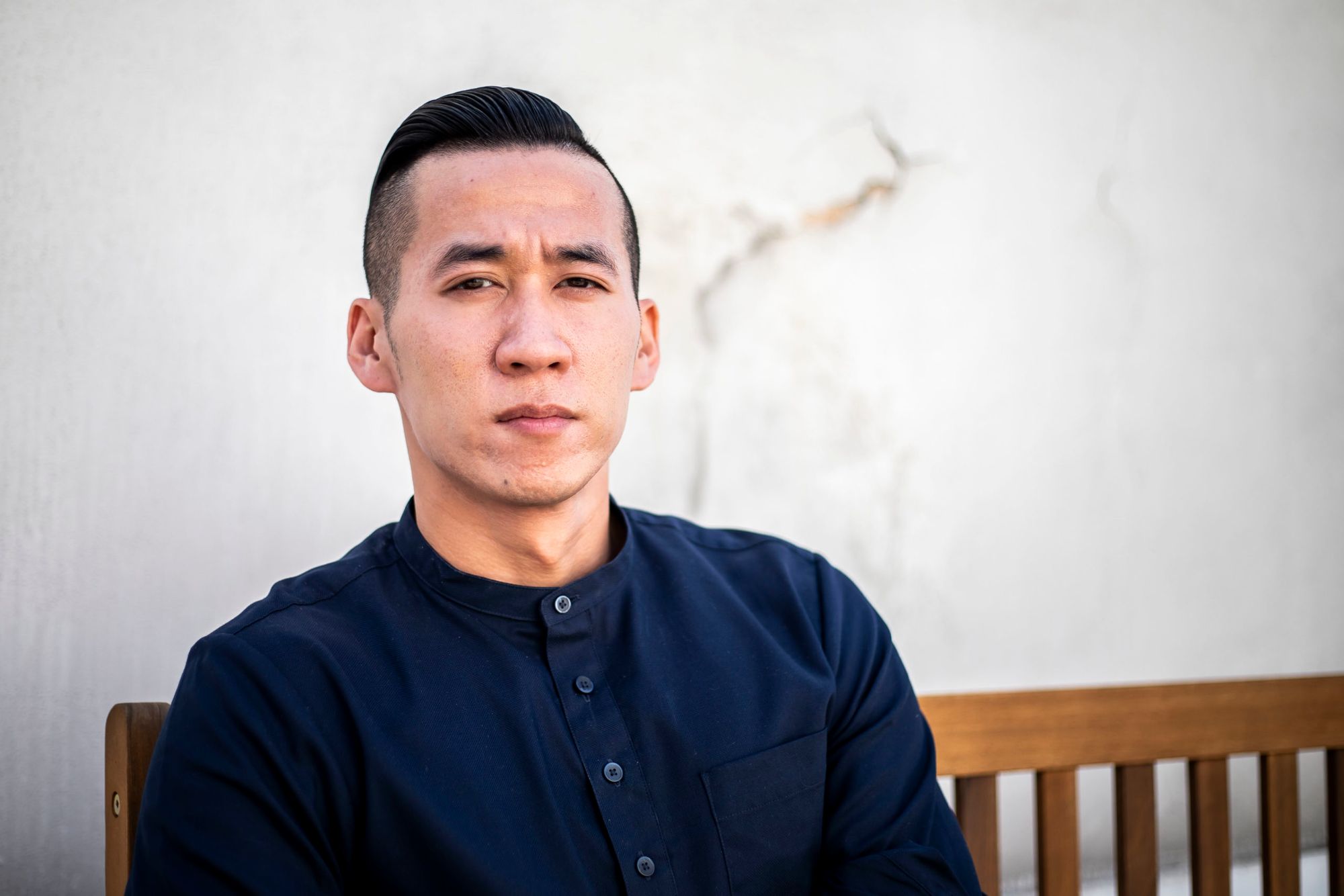
    Will Nguyen (age 34) is a Vietnamese-American public policy specialist and an activist for the Vietnamese democracy movement. He was born in Houston, Texas to a refugee family from South Vietnam. He graduated with a Bachelor in East Asian Studies from Yale University and a Master in Public Public Policy from the National University of Singapore. Last June, for participating in an anti- government protest, he was imprisoned in Vietnam; after international pressure, he was released one month later and deported from the country. Photo: Gabriel Kuchta, Deník N.

    Wikipedia says the Vietnam War started November 1st, 1955. Of course, that’s according to the Americans. The Vietnamese know well that the long, hellish days lasted much longer than the 20 years before Saigon fell (1975). How could it be otherwise – after all, the vast majority of lives lost in this war were Vietnamese. “In America, the Vietnam War is seen as a strictly American affair. I’d like to remedy that,” Will Nguyen, activist and descendent of South Vietnamese refugees, says in an extended interview with Deník N.

    A passage in Michael Herr’s Dispatches reads: “We took a huge collective nervous breakdown, it was the compression and heat of heavy contact generated out until every American in Vietnam got a taste. Vietnam was a dark room full of deadly objects, the VC were everywhere all at once like spider cancer, and instead of losing the war in little pieces over years we lost it fast in under a week. After that, we were like the character in pop grunt mythology, dead but too dumb to lie down. Our worst dread of yellow peril became realized; we saw them now dying by the thousands all over the country, yet they didn’t seem depleted…”

    The book written by Herr, an American military reporter, has become symbolic. It cuts like a knife, and it is hard to come by another work that describes as sharply what the Americans experienced in the Vietnam War.

    But what did the Vietnamese experience? After all, it was their country. Unfortunately, for nearly its entirety, few saw the war as belonging to the Vietnamese, to their loss. And to this day, the wounds have not healed.

    Will Nguyen knows this all too well. He was born in the United States to a woman who fled the communists—a South Vietnamese woman, to be more precise. Except Will doesn’t agree with black-and-white divides, even in his direct experiences with the Vietnamese Communist Party: last year, he was arrested for participating in protests in Ho Chi Minh City. Or is it Saigon? They’re the same city, with two different names; one was used before the communists took over, the other is the name used today. Current maps clearly label the city Ho Chi Minh City, but try using that name with South Vietnamese refugees!

    So which is it: Ho Chi Minh City or Saigon?

    Nguyen: (Laughs) You tell me. I grew up with Saigon; it wasn’t until later that I found out on-paper, it was Ho Chi Minh City. I currently use both, depending on whom I’m talking to. With southern Vietnamese, I’ll use Saigon; in other contexts, Ho Chi Minh City is more appropriate. For me, either name is fine; I let the person across from me decide.

    Yellow star, red stripes

    You were born in Houston, as part of the South Vietnamese diaspora – you didn’t spend your childhood in Saigon, right?

    When I was young, I didn’t really pay attention to politics. The first time politics hit me in the face, however, when I was doing a school report on my country of origin. I didn’t know what the flag of Vietnam looked like, so I opened up an encyclopedia and drew a pretty red flag with a yellow star. My mother saw it and immediately told me that flag wasn’t the “correct” one! I had to then draw the yellow flag with three red stripes, the one that Vietnamese in the US still use, the flag of South Vietnam.

    A combination of the flags of the Democratic Republic of Vietnam (North Vietnam, left) and the Republic of Vietnam (South Vietnam). Photos: Wikimedia Commons, image created by Deník N.

    It was until later that I began slowly putting together the pieces of the puzzle. I learned how my aunt fled Saigon on April 29th, 1975, a day before the city fell to the communists; how after she arrived in the States, she helped my mother escape when war broke out between China and Vietnam in 1979. During that time, Vietnam was expelling all those of Chinese origin, so my aunt was able to sponsor my mother and helped her find forged papers claiming Chinese ancestry. My mother reached a refugee camp in Indonesia and from there, traveled to Houston.

    In Texas, how did you put together the fragments of war? Americans, and the West by way of the Americans, tend to see the war as a nightmare for themselves. Oftentimes, the Vietnamese are seen as mere accessories, like decoration on military garb, or puppets in the hands of their masters.

    I read whatever I could find around me. And the more I read, the more I understood that the majority of books I could find were written by Americans, about Americans; regarding South Vietnamese and the difficulties they faced during the war, you’d be hard pressed to find anything. So I began searching for books written by South Vietnamese. There aren’t very many [in English] and they aren’t very easy to find.

    Luckily, I was fortunate enough to study at Yale, with its excellent libraries–whatever books they didn’t have, you could request by order. I read at least 20 or so books written by South Vietnamese authors – government figures, refugees, memoirs of life in South Vietnam before and after the revolution (1975). Similarly, I began researching sources of information from North Vietnam. Generals, spies, and figures in the North Vietnamese politburo.

    Because you hit the nail on the head. In America, the Vietnam War is seen strictly as an American affair. Whatever the Americans carried out…

    … would have to be suffered.

    Exactly! Americans lost about 60,000 lives in Vietnam, a terrible number, but on the Vietnamese side, deaths numbered several million, and this disproportionality is never mentioned. American lives lost is still center-stage. I would like to remedy this. And I believe the first step is researching the war thoroughly from all sides, in order to shed this problematic “black-and-white” framework.

    “After Saigon fell, my mother escaped to America. By good fortune, I was born in the States, where I was provided better opportunities. I recognize that my upbringing was ultimately a privilege—one which I want to pay forward by helping native Vietnamese fight for their own freedom and independence of thought. This doesn’t necessarily mean slandering communists.” Photo: Gabriel Kuchta, Deník N.

    You know, it’s not just the Americans who are guilty of black-and-white thinking. We Vietnamese have a similar tendency. It’s north or south—nothing in between. But its hard to be surprised at such an ideological divide, solidified as it was by a devastating civil war. It’s still a sensitive topic. Moreover, this north-south division has historical roots. Hanoi, in the north, is seen as the cradle of Vienamese culture; as you go further south, its influence weakens. This is still true today; the Vietnamese Communist Party has a stronger base and more faithful party members in the north.

    It’s like with the two Koreas, especially in the older generations. The division between right and wrong, good and bad. And sometimes even in the Czech Republic: in the north the evil communists; the

    south, the righteous democrats. But South Korea had a period of authoritarianism, and in Vietnam, communism went hand-in-hand with the anti-colonial struggle for independence.

    The interesting thing is the communists weren’t always the only players in Vietnam. Especially in the south, there was a strong nationalist movement spearheaded by non-communists. And in the 1940s, they worked with the communists for the sake of a common goal (Under the leadership of Ho Chi Minh and the Indochinese Communist Party, the Viet Minh – a coalition of northern and southern nationalists formed during the second half of the 1930s in Nanjing, China, was officially re-established in Vietnam in 1941).

    Only, the communists had their own vision of an independent Vietnam. They had greater numbers, were better organized, and were more ruthless, so in the end, they swallowed whole the other nationalists, completely obliterated them. Vietnam in the 40s and early 50s was a tumultuous time. French rule followed by the Japanese invasion, famine, then the First Indochina War, then the Viet Minh defeated France in 1954 and the French withdrew. The struggle between Vietnamese communists and Vietnamese non-communists played out against this backdrop and continued through the Cold War era—and it would be this civil struggle that would ultimately determine Vietnam’s fate.

    A heavy-handed government

    When peace talks began in Geneva in April 1954, Vietnam was de-facto divided: the Democratic Republic of Vietnam declared by Ho Chi Minh in September 1945 ruled the north; the State of Vietnam, aligned with the French, ruled the south. Both Vietnamese states saw themselves as the only legitimate government; the Geneva Accords de-jure recognized this division, establishing a border at the 17th parallel.

    Yes, with a plan for nationwide elections in 1956 to determine Vietnam’s fate and unify the country. But the south, led by prime minister Ngo Dinh Diem, knew that they could not win the election. And because the south technically did not sign the Geneva Accords, they refused to hold the elections, claiming that the elections would be rigged by the communists. Instead of the general election, the south held a referendum declaring the establishment of the Republic of Vietnam, with Diem elected president (with a spectacular 98.2% of the vote. In Saigon, President Diem received 600,000 votes out of a total 450,000 registered, according to reports). In Geneva, the US also refrained from signing the accords, which Ngo Dinh Diem counted on.

    November 1955: President Diem speaks with standard-bearing members of the Civil Guard during a ceremony marking a denunciation of communism. On November 1st, 1955, America officially begins participating in the conflict in Vietnam by establishing the Military Assistance Advisory Group (MAAG). Photo: PhotoQuest / Getty Images, Flickr, CB BY 2.0.

    In the north during that time, the Chinese had convinced Ho Chi Minh to abandon plans for military action in the south and to wait for the election to resolve the big questions. The communists conducted a land reform campaign that killed thousands, while the south pursued its own brutal anti-communist campaign. The CIA embarked on a psychological war, sowing fear and panic among Catholics in the north, convincing perhaps more than a million to flee south.

    The Americans encountered the South Vietnamese at the right time. They helped the South Vietnamese in many respects, most obvious of all, financially. I would assert that despite all this assistance, there was one decisive factor: the South Vietnamese had no idea what it meant to be a good citizen in a functioning democracy. To the majority of Vietnamese, the ideals of democracy were in reality, something completely unfamiliar, and as the Vietnamese tried to advance towards democracy…

    In short, it was like a circus. Corruption was endemic, clientelism, and on top of that, war with the north. Imagine trying to build a healthy democracy in that environment! The South Vietnamese government was quite heavy-handed and far from resembling any kind of democracy; it was closer to autocracy. During the second republic at the end of the 1960s, after several coup d’etats, things calmed down a bit, elections were conducted properly, and prospects for democracy were looking up. If there was no war, who knows how far it would have progressed. You mentioned South Korea – the path to democracy for them took several decades. Same with Taiwan.

    But in South Vietnam, Ngo Dinh Diem’s heavy-handed government only lasted until 1963, when the opposition assassinated him. How were the Americans involved?

    Formally, Ngo Dinh Diem was President, but in actuality, he was a dictator. He was a symbol of everything we discussed earlier: authoritarianism, corruption, and nepotism. He came from a well-known family, and his relatives held many high positions of power in a type of oligarchy. There was nothing surprising about him facing powerful opposition.

    In the end, a group of South Vietnamese generals decided to test the waters with the Americans. If we wanted to get rid of Diem’s government, the generals probed in a meeting with the CIA, would you support us? Kennedy’s administration gave the green light. But my god! The generals got rid of President Diem in such an awful manner. The Americans didn’t imagine it that way. They thought Diem would live a life in exile, and the government would proceed to reform.

    On the Saigon River, Viet Cong take turns on the lookout, October 1966. Photo: Manhai, Flickr, CB BY 2.0.

    Instead, President Diem’s assassination opened up Pandora’s box. The ironic thing is some of Kennedy’s advisors warned about this very outcome: while Diem was a dictator and corruption was rampant, there existed no viable alternative to him. And it was true; the country was wracked with one coup d’etat after another. South Vietnam not only became enfeebled, but it endured continuous pressure from North Vietnam and communist insurgents in its own territory. The country’s ability to deliver its people from northern communism weakened by the day.

    Up until April 30th, 1975, when Saigon was taken over by the communists. To North Vietnamese, that event was a “liberation”, but for Southerners, it was a “fall”. Is this still true?

    Definitely. In the memoirs of South Vietnamese diaspora, they remember April 30th, 1975 and the “Fall of Saigon” with anguish, and not just figures from the older generations, but the majority of the diaspora’s descendents also see the event as an invasion.

    And in Vietnam, where the communists have ruled for 45 years now?

    The current propaganda is powerful. I believe many Vietnamese see April 30th in a positive way, a victory over colonialism, a liberation, a unification of the country. But the interesting thing is, in the south, when you speak with older people—and obviously this doesn’t happen right away because there are dangers in doing so—but when they trust you enough… my mother and I would often encounter more “sensitive” views when we were traveling around southern Vietnam. For example, taxi drivers would often reminisce positively about what life was like before 1975, as they drove us around the city.

    Rosy history

    In your travels around Vietnam, you were able to absorb a lot of literature and messaging, especially propaganda posters. These displays tap a lot into the past, right?

    Most of them do. But that’s logical because the Vietnamese Communist Party derives its legitimacy from history and regularly reminds the people what it has achieved—1945 and the [August] Revolution, the defeat of the French, Ho Chi Minh, and of course, the greatest achievement of all: the liberation and unification of the country in 1975 [the latter technically occurring in 1976]. It’s like a broken record-player, stuck repeating myths.

    A propaganda poster marking 60 years since Hanoi threw off the yoke of French colonialism. Photo: Vuong Tri Binh, Wikimedia CC BY-SA 4.0

    And because these pages of history bear the hallmarks of the communist party, most people don’t pay it any heed. Is it a heroic story with a fortunate ending, or is it a happy lie? For some, either case is better than the sad truth. More easily stated, one way or another, many people realize the history is suspiciously rosy. But to find the truth, one must put in the work. It takes effort, and most people simply don’t feel the need.

    Why?

    Because they’ve directly experienced in their daily lives that the regime they live under doesn’t give them a voice. So the result is political apathy. This is especially true with young people, who have their whole lives ahead of them. They have no desire to rehash the past; they desire a comfortable future, with a high standard of living.

    But of course, not all young people are like this; I’ve gotten to know quite a few young activists from Vietnam who feel the truth is worth pursuing. A lot of it has to do with the fact that it’s easier now to find information online. It only takes a little research to reveal why the yellow flag with three red stripes is banned in Vietnam. And why the Vietnamese diaspora numbers millions across the world.

    To search for truth, to absorb information and then decide for oneself – that is true independence. Not the propaganda that the regime mouth-feeds the people to maintain its grip on power. Protecting the regime is the government’s number one goal. The Party has to make sure the boat doesn’t rock too much under its feet, and along with propaganda, it must also ensure that the economy develops while it conducts a balancing act between opposing China and allowing Chinese influence.

    How are relations between the Vietnamese Communist Party and the Chinese Communist Party?

    Very close, in an existential way. Vietnamese communists owe much to their Chinese counterparts, but at the same time, they have to be extremely careful not to be seen as Chinese puppets. This demands sufficiently independent behavior, opposing China in moderation, and at the same time, making sure not to offend their Chinese patrons.

    Are they really patrons?

    You know, Vietnamese leaders are slowly realizing they’re skating on the thinnest of ice. While I was imprisoned in Saigon, I spoke with police investigators about the situation in the South China Sea, and it was hard to miss the frustration written on their faces. They have to oppose China because that’s part of the Vietnamese national mythology: China is our hereditary enemy, and it’s forever finding ways to swallow Vietnam. If they don’t oppose China, then they face the danger of public opposition. That’s why Hanoi tries to find international support in their case against Chinese aggression. But it’s all one big act. No vociferous pronouncements will change the fact that China currently has the upper-hand in the South China Sea. China is several times larger and stronger than Vietnam, and Hanoi is fully cognizant of this, as well as the fact that Vietnam is economically dependent on China. And besides, the Vietnamese Communist Party imitates the Chinese Communist Party on a fundamental level. Their historic consolidation of power, their land reforms, and more recently, the cybersecurity laws.

    And the general secretary? The similarities between Xi Jinping and Nguyen Phu Trong, the head of the Vietnamese Communist Party, can’t be ignored: a strong, hard-line leader, pursuing an anti-corruption campaign.

    Of course; if you observe down to a minute-enough level, you’ll always find differences, but the truth is the Vietnamese and Chinese models of rule are quite similar – including the issue of Trong becoming both General Secretary and President. Though for most of its history, the Vietnamese Communist Party has followed the path of collective leadership, Trong has spearheaded an anti-corruption campaign very similar to that of Xi: sure, you’re cleaning up the ranks, but you’re also inserting your own allies into positions of power.

    The two parties [and their historical trajectories] are not exact replicas. But there are more than enough similarities to remind us of Mark Twain’s observation: “history doesn’t repeat itself, but it does rhyme.”

    Prison bars and television screens

    You actually mentioned something I wanted to ask you about: last year, you were incarcerated in Vietnam. You went straight to prison after an anti-government protest in Saigon, right?

    I had graduated [from my master’s program] in May and after that, had flown to Vietnam. When I found out [a few days prior] that there would be protests, I decided to attend because I also believed the two proposed laws were harmful to the Vietnamese people.

    I walked the streets with protestors, cell phone in hand, recording as much as I could and uploading it immediately onto social media. It wasn’t an easy thing to do because the internet was slowed. The government often finds ways to prevent the spread of information. After a couple of hours, we ran up against a formation of police officers who stopped us and tried to get us to turn away from the city center. But I could tell that the officers were ill-at-ease; they were young, and looked just as worried and fearful as the protestors. It seemed like all it would take was one person to push through to break the line.

    So I did it, and they ultimately let us through. But after a few intersections, the police parked a row of pick-up trucks across the road to block it. I wanted to help the people cross the barrier – I knew I could take on a little more risk because I wasn’t a Vietnamese citizen and I didn’t face as serious of punishment as they did. I knew I could be arrested, but to be beaten in the middle of the streets was definitely something I did not expect.

    How many people were there around you?

    Hard to say, but the streets were impassable, surging with people. They charged me not only with “disturbing public order” but added on the aggravating factor “causing serious traffic congestion”. They blamed me for making 14 people miss their flights.

    And what were you facing?

    Up to 7 years in prison.

    At least you confessed on TV! And that’s yet another similarity between China and Vietnam: a recorded confession broadcast on national television…

    It was all for show. In order to maintain their hold on power, the Party choreographs one performance after another and forced televised confessions are just one part of it. I had known about this “song-and-dance” prior to being captured, so I wasn’t surprised when they made me participate. But mostly, nobody was particularly enthusiastic about doing it. It was all pretty tiring: the security officers and I didn’t want to do it, but because the orders were coming from above, we wanted to just get it out of the way.

    And you participated?

    If I didn’t, it would only complicate things. Not just for me, but also for the investigators, the people who were in charge of (processing) my case. They treated me well enough, though obviously I knew it was related to the fact that I was American and that my case was receiving widespread international attention.

    Moreover, I refused to lie. When they wanted me to apologize for causing traffic congestion or for making my friends and family worry, that wasn’t a big deal. But there was a part where they said I tried to flip a police truck and other things. I refused to read that. They accepted it and moved on.

    As in there was a script?

    The whole thing was so surreal. First, I wasn’t wearing the appropriate clothing, because I was a prisoner, so one of the police officers gave me the button-down shirt off his back to wear. Then, they styled my hair and had me sit down in front of the camera – we did around 5 takes, until I read the script convincingly enough.

    The banality of evil

    It all sounds like a joke, but in actuality, it’s nothing to laugh at right? Especially those with Vietnamese and not American citizenship.

    Exactly. Suddenly, I had fallen into the belly of this oppressive regime I had researched for so many years; it was there that I was able to fully realize that the system ran on fear. It doesn’t have to be the kind of fear that stops your heart or takes your breath away. But as long as that fear becomes an abided part of your life, like an old coat, mundane and commonplace, then the system remains in place.

    Like Hannah Arendt has written of, it’s all about the diffusion of responsibility: “I was just following orders!” You’re sitting behind bars, observing how police officers observe you. And you realize that they’re just cogs in the machine. But it’s precisely all of these small cogs that keep the machine going. If they weren’t there, the entire system would collapse. At the same time, they’re all just normal people. Outside of work hours, when they weren’t interrogating me, we would talking to one another like normal people.

    With the small detail that you were behind bars and the police officers were in front.

    Of course. You know, dehumanizing the other side doesn’t help anyone; don’t even get me started on caricaturing them as demons. I grew up in an environment where people spoke of communists as man-eating devils, and dissident propaganda often depicts Ho Chi Minh with horns. What is this good for? The more you put pressure on them in this way, the more they will dig in their heels in siege mentality. And that mentality leads to an increasingly oppressive regime. I believe in doing the opposite. Jettison the black-and-white paradigm and fracture an otherwise monolithic ideology.

    How?

    By treating these individuals like human beings. By convincing them that those who want to reform the system are not their enemies. As long as overseas Vietnamese communities across the world continue to demonize the communists as they do, then nothing will change. The banality of evil works both ways: people mold the system, but the system also molds the people. We have to work to fill the gap between the two sides, or at the very least, build some kind of bridge. I’m purposefully avoiding the word “reconciliation” because the communists used it after 1975, and then ultimately sent southerners to re-education camps.

    This reminds me of the situation in the Czech Republic after the Velvet Revolution. It’s a shame how the party and corruption went hand-in-hand, but enough people were able to “change outfits” after the transition [to continue their behavior]; some didn’t even bother to change. What’s going to happen if the same people are able to survive reform efforts in Vietnam?

    I believe the Vietnamese Communist Party has a right to exist – this is something anti-communists have excluded me for saying, even accusing me of Stockholm Syndrome. But then there are anti-communists who are impressed with Trump and openly support him, and that’s something that’s completely absurd to me.

    But most importantly: the Vietnamese Communist Party has four million party members. Their numbers are decreasing, and the Party itself is purifying in an ideological sense, getting smaller and older. But four million is still a lot. What are we going to do with them? Vietnam has suffered several decades of war. Millions have lost their lives, several more million have had to flee their homeland, and hundreds of thousands have lain their corpses at sea in pursuit of freedom… is this not enough? I understand your question, and I can’t say it doesn’t worry me. But what other way do we have to pursue reform but this?

    I’m not so naïve as to think that we only need dialogue to reform a totalitarian regime. Obviously you can extend your hand across the table, but if the other side is not willing, then there has to be something to push them to the table. The people must speak up for themselves; they have to march if need be. Reform can’t be achieved without it. And in a similar vein, I also hope that young people reconsider joining the Party.

    The economy plays a huge role: Vietnam’s labor productivity is quite low because the regime robs people of their initiative. Those with enough drive, those who can overcome the apathy find happiness overseas, where they go to work or study. But a number return with open eyes. For others, the internet opens their eyes. And people are slowly realizing, it doesn’t pay to be politically apathetic – if you don’t want to decide politics, then someone else will decide for you.

    https://twitter.com/will_nguyen_

    •••

    The above article is an English translation of https://denikn.cz/222401/o-valce-ve-vietnamu-se-siri-stastna-lez-namisto-smutne-pravdy/ and was originally published on October 31st, 2019, in the Czech newspaper Deník N.