Tag: biểu tình Myanmar

  • Oppression Through Greed: What The Myanmar Military And Vietnam Stand To Gain

    Oppression Through Greed: What The Myanmar Military And Vietnam Stand To Gain

    More than a month has passed since the start of the Myanmar coup and since then various notable events have taken place. At the start of the takeover, several prominent figures of the ruling National League for Democracy (NLD) were arrested and detained. Among those taken into custody were Aung San Suu Kyi and President Win Myint of the NLD .

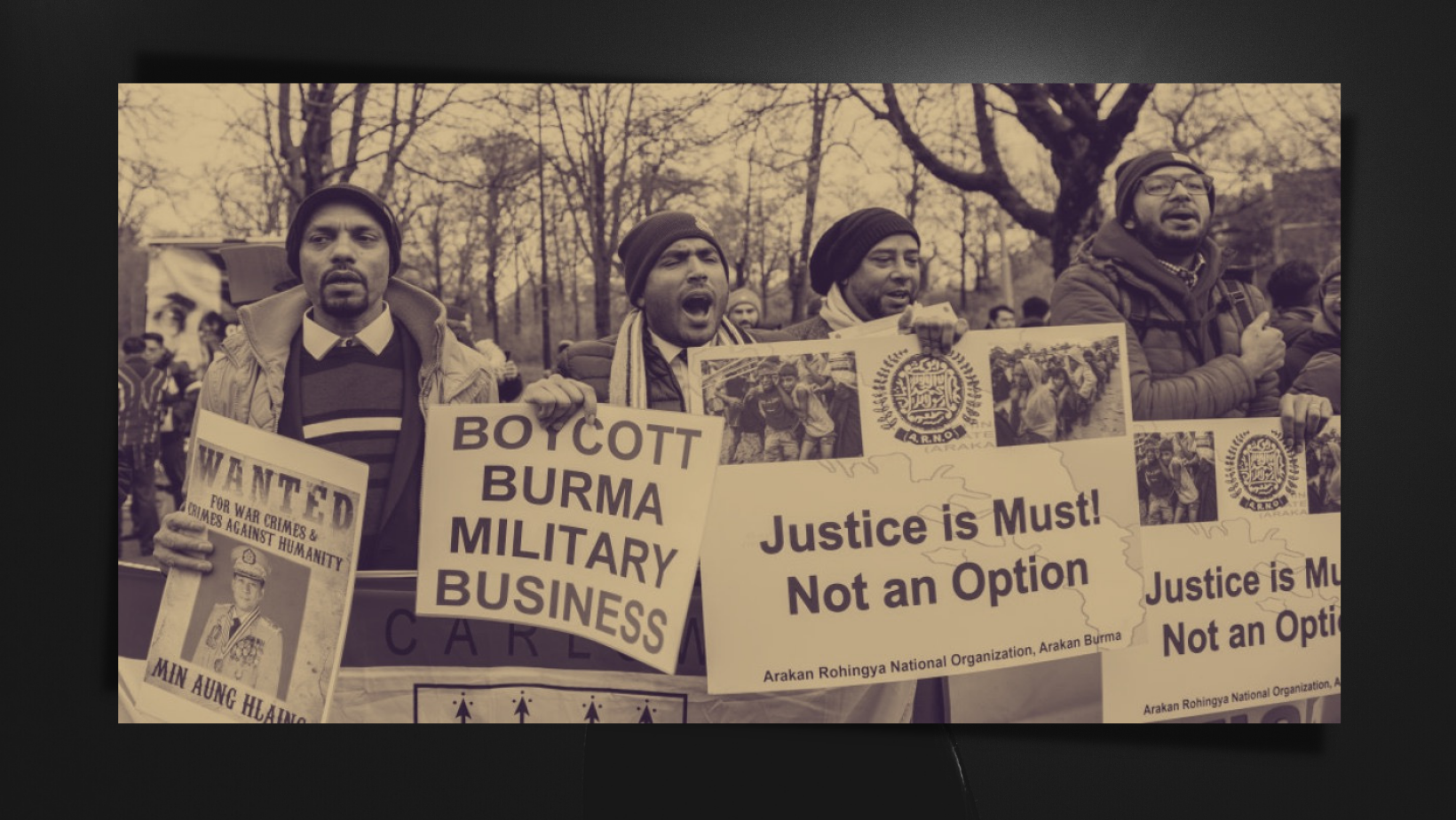
    The following weeks were then marked by massive demonstrations and acts of civil disobedience by the citizens of Myanmar. Crowds of people from all walks of life continue to gather to protest around the country in a display of anger and frustration against the fledgling dictatorship of Min Aung Hlaing.

    The Myanmar military has responded with escalating acts of violence and control typical of any authoritarian state. Initially, they tried to shut down forms of communication and when these proved to be less than effective, they resorted to using physical force against their own citizens. To date, at least 149 people have been killed and countless more have been arrested.

    While the Myanmar military continues to claim that its takeover was inevitable due to its alleged and unsupported claims of election fraud, the truth is much less conspiratorial. It is the result of the callousness and unending greed of those who would willingly choose to set their nation ablaze rather than let power slip from their fingertips.

    Information has been released and verified that exposes the connections the Myanmar military has with several local and international corporations and businesses; these business interests continue to be the main driving force behind the Myanmar military’s oppressive and repressive actions.

    Yet, how much money do they actually stand to gain?

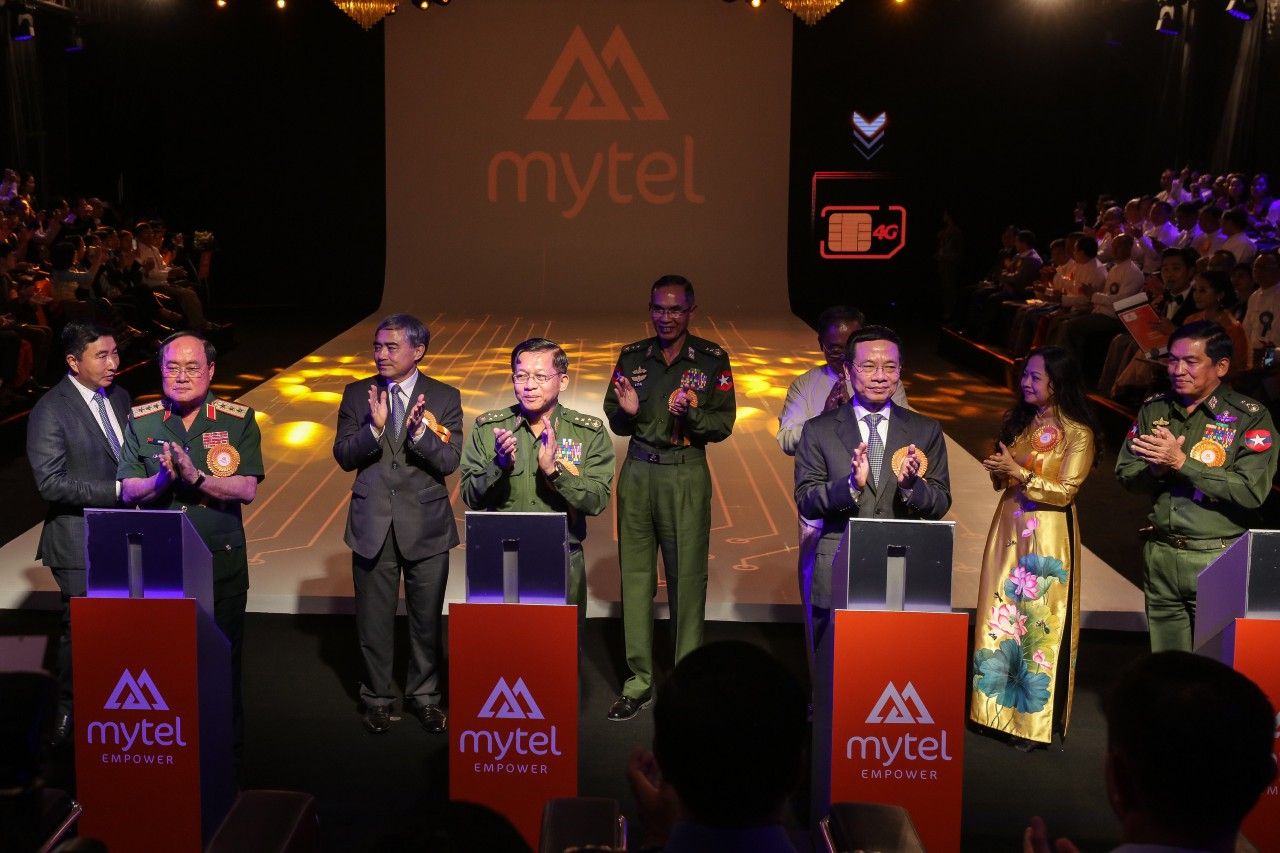
    In December 2020, Justice for Myanmar, a movement which aims to expose systemic oppression and human rights violations in the country, released a comprehensive report that details the involvement of the Myanmar military with Mytel and Viettel. The report then explains how these three entities work in tandem to further line their pockets while committing grave violations of human rights. Viettel is publicly known to be a state-owned enterprise with direct ties to both the Communist Party of Vietnam and the Ministry of Defense.

    Then, on March 4, 2021, Justice for Myanmar released additional information regarding this issue. While its previous report explores the structure and the effects of the symbiotic relationship of the military, Mytel, and Viettel, this more recent exposé focuses more on the financial aspect of the situation.

    Justice for Myanmar claims that Military generals involved in this operation may be entitled to more than US$700 million after five to nine years since the start of Mytel’s business venture and a further US$450 million in the five years after that.

    This is due to the military owning more than 28 percent of shares in Mytel through Star High, a subsidiary of the Myanmar Economic Corporation, which is a Myanmar military conglomerate.

    However, when the other domestic investor – Myanmar National Telecom Holdings (MNTH) – was unable to keep its financial obligations and was forced to sell a number of its total shares in Mytel to Star High, causing the military owns more shares of Mytel.

    In effect, the military actually owns as much as 39 percent of Mytel in shares while 49 percent belongs to Viettel. The remainder goes to the other smaller investors that came from MNTH.

    Viettel also stands to achieve significant financial gain through this arrangement.

    Viettel was essential in the establishment of Mytel itself. In Mytel’s first three years of operation, Justice for Myanmar reported that Viettel “agreed to provide the lion’s share of the US$1.38 billion needed by Mytel in its first three years by investing US$169 million in its shares and lending it up to US$903 million.”

    Aside from this, Viettel also dedicated staff and personnel to train and establish Mytel’s workforce. Interest is also paid to Viettel from the loan taken by Mytel on top of the 2 percent annual management fee from yearly profits.

    Mytel also has allegedly made deals with some Vietnamese banks as well. This report stated that Mytel had entered into a US$40 million five year loan with Vietnam’s TP Bank.

    It is clear that this arrangement stands to be very financially lucrative for those involved, and while the ethics of both military and sizable foreign ownership in commercial businesses is, to an extent, debatable, the danger with Mytel lies in the nature of the company itself.

    Mytel is not just any company; it is a telecommunications company. And it is often the case that governments and militaries have malicious vested interests in controlling telecommunications.

    There is already evidence available that the Myanmar military is using Mytel to infringe on the rights of the already oppressed Rohingya minority. Being a telecommunications company also gives the Myanmar military direct access to information it can use to strengthen and extend its hold on the country.

    Justice For Myanmar spokesperson Yadanar Maung states that, “Every phone call on the Mytel network and every kilobyte of data finances the people’s oppression. The brutal and corrupt Myanmar military junta is motivated by personal profit and it is greed that drives their brazen and bloody attacks on the people.” His words and sentiments seem to be echoed by a few of Mytel’s former business partners.

    In response to its militarization, some of Mytel’s domestic and international business partners and investors have grown concerned.

    Singaporean payments firm Coda has removed Mytel from it’s payment channels and International Power Generation, (IPG), a local investor, has taken initial steps to distance itself from the company. While the actions of Coda and IPG are commendable and other investors in Mytel should follow suit, it still remains doubtful if this will have any significant and immediate effect.

    After all, the fact remains that the three-way relationship between Mytel, Viettel, and the Myanmar military is only one of more than 100 business channels that the Myanmar military uses to fatten its coffers. Should one avenue be shut down, others continue to remain open for them to exploit and use. With the amount or resources available at their disposal, it should only be a minor inconvenience for them to open up alternative methods for monetary gain. But, this is hardly a surprise. In fact, it is expected.

    The struggle for true freedom and democracy has never been an easy fight. It has always been a Sissyphean battle, an uphill and treacherous climb against overwhelming odds. And once you reach the top, there is also no guarantee that you can stay there.

    Oftentimes, a nation finds itself on the zenith of the hill only to stumble and fall partway or even descend all the way to the very bottom. Yet, as believers in a better tomorrow for ourselves and for all, we pick ourselves up and try again. We stand and climb as many times as it takes, for a future we might not even get to see.

    And here lies the beauty of the struggle.

    While the Myanmar military and other authoritarians like it fight to amass wealth and hoard as many pieces of magic paper they can get, others fight for something much greater than themselves: an idea, a dream, a possibility.

    What activists, protestors, and demonstrators in Myanmar, and in the rest of the world stand to gain cannot be measured in billions, or even trillions of dollars. Rather, its value can only be glimpsed in the people’s eyes as they continue to stand firm, shoulder-to-shoulder, against tyranny and against terror.

    Now is the time to stand with the people of Myanmar; for the good of one is for the good of all.
  • Vietnam Should Stand In Solidarity With The People Of Myanmar

    Vietnam Should Stand In Solidarity With The People Of Myanmar

    On February 1 2021, the Myanmar military arrested and detained several prominent figures from the National League for Democracy (NLD), the ruling party of Myanmar prior to the recent coup. Among those arrested were Aung San Suu Kyi and President Win Myint.

    This was followed by a swift declaration of a state of emergency and the entrenchment of  military cronies in the Myanmar government. Min Aung Hlaing, the figurehead of this new budding dictatorship, stated that it was inevitable that the military would seize control; he alleged that last year’s election, which the military resoundingly lost, was fraudulent and that this coup was their way to ensure a smooth and stable transition towards “a genuine and disciplined demoractic system.” The actions of the Myanmar military have been met by both local and international backlash, criticism, and scrutiny despite their attempt to justify the coup.

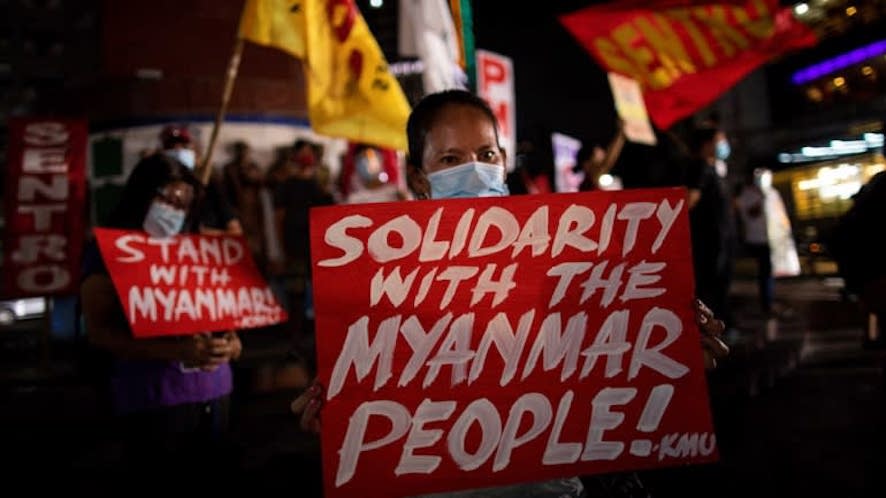
    Unprecedented numbers of Myanmar citizens have gathered to express their disapproval and anger towards the military through constant and relentless demonstrations and protests; some have even been arrested for their participation in these events. Even though the new regime has been attempting to quell these gatherings through the disruption of internet services, limiting telecommunications access, and through the enforcement of curfews, the Myanmar people have hardly faltered – they continue to remain steadfast and resolute in the face of escalating violence by Min Aung Hlaing’s fledgling dictatorship.

    On the international stage, the residents of other nations have organized demonstrations of their own in solidarity with their brothers and sisters in Myanmar. Likewise, private citizens, NGOs, and various media outlets have been spreading awareness of the situation and have placed the actions of this dictatorship under the scrutiny of the rest of the free world. Some foreign countries, such as the United States, now under the Biden administration, have imposed economic sanctions to pressure the Myanmar military into compliance.

    The United Nations Human Rights Council, despite the dissenting voices of China, Bolivia, Venezuela, Russia, and the Philippines, has also made several demands of the current ruling power of Myanmar, such as a call for the immediate lifting of the declaration of the state of emergency and the release of all arbitrarily detained individuals.

    Justice for Myanmar, a group of undercover activists that aims to improve the lives of all people in their homeland, has recently published a list of people, businesses, and organizations under the control and sway of the military junta. These entities provided the Myanmar military with assets and sources of revenue that aided it in its systemic takeover of the country that further lined the pockets of those in control.

    Justice for Myanmar calls on “the international community to impose immediate comprehensive and targeted sanctions against the Myanmar military in response to their Feb 1 coup and their continuing violations of international law, including their campaign of genocide against the Rohingya and war crimes and crimes against humanity in ethnic regions.”

    This published report lists 133 businesses fully or partially controlled by the Myanmar military, the names of 174 directors of those businesses, 112 other businesses which the military gets additional income from, and 32 state-owned enterprises that were formerly under the control of civilian institutions. While a majority of the businesses stated are based in Myanmar, there are a number which operate in other neighboring countries such as Vietnam, South Korea, and Japan.

    Yadanar Maung, the spokesperson for Justice For Myanmar, states that the “brutal and illegitimate Feb 1 coup, is enabled by their business interests. The Myanmar military leadership uses business to enrich themselves at the expense of the Myanmar people and finance their brutal campaigns of repression….” He then adds that several international businesses such as Kirin Holdings and Viettel empowered the Myanmar military and that their continued operation in the country will only serve to further embolden the junta to commit further atrocities against its people.

    With money being an essential factor in the military takeover, one of the most effective ways to aid the struggle of the citizens of Myanmar is through severing relations with those institutions and companies that actively do business with the junta.

    In Vietnam, as private citizens in our own country, something as simple as refusing to patronize businesses like Viettel is a start. Those with direct connections to organizations that work with the businesses on the list may take it a step further and call for these groups to distance themselves from the junta. With enough people, we could even petition our government to look into whether or not they actively do business with any of the corporations in the report in a bid to expose and terminate these agreements.

    Yet, something as simple and cliche-sounding as discussing this issue with family and friends serves this purpose as well.

    After all, the situation in Myanmar is not a story in a vacuum, but rather it is one of many tales regarding the struggle of freedom against the ever rising threat of authoritarianism in the world. It is merely one chapter in the anthology of human history, of the conflict between those who persevere for the betterment of all against those who would enrich only themselves at the expense of everyone else.

    As such, the events in Myanmar cannot be willfully ignored, and we have to stand as a unified front against tyranny, selfishness, and deceit. And thankfully, a few exceptions notwithstanding, the rest of the world seems to be on the same page.

    All in all, the Justice for Myanmar report, the words of its spokesperson, and all the corollary information derived from the available facts underscore the reality that this coup was not the result of grave injustice, nor the misplaced nationalistic sentiments of the Myanmar military; it is the result of the callousness and unending greed of those who would willingly choose to set their nation ablaze rather than let power slip from their fingertips through legitimate democratic mechanisms.

    It is the last resort of a delusional group of people destined to fade into the annals of history as nothing more than a footnote in a textbook. Times are changing and the people of Myanmar have spoken. True democracy will come to them in time as it has come to several other nations in the past. And while the fight rages in the streets of Naypyidaw all the way to the alleys of Kawthaung, the united people of the free world stand in solidarity, in kinship, and in brotherhood with the Myanmar citizens in their struggle for lasting democracy and freedom.

    In Vietnam, we are hoping that our human rights and democracy activists will also take the opportunity to stand in solidarity with the people of Myanmar.

  • Vietnam-Myanmar, A Tale Of Two Systems: The Takeover Of Telecommunications By Authoritarian Governments And The Military

    Vietnam-Myanmar, A Tale Of Two Systems: The Takeover Of Telecommunications By Authoritarian Governments And The Military

    A report submitted by Justice for Myanmar, a movement which aims to expose systemic oppression and human rights violations in the country, on December 20, 2020, released details regarding the involvement of Viettel and other international businesses in the Myanmar telecommunications sector. This piece of investigative journalism states that “the commercial partnerships established between these businesses and Mytel (Myanmar’s newest mobile network operator) show that they are complicit in the abuses committed by the Myanmar military.”

    An even more concerning factor would be the connivance of the Vietnamese government itself. Viettel is a state-owned enterprise operated by Vietnam’s Ministry of Defense and it is also the fourth largest stakeholder in Mytel. Hence, the Vietnamese government appears to have a direct hand in the affairs of another sovereign nation. In the same vein, Mytel itself has its own fair share of controversies and scandals hounding it since its inception.

    While a large number of businesses are named in the report, Mytel and Viettel are given more attention and both play an integral role in the scandal surrounding the Myanmar telecommunications sector. The remainder of this article will shed light on both these companies and will examine the reasons for their involvement in this issue.

    Mytel is Myanmar’s fourth mobile network operator. It launched in June 2018 and from the report, it was envisioned to be “a successful collaboration between the private sector and [the] Union government” of Myanmar. In the two years it has been in operation, Mytel has amassed more than 10 million subscribers and their quarterly profits are estimated to be at around US$25 million. On the surface, Mytel appears to be your typical for-profit communications business. However, the aforementioned report exposes the truths, lies, and intricacies within this corporation.

    Justice for Myanmar also stated that 28 percent of Mytel’s shares are publicly owned, the shares under the control of Star High Co. Ltd., a privately registered company that is a subsidiary of the Myanmar Economic Corporation (MEC), a military-controlled conglomerate.

    A lack of transparency regarding the company’s finances also plagues Mytel with public shareholders not being informed of how the company’s profits are being used. The report also highlights that the communication infrastructure built by Mytel is being utilized by the Myanmar military to aid in their oppression of the Rohingya ethnic minority. With the advent of 5G coming into the region, these human rights violations and abuses will only intensify.

    Unlike Mytel, Viettel is publicly known to be a state-owned enterprise with direct ties to both the Communist Party of Vietnam and the Ministry of Defense. Since its establishment in 1989 as a construction company, the enterprise has gradually evolved and is now the leading force in the Vietnamese telecommunications sector. The company’s reach has also extended to other fields as well, such as the real estate and investment sectors. It’s involvement in Myanmar began in 2010 and its sway and influence in that country has only grown since then. According to the report, aside from being a major shareholder in Mytel, Viettel has also been actively aiding the modernization of Myanmar’s military through providing equipment and training. In effect, Vietnam Ministry of Defense, a foreign government entity, is aiding and complicit in the multitude of war crimes and human rights violations of the Myanmar military.

    It is apparent that both these companies, Viettel and Mytel, are heavily influenced, or even controlled, by their country’s respective governments and military. Yet, what benefits could these twin pillars of the state stand to gain from their involvement in the telecommunications sector? Why are these two towers of nationhood so fascinated with controlling communications?

    The meddling of the government and the military in telecommunications is not something new. This is most apparent when we look at the various authoritarian states of the past. Mass surveillance, wiretapping, and undercover spy rings are the tricks of the trade and these were heavily used to observe and control citizens living under the heels of these regimes.

    For instance, a 2015 report by Amnesty International asserted that the Stasi surveillance network had around 174,000 informants, which made up about 2.5 percent of the working population of East Germany during the Cold War. The amount of information this network was able to amass about both citizens and foreign tourists is both staggering and horrifying; this information was then used to influence public opinion, identify dissidents, and control the general population. Since the fall of the Berlin Wall in 1989, around 2.75 million people have asked to see their files in the Stasi database. While this is just one prime example of how totalitarian states use the personal information of their citizens, this has been fairly consistent throughout history. No matter which era, the play has been the same: authoritarian regimes collect information from just about everyone and use this knowledge to quash any dissenting thoughts people might hold and to quell any actions the government might find subversive.

    This is exactly what we see in how the Myanmar military treats the Rohingya people. Several Mytel towers are built inside military bases found within ethnic areas. In doing so, Mytel subverts the need for negotiations and the consent of the local communities in order to expand its communications network inside those locations. The townships of Ann, Kengtung, and Lashio have suffered the brunt of the abuses by the Myanmar military with thousands of citizens displaced from their homes, a lack of food and water, extrajudicial killings, forced disappearances, torture, and constant surveillance all made possible due to the infrastructure established by Mytel, with the invisible hand of the Vietnamese government pulling the strings from behind the scenes.

    While surveillance has historically been known to be the main reason governments and militaries desire to control telecommunications, in the case of Viettel and Mytel, a lucrative avenue for corruption presents itself.

    The Justice For Myanmar report also mentions that the profits the Myanmar military makes through Mytel are hidden through proxy shareholders and military shell companies. While 23 percent of the profit goes to 11 Myanmar investors, another 28 percent goes to the state-owned enterprise, Star High Co. Ltd. Although Star High is registered as a private company, it is listed as a public company on both the Mytel website and official government documents. Shares in this company also belong to individual members. Moving through Star High, the money flows and changes hands several times and at the end of it all, no one can really tell where the money goes. The remaining 49 percent of the profit, the lion’s share, goes to Viettel Global JSC, and at the end, reaches Vietnam’s Ministry of Defense.

    In the case of Mytel and Viettel, corruption and control appear to be the main forces that fuel how the Vietnamese and Myanmar governments and militaries act. A symbiotic relationship has been formed between all players involved that benefits those in-charge, but at the cost of human rights, and more importantly, human lives.

    The lives of their citizens and those underrepresented are treated not even as commodities, but as obstacles that need to be discarded, ignored, or eliminated. Yet, the dramatic irony of it all is that the same advancements in telecommunications used by governments and military to push their agendas also provide others with the means to identify and lay bare the truth for all the world to see. At the end of the day, all truths will be exposed, all lies will be debunked, and all will be laid bare at the feet of justice.

  • Facilitator in EU-Vietnam Free Trade Agreement Fails to Disclose Links to Vietnamese Communist Party, Possibly Violating Code of Conduct

    Facilitator in EU-Vietnam Free Trade Agreement Fails to Disclose Links to Vietnamese Communist Party, Possibly Violating Code of Conduct

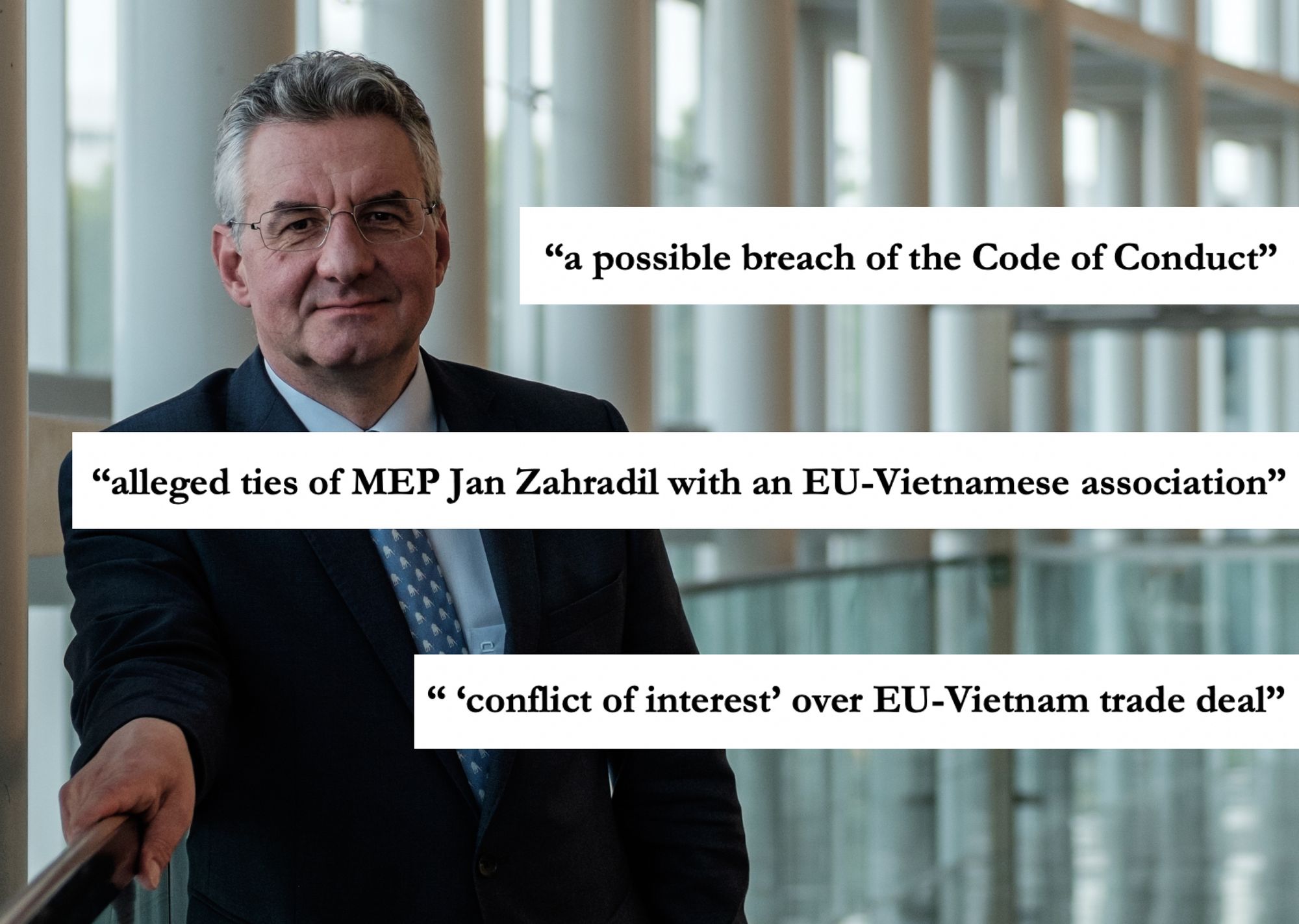
    Member of European Parliament (MEP) Jan Zahradil, who is currently the rapporteur (or facilitator) for a free trade agreement (EVFTA) and an investment protection agreement (IPA) between the European Union and Communist Vietnam, has failed to disclose his links to the Vietnamese Communist Party, in possible violation of the European Parliament Code of Conduct, a letter to the President of the European Parliament (EP) has revealed.

    The letter, sent by Philippe Lamberts, one of the co-presidents of the Greens/European Free Alliance Group, cites a recently published article by the EU Observer which accuses Zahradil of a “conflict of interest” after it was revealed that Zahradil failed to disclose that he was chairman of the Advisory Council to the Federation of Overseas Vietnamese Associations in Europe (FOVAE).

    The FOVAE is itself set up under the guidance of the Vietnamese Fatherland Front (VFF), a broad-based political organization controlled by the Vietnamese Communist Party. The Vietnamese Fatherland Front has been comparedto China’s United Front in its influence operations, and a 2016 official report from the Czech government confirmsthat the VCP uses the FOVAE as a means to control overseas Vietnamese communities.

    The EU Observer reports that Zahradil is also chair of a parliamentary “friendship group” to Vietnam, which is “[o]ften billed as a means to increase cultural understanding, promote values, and better inform the public […but is] in fact often backdoor entries for pariah governments seeking greater access to the European Parliament.”

    In response, Zahradil sought to downplay the FOVAE and friendship group’s significance, citing the former’s inactivity and the latter’s informality.  Ample evidence found by the EU Observer calls both of these assertions into question.

    In particular, the EU Observer cites examples from Vietnam’s own state-run media which show a healthy relationship between Zahradil and active FOVAE chairman Hoang Dinh Thang (who is also on the Presidential Committee of the VFF). Another articlefrom the Vietnam People’s Army website touts the efficacy of the parliamentary “friendship group” in advocating for the EVFTA.

    Regardless of these two groups’ relevance, Zahradil’s failure to disclose his links may directly violate Article 3 of the European Parliament’s Code of Conduct, which requires that “Members shall disclose, before speaking or voting in plenary or in one of Parliament’s bodies, or if proposed as a rapporteur, any actual or potential conflict of interest in relation to the matter under consideration”.

    Jan Zahradil is of Czech origin and has been an MEP since 2004. He is a member of the Civic Democratic Party and part of the rightwing Eurosceptic group “European Conservatives and Reformists” (ECR) in the EP. In addition to rapporteur for the EVFTA and IPA, he is also vice-chair of the EP’s International Trade Committee (INTA).

    Although the EVFTA and IPA have both been signed by Vietnam and their EU counterparts, the agreements (and their amendments) must be formally ratified by the European Parliament at its plenary session in February 2020 in order to take effect. NGOs and democracy groups insist Vietnam’s deteriorating human rights record must be improved before the EU proceeds with these agreements.

    Update: Jan Zahradil has resigned from his position as rapporteur for the EVFTA, effective December 10th.

  • How Can The EU Parliament Convince Us That Vietnam Will Improve Its Human Rights Record When Dissidents Continue To Get Jailed For Exercising Their Rights?

    How Can The EU Parliament Convince Us That Vietnam Will Improve Its Human Rights Record When Dissidents Continue To Get Jailed For Exercising Their Rights?

    The European Union – Vietnam Free Trade Agreement (EV-FTA) is expected to be a comprehensive win-win deal for both sides, ambitiously seeking to improve trade and boost mutual economic growth. As with all free trade agreements to which the EU is a party to, a human rights clause is built into this FTA with Vietnam. Many EU officials and parliament members that I have met in the past two years through my advocacy for Vietnam’s human rights situation earnestly believe that Vietnam will improve its record once the FTA takes effect.

    In the past, these friends have asked me to have some faith in the current regime, assuring me that our Vietnamese human rights activists and defenders will have better days in the future. It is a very typical “give them more time” argument that they expect me to accept. Yet the record shows that Vietnam’s aggression against human rights activists increases every year while government-controlled courts continue to hand out harsh sentences. I often wonder how EU officials still want to convince me to have such faith?

    In March 2019, I met with an EU official who was participating in the negotiations of the EV-FTA. She expressed great sympathy for human rights defenders in Vietnam and even realized the situation for human rights there was worrying. And yet, towards the end of our conversation, she asked me what I thought about one of Vietnam’s ministers, whose name I will not disclose. She seemed to be fond of the guy and praised him for belonging to a “progressive group in the Vietnamese Communist Party (VCP)” that she said hopefully would one day push for an improvement in human rights in the country.

    As a democracy activist, I personally think that regardless of whether a person is progressive or not, none of the VCP members right now would dare to inch away from the Party’s political monopoly inside the country. And I frankly stated that the Ministry of Public Security – the national police – would never allow any official to raise his or her voice over the human rights situation in Vietnam. Asking for political pluralism, an improvement in the human rights situation, and democracy would place anyone in danger of being sent to prison for more than a decade, as the latest political trials have shown this year.

    I met with the official right after attending the United Nations Human Rights Committee’s 125th session in Geneva, Switzerland where the Committee completed its third periodic report on Vietnam’s implementation of the International Covenant on Civil and Political Rights (ICCPR). Vietnam submitted its report after a 13-year delay in December 2017–the original deadline was set for August 2004. The Committee sadly acknowledged that in Vietnam’s review “less information was provided on the actual implementation of ICCPR and application of domestic laws in practice, where concrete data was crucially lacking.”

    Vietnam ascended to the ICCPR in 1982, but with regard to complying with the international covenant on human rights, it didn’t actually provide any opportunities for people to learn and exercise their rights. More than that, the government did not allow the Vietnamese people to use the ICCPR in courts to defend themselves when such rights were being violated.

    The point is that more than three decades after Vietnam joined the ICCPR, the human rights situation in Vietnam remains hopeless and people’s rights are being violated on a daily basis. How can we believe that the EV-FTA will improve such a situation when the ICCPR has so far failed so miserably?

    I began to write this article after receiving the news that a close friend, an activist from Vietnam, had been detained upon arrival at the Noi Bai International Airport, where she was put into detention by 10 security police. Dinh Thao is an environmental and human rights activist who left Vietnam to study and work abroad as an advocate for human rights more than three years ago. She was a medical doctor before becoming an activist and I am sure some of the EU parliament members must remember her because she advocated for Vietnam’s human rights situation in Brussels a few years ago and may have met some of them.

    Thao is non-violent and even created a project to educate people about peaceful demonstrations. Yet she was detained by the police immediately after her arrival in Vietnam. What crime did she commit to deserve such treatment? Or is it just simply the fact that the government violated her rights in retaliation for her advocacy internationally for more human rights in Vietnam?

    On the same day that Dinh Thao was detained, November 15, 2019, another Vietnamese was sentenced to 11 years imprisonment and five years of house arrest. Nguyen Nang Tinh, a  music teacher who also advocated for human rights and democracy for Vietnam, was accused by the state of “propagandizing against the government” via his Facebook posts. Tinh denied that the alleged Facebook account belongs to him, but if you read the posts in that account you’ll see that there was nothing that called for a violent overthrow of the regime. If you search for him online, you will see videos of him teaching young children patriotic songs, songs that demand human rights for the people. How could his activities be called “propaganda against the state”?

    As I have worked to protect the human rights of activists in Vietnam for many years, I have often recounted their stories to many Western politicians and officials. The activists I have met are people who had the opportunity to learn about the concept of human rights and who then started to defend such rights for others and also sometimes for themselves. They are the people who believe in the spirit and the universal values of human rights and they also believe that international laws, such as the ICCPR, will protect them. They probably had hoped that the ICCPR would be implemented in Vietnam at their trials. But that hope was never realized because we have never seen arguments articulating any of the articles of the ICCPR, such as Article 19, which protects the freedom of expression, presented in Vietnamese courts.

    And as a result, human rights activists and defenders have often typically been sentenced in rushed one-day trials without an independent judiciary. Sometimes the decisions handed down include lengthy jail sentences, as in the case of Nguyen Nang Tinh, which happened this month.

    In response to the EU officials who asked me to “have faith” in the regime, I point to a database built by the independent civil society organization The 88 Project, which catalogues the arrest and detention of political prisoners in Vietnam. A representative of that organization informed me a few days ago that in 2018, the Vietnamese government had arrested 145 people. These arrests showed the authorities’ blatant violation of the human rights of citizens. That number was greater than the number of arrests Vietnam made in 2017, 2016, and 2015 combined. In 2018, the number of arrests went up because the government detained and sentenced many people after large demonstrations happened in June 2018, in protest against the new cybersecurity law and the development of special economic zones with Chinese investment.

    It is not only human rights activists who are being treated unfairly and who are suffering mistreatment in Vietnam. There are also other groups, such as the workers, for whom the EV-FTA probably has some aspirations to improve their work environment and living standards. Many EU Parliament members have urged the Vietnamese government to quickly ratify the remaining three International Labor Organization (ILO) conventions prior to EU voting on the trade deal. Vietnam has promised to ratify the three ILO conventions over a time period of five years beginning in 2018. However, ratification of international laws is one thing, while the reality of how the Vietnamese authorities have failed to improve workers’ lives is another story.

    In Taipei, Taiwan, legal migrant workers from Vietnam went on a protest this month to demand the abolition of broker fees that each of them had to pay to be able to work in Taiwan. These broker fees are considered to be part of the most exploitative system of all of the countries in Southeast Asia from which these workers come from. What does the Vietnamese government know about this system and why does it allow such a broker fee system to continue to exploit their people? Would the EV-FTA be able to eradicate that system to improve the lives of these workers? How can I have the faith to believe that the Vietnamese government will ever take care of these people?

    Recently, Prime Minister Hun Sen of Cambodia released 70 opposition activists in order to improve his country’s human rights image after the EU threatened the withdrawal of special trade preferences. Cambodia’s political system has many aspects that are far better than in Vietnam. That country at least has an opposition political party – the Cambodian National Rescue Party (CNRP). On the contrary, the Vietnamese Communist Party has a political monopoly and we don’t have a single other political party.

    Running for office as an independent candidate will not lead to any success as the 2016 elections have demonstrated. Being a member of a political party that was formed overseas was the reason that Vietnam sentenced a 70-year-old Vietnamese-Australian man, Chau Van Kham, to 12 years in prison earlier this month.

    And yet, the EV-FTA provides for a lot more benefits for Vietnam than compared the trade preferences that Cambodia would get from the EU. How can Cambodia demonstrate a greater willingness to improve its human rights record while Vietnam just keeps getting worse? How can I have faith that Vietnam will eventually improve?

    During these days, police brutality in Hong Kong has increased dramatically as we see from the recent news coming out from universities there. And as we support and pray for young people there, I hope none of the international politicians and officials will say “give China more time” so that they can resolve their human rights problems.

    In my personal capacity, despite all my efforts, I have yet to make Vietnam’s human rights situation become more well-known in the world. However, I can not look at all of my human rights activists friends in Vietnam and tell them to be patient and to give the government more time.

    We need to raise our voices and demand right now that the Vietnamese government make an effort to improve its human rights record. Should Vietnam make some improvements prior to the EU Parliament vote on the FTA trade deal? Yes, absolutely. Vietnam has to show its good faith by releasing the more than 200 political prisoners who are currently serving time and by allowing the emergence of political pluralism with fair and free elections.

  • Has Vietnam Already Violated the To-Be-Ratified Free Trade Agreement with the EU?

    Has Vietnam Already Violated the To-Be-Ratified Free Trade Agreement with the EU?

    After Hoàng Đức Bình’s 14-year sentence was affirmed by an appellate court in Vietnam on April 24, 2018, one of the state-owned newspapers, Người Lao Động (NLD), published a story about Bình’s case on the same day, explaining the government’s reasons behind his harsh sentence.

    In one paragraph, NLD wrote:

    “Taking advantage of the marine life environmental incident in the Central, and as the Vice-Chairman of Viet Labor Movement, Hoàng Đức Bình began to organize The Association of Fishermen in the Central with the intent to form an external organization, mobilizing forces, attracting Catholics, fishermen in the Central to join that organization; selecting ‘nucleus’ who could incite demonstration to disturb the peace and security.”

    Not only international human rights laws protect the right of the people to form associations and organize protests, Vietnam repeatedly acknowledges and agrees to not infringe on these rights of its people in various international treaties and agreements. One of the more recent ones is the free trade agreement (FTA) with the European Union (EU).

    About two and a half years before Bình’s trial, in October 2015, Vietnam and the EU have agreed on the text concerning the terms of the FTA between them.

    At the same time, EU and its member countries have repeatedly maintained, that they are “fully committed to implementing the 2030 Agenda and its Sustainable Development Goals into EU policies.”

    One of EU’s commitments to implementing the 2030 Agenda is to include in their free trade agreements, rules on trade and sustainable development as well as a human rights clause.

    In the case of the Vietnam-EU FTA, that language is under Chapter 15 of the agreement, entitles Trade and Sustainable Development.


    Article 3, Paragraph 2, Sub-paragraph (a) of Chapter 15 states:

    “Each Party reaffirms its commitments, in accordance with its obligations deriving from the membership of the ILO and the ILO Declaration on Fundamental Principles and Rights at Work and its Follow-up, adopted by the International Labour Conference at its 86th Session in 1998, to respect, promote and effectively implement the principles concerning the fundamental rights at work, namely:

    a) the freedom of association and the effective recognition of the right to collective bargaining;”

    The importance of this chapter and the human rights clause are also highlighted by the Chair of the European Parliament’s Committee for International Trade, Bernd Lange, during his visit to Hanoi in September 2017. That human rights and labor rights are at the center of the continued discussions about the FTA between Vietnam and EU.

    Many could imply that the criminalization of Hoàng Đức Bình’s conduct for organizing people and forming an association of fishermen in the Central of Vietnam appears to be in direct violation of the Trade and Sustainable Development Chapter and the human rights clause of the Vietnam-EU FTA.

    The European Parliament Think Tank assessed in February 2018, that the FTA with Vietnam “has been described as the most ambitious deal of its type ever concluded between the EU and a developing country. Not only will it eliminate over 99 % of customs duties on goods, but it will also open up Vietnamese services markets to EU companies and strengthen protection of EU investments in the country.”

    They also opined that the Vietnam-EU FTA is estimated to boost Vietnam’s economy as much as 15 % of GDP, with Vietnamese exports to Europe growing by over one third.

    The parties are hopeful that the FTA will be ratified by EU Parliament (and also by its member-states on issues involving investment) by the end of this year, or by 2019 at the latest.

    However, the recent affirmation of Vietnam’s court regarding Hoàng Đức Bình’s 14-year sentence for organizing and participating in protests against Taiwan’s Formosa Hà Tĩnh Steel Corporation raises questions over the good faith of Hanoi in keeping up their end of the bargain when it comes to human rights and labor rights.

    If Vietnamese government is sending people to prison with a very harsh sentence for exercising their freedom of association before the FTA is ratified, then what and how does EU plan to keep them in check once the dust is all settled?

    Perhaps, this is a legitimate question for the EU-Vietnam Human Rights Dialogue to provide the public with a more definitive answer later this year?