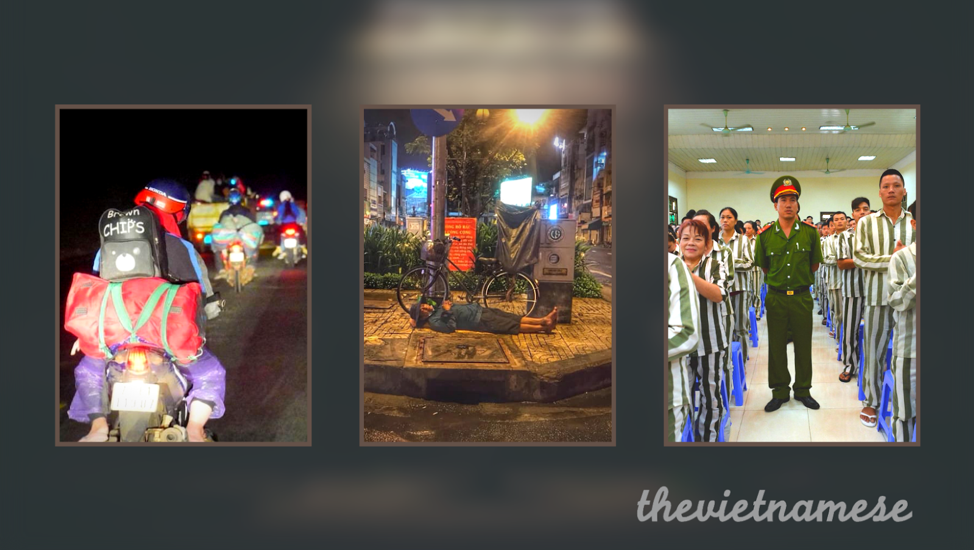
Category: Society

  • Why Did The Vietnamese Communist Party Militarize Its Fight Against COVID-19?

    Why Did The Vietnamese Communist Party Militarize Its Fight Against COVID-19?

    When the Ho Chi Minh City authorities decided to deploy troops to enforce an antivirus lockdown during the last week of August 2021, they caught local people off guard.

    The move, which came amid the rise in both Covid-19 infections and deaths in the city, has been seen as the last strategic card adopted by the Vietnamese government in its arduous and yet controversial battle to “defeat the virus.”

    According to state media, military troops will help enforce the lockdown until September 15, taking on the duty of barring people from going outside and providing necessities to quarantined residents.

    However, this has brought little peace of mind to local communities.

    Despite firm reassurances from the local government that military troops would take on the duty of buying and delivering food during the quarantine period, panic buying broke out even before the lockdown, while several opinions circulated on social media cast doubt that the preliminary action was to quell potential riots.

    Since the beginning of Covid-19, military-style rhetoric against the disease has appeared frequently in Vietnam’s state-run media and newspapers.

    Some might argue that these grandiose war-like bombasts and military mobilizations are not exclusively confined to Vietnam. Still, given the country’s authoritarian political landscape where speech is often suppressed and orders arbitrarily passed, these have been abused by the Communist government to spread propaganda and shirk off the responsibilities for its failure to handle Covid-19.

    Military rhetoric

    Vietnam has used military rhetoric since the early phase of the pandemic, with the flashy anti-coronavirus slogan of “fighting the virus as if we are fighting an enemy.” Depicting coronavirus as “an invader,” Vietnamese officials announced a war on the disease, vowing to “defeat” it through drastic operations and comprehensive “tactics.” [1]

    In Vietnam’s epidemiological “war,” each person is portrayed [2] as “a soldier.” Each family is “a fortress” in fighting “an invisible enemy,” [3] namely Covid-19. Healthcare workers have been zealously described as “superheroes,” [4] while infected patients are “subjects” [5] who need to be “swept out” [6] of the community.

    Last year, in June, when the Communist country successfully contained the first wave of infections and maintained a zero death toll, its leaders declared “a victory” [7] in the battle against Covid-19. Its success, said [8] the deputy prime minister, was primarily thanks to “the leadership of the Party, the state and the entire political system.”
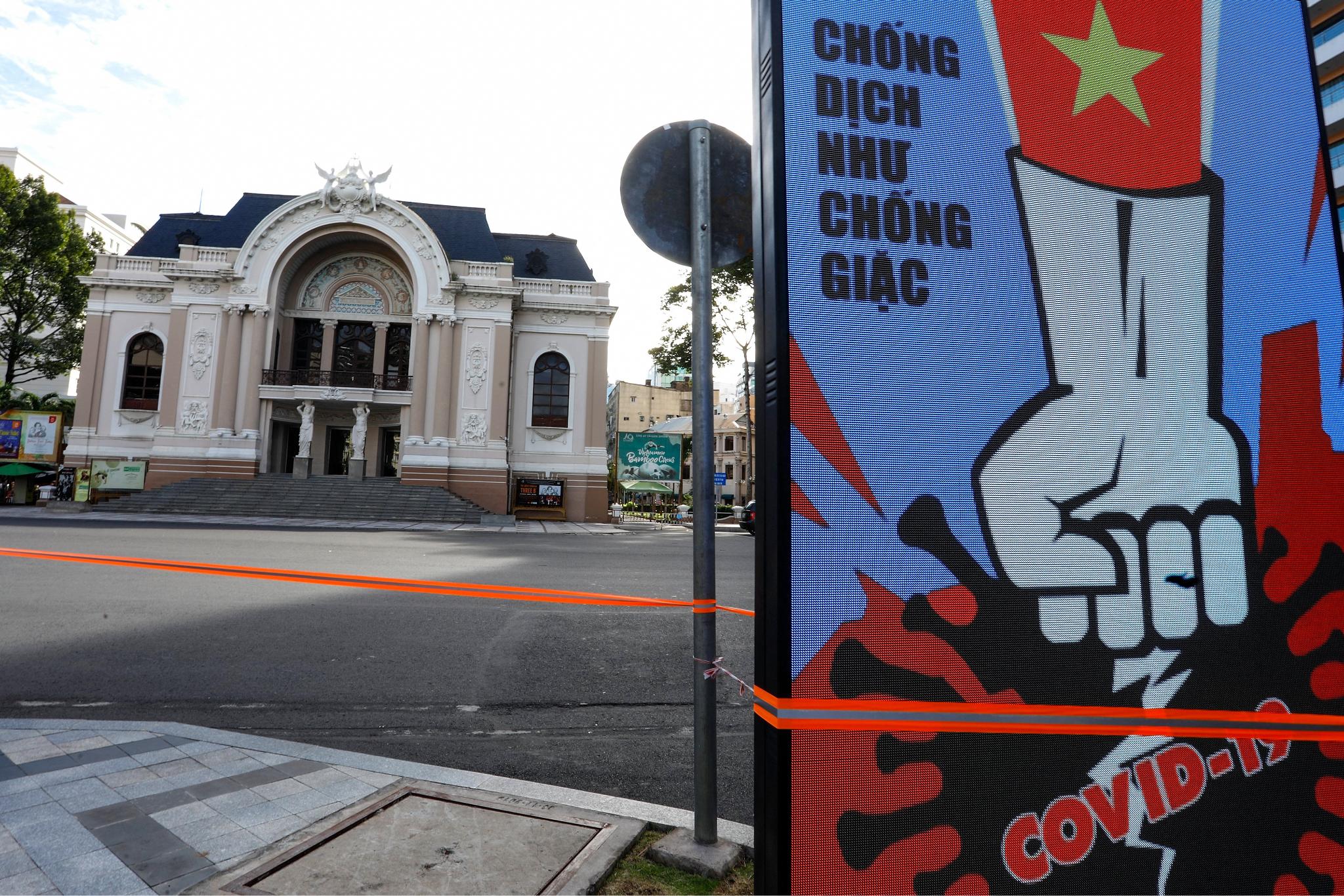
    “Fighting the virus as if we are fighting an enemy,” a street board displaying Vietnam’s anti-coronavirus slogan. Photo: AFP.

    Looking from the historical perspective, the Vietnamese Communist Party has since boasted about its significant role in defending its independence from French colonialism and American imperialism.

    Likewise, the warlike discourse on the coronavirus disease is nothing but a manipulative tactic utilized by the Communist Party to spread propaganda and reinforce its “legitimate” reign on every aspect of Vietnamese society. By intertwining the use of military rhetoric and the country’s previous military victories, the propaganda department has maneuvered the public into believing that the war against Covid will prevail under the Party’s leadership, just as has happened in the past.

    The battleground

    While the political rhetoric has dominated Vietnam’s state-run newspapers, a military mobilization is simultaneously taking place in real life.

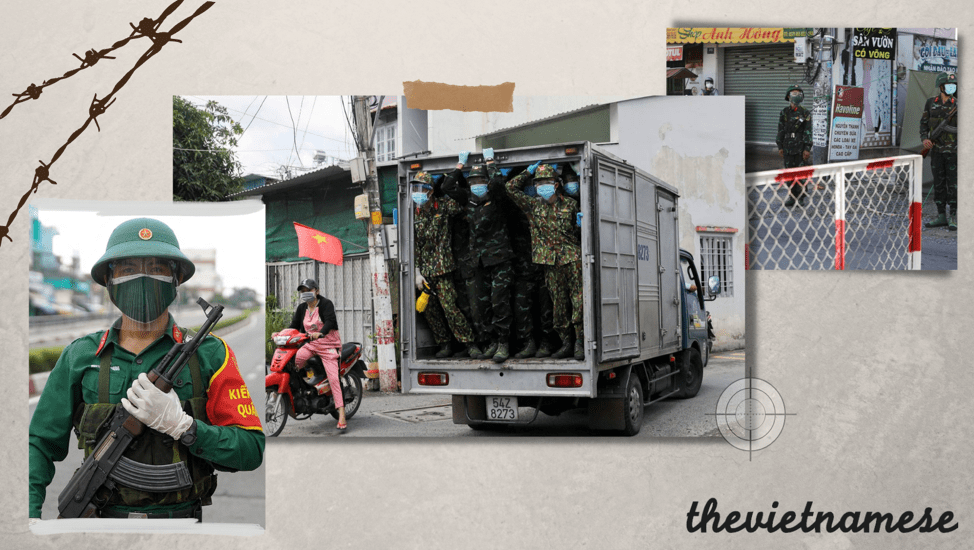
    Since August 23, military troops carrying rifles have been present at roadblocks in Ho Chi Minh City. These soldiers have been tasked with checking commuting permissions or delivering food and medicine to local households. The government called in the military to enforce the policy adopted by the city authorities to limit unnecessary movement to help curb the spread of the infection. Meanwhile, a comprehensive propaganda campaign [9] has been implemented to sway public opinion into supporting this strategy.

    Almost a week later, as many expected, the army mobilization program began to expose its incompetence and proved ineffective in relieving the burdens of maintaining a stable food supply delivery to Ho Chi Minh City’s citizens. In reality, substantial shopping demands from customers overloaded the capacity of the army’s workforce, causing essential goods to be congested and accumulated at the supply center; at the same time, Vietnam’s daily Covid-19 confirmed cases continue to reach new milestones [10], nearly every passing week.

    The failure of this policy eventually compelled local authorities to discontinue the program, allowing [11] delivery drivers to carry out their everyday operations.
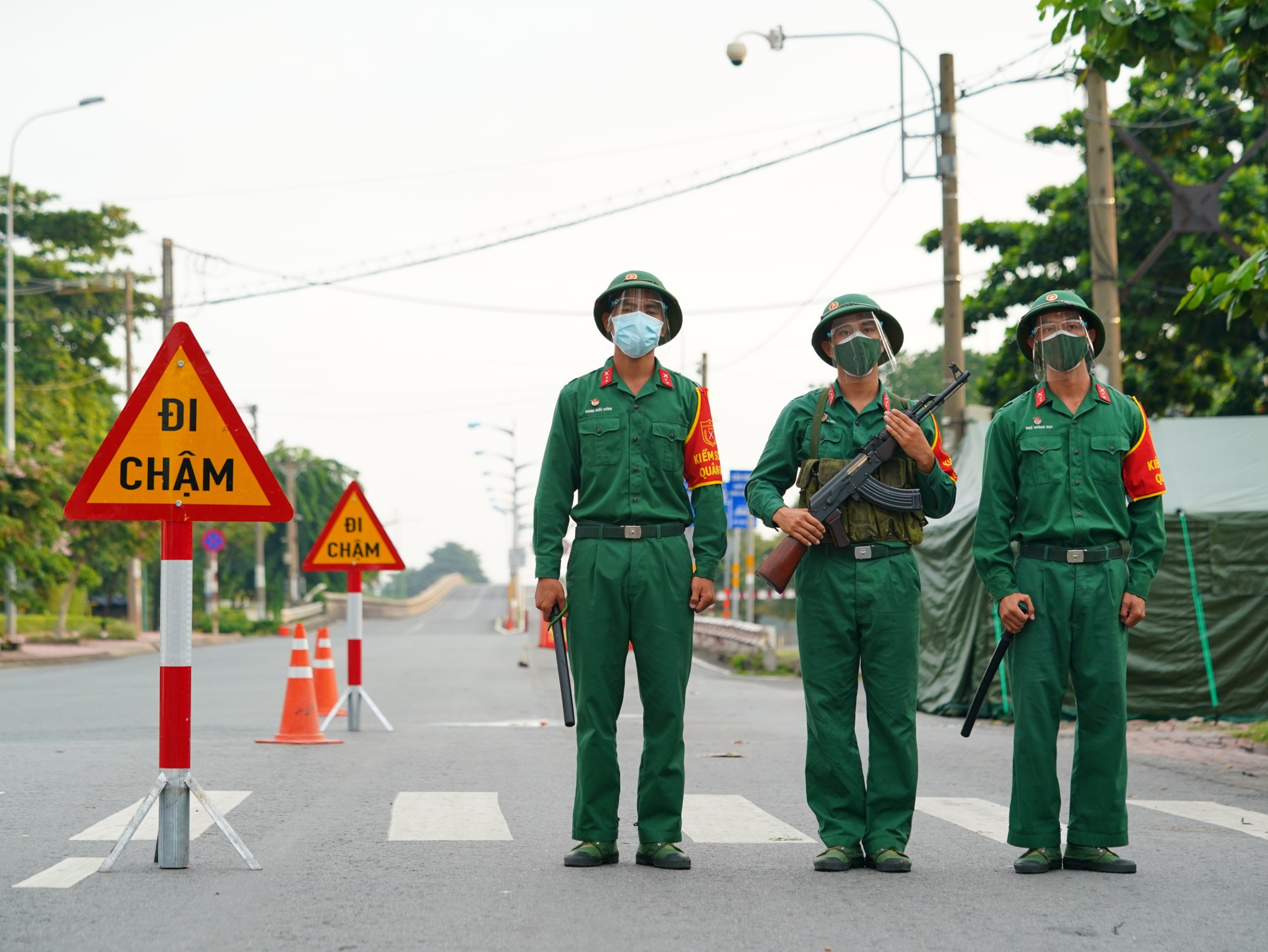
    Soldiers with rifles and batons guarding roadblocks in Ho Chi Minh City. Photo: Doc Lap/ Thanh Nien Online.

    So why did the Vietnamese authorities still proceed to implement this strategy, as, from the beginning, it had been proved to be inefficient?

    The idea of utilizing military force to solve the problem by enforcing stringent lockdowns is also widely supported by pro-government critics on social media. In explaining the failures of Vietnam’s anti-coronavirus strategy, they argue, it is due to the lack of city residents’ discipline in complying with health guidelines, not from the state’s inefficient policies in handling the pandemic. And imposing stricter measures, such as conducting a martial-style intervention, could help improve the ongoing situation.

    According to Huynh Cong Duong, [12] a writer for Luat Khoa Magazine, this tumultuous circumstance represents an underlying effort by the Vietnamese government to shift the blame to citizens. The consequence of this blame-shifting mindset, Huynh Cong Duong concludes, might “pose a significant threat” to civilian efforts on public issues, such as health and social security and the future of policy building in the country.


    As the aggressive hyperbole and military approach appear to be of little help, the Vietnamese Communist Party has to adopt more practical methods to get ahead in the fight against the coronavirus. There are two options that the Party might consider.

    Firstly, the government needs to admit the loopholes and mistakes in its anti-coronavirus policies and make human rights matters more inclusive in the epidemiological protocols.

    Secondly, when the public’s trust in the government and state media is severely eroding, the Communist authorities should recognize and promote the critical role of Vietnam’s civil society organizations and religious groups in picking up the slack where they struggle. [13] Not only do civil society and religions help alleviate the effects of Covid-19 on local communities, but they also become a beacon of reassurance and hope [14] for Vietnamese people during these challenging times, an important mission that none of the Party mouthpieces or army units could ever accomplish.

    It is time for the Communist Party to adjust its approach towards the Covid-19 pandemic.

    References:

    1. Những chiến thuật của Việt Nam trước “giặc” COVID-19. (2020, April 20). VietnamPlus. https://special.vietnamplus.vn/2020/04/20/chien-thuat-chong-covid-19-viet-nam/
    2. TP.HCM: Phát huy tinh thần “mỗi người dân là một chiến sĩ; mỗi gia đình, tổ dân phố, khu phố là một pháo đài chống dịch.” (2021, May 27). HCDC. https://hcdc.vn/category/thong-tin/viem-phoi-cap-do-virus-ncov/tphcm-phat-huy-tinh-than-moi-nguoi-dan-la-mot-chien-si-moi-gia-dinh-to-dan-pho-khu-pho-la-mot-phao-dai-chong-dich-67931aad42e0787f04c62ab852e6c0d2.html
    3. Hoa, Q. (2021, August 8). Quyết liệt hành động để sớm đẩy lùi “kẻ thù vô hình” COVID-19. VietnamPlus. https://www.vietnamplus.vn/quyet-liet-hanh-dong-de-som-day-lui-ke-thu-vo-hinh-covid19/732256.vnp
    4. Khuong, T. (2021, June 26). Hàng ngàn bức thư tay sưởi ấm các ‘siêu anh hùng’ chống dịch Covid-19 ở TP.HCM. Thanh Nien Online. https://thanhnien.vn/doi-song/hang-ngan-buc-thu-tay-suoi-am-cac-sieu-anh-hung-chong-dich-covid-19-o-tphcm-1400833.html
    5. L.Đ.O. (2021, August 8). Thông tin mới nhất về những đối tượng F0 COVID-19 được cách ly tại nhà. Lao Dong Online. https://laodong.vn/suc-khoe/thong-tin-moi-nhat-ve-nhung-doi-tuong-f0-covid-19-duoc-cach-ly-tai-nha-939623.ldo
    6. Not, T. (2021, August 17). Chủ tịch tỉnh An Giang kêu gọi chung tay quét sạch F0. Lao Dong Online. https://nld.com.vn/thoi-su/chu-tich-tinh-an-giang-keu-goi-chung-tay-quet-sach-f0-20210817114001702.htm
    7. D. Hai & D. Linh, D. H. D. L. (2020, June 14). Tại sao Việt Nam chiến thắng dịch COVID-19? Vietnam Ministry of Health. https://ncov.moh.gov.vn/en/-/tai-sao-viet-nam-chien-thang-dich-covid-19-
    8. Ibid., [7]
    9. Quan, V. V. (2021, August 31). Quân đội “lo từ A đến Z” và những kỹ thuật tuyên truyền chính trị kinh điển. Luật Khoa Tạp Chí. https://www.luatkhoa.org/2021/08/quan-doi-lo-tu-a-den-z-va-nhung-ky-thuat-tuyen-truyen-chinh-tri-kinh-dien/
    10. Nga, L. (2021, August 30). Vietnam confirms 14,219 new Covid-19 cases. VnExpress. https://e.vnexpress.net/news/news/vietnam-confirms-14-219-new-covid-19-cases-4348606.html
    11. Đi chợ hộ tại TP HCM: Quân đội “chào thua”, shipper trở lại. (2021, August 30). BBC Vietnamese. https://www.bbc.com/vietnamese/vietnam-58381909
    12. Duong, H. C. (2021, August 25). Cảm tình quân phiệt trên đường phố Sài Gòn. Luật Khoa Tạp Chí. https://www.luatkhoa.org/2021/08/cam-tinh-quan-phiet-tren-duong-pho-sai-gon/
    13. Luke Hunt. (2021, July 28). In Vietnam, Civil Society Is Picking up the Slack Where Authorities Struggle. The Diplomat. https://thediplomat.com/2021/07/in-vietnam-civil-society-is-picking-up-the-slack-where-authorities-struggle/
    14. Thanh, T. (2021, August 22). Trong hoảng loạn, tôn giáo đang giúp trấn an – việc mà nhà nước không làm được. Luật Khoa Tạp Chí. https://www.luatkhoa.org/2021/08/trong-hoang-loan-ton-giao-dang-giup-tran-an-viec-ma-nha-nuoc-khong-lam-duoc/
  • State Media And Social Media During The COVID-19 Pandemic: A Tale Of Two Cities In Vietnam

    State Media And Social Media During The COVID-19 Pandemic: A Tale Of Two Cities In Vietnam

    It is probably one of the worst times for Vietnam right now. The latest wave of Covid-19 infections has pushed Vietnam into both a healthcare and a media crisis. Once envied for its low death toll and effective methods to contain the virus, the Communist nation is now struggling to keep itself afloat as the rapid transmission of the new Delta variant overwhelms the healthcare capacity of its many provinces and municipalities.

    Last year, when the first cases of Covid-19 began to emerge in the country, the Vietnamese government actively utilized its state media apparatus to promote anti-coronavirus measures, deliver nationalistic and heroic messages [1] to target local audiences, as well as project its initial success in containing the disease by quoting praises from international media and experts.

    However, the latest outbreak, which created an unprecedented crisis, has driven state media to adopt new propaganda tactics. Similar to the Chinese authorities’ media strategy, [2] when coronavirus first broke out in Wuhan, the Vietnamese government proactively covered up the truth, silenced independent voices, and pushed optimistic narratives to sway public attention away from the reality on the ground.

    Amid the worsening Covid-19 predicament, many social media users in Vietnam chose social networks to share their personal experiences and to seek financial and medical help from the community. This circumstance has thus created a stark contrast between the government’s efforts to portray a positive picture of the pandemic and the appalling stories shared by ordinary citizens.

    The Vietnamese Magazine has analyzed the contents from both state media and public postings on social networking sites in Vietnam to create a more comprehensive picture of the current situation through three main criteria: the reports of state-owned media regarding the death toll, the government’s assistance for affected individuals, and the vaccination program.

    The Death Toll Cover-up

    As of this writing, Vietnam has recorded [3] over 265,000 Covid-19 infections, with around 100,000 recoveries and more than 5,000 deaths. The country’s recent daily infections tally is about 6,000 to 9,000 cases.

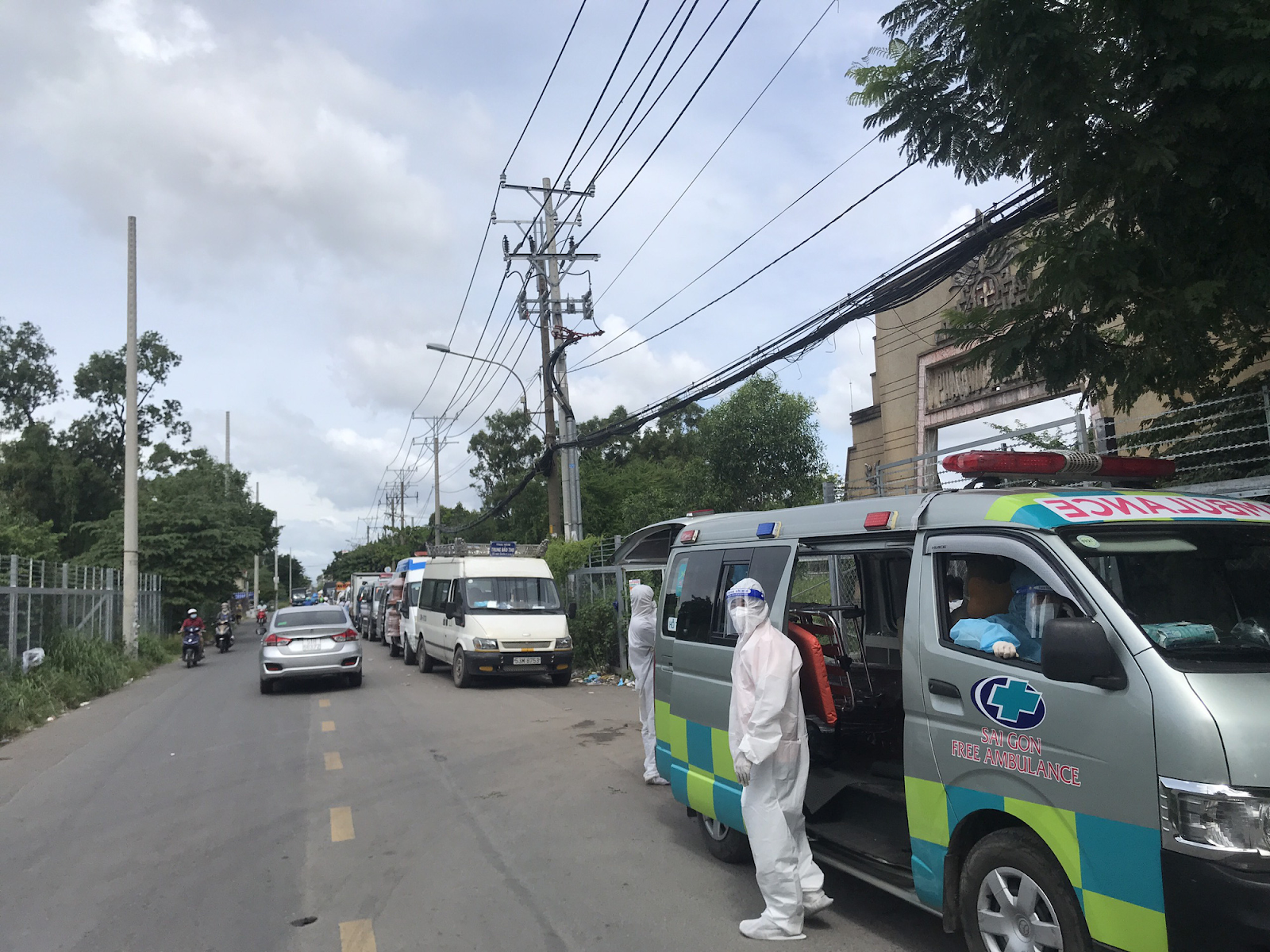
    Since the beginning of August, when the coronavirus situation began to worsen, numerous real-life stories and videos have started circulating on Vietnamese social media. These postings, which are done primarily by ordinary citizens, exposed the grim condition of Vietnam’s healthcare facilities, the struggle of impoverished people in quarantined areas, and the harrowing scenes of long lines of ambulances carrying the coffins of Covid-19 victims to cemeteries.

    Despite their accurate portrayal of the current situation during the time they were released, that footage was mainly absent on the country’s official news channels. On the other hand, state media has ramped up its censorship on these disturbing details and has also diverted public attention towards the mishandling of the pandemic by other foreign countries.

    A long trail of ambulances was seen parked on the road leading to Binh Hung Hoa Cemetery, Ho Chi Minh City. Photo: Le Phan/ Tuoi Tre Online.

    In the past few weeks, when daily Covid-19 mortality rates began to spike, almost all major newspapers and broadcasting channels in the country avoided mentioning or reporting [4] on the details of the death toll. Instead, their reports focused on the number of recoveries and emphasized the severity of the situations in other neighboring Southeast Asian countries.

    For instance, Thanh Nien Online, a state-owned newspaper, last reported [5] on coronavirus-related deaths in Vietnam on July 29, despite its previous regular updates of the number. This news outlet nevertheless diverted its reports on death tolls from Vietnam to Indonesia [6] and Thailand [7].

    Other online news outlets, such as Vietnamnet [8] and Tuoi Tre Online,[9] last reported on the number of Covid-19 deaths in Vietnam on July 30 and August 3, respectively. At the same time, VTV, the Communist Party’s most significant broadcasting mouthpiece, asked [10] its audience to spread “positive information” instead of dwelling on “negative and less optimistic” news to overcome the pandemic.

    This manipulative approach to the media further raises public concerns about the authenticity of the government’s official statistics, and at the same time, casts lingering suspicion among Vietnamese citizens on whether or not the actual scenario is far worse than the state media’s reportage.

    Welfare for the Poor: Promises and Reality

    Besides grappling with the surge of new Covid-19 infections, Vietnam is also facing an economic and welfare crisis as the livelihoods of millions of its citizens are being jeopardized for the sake of rigid anti-coronavirus measures.

    During the lockdown periods, a significant number of civil society groups on social media, as well as SOSmap.net, a project established by citizens, have begun operations in Vietnam. These social and technical incentives act as open platforms to connect bringers of goodwill to those in need. People can post their requests or promises to help on these platforms for a variety of purposes – from donating food and providing financial aid, to giving medical advice, and the like.

    These online platforms, despite differing in scope and geographic location, all have one thing in common: they are flooded with waves of hopeless calls for help from ordinary citizens, [11] of all of whom are negatively affected by harsh lockdown measures. In the majority of cases, the victims are contractors and manual workers who face financial difficulties or food shortages due to unemployment; many of them receive little or no support from the government.

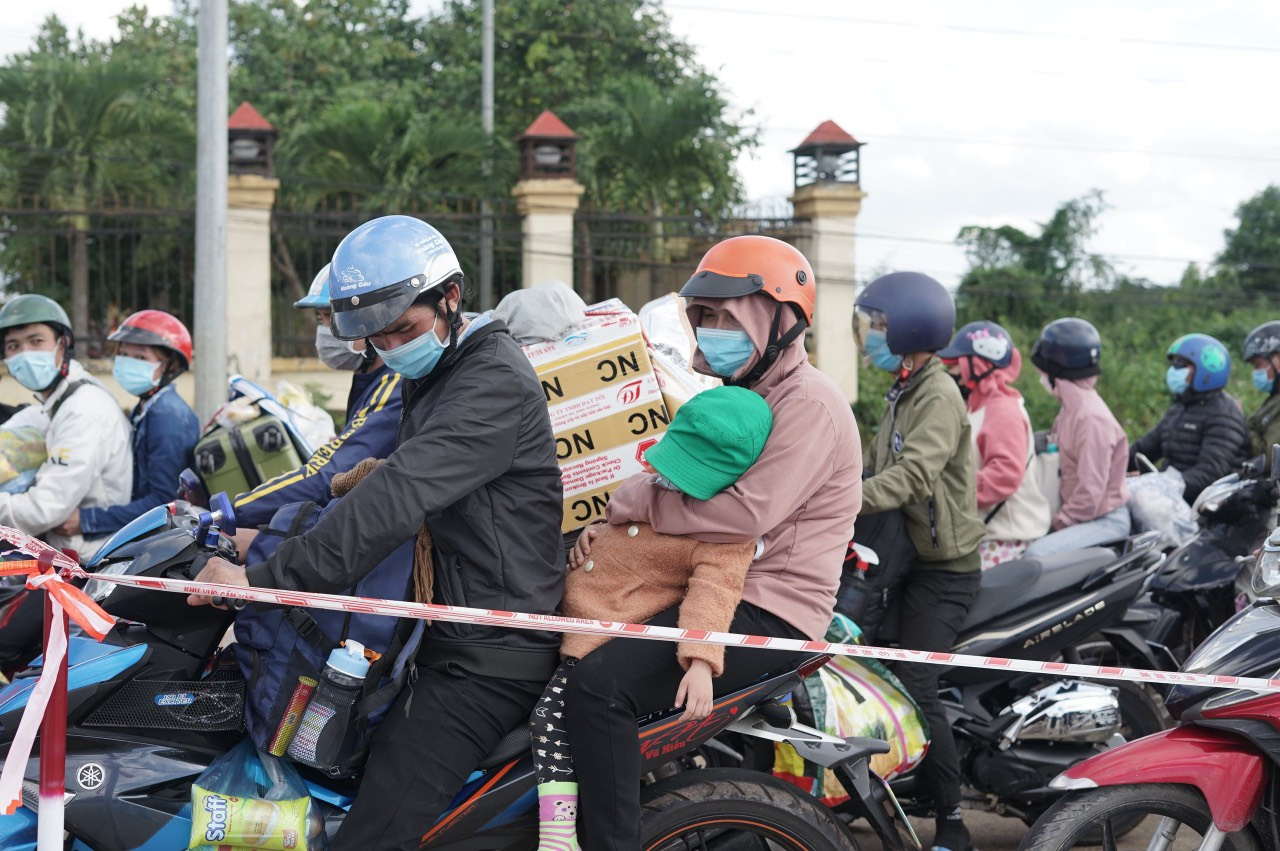
    A mass exodus of workers has also been seen fleeing [12] Ho Chi Minh City and other southern industrial provinces as the number of coronavirus cases surged in the region, while many factory workers and prisoners of conscience are at risk of getting infected due to poor working and living conditions.

    An exodus of people, mostly contracting workers, have fled Ho Chi Minh City to overcome financial difficulties due to strict lockdown measures. Photo: Thanh Quan/ Thanh Nien Online.

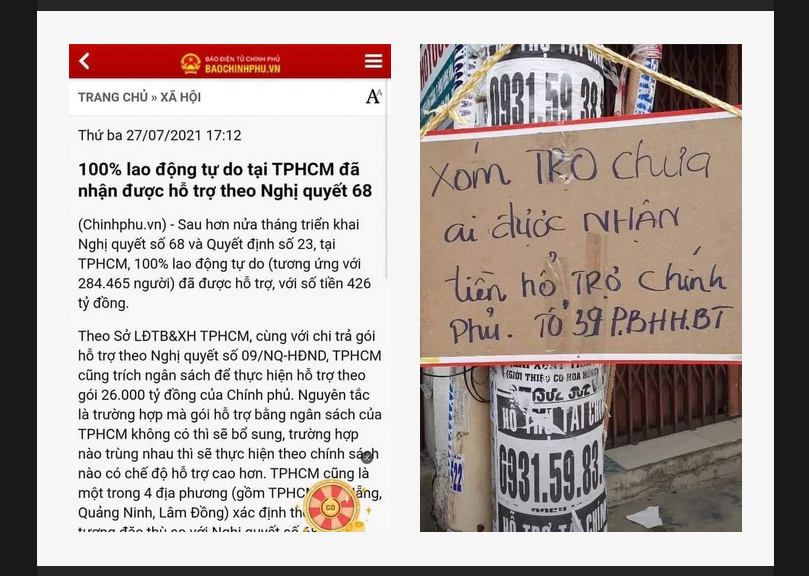
    But on state media, their hopeless voices are barely mentioned. They are often drowned-out to pave the way for a medley of political discourses,[13] victory speeches, [14] and firm guarantees of “letting no one starve” [15] from the government. According to our analysis, mainstream newspapers and broadcasting channels in Vietnam generally choose to report only on the positive sides of the migrant workers’ crisis, praise [16] the local authorities for their “timely” assistance for affected families, and simultaneously avoid mentioning the country leaders’ mistakes which helped lead to the current situation.

    Needless to say, the propaganda narratives mentioned above have two primary aims: placating the public and circumventing the Vietnamese authorities’ own failure in providing basic necessities to its people. Since freedom of the press is a concept that does not exist in Vietnam, the media is nothing but the Party’s effective tool to bend public opinion to its will.

    An article from a state-owned newspaper claimed that all contracting workers in Ho Chi Minh City had been financially supported (left), while a local neighborhood argued that they had received nothing from the government (right). Photo: screenshot/ Facebook post.

    The Vaccination Triad

    Meanwhile, as Vietnam struggles to contain the spread of Covid-19, its citizens are encouraged to get vaccinated to reach herd immunity [17] “in the shortest amount of time.” According to official statistics, [18] as of July 31, around 1.5 million vaccine doses have been given in Ho Chi Minh City, the country’s largest Covid-19 hotspot, while health authorities ensure that “around 99 percent of the population above 18 years of age [in the city] will be vaccinated.”

    The same rhetoric of hope and assurance, as expected, are also dominating the country’s state media.

    Although the vaccination plan sounds promising, state-owned media fail to consider three key shortcomings that could hinder the country’s progress towards achieving its immunity goal. These challenges include Vietnam’s ongoing shortage of Covid-19 vaccines, low rates of immunization [19] and the people’s hesitancy to get Chinese-made jabs.

    Earlier, a decision from Ho Chi Minh City authorities to use the Chinese-made Sinopharm in its inoculation program due to the vaccine scarcity problem has drawn public opposition and criticism. People’s concerns over the efficacy of these vaccinations, the significant lack of transparency of government officials about their vaccination status and which types of vaccines were given to the officials, and deep-rooted anti-China sentiments among many Vietnamese are believed to be the reasons for such reactions.

    On social media platforms such as Facebook, public opinion expressingobjections to Chinese vaccines have sparked thousands of interactions. At the same time, many of the commenters claimed that they would reject the made-in-China vaccinations if given a chance.

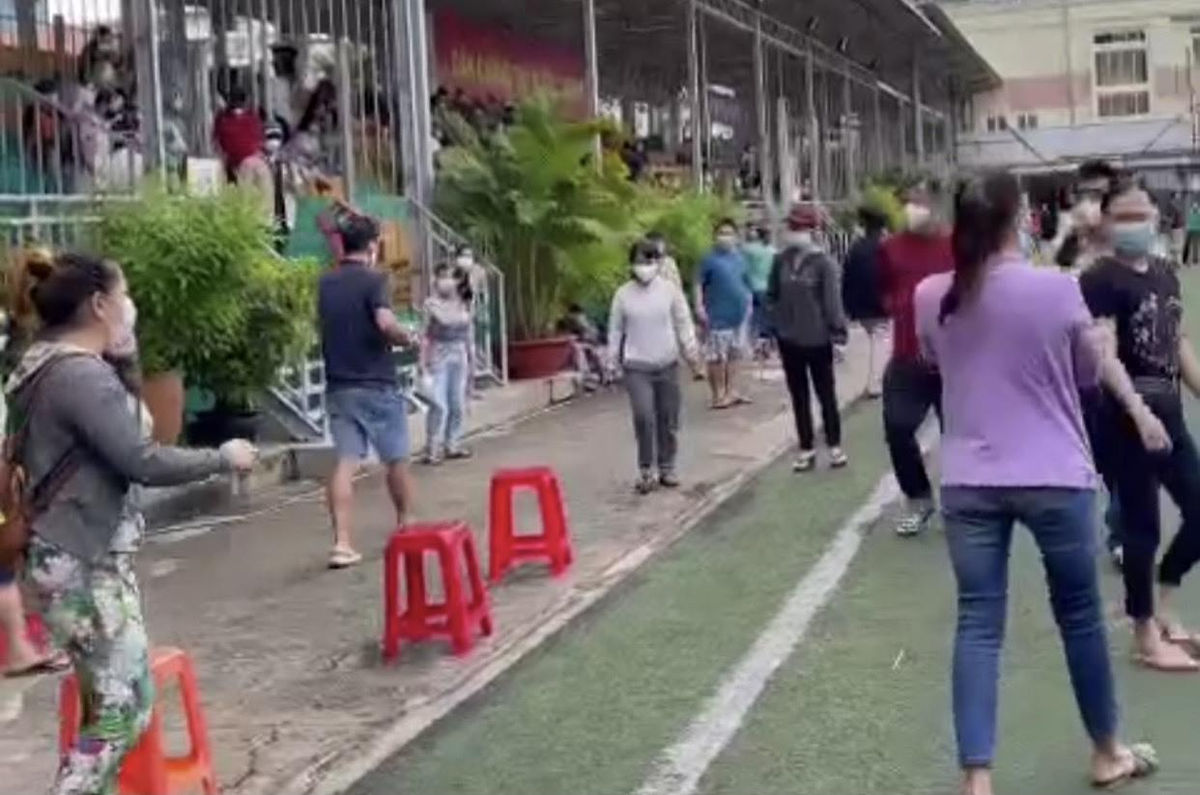
    The hostility also takes place under actual circumstances. A week ago, long lines of local people were seen angrily leaving a vaccination venue in District 1, Ho Chi Minh City. They were informed by the vaccination venue that they would be given Sinopharm shots since that center had run out of AstraZeneca vaccines.

    Local people seen leaving a vaccination venue in District 1, Ho Chi Minh City, after being informed that they would receive Chinese-made Sinopharm vaccines. Photo: screenshot/ VOV.

    On state-owned news channels, none of these stories has been adequately reported. Instead, the common headlines regarding the current vaccination campaign in Vietnam mostly boast [20] the country’s rapid rate of inoculations, reassure [21] the public of an abundant vaccine supply, or urge [22] the people to get Sinopharm while endorsing its high effectiveness against Covid-19.

    The ongoing vaccination fiasco is yet another example of the Communist Party attempting to control the flow of public discourse, debate, and opinion.

    The stories they peddle in mainstream media and the experiences of ordinary citizens rarely overlap; they portray two different truths: the alternative reality of the Party and the reality on the ground.

    Once again, the vulnerable people’s frantic calls for help are suppressed and overpowered by the Party’s extravagant mouthpieces.

    Bibliography:

    1. Lena, L. (2020, June 24). Nationalism, heroism and media in Vietnam’s war on COVID-19. East Asia Forum. https://www.eastasiaforum.org/2020/06/24/nationalism-heroism-and-media-in-vietnams-war-on-covid-19/
    2. Muyi Xiao, Drew Jordan, Meg Felling And Christoph Koettl. (2020, March 18). How China Is Reshaping the Coronavirus Narrative. The New York Times. https://www.nytimes.com/video/world/asia/100000007024807/china-coronavirus-propaganda.html
    3. The Vietnamese Magazine. (2021, August 16). Vietnam Briefing: Exoduses In Kabul And Saigon, At The Same Time, For Different Reasons. The Vietnamese Magazine. https://www.thevietnamese.org/2021/08/vietnam-briefing-exoduses-in-kabul-and-saigon-at-the-same-time-for-different-reasons/
    4. Minh, H. (2021, August 14). Điều VTV không nói: hơn 5.000 người đã chết vì COVID-19 ở Việt Nam. Luật Khoa Tạp Chí. https://www.luatkhoa.org/2021/08/dieu-vtv-khong-noi-hon-5000-nguoi-da-chet-vi-covid-19-o-viet-nam/
    5. Chau, L. (2021, July 29). Thêm 4.323 bệnh nhân khỏi bệnh; 233 ca tử vong do Covid-19 trong 8 ngày qua. Thanh Niên Online. https://thanhnien.vn/thoi-su/them-4323-benh-nhan-khoi-benh-233-ca-tu-vong-do-covid-19-trong-8-ngay-qua-1422364.html
    6. Vi, L. (2021, August 4). Số ca tử vong do Covid-19 vượt mốc 100.000, Indonesia đánh giá đã qua đỉnh dịch. Thanh Niên Online. https://thanhnien.vn/video/the-gioi/so-ca-tu-vong-do-covid-19-vuot-moc-100000-indonesia-danh-gia-da-qua-dinh-dich-164860v.html
    7. A, Đ. (2021, August 5). Nhân viên nhà xác Thái Lan ngất xỉu vì số ca tử vong tăng cao. Thanh Niên Online. https://thanhnien.vn/the-gioi/nhan-vien-nha-xac-thai-lan-ngat-xiu-vi-so-ca-tu-vong-tang-cao-1425575.html
    8. Lien, N. (2021, July 30). Việt Nam công bố thêm 159 bệnh nhân Covid-19 tử vong. Vietnamnet. https://vietnamnet.vn/vn/suc-khoe/viet-nam-cong-bo-them-159-benh-nhan-covid-19-tu-vong-761050.html
    9. Anh, L. (2021, August 3). Sáng 3–8: Thêm 3.578 ca mắc COVID-19, hôm qua là ngày tiêm vắc xin nhiều nhất tới nay. Tuổi Trẻ Online. https://tuoitre.vn/sang-3-8-them-3-578-ca-mac-covid-19-hom-qua-la-ngay-tiem-vac-xin-nhieu-nhat-toi-nay-20210802201648193.htm
    10. Chuyển động 24h tối – 10/8/2021. (2021, August 10). VTV. https://vtv.vn/video/chuyen-dong-24h-toi-10-8-2021-514933.htm
    11. Tinh, N. (2021, August 6). Dân kêu cứu khắp nơi, chính quyền thì đang làm gì? Luật Khoa Tạp Chí. https://www.luatkhoa.org/2021/08/dan-keu-cuu-khap-noi-chinh-quyen-thi-dang-lam-gi/
    12. Jason, N. (2021, August 4). Vietnam: In The Middle Of The COVID-19 Pandemic, They Are The Ones Being Left Behind. The Vietnamese Magazine. https://www.thevietnamese.org/2021/08/vietnam-in-the-middle-of-the-covid-19-pandemic-they-are-the-ones-being-left-behind/
    13. B.S. (2021, July 30). Cần chống dịch quyết liệt hơn với những giải pháp đặc biệt. Báo Công An Nhân Dân. https://cand.com.vn/Su-kien-Binh-luan-thoi-su/Can-chong-dich-nghiem-ngat-hon-quyet-liet-hon-voi-nhung-giai-phap-dac-biet-vi-an-toan-hanh-phuc-am-no-cua-nhan-dan-i622263/
    14. Truong, X. (2021, August 14). Thủ tướng: “Nhất định chúng ta sẽ sớm chiến thắng đại dịch COVID-19.” VTC News. https://vtc.vn/thu-tuong-nhat-dinh-chung-ta-se-som-chien-thang-dai-dich-covid-19-ar630743.html
    15. Hoa, Đ. D. (2021, August 2). Không để cho dân đói trong đại dịch. Vietnamnet. https://vietnamnet.vn/vn/tuanvietnam/tieudiem/khong-de-cho-dan-doi-trong-dai-dich-covid-19-761973.html
    16. Minh, B. (2021, July 20). Gói hỗ trợ 26 nghìn tỷ đồng: “Sự động viên kịp thời.” Dân Trí. https://dantri.com.vn/an-sinh/goi-ho-tro-26-nghin-ty-dong-su-dong-vien-kip-thoi-20210719210750222.htm
    17. Tiêm hết vaccine cho người dân TPHCM để đạt miễn dịch cộng đồng sớm nhất. (2021, July 31). Ministry of Health. https://moh.gov.vn/hoat-dong-cua-lanh-dao-bo/-/asset_publisher/TW6LTp1ZtwaN/content/tiem-het-vaccine-cho-nguoi-dan-tphcm-e-at-mien-dich-cong-ong-som-nhat
    18. Ibid., [17]
    19. Reuters. (2021, August 13). Vietnam concerned over vaccine supply as COVID-19 cases near record. Reuters. https://www.reuters.com/world/asia-pacific/vietnam-concerned-over-vaccine-supply-covid-19-cases-near-record-2021-08-12/
    20. Nguyen, T. (2021, August 11). Tốc độ tiêm vaccine COVID-19 đang tăng nhanh những ngày gần đây. Báo Tin Tức. https://baotintuc.vn/y-te/toc-do-tiem-vaccine-covid19-dang-tang-nhanh-nhung-ngay-gan-day-20210811181034442.htm
    21. L.Đ.O. (2021b, August 10). Bộ trưởng Bộ Y tế: Việt Nam sẽ đón số lượng lớn vaccine phòng COVID-19. Lao Động Online. https://laodong.vn/y-te/bo-truong-bo-y-te-viet-nam-se-don-so-luong-lon-vaccine-phong-covid-19-940407.ldo
    22. Nam, K. (2021, August 12). Đừng để thốt lên “Giá như. . .” khi đã quá muộn. Trang Tin Điện Tử Đảng Bộ Thành Phố Hồ Chí Minh. https://www.hcmcpv.org.vn/tin-tuc/dung-de-thot-len-gia-nhu%E2%80%A6-khi-da-qua-muon-1491882335
  • Vietnam: In The Middle Of The COVID-19 Pandemic, They Are The Ones Being Left Behind

    Vietnam: In The Middle Of The COVID-19 Pandemic, They Are The Ones Being Left Behind

    Since the first infections were detected in the country, Vietnam has surpassed[1] 100,000 Covid-19 cases spanning 62 out of its 63 provinces and more than 1,000 deaths. As the pandemic shows no signs of vanishing anytime soon, especially in the southern provinces, this Southeast Asian country faces both a healthcare and economic crisis.

    The Vietnamese Communist Party, as usual, has been deploying propaganda, at maximum capacity, to placate the public. Vigorous slogans, from promises of “leaving no one behind” to “protecting people’s lives remain a top priority” [2], are dominating state media and pro-government online groups on social media.

    However, the reality is far gloomier than the Party’s political discourse.

    Besides revealing the darker side [3] of Vietnam’s epidemiological strategy, the pandemic also deepens the increasingly widening gap between the haves and have-nots and between the people with power and those without.

    The Workers

    According to the Vietnam General Statistics Office report, [4] nearly 13 million workers were negatively affected by the economic downturn caused by the third and fourth wave of Covid-19 outbreaks. This number includes [5] about 557,000 people who lost their jobs, 4.3 million people who had their working hours cut, those who had to take time off from work or had to rotate shifts, and another 8.5 million who had their income reduced.

    The pandemic has had an impartial effect on the Vietnamese labor market, but so far, freelance and manual workers are among those who got hit the hardest.

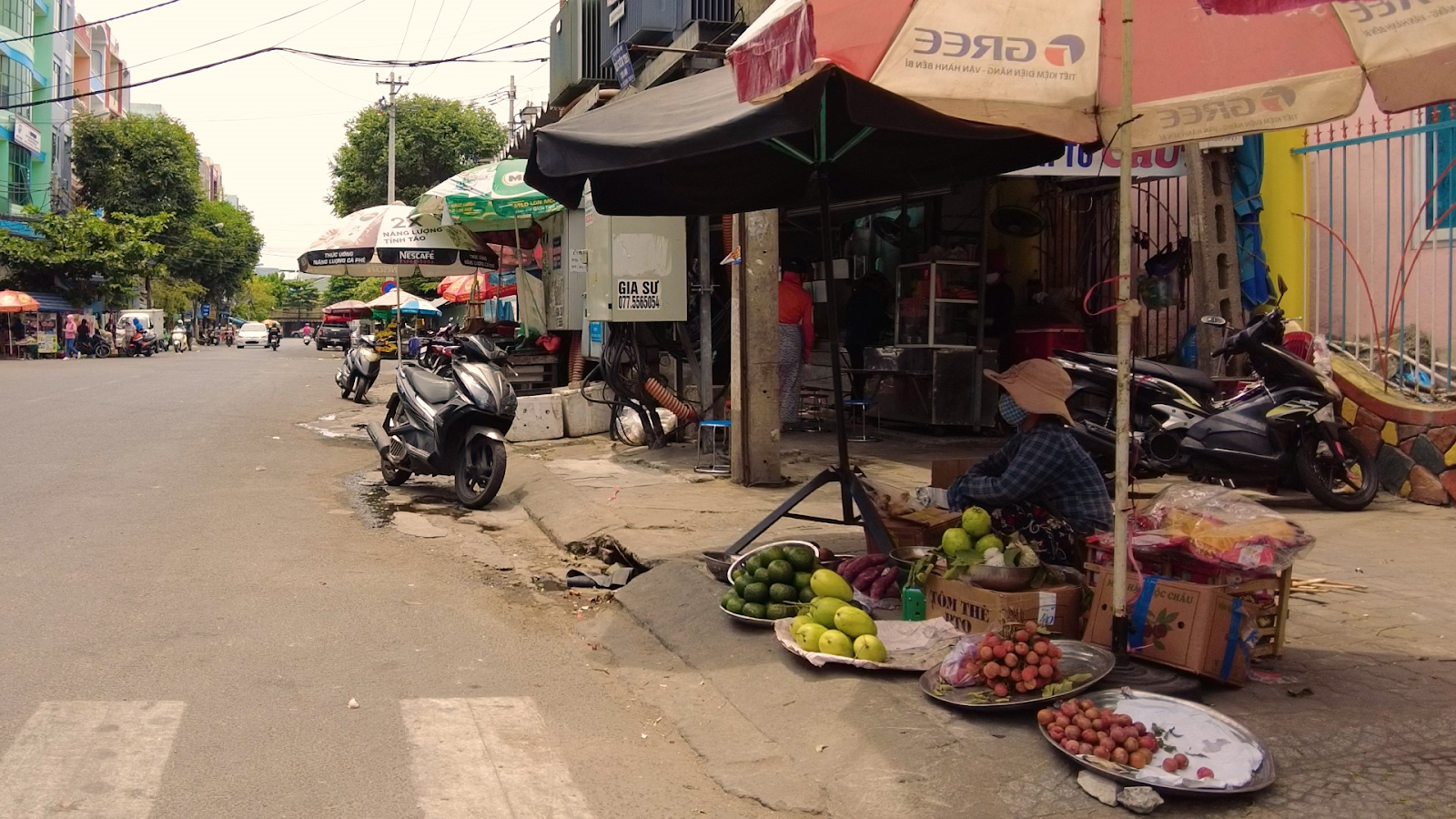
    In Vietnam, the term “freelance workers” has a very different connotation compared to the West. This workforce primarily consists of senior citizens, the impoverished, and college graduates, who lack physical health and certain skills that the average employer often deems necessary. They are known for doing various unskilled jobs, such as being street vendors, motorbike drivers, lottery ticket sellers, and the like.

    These freelance workers usually rely on their own labor to make ends meet daily while lacking health insurance and many personal savings, so they are at a greater risk of getting infected with the coronavirus or becoming financially strained under lockdown measures and other anti-coronavirus restrictions. Furthermore, stagnant economic activities, coupled with the government’s ineffective financial assistance schemes, seem to add [6] to their struggle.

    A street vendor in Da Nang City. Photo: RFA.

    At the same time, factory workers, the backbone of Vietnam’s export-oriented economy, are also facing another set of challenges in the midst of the pandemic.

    When coronavirus infections started to spread inside many factories during the latest outbreak, most workers were required to be quarantined inside their workplaces while continuing production in a strategy known as “dual goal.” [7] This strategy aimed to control infections while at the same time maintaining industrial production.

    However, risky working environments and the factories’ poor accommodations have sparked anger among many workers, causing them to flee their workplaces. Meanwhile, on social media, many people have also expressed their disagreement with the decisions of local authorities, repeatedly condemning[8] them for compromising workers’ health for cash.

    Besides rigid anti-coronavirus measures, the “ho khau” system, a household registration scheme used in Vietnam, has created another burden for these unskilled workers, especially for migrants from poorer provinces seeking manual jobs in big cities and industrial zones.

    More specifically, this household registration system denies migrant workers the eligibility to receive public services and welfare assistance where they temporarily live and work, such as healthcare and education, unless they register with local police.

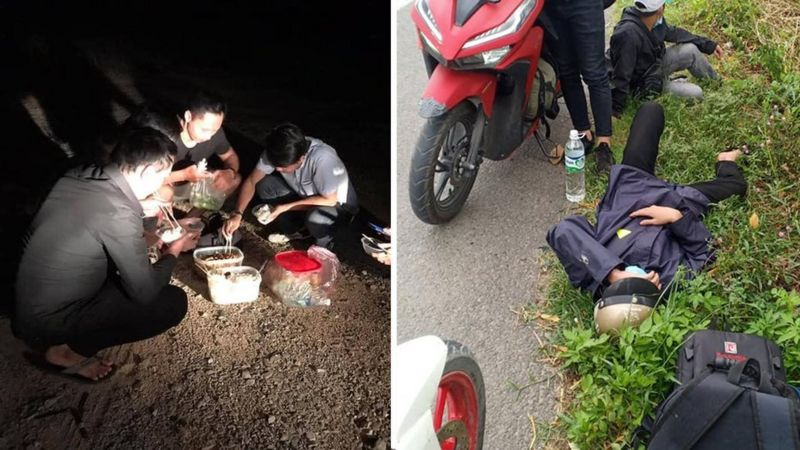
    Many migrant workers chose to return to their hometowns by motorbikes. Photo: Người Huế ở Sì Gòn (Facebook group)/ BBC Vietnamese.

    Nevertheless, Vietnam’s bureaucratic public services, alongside rampant corruption in the registration process, leaves many of them living illegally without legitimate status. As a result, when several southern industrial provinces and the economic hub of Ho Chi Minh City remained under lockdown to battle the latest outbreak of Covid-19, a large number of these employees were left with no choice but to return to their hometowns to avoid infection and to overcome the financial difficulties caused by their unemployment.

    Over the past few weeks, a massive exodus of migrant workers has been seen, with workers risking their lives on arduous journeys to go back home. Many choose motorbikes, and some attempted to make it on foot, [9] with several unfortunate souls losing their lives along the way. In response, several provinces have publicized official announcements citing the Covid-19 infection risk to urge migrant workers not to return home [10] or to “go back to where they started.” [11]

    This dire situation has led to an outcry on Vietnamese social media. Many users are questioning the government’s response and criticizing its failure to provide financial assistance to these people, secure safer means of homebound transportation, and provide housing in adequate quarantine facilities.

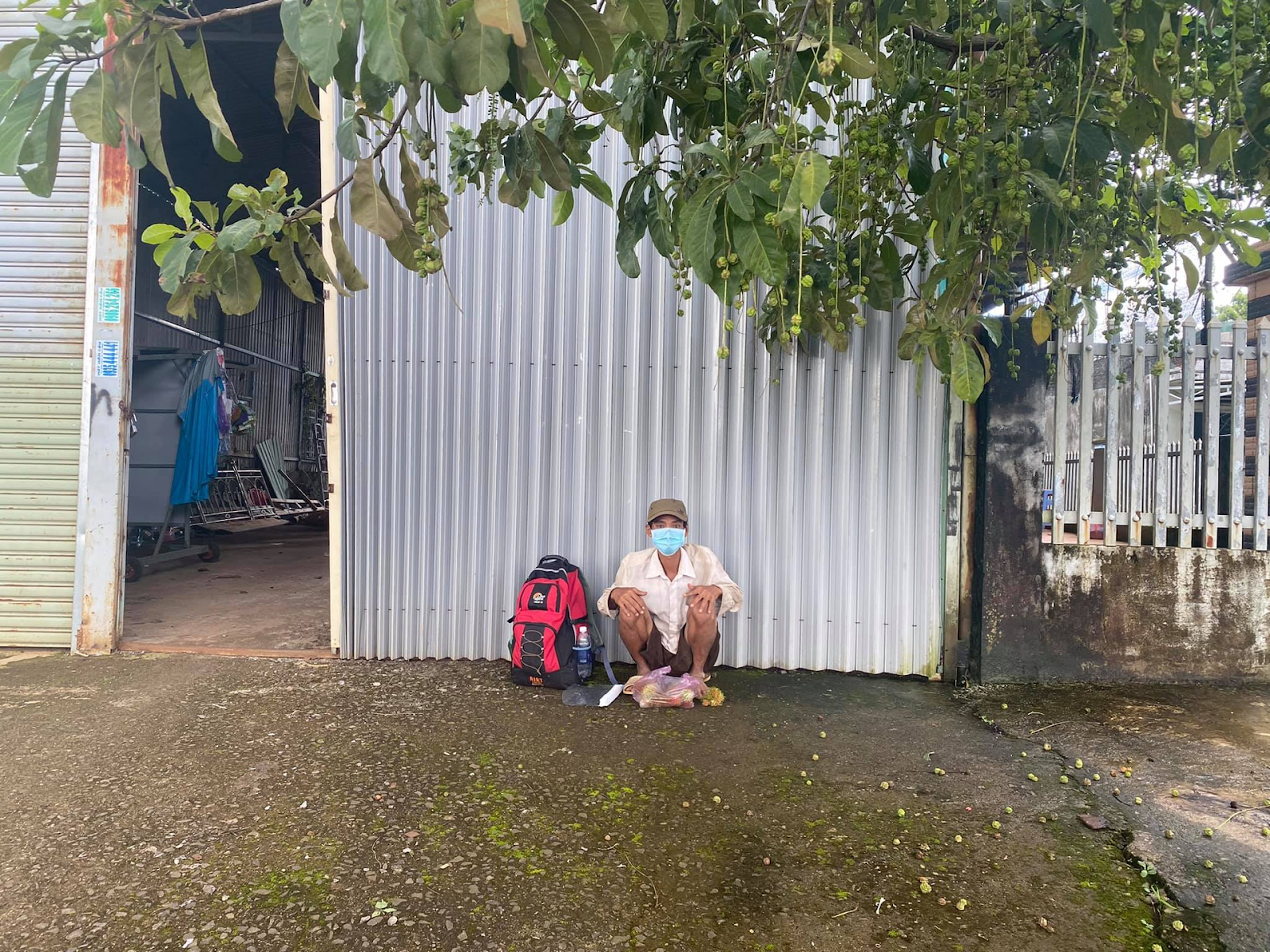
    A worker walked more than 180 km in 16 days from Dak Lak Province to his sister’s house in Binh Phuoc Province, as he did not have enough money for a bus ride. Photo: Zing News/ provided by the worker.

    Inmates, Prisoners of Conscience, and Addicts

    Multiple prisons and rehabilitation centers, especially in several southern localities, have also become new hotspots of infections during the fourth wave of the Covid-19 outbreak in Vietnam.

    On July 7, local authorities declared [12] that Chi Hoa Prison, a detention center located in Ho Chi Minh City, had recorded more than 80 people infected with Covid-19, including detainees and correctional officers. As the situation worsened, riots began to erupt [13] inside the facility as the rapid spread of coronavirus fueled fear among hundreds of inmates.

    A few weeks later, on July 23, all of the staff and addicts [14] at Bo La Rehabilitation Center, a facility located in the southern province of Binh Duong, tested positive for Covid-19. At the same time, a mental health hospital in Ho Chi Minh City also diverted a part of its functionality to treat Covid-19 patients, including many infected mental health patients, as surging cases overloaded healthcare capacity in the city.

    The infrastructure of detention and rehabilitation centers in Vietnam in general and other public facilities have long been infamously known for their degradation, poor living conditions, and maltreatment of prisoners and patients.

    Riot police vans were seen leaving the Chi Hoa Prison after reportedly being deployed to quell riots. Photo courtesy: Dinh Van/ VnExpress.

    Several family members of prisoners of conscience have also expressed their concerns over the safety of their relatives amid the Covid-19 situation. During interviews with RFA Vietnamese, [16] many expressed concerns that the proximity of sleeping quarters, poor living conditions, and limited information about the prisoners threaten the well-being of the people being kept inside the cells.

    Currently, prisoners, addicts, and mental health patients are not part of the official list [17] of 16 qualified priority groups to receive Covid-19 vaccinations, despite promises of future vaccination opportunities. However, given Vietnam’s ongoing vaccine shortage, these people will likely be the last to receive the vaccine.

    Other Vulnerable Groups

    The latest vaccination scandals [18] include a woman and her husband being prioritized to get vaccinated thanks to her father’s connections and a decision from Ho Chi Minh City authorities to lend Vingroup, a local conglomerate, 5,000 Moderna doses from the COVAX initiative to inoculate its staff, raise questions about equal access to the Covid-19 vaccine for all Vietnamese citizens.

    From a broader perspective, the political landscape in Vietnam is deepening the inequality in vaccine distribution. Government officials with strong connections or powerful corporations with economic clout can “cut in line” [19] to get vaccinated first, taking away inoculation opportunities from others, especially those who are most vulnerable once infected.

    As of July 19, [20] Ho Chi Minh City has officially begun vaccinating older adults and patients with underlying health conditions in the fifth phase of its inoculation campaign. Still, authorities have neither provided further information on the screening process nor medical assistance should side effects occur in these high-risk groups. Meanwhile, vaccination schedules for other vulnerable groups, such as the homeless, war veterans, and the disabled have remained undisclosed.

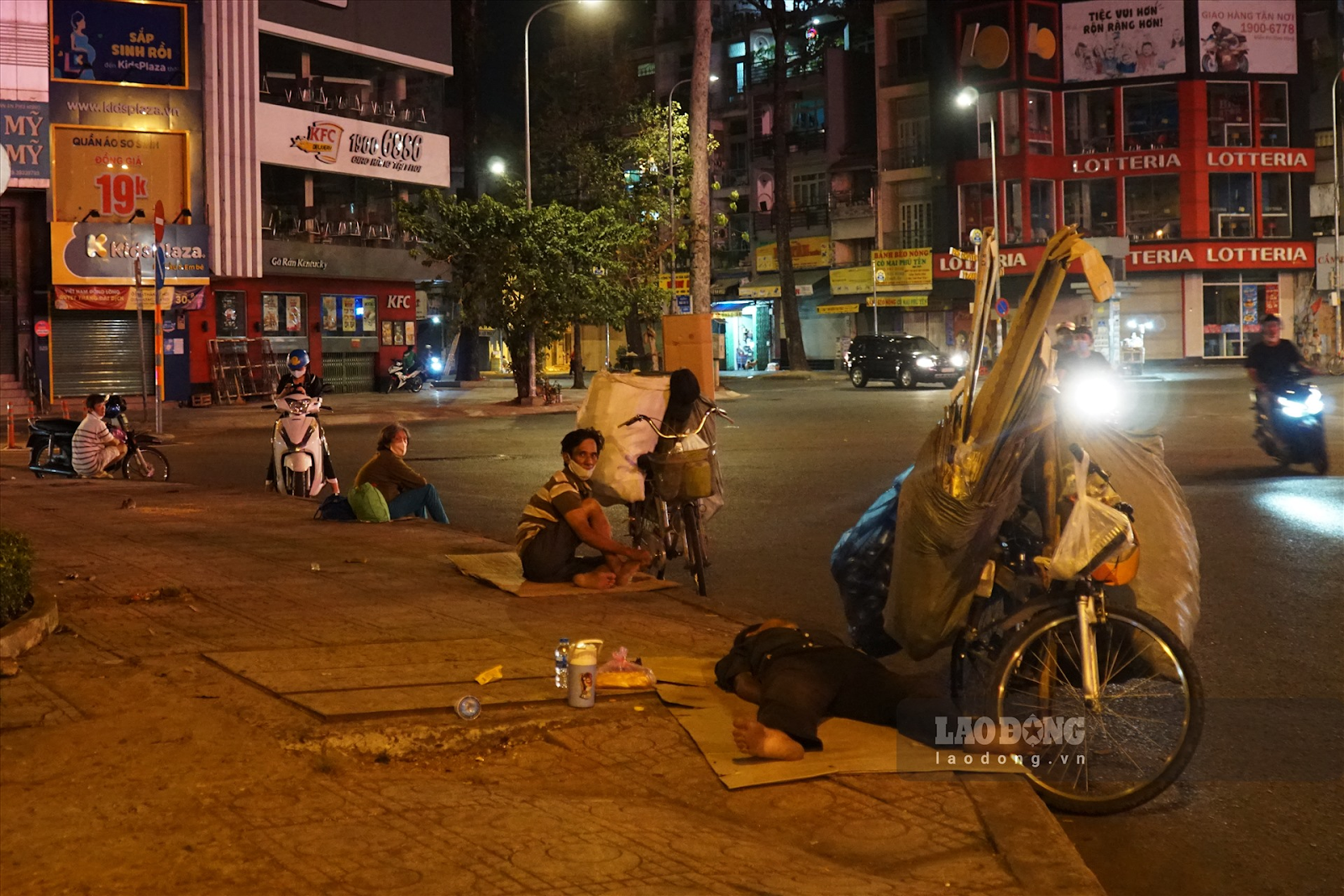
    Homeless people in Ho Chi Minh City amid the Covid-19 pandemic. Photo: Lao Dong.

    The Communist Party, since the very first days of its establishment, has prided itself on being “a Party of the people, of the working class.” [21] The Party manifests its ideology in the notion that their ultimate goals are “nothing other than the interests of the [working] class, the people and the nation” to build a more “democratic, wealthy and equal Vietnam.”

    Almost a century later, the Covid-19 pandemic has fully uncovered what the Party has been dedicating its whole lifespan to achieving benefits for itself and those living dependent on the corrupt system. Ironically, the poor, migrant workers or prisoners of conscience have never been of great concern to the Communist regime.

    As the dark clouds of Covid-19 continue to loom large over Vietnam, the tragic fates of those voiceless and powerless people mentioned above seem astoundingly more genuine than the Party’s empty promises.

    Bibliography:

    1. Số liệu Covid-19 tại Việt Nam. (2021, August 2). VnExpress. https://vnexpress.net/covid-19/covid-19-viet-nam
    2. Tiep, P. (2021, May 16). Quyết tâm đẩy lùi dịch COVID-19, bảo vệ sức khỏe nhân dân là trên hết. Báo Công An Nhân Dân. https://cand.com.vn/Su-kien-Binh-luan-thoi-su/Quyet-tam-day-lui-dich-COVID-19-bao-ve-suc-khoe-nhan-dan-la-tren-het-i605680/
    3. Jason, N. (2021, July 21). How The Latest Outbreak Reveals The Darker Side Of Vietnam’s Anti-Coronavirus Strategy. The Vietnamese Magazine. https://www.thevietnamese.org/2021/07/how-the-latest-outbreak-reveals-the-darker-side-of-vietnams-anti-coronavirus-strategy/
    4. Bang, L. (2021, July 7). Over 1.1 million people unemployed, nearly 13 million others affected by Covid-19 pandemic. Vietnamnet. https://vietnamnet.vn/en/society/over-1-1-million-people-unemployed-nearly-13-million-others-affected-by-covid-19-pandemic-753558.html
    5. VOA News. (2021, July 16). Vietnam Shops for Vaccines in Hopes of Avoiding More Lockdowns. VOA. https://www.voanews.com/covid-19-pandemic/vietnam-shops-vaccines-hopes-avoiding-more-lockdowns
    6. RFA. (2021, June 7). Lao động tự do chật vật trong đợt dịch COVID-19 thứ tư. Đài Á Châu Tự Do. https://www.rfa.org/vietnamese/in_depth/freelance-workers-struggle-during-the-fourth-covid-19-outbreak-06072021145713.html
    7. Việt Nam có nên vận dụng “mục tiêu kép” trong lúc này? (2021, May 27). Đài Á Châu Tự Do. https://www.rfa.org/vietnamese/in_depth/should-vietnam-maintain-dual-goal-now-05272021111728.html
    8. Ibid., [7]
    9. Nhi, T. (2021, July 26). Người đàn ông đi bộ 16 ngày từ Đắk Lắk về Bình Phước để tránh dịch. Zing News. https://zingnews.vn/nguoi-dan-ong-di-bo-16-ngay-tu-dak-lak-ve-binh-phuoc-de-tranh-dich-post1243231.html
    10. Nguyen, C. (2021, August 1). Xót xa cả gia đình gặp nạn trên đường về quê tránh dịch Covid-19. Người Lao Động. https://nld.com.vn/thoi-su/xot-xa-ca-gia-dinh-gap-nan-tren-duong-ve-que-tranh-dich-covid-19-20210801092125848.htm
    11. Ngoc, N. (2021, July 31). Từ 1/8, dân Quảng Ngãi buộc quay lại nơi xuất phát. Tiền Phong. https://tienphong.vn/tu-1-8-dan-quang-ngai-buoc-quay-lai-noi-xuat-phat-post1360999.tpo
    12. Tinh, D. (2021, July 7). TP.HCM: Ổ dịch tại Trại tạm giam Chí Hòa có 81 ca nhiễm Covid-19. Thanh Niên Online. https://thanhnien.vn/thoi-su/tphcm-o-dich-tai-trai-tam-giam-chi-hoa-co-81-ca-nhiem-covid-19-1410289.html
    13. Trại Chí Hòa: Hàng trăm phạm nhân nổi dậy sau khi 81 người nhiễm COVID-19 trong trại. (2021, July 7). Đài Á Châu Tự Do. https://www.rfa.org/vietnamese/news/vietnamnews/chi_hoa_riot-07072021052110.html
    14. Canh, N. (2021, July 23). Toàn bộ những người ở cơ sở cai nghiện ma tuý Bố Lá dương tính với SARS-CoV-2. Báo Công An Nhân Dân. https://cand.com.vn/y-te/Toan-bo-nhung-nguoi-o-co-so-cai-nghien-ma-tuy-Bo-La-duong-tinh-i621306/
    15. Anh, T. (2021, July 25). TP HCM lập bệnh viện điều trị người tâm thần mắc Covid-19. VnExpress. https://vnexpress.net/tp-hcm-lap-benh-vien-dieu-tri-nguoi-tam-than-mac-covid-19-4330137.html
    16. Son, T. (2021, July 7). COVID-19 xâm nhập trại giam: lo lắng cho an nguy của các tù nhân. Đài Á Châu Tự Do. https://www.rfa.org/vietnamese/in_depth/families-of-prisoners-of-conscience-worry-as-covid-spreads-in-prisons-07072021080636.html
    17. Thanh, A. (2021, July 11). [Infographic] Những nhóm mở rộng được ưu tiên tiêm vắc-xin Covid-19. Người Lao Động. https://nld.com.vn/thoi-su/infographic-nhung-nhom-mo-rong-duoc-uu-tien-tiem-vac-xin-covid-19-20210711011752387.htm
    18. The Vietnamese Magazine. (2021, July 26). Vietnam Briefing: COVID-19 Crisis Deepening While The National Assembly Convened To Elect State Leadership. The Vietnamese Magazine. https://www.thevietnamese.org/2021/07/vietnam-briefing-covid-19-crisis-deepening-while-the-national-assembly-convened-to-elect-state-leadership/
    19. Minh, N. (2021, July 22). Có bao nhiêu “cháu ngoại” đã trót lọt chen hàng để tiêm vaccine trước? Luật Khoa Tạp Chí. https://www.luatkhoa.org/2021/07/co-bao-nhieu-chau-ngoai-da-trot-lot-chen-hang-de-tiem-vaccine-truoc/
    20. L.Đ.O. (2021, July 19). Người già, người có bệnh nền tại TPHCM được tiêm vaccine tại bệnh viện. Người Lao Động. https://laodong.vn/y-te/nguoi-gia-nguoi-co-benh-nen-tai-tphcm-duoc-tiem-vaccine-tai-benh-vien-932236.ldo
    21. L.Đ.O. (2020, January 28). Đảng của dân tộc, Đảng của giai cấp công nhân. Người Lao Động. https://laodong.vn/thoi-su/dang-cua-dan-toc-dang-cua-giai-cap-cong-nhan-778528.ldo
  • How The Latest Outbreak Reveals The Darker Side Of Vietnam’s Anti-Coronavirus Strategy

    How The Latest Outbreak Reveals The Darker Side Of Vietnam’s Anti-Coronavirus Strategy

    Last year, when the novel coronavirus Covid-19 ravaged the healthcare system and economy of even the most developed countries in the world, Vietnam’s early success in containing infections and keeping the death toll low drew praise and even admiration from the international media and community.

    “Fighting the pandemic as if we are fighting an enemy,” the country’s anti-coronavirus slogan declared.

    Vietnam’s early successful anti-coronavirus protocols primarily focused on isolating infected areas, facilitating rapid contact tracing, mandatory hospitalization of infected patients and their close contacts, as well as imposing fines on those who broke the social distancing rules.

    Though efficient as these protocols might seem, as experts point out [1], only a few countries possess control structures that Vietnam has in order to deal with the pandemic, let alone being willing to carry them out under actual circumstances.

    Since the control playbook helped the country get through the very first waves of Covid-19 infections, the most recent outbreak has revealed the darker sides of how Vietnam handles the pandemic in its rigid and yet abusive nature.

    When “collective benefits” dwarf human rights

    In Vietnam, the need to curb the pandemic seems to have outmatched other substantial matters, such as upholding certain human rights [2] and looking after people’s livelihoods.

    As the Southeast Asian country witnessed [3] its highest surge of Covid-19 cases in recent days, more measures, including strict lockdown and movement restrictions, have been put in place. Ho Chi Minh City [4] and the entire southern region [5] remain under lockdown while adopting Directive 16 of the government, an anti-coronavirus protocol, to curb the spread of Covid-19.

    Directive 16 [6] requires all citizens to follow disease control guidelines and stay at home, except for “necessary duties,” while restricting gatherings of more than two people in public places, halting all means of transportation, and so on.

    Although not legally binding [7], the new ordinance raises public concerns about whether the authorities’ policies for “curbing the pandemic” interfere with fundamental human rights, such as the freedom of movement and speech.

    People can be coerced into compliance or fined if they go outside without a “reasonable purpose”[8] or post content deemed to be “false information”[9] on social media.

    These terms, “reasonable,” “necessary,” or “false,” of course, are arbitrarily defined by local authorities.

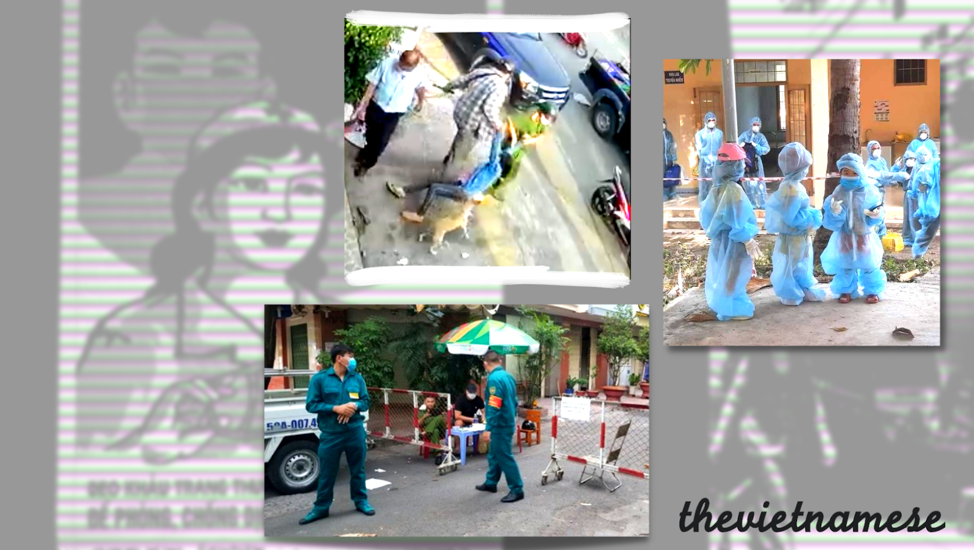
    Barbed wire fences were set up in a quarantine area in District 3, Ho Chi Minh City (July 2021). Photo: Sy Dong/ Thanh Nien Online.

    Since Ho Chi Minh City has undergone a citywide lockdown, there have been over 12,000 cases [10] in which people were fined for “violating anti-coronavirus regulations.” That would include more than 2,000 cases [11] where people were fined for going outside, despite reports that they were properly wearing masks and keeping a safe distance. More ironically, the authorities even set a daily quota [12] for how many people to be fined.

    Besides its legal ambiguity, Directive 16 is also being abused [13] by police officers and security forces to serve their interests in the name of containing the coronavirus. Petty corruption and alleged misconduct are commonplace.

    Multiple personal experiences, videos, and short clips circulating on social media show the truth behind the curtain of the “ideal anti-coronavirus model,” [14] about which Vietnamese authorities brag so enthusiastically.

    In one video, policemen and security guards were seen entering a house and grappling with a local family, allegedly accusing them of violating social distancing measures for selling essential produce. The security forces later confiscated all the produce, and they then dragged the homeowner into their vehicle.

    This woman was seen being dragged to a police car by security forces. Photo: Screenshot/Thanh Nien Online.

    The lack of independent oversight of the power of law enforcement, along with the absence of transparency on Covid-19 stimulus and relief policies, is nurturing an environment where abuse of power [15] and corruption [16] flourish.

    Other similar videos and Facebook posts showing police taking advantage of anti-coronavirus measures to harass passers-by, arbitrarily fine people, penalize street vendors, or implicitly ask for bribes are not difficult to find on social media.

    Behind the successful anti-coronavirus model

    The “effective” methods that helped Vietnam overcome the first three waves of Covid-19 infections, in reality, are not immune to shortcomings and inefficiency.

    “Tracing, mapping and quelling the virus,”[17] the strategy which operates on the principle of tracing infected patients, isolating residential areas, and administering treatment, although appearing to be successful at first, comes at the cost of hurting the Vietnamese economy and causing many to be unemployed. Furthermore, the procedure of providing financial assistance to affected families is often long and bureaucratic.

    Meanwhile, the effectiveness of centralized quarantine camps, where Covid-19 patients and their direct contacts are compulsorily held while awaiting testing and treatment, remains still a big question.

    The so-called quarantine camps were hailed by state media [18] as “effectively functioning” to curb the coronavirus outbreaks, and therefore should remain “a top priority method.”

    Young children were isolated inside a quarantine camp in Phu Yen Province. Photo courtesy: Soha.vn

    Nevertheless, the surge in cases in recent weeks, which overloaded the capacity [19] of those camps, coupled with their poor and unsanitary conditions, put both asymptomatic patients and healthy people at risk of being mutually infected. Also, since the quarantine requirements are applied to everyone regardless of age, children were subject to isolation and staying away from their parents, whereas home quarantine could be a more feasible option.

    While too focused on the idea of “fighting the virus,” Vietnam also trails behind [20] other neighboring Southeast Asian countries in securing a vaccination supply, as well as ramping up inoculation programs. As of now, only above 0.3 percent [21] of Vietnam’s population is fully vaccinated.

    Only around 0.3 percent of Vietnam’s population is fully vaccinated (July 19th). Source: Our World in Data/screenshot.

    Meanwhile, as the government asks its citizens [22] to donate to the ‘vaccine fund’ as cases spike, questions [23] regarding the transparency of the fund, along with promises of equal access to Covid-19 vaccines [24] for all citizens, remain unanswered.


    Last June, the New York Times published an article [25] warning Vietnam to brace itself for a fresh wave of Covid-19 infections while suggesting the country’s luck in containing the disease might be “running out” this time.

    The Vietnamese government, facing the shortcomings and challenges of its anti-coronavirus strategy, rather than admitting the faults, consulting experts’ advice, and making appropriate adjustments to improve the situation, continues to defend its mistakes. The government has perpetually shifted the blame to “reactionary forces” for spreading “distorted information”[26] or the New York Times for a “biased evaluation” [27] in claiming that the country’s success in containing previous infections was based on luck.

    Whether Vietnam was lucky in its past Covid-19 handling is still unclear; however, we can ostensibly see the secret behind the success of the Communist regime’s strategy: its anti-coronavirus playbook only works at the expense of the well-being of ordinary citizens.

    Bibliography:

    1. Bill Hayton, Tro Ly Ngheo. (2020, May 12). Vietnam’s Coronavirus Success Is Built on Repression. Foreign Policy. https://foreignpolicy.com/2020/05/12/vietnam-coronavirus-pandemic-success-repression/
    2. H.R.W. (2020, March 19). Human Rights Dimensions of COVID-19 Response. Human Rights Watch. https://www.hrw.org/news/2020/03/19/human-rights-dimensions-covid-19-response
    3. Reuters. (2021, July 9). Vietnam sees record coronavirus cases as curbs tighten. Reuters. https://www.reuters.com/world/asia-pacific/vietnam-sets-covid-19-vaccination-targets-new-curbs-unrolled-2021-07-09/
    4. BBC. (2021, July 7). TP HCM giãn cách xã hội “quyết liệt” theo Chỉ thị 16 từ 0h 9/7. BBC Tiếng Việt. https://www.bbc.com/vietnamese/vietnam-57750819
    5. Associated Press. (2021, July 18). Vietnam puts southern region in lockdown as surge grows. AP News. https://apnews.com/article/asia-pacific-world-news-health-coronavirus-pandemic-vietnam-958c8f737c497b2330f1af69c84bae18
    6. Cong, H. (2021, July 7). TP HCM giãn cách xã hội theo Chỉ thị 16. VnExpress. https://vnexpress.net/tp-hcm-gian-cach-xa-hoi-theo-chi-thi-16-4296651.html
    7. Percy, N. (2020, April 4). Chỉ thị 16 có giá trị pháp lý không? – Không. Luật Khoa Tạp Chí. https://www.luatkhoa.org/2020/04/chi-thi-16-co-gia-tri-phap-ly-khong-khong/
    8. Son, T. (2021, July 14). Xử phạt dân ra đường: vừa không hợp tình vừa thiếu cơ sở pháp lý! Đài Á Châu Tự Do. https://www.rfa.org/vietnamese/in_depth/punishing-people-leaving-their-houses-in-lockdown-time-is-ruthless-and-lack-of-legal-base-07142021094348.html
    9. RFA. (2021c, July 2). Lâm Đồng phạt 30 triệu đồng ba người đưa tin sai về dịch COVID-19 trên mạng xã hội. Đài Á Châu Tự Do. https://www.rfa.org/vietnamese/news/vietnamnews/lam-dong-fined-three-people-vnd-30-million-for-spreading-false-information-about-covid-19-07022021082827.html
    10. An, D. (2021, March 17). TPHCM: Phạt hơn 12.000 vụ vi phạm Chỉ thị 16 với số tiền 3,3 tỷ đồng. Công an TP.Hồ Chí Minh. https://congan.com.vn/doi-song/tphcm-phat-hon-12000-vu-vi-pham-chi-thi-16-voi-so-tien-33-ty-dong_116102.html
    11. Ibid., [8]
    12. Phuong, V. (2021, July 13). Phường ở TP.HCM giao chỉ tiêu phạt người vi phạm Chỉ thị 16: Quận chấn chỉnh ngay. Thanh Niên Online. https://thanhnien.vn/doi-song/phuong-o-tphcm-giao-chi-tieu-phat-nguoi-vi-pham-chi-thi-16-quan-chan-chinh-ngay-1413746.html
    13. Chan, Y. (2021, July 15). Con virus không gây ra bệnh lộng quyền, nó chỉ làm lộ rõ bản chất của các “đầy tớ.” Luật Khoa Tạp Chí. https://www.luatkhoa.org/2021/07/con-virus-khong-gay-ra-benh-long-quyen-no-chi-lam-lo-ro-ban-chat-cua-cac-day-to/
    14. Van, N. (2021, July 6). Việt Nam – mô hình lý tưởng trong phòng chống dịch COVID-19. Sức Khỏe & Đời Sống. https://suckhoedoisong.vn/viet-nam-mo-hinh-ly-tuong-trong-phong-chong-dich-covid-19-n196626.html
    15. RFA. (2021d, July 19). Giám đốc Hợp tác xã cấp khống giấy thông hành cho con gái bị phạt 7,5 triệu đồng. Đài Á Châu Tự Do. https://www.rfa.org/vietnamese/news/vietnamnews/director-of-cooperation-determine-control-travel-warrants-granted-to-his-daughter-received-a-7-million-07192021090444.html
    16. Hoang, T. (2020, December 10). Xét xử cựu giám đốc CDC Hà Nội và đồng phạm nâng giá máy xét nghiệm COVID-19. Tuổi Trẻ Online. https://tuoitre.vn/xet-xu-cuu-giam-doc-cdc-ha-noi-va-dong-pham-nang-gia-may-xet-nghiem-covid-19-2020120922563448.htm
    17. Hai, S. (2021, June 11). Khẩn trương truy vết, khoanh vùng dập dịch triệt để nhằm khống chế các chuỗi lây bệnh. Trang Tin Điện Tử Đảng Bộ Thành Phố Hồ Chí Minh. https://www.hcmcpv.org.vn/tin-tuc/khan-truong-truy-vet-khoanh-vung-dap-dich-triet-de-nham-khong-che-cac-chuoi-lay-benh-1491879154
    18. Yen, N. (2021, June 2). Cách ly tập trung vẫn là biện pháp quan trọng hàng đầu. Báo Công an Nhân Dân. http://cand.com.vn/Su-kien-Binh-luan-thoi-su/Cach-ly-tap-trung-van-la-bien-phap-quan-trong-hang-dau-644093/
    19. Tien, V. (2021, June 27). Tình hình Covid-19 hôm nay 27.6: Khu cách ly quá tải, TP.HCM sắp cho “tự quản” F1 tại nhà. Thanh Niên Online. https://thanhnien.vn/thoi-su/tinh-hinh-covid-19-hom-nay-276-khu-cach-ly-qua-tai-tphcm-sap-cho-tu-quan-f1-tai-nha-1405218.html
    20. Tomoya Onishi. (2021, June 25). Vietnam backpedals on COVID-19 vaccination targets. Nikkei Asia. https://asia.nikkei.com/Spotlight/Coronavirus/COVID-vaccines/Vietnam-backpedals-on-COVID-19-vaccination-targets2
    21. Share of people vaccinated against COVID-19, Jul 19, 2021. (n.d.). Our World in Data. https://ourworldindata.org/covid-vaccinations?country=VNM
    22. AFP. (2021, June 8). Vietnam begs public for “vaccine fund” donations after virus surge. Yahoo News. https://sg.news.yahoo.com/vietnam-begs-public-vaccine-fund-091017383.html
    23. Chinh, Y. K. (2021, July 13). 4 câu hỏi về chiến dịch tiêm vaccine COVID-19 của Việt Nam. Luật Khoa Tạp Chí. https://www.luatkhoa.org/2021/07/4-cau-hoi-ve-chien-dich-tiem-vaccine-covid-19-cua-viet-nam/
    24. Tuan, V. (2021, July 10). Thủ tướng: “Mọi người bình đẳng trong tiếp cận vaccine.” VnExpress. https://vnexpress.net/thu-tuong-moi-nguoi-binh-dang-trong-tiep-can-vaccine-4307457.html
    25. Richard C. Paddock, Chau Doan. (2021, June 2). Spared for Months, Vietnam Faces a Wave of New Infections. The New York Times. https://www.nytimes.com/2021/06/02/world/asia/vietnam-covid-ho-chi-minh.html
    26. Department Of News. (2021, July 19). Bác bỏ luận điệu xuyên tạc về công cuộc chống dịch COVID-19 của Việt Nam. VTV. https://vtv.vn/xa-hoi/bac-bo-luan-dieu-xuyen-tac-ve-cong-cuoc-chong-dich-covid-19-cua-viet-nam-20210719192125814.htm
    27. Quan, M. (2021, June 24). Nói Việt Nam ‘may mắn’ trong chống dịch Covid-19 là thiếu khách quan. Báo Thế Giới và Việt Nam. https://baoquocte.vn/noi-viet-nam-may-man-trong-chong-dich-covid-19-la-thieu-khach-quan-149357.html
  • 2020 In Pictures: A Year Of Endurance For Vietnam

    2020 In Pictures: A Year Of Endurance For Vietnam

    We are introducing a photo collection of Vietnam in 2020 taken by photographer Giang Pham. In it, there will be no medical staff, no politician, no breaking news. This photo collection tells another story – the story of endurance and the story of ordinary people in Vietnam.

    The photographer wrote to introduce this collection:

    Twelve months ago, not many people would think that 2020 would be such a challenging year.

    The pandemic came, and it has been staying without any check-out date, shifting people’s lives all over the world into an unexpected direction.

    Since the outbreak of Covid-19, Vietnamese people have traveled on a roller-coaster ride, ups and downs, hope and despair, and joy and anger.

    The fight against Covid-19, the health of our economy, and the collective efforts to mitigate the negative impacts on society have been ubiquitous on Vietnamese coffee tables every morning.

    But life keeps moving on.

    Despite the pandemic, and no matter if Covid-19 has come closer to their neighborhood, Vietnamese people live their daily lives, as usual, and unusual.

    This photo collection covers Vietnamese people’s daily lives in the year 2020. It was from the mountainous northwestern provinces to the country’s southernmost land, from the urban dwellers in the big cities to the farmers of ethnic minorities in the countryside, who might never be mentioned in the stories throughout the year covered by other media.

    Farmers in Cai Mon flower village, Cho Lach District harvested flowers before transported to Ho Chi Minh City to sell for Tet holiday (Vietnamese Lunar New Year). Ben Tre, Vietnam, January 2020.

    Flower trading boats were at Binh Dong floating market in days prior to Tet (Vietnamese Lunar New Year) holiday. Saigon, Vietnam, January 2020.

    A man carried incense sticks for worship rituals in Lantern Festival – the biggest annual festival of Chinese Vietnamese community – in the early days of the Covid-19 outbreak in Vietnam. Saigon, Vietnam, February 2020.

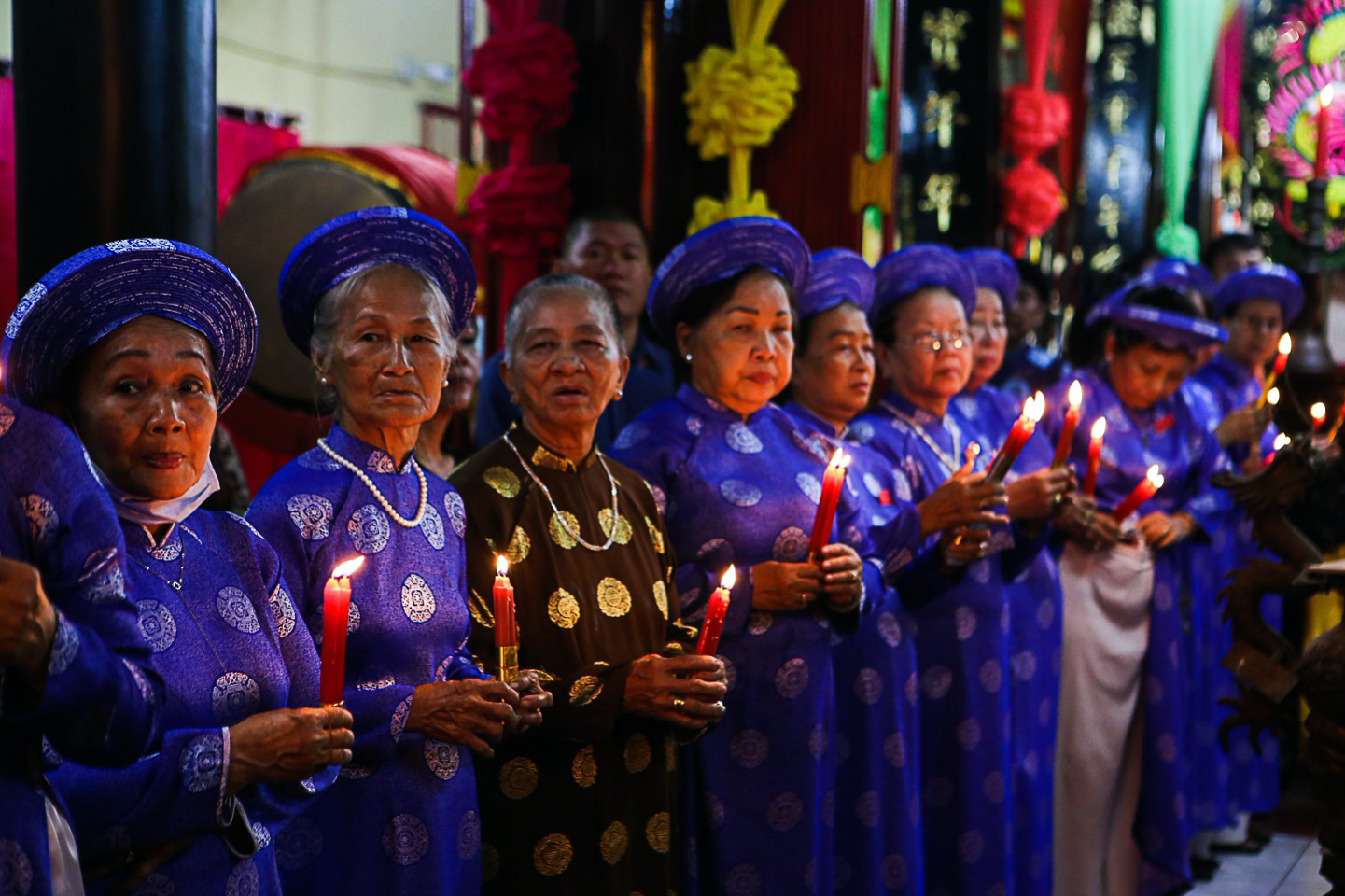
    Elderly women who served for the annual Ky Yen (Pray for Peace) Festival at Phu Nhuan communal house. Saigon, Vietnam, February 2020.

    A groom brought home his bride, who lived in the same village, on their wedding day in Dong Anh District. Ha Noi, Vietnam, March 2020.

    Women did their laundry by the bank of Huong (Perfume) River. Hue, Vietnam, March 2020.

    A woman sent her prayer during Jingzhe ceremony in On Lang assembly hall. Saigon, Vietnam, March 2020.

    A man got his coffee delivered from a cafe in the neighborhood during the social distancing period. Saigon, Vietnam, April 2020.

    Locals rowed their boat for fishes along Dong Nai river. Dong Nai, Vietnam, June 2020.

    Street traders navigate under a heavy rain in the flooded Binh Quoi area. Saigon, Vietnam, June 2020.

    A fisherman looked for fish on Quan Chanh Bo canal in Duyen Hai district, where the massive Duyen Hai Power Generation Complex located. Tra Vinh, Vietnam, June 2020.

    Inside a hammock cafe in the outskirts of Ho Chi MInh City, Vietnam where hired labors rested every night for 20,000 VND (around 1 USD). Saigon, Vietnam, August 2020.

    A girl helped her family to prepare raw field rat meat in Binh Long Commune, the biggest field rat market in the country. An Giang, Vietnam, September 2020.

    A woman of Red Dao ethnic and her neighbors smiled while loading chayote bags for their trader. Lao Cai, Vietnam, September 2020.

    A worker put cinnamon leaves and barks into distiller to produce cinnamon oil. Yen Bai, Vietnam, September 2020.

    Children crossed a suspension bridge to return home with gifts for Mid-Autumn Festival in their village. Bac Kan, Vietnam, September 2020.

    A man comforted his sick daughter who was in pain at the National Pediatric Hospital. Hanoi, Vietnam, September 2020.

    Inside the kitchen of a M’nong family where they prepared for their dinner. Unlike the major Kinh ethnic group, M’nong people today still have a matriarchal social system. Dak Lak, Vietnam, October 2020.

    Workers commuted to their workplace by crossing Tam Giang river on a local ferry. Ca Mau, Vietnam, December 2020.

    A male shaman of Cham ethnic danced during a Rija Dayep ritual at a Cham family in Bau Truc village. Ninh Thuan, Vietnam, December 2020.

    Farmers harvested sugarcanes in K’Bang district. Gia Lai, Vietnam, December 2020.

    A Bana patriarch was inside his village communal house, which also served as a church for religion services. Kon Tum, Vietnam, December 2020.

    Elementary students were seen during a study activity at their school. Dak Nong, Vietnam, December 2020.

    Children from a Bana village finished their class at a branch of Kapakolong primary school. This branch was built to help students avoid travelling too far to reach their schools. Kon Tum, Vietnam, December 2020.

    Dawn on Mekong Delta. Vietnam, December 2020.