Category: Politics

  • Vietnam’s Institutional Corruption: Why Nguyen Phu Trong’s “Blazing Furnace” Will Be Meaningless In The Long Term

    Vietnam’s Institutional Corruption: Why Nguyen Phu Trong’s “Blazing Furnace” Will Be Meaningless In The Long Term

    This article was written in Vietnamese by Vo Van Quan and previously published in the Luat Khoa Magazine on October 6, 2020.


    The term burning furnace (đốt lò in Vietnamese) is a frequently used term in Vietnam to describe the anti-graft campaign that Nguyen Phu Trong pledged would eliminate corruption in the country.

    After nearly ten years of the Vietnamese Communist Party (VCP) being under the leadership of General Secretary Nguyen Phu Trong, many people seem to be proud that the Vietnamese government has done well in its political task of purging the moral degradation that affects the people’s trust in the Party and the State.

    For instance, in the first six months of 2020, Nguyen Phu Trong ordered several investigations of senior party officials: a member of the Politburo, a former member of the Politburo, four current and former members of the Party Central Committee, and 186 other members of the Party who were under the Central Committee’s management. These investigations seem to affect a broad number of Party members.

    Big-name politicians such as Hoang Trung Hai, Dinh La Thang, Le Thanh Hai, Nguyen Duc Chung, Truong Minh Tuan, Nguyen Bac Son, and Tat Thanh Cang, all seem to have either been brought to justice, have been reprimanded for their actions, or have lost any chance for a long-term political position in the future. Since the beginning of the VCP’s Doi Moi policy in 1986, it can be seen as one of the unprecedented successes for the Party.

    However, after the new Party Congress concluded in early 2021, it immediately became apparent that all of these achievements would have been for nothing if another faction becomes the majority in the Party’s leadership.

    If the ruling faction’s victories against corruption under Trong’s leadership have been so triumphant, why are they at risk of falling apart after just one new congress?

    Philosophical or social science discussions related to corruption in Vietnam are sparse. On the  rare occasion that they do take place, they are mainly carried out by members of the VCP themselves to serve their interest.

    This article will introduce another perspective on anti-corruption science and explain why the “blazing furnace” of Nguyen Phu Trong does not have any significant value over the long term.

    The concept itself and the philosophical problems associated with corruption are innumerable. Great philosophers from ancient times, such as Plato and Aristotle, to the more modern era, such as Machiavelli and Montesquieu, all discussed this topic in great detail.

    Hence, to prove the lack of current anti-corruption policies in Vietnam, this article will only focus on these two concepts: individual corruption and institutional/systemic corruption.

    Individual corruption, in the simplest sense, pertains to the selfish actions of a specific person while they work in public service. Such behavior may involve accepting bribes, abusing power, or giving special consideration to family or friends in government deals, contracts, or bidding.

    Personal corruption is at the lowest level in terms of organization and state functions. This concept is often used when corruption is the exception and not the norm of the system.

    Because of this, individual corruption can be present in any country regardless of its development and level of democracy. Individual corruption is inevitable, but it is also the easiest to deal with. Several laws, ethical appeals, and judicial campaigns are aimed at limiting or eliminating it.

    We can immediately recognize that this is the VCP’s current approach to fighting corruption in Vietnam. However, the success rate of stopping individual corruption greatly depends on stopping this form of government misconduct at this level.

    At this point, we need to discuss institutional corruption.

    Professor Dennis F. Thompson of Harvard University, one of the first academics who introduced the concept of institutional corruption, suggests that corruption becomes an integral part of a system in three ways:

    1. Corruption benefits the system’s survival while at the same time undermining it.

    2. Corruption is of an impersonal passive nature.

    3. Corruption becomes a phenomenon that can be generalized to the whole society.

    However, Professor Thompson was speaking about the political situation in the United States, and it would be difficult to apply his theoretical archetype to Vietnam. That said, his ideas can be used as the foundation for analysis.

    Regarding his first point, it can be said that corruption in Vietnam has reached a level of coexistence with the political system because of the close relationship of objective and subjective factors, such as a cumbersome state apparatus, meager wages and benefits, and the overwhelming power of state authority.

    The need to align government interests with those of a large population in Vietnam is not something new.

    Recently, many people in Vietnam were surprised when the Ministry of Public Security announced that the Civil Defense force and the other grassroots security forces had a combined number of 1.5 million people, equivalent to nearly 1.5 percent of the Vietnamese population. And these 1.5 million people are on the government payroll.

    But the story does not stop there. In 2017, official government statistics recorded up to 11 million workers receiving direct salaries from the state budget.

    The number of officials at the commune level is stated to be 1.3 million.

    Units belonging to the public non-business sector, such as education, health, culture, and sports, have more than 73,600 units and employ 2.5 million people. This is a 14.7 percent increase compared to 2012. The number of political organizations, unions, and associations is at 35,100 units, and they employ more than 237,000 people.

    A cumbersome state apparatus keeps the budget in a condition of exhaustion, even though wages and benefits are generally meager. In effect, when people decide to work for the state, they expect something else when they join, and that is power. They can then use this power to generate other sources of income.

    A pattern starts to form. People spend money to gain access to the state apparatus. Then, they use this newly acquired power to participate in various corrupt practices, that become an integral part of maintaining and operating the government machinery of Vietnam.

    Running for office has also become so popular that the head of the Party Inspection Committee of Hanoi had to admit, “Comrades, now people say less than 100 million dong cannot buy a position.”

    Therefore, even though abuse of power, corruption, bribery, budgetary overspending, and the like have become problems and seriously affect the reputation of state agencies, they have become essential in maintaining the existence of the status quo.

    Thus, in Vietnam, corruption has gradually become universally accepted into the system. This means that the decision to commit an act of corruption no longer depends on the rationality or morality of an individual. It has become an instinct of those who participate in the system.

    This phenomenon has also been argued to have become integral to the Vietnamese political apparatus through many studies by both Vietnamese and international scholars.

    For example, in a short study conducted by the Anti-corruption Resources Center, between 2005-2010, 95 percent of the public saw the police force as degenerate and corrupt. The same study also noted that 59 percent of businesses consider the bribes that they have to pay as “additional operating expenses”.

    A more recent study by Nguyen Thai Hoa confirms that corruption and informal fees are some of the biggest drivers of developing the informal economy in Vietnam.

    There is also no mechanism for citizens and civil society organizations to denounce, criticize, and intervene in an organized manner. The process of dealing with corruption depends heavily on the political will of the local Communist Party’s internal forces. Corruption has become a mindset, a culture, or a thought that permeates the entire Vietnamese society, whether in the public or private sectors.

    The above features are consistent with the warnings of Roberto Laver, a guest researcher at the Center for Ethics in Harvard Law School. He said that once corruption becomes ingrained and widespread, the system itself will nurture, or even encourage, corrupt behavior.

    Those who do not participate in acts of corruption or abuse of power quickly discover that they cannot survive in such a system and are often left to fend for themselves. They realize that they must sacrifice their values and ideals and compromise if they want any chance of promotion in their chosen career.

    Looking back at the “blazing furnace” project of General Secretary Nguyen Phu Trong, from central government to local government, from administrative agencies to non-business agencies, from state-owned companies to party committees, we can finally say with certainty that corruption is no longer just a peculiar phenomenon that revolves around an individual’s morality or behavior. It is a type of cancer, festering and growing at the core of Vietnamese society.

    ***

    Due to the above-mentioned nature of institutional corruption, we have grounds to believe that Nguyen Phu Trong’s blazing furnace will end very quickly.

    He can remove one Politburo member or even five Politburo members.

    He can arrest 100 or 200 members of the Party Central Committee.

    He can even purge all Party members of a city if conditions permit.

    But these are merely superficial solutions that fail to address the sickness at the heart of the issue.

    The anxiety of the supporters of the blazing furnace movement in the future is not without basis. In the end, the furnace only burns individual corruption.

    Yet, the corruption that thrives in the veins of the Vietnamese government itself requires more vigorous efforts to excise. And this is something the Communist Party may never dare to do because it will call for an end to the monopoly of the VCP’s political power in Vietnam and replace the authoritarian regime with pluralism.
  • Ho Chi Minh – From Political Monument To God Of Prayers – Part 2

    Ho Chi Minh – From Political Monument To God Of Prayers – Part 2

    This article was written in Vietnamese by Vo Van Quan and was previously published in the Luat Khoa Magazine on February 1, 2021.


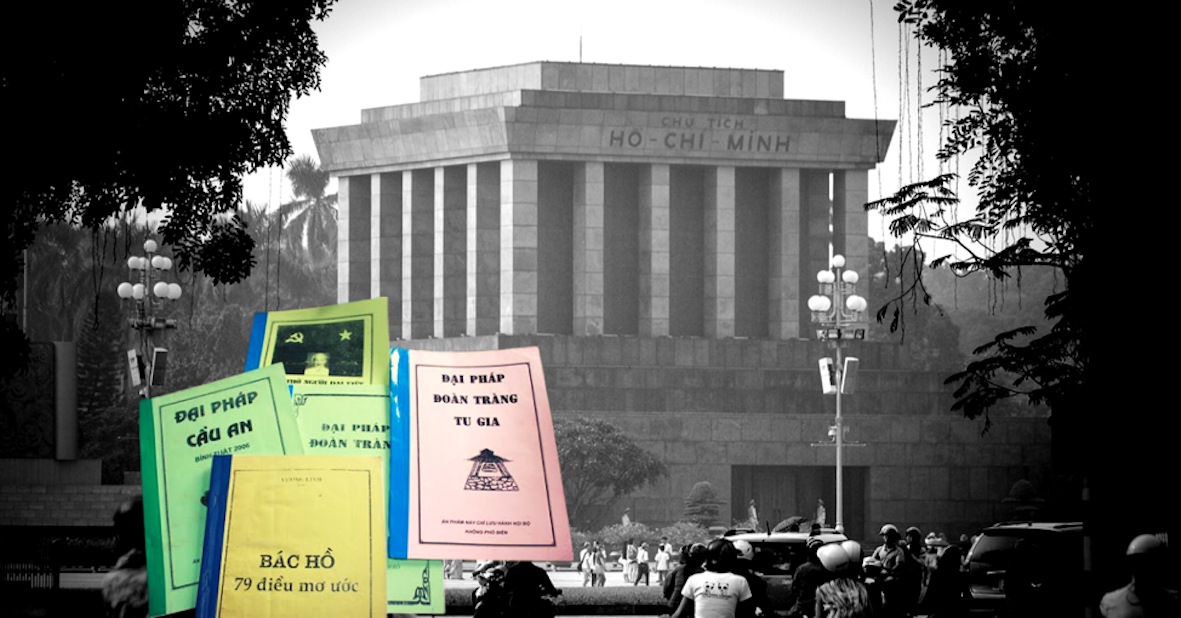
    The religion Way of Uncle Ho aims to start a spiritual revolution in order to save the nation from foreign enemies, both past and present. This revolution also aspires to harmonize the balance between the worlds found in this religion’s metaphysical framework. These worlds include the Heavenly realm, the Buddha’s realm, the Earthly realm, and the Yin realm.

    “A spiritual heavenly revolution.

    Replace the old, change to the new. This religion will bring the people and our country up and we will no longer be slaves of others.

    From now on there will be a new order. By the law of God, by the demand of our ancestors.”

    According to the teachings of this religion, the Heavenly realm rules over the other three realms. However, the blasphemous behavior, attitude, and way of worship in the Earthly realm destabilizes the harmony of the other worlds.

    This religion espouses that, because of Ho Chi Minh’s achievements, the purity of his soul, and his moral conduct on earth, his soul was “elected” to become the leader of the Heavenly Palace upon passing away. Henceforth, he leads the spiritual revolution which claims to promote the right path to reach heaven in the material world.

    https://2xjs7y10oiyz26vqxu2hok6y-wpengine.netdna-ssl.com/wp-content/uploads/2021/02/image-1024x812.jpeg
    Photo: Hochiminh.vn.

    In Chapter 4 of “New Religions and State’s Response to Religious Diversification in Contemporary Vietnam,” the author Hoang Van Chung summarizes the eight issues that this revolution wants to address:

    1. A mistaken understanding of the origins of the Vietnamese people and the their neglect of ancestor worship;

    2. The overuse of joss paper and objects;

    3. The incorrect performance of traditional rituals to the Mother Goddess;

    4. A mistake in dating the death anniversary of Ho Chi Minh;

    5. The invalidity of rituals of spiritual possession;

    6. The pervasive worship of foreign spirits and gods, such as the Indian Buddha, Jesus Christ, and Chinese spiritual figures (Guan Yin or Bodhisattva);

    7. Disrespect for heroic martyrs; and

    8. Making mistakes in medical diagnosis and the treatment of illnesses caused by spiritual entities.

    The religious texts of the Peace Society state:

    “In the twenty-first century

    The first Vietnamese Buddha was born.”

    Monism has since become the motto of Ho Chi Minh’s religion. This religion states that the Vietnamese people can only worship the Vietnamese Buddha: “Uncle Ho.” Worship of any other foreign power also goes against their tenets and beliefs.

    “Do not worship foreign gods

    We worship our own Buddha in our country.”

    Most importantly, Vietnam is seen as the leader of the entire revolutionary process that determines the future of mankind; this demonstrates a somewhat extreme form of nationalism.

    “Vietnam is the eldest son of the Emperor.

    Born first in the Earthly world.”

    If people disobey the Jade Buddha’s commands, natural disasters, epidemics, wars, and social disorder will befall human society. This punishment is therefore not limited to  just one nation or to one group of people, but extends to the entire world.

    What is the Way of Uncle Ho’s religious practice?

    The Ho Chi Minh religion has its own form of exorcism and this practice, in general, is very popular in the north. However, Madam Xoan believed that those who perform this act, if they come from the Mother Goddess religion or other popular sects, would often lose their cognitive abilities. On the contrary, Madam Xoan claimed she was a disciple of the Jade Buddha, so she could hear and preach the voice of the Jade Buddha without losing her reason.

    As for worship, adherents of this religion are guided to worship Ho Chi Minh at home.

    These worshipers have an altar that includes a statue or photo of Ho Chi Minh, the Communist Party’s version of the Vietnamese flag, and a bowl of incense. This altar should also be higher than all other altars in the house. Each day believers are required to offer fresh flowers, cakes, or fruits. Prayer is optional, but burning joss paper and other objects is prohibited. Their holidays also follow the official Vietnamese national holiday calendar which somewhat shows the religion takes a political stance.

    One of the Ho Chi Minh Shrines in Ben Tre. Photo: The Vietnamese.

    With respect to mass religious gatherings, the Peace Society spends most of its time performing activities such as the annual ancestral worship ceremony, which obviously includes Ho Chi Minh and the martyrs. They also provide magic spells and incantations.

    It is also quite interesting to note that the Way of Uncle Ho has a very high anti-Chinese sentiment.

    According to the leaders of the Peace Society, evil spirits are the wandering souls of the Chinese invaders who died years ago. They still haunt Vietnam, harm the people’s health, and negatively influence the future of the nation.

    “Don’t listen to evil spirits. In the past, they were the enemy who deceived us and harmed us.

    They admired evil and always wanted to invade our country.”

    When the Hai Duong 981 drilling rig entered Vietnamese territorial waters in 2014, Madam Xoan and 400 other followers gathered, prayed, and condemned the behavior of the enemy in the north, the Chinese.

    “I pray to Uncle Ho, he will pour out the safe water

    […] So that he could protect our sovereignty over seas and islands

    from being  invaded, in heaven and on earth.”


    Madam Xoan has repeatedly tried to register this religion with the Vietnamese government, but the answer from officials is usually to wait for a decision from their superiors. She is also believed to have close connections with more than 30 figures in the central government, including scientists working in state agencies, ministry officials, and intellectuals interested in studying and learning about this religion.

    According to research estimates, there are believed to be more than 10,000 official followers of the Way of Uncle Ho, and major ceremonies take place with more or less a thousand believers in attendance. This is a significant figure if you consider the fact that other domestic religions are slowly dying.

    In addition, although not officially recognized, the followers of Ho Chi Minh’s religions, such as the Jade Buddha, receive approval from the government, along with the ability to exercise their freedom of religion easier than others.

    However, these were the study’s conclusions up to the time of publication (2017).

    In more recent times, the Way of Uncle Ho as the Jade Buddha has also fallen under the close scrutiny of local authorities. For example, the People’s Public Security newspaper published an article that claimed the Way of Uncle Ho had used Ho Chi Minh’s image with “misguided claims,” such as alleging that it “received Uncle Ho’s blessings” and its leaders offered some medicinal leaves to cure all diseases of the people. The authorities of some provinces, such as Vinh Phuc, also warned that this religion was an act of “illegal” religious activities.

    The Vietnamese government is now in a dilemma. Should it maintain the treatment of Uncle Ho as a well-loved political figure and expect all Vietnamese citizens to continue worshiping his life? Or will the authorities rein in the Way of Uncle Ho and other cults and illegal religions involving Ho Chi Minh, and deal with these religious activities as it has often dealt with other different religions in the country? Only time will tell us how the authoritarian government of Vietnam will act on this issue.

  • Ho Chi Minh – From Political Monument To God Of Prayers – Part 1

    This article was written in Vietnamese by Vo Van Quan and was previously published in the Luat Khoa Magazine on January 31, 2021.


    “The nation of Vietnam will stand forever

    with Jade Buddha – Chí Minh – Ái Quốc”

    (A quote from a 2010 prayer)

    The process of globalization in Vietnam has made major religions such as Buddhism and Christianity overshadow the silent development of local belief systems. However, overlooking them would be a mistake.

    In a certain sense, these domestic religions most accurately and clearly reflect the dynamics of religious beliefs among the masses, and they can also show some of the implications of development in Vietnam’s societal relationships.

    The religion called “Way of Ho Chi Minh as the Jade Buddha” (referred to as the Way of Uncle Ho in this article) is one significant example we can use to learn about how religion is practiced or how it is imbibed by the Vietnamese people. Up till now, there has not been an official study, or even an official government statement, on this strange and peculiar religion.

    In the development framework of the research program “Boundaries of Religious Freedom: Regulating Religion in Diverse Societies,” Dr. Hoang Van Chung gives us a clearer and deeper look at the development of Ho Chi Minh’s religion in Chapter 4 of “New Religions and the State’s Response to Religious Diversification in Contemporary Vietnam.”

    Dr. Chung is currently the head of the Department for Research on Policy and Law on Religion at the Institute for Religious Studies, under the Vietnam Academy of Social Sciences. He obtained his Ph.D. in Sociology from La Trobe University (Australia) in 2014, and was a scholar with the ISEAS-Yusof Ishak Institute (Singapore).

    It is important to note that even though his book was published in 2017, the accompanying data in the study of Ho Chi Minh City was collected from 2011 to 2012. Therefore, there is a gap between the information provided by the author and the present state of this religion.

    Một hình ảnh được cho là điện thờ Hồ Chí Minh của tín đồ đạo Hồ Chí Minh. Ảnh: Blog Tìm tòi và Lượm lặt.
    Ho Chi Minh statue is worshipped at the Ho Chi Minh Shrine. Photo: Search and Gathering Blog.

    How was the “Way of Uncle Ho” formed?

    According to a research by Dr. Chung published in 2016, a Madam Xoan founded the Way of Uncle Ho at the Peace Shrine (now called the Peace Temple) on January 1, 2001.

    Madam Xoan, 73, experienced a miserable childhood in Nam Dinh Province. She lost her mother at a young age, had to live with her father and stepmother, and began working at the age of just 15. She also attempted suicide many times. At the age of 19, she married a notary public and had four children.

    Everything changed when she became seriously ill just before she turned 30. It was reported that Xoan was unconscious and that the pain she felt in one finger was so intense that it had to be completely amputated.

    Meanwhile, doctors could not find the reason for her illness nor determine the cause of the disease. One day while she was waiting to be treated in Hanoi, she heard a strange voice telling her that she was not sick but that this was just a test to see if she was qualified to serve a higher purpose. This voice also affirmed that Mrs. Xoan had spiritual inclinations.

    She immediately quit her factory job and became a humble merchant buying and selling joss paper. During the next 5 years, Mrs. Xoan continued to be guided by this voice and her financial situation gradually improved. By the time she was able to clearly hear and fully communicate with this voice, she gave up her small business to study the supernatural.

    In 1989, Mrs. Xoan heard the voice again commending her for being the first person chosen by the Heavenly Palace to complete her assigned mission.

    From politicians to gods

    Since the 2000s, the stories of individuals who have achieved great success and have become rich for relying on the help of Ho Chi Minh’s Jade Buddha have been compiled by the Peace Society of Heavenly Mediums (the religious leaders of the religion “Way of Uncle Ho”). These stories were then spread among the followers of this belief system.

    For instance, there is also a similar story about an entrepreneur who worked in the construction industry. The story claims that he became very rich because of his obedience to “Uncle Ho.” To show his sincerity, he donated 200 million dong to the Peace Temple. This amount was then used to upgrade and renovate  this place of worship.

    Ho Chi Minh’s image has come a long way in the last century, morphing from a simple politician who was close to the people, to a god capable of interfering in and controlling the lives, happiness, and success of everyone who lives on Earth.

    What happened?

    Tổng Bí thư, Chủ tịch nước Nguyễn Phú Trọng dâng hương cúng bái Chủ tịch Hồ Chí Minh tại Hà Nội năm 2019. Ảnh: TTXVN.
    General Secretary cum State President Nguyen Phu Trong offers incense to worship President Ho Chi Minh in Hanoi in 2019. Photo: VNA.
    Đoàn đại biểu của Đảng Cộng sản Việt Nam và người dân Cao Bằng dâng hương, dâng hoa tại Đền thờ Chủ tịch Hồ Chí Minh tại Cao Bằng. Ảnh: pacbo.vn.
    The delegation of the VCP and the people of Cao Bang offer incense and flowers at the Ho Chi Minh Temple in Cao Bang. Photo: pacbo.vn.

    Clearly, the deification of Ho Chi Minh did not begin with Vietnamese civilians.

    Dr. Chung’s research indicated that numerous other studies have linked Ho Chi Minh’s death with the Vietnam Communist Party’s (VCP) own propaganda campaign. The State has intervened in directing or encouraging the remembrances of Ho Chi Minh. This has turned a mere ritual into the worship of the late leader.

    Dr. Chung also concluded that many other researchers also pointed out that the VCP had a very clear goal of building a cult of personality around Ho Chi Minh. From promoting Uncle Ho’s supposed divine moral qualities to building up various myths about him, the VCP wants to make this version of Ho Chi Minh the formal history.

    However, the most interesting point that Dr. Chung stated was that the VCP only expected to limit this phenomenon about Uncle Ho as a personal cult within the realms of the “ancestor worship” belief model. By doing that, the VCP wanted to connect the history of Vietnam’s national democracy movement and its communist movement, leading it to national success in the future. Once they establish this basis, the VCP, a political conglomerate founded by Uncle Ho, would have solidified more of its legitimacy.

    The author emphasizes that the goals of the VCP and the desires of the masses in worshiping Ho Chi Minh are different.

    The VCP’s model of worship of Ho Chi Minh is considered less religious and less superstitious. Therefore, Dr. Chung asserts that the religions associated with this political leader, such as the Way of Uncle Ho as the Jade Buddha, were “undesirable consequences” of state policy. The government’s efforts regarding the remaking of Ho Chi Minh’s image, if compared to people’s beliefs, are heterogeneous.

    There are a lot of questions for Dr. Chung when he stated this argument.

    It is because in Vietnam, we are seeing a common phenomenon that state agencies regularly promote the worship of Uncle Ho. The government placed Ho Chi Minh statues and photographs in many temples in the north of Vietnam, and offered incense to commemorate Ho Chi Minh during big national holidays, and the like.

    If we follow Dr. Chung’s reasoning and assumption that the state did not want, or at least did not foresee, the formation of a religion centered around Ho Chi Minh, I think his argument is a bit unpersuasive.

    In the context that the Vietnamese economy had just opened up and the practice of worship had just reformed since the 1990s, the nature of the people’s curiosity and experimentation for new religions and beliefs is obviously evident. Therefore, it is fairly certain to foresee that the people will eagerly want to join a new religion like the Way of Uncle Ho as the Jade Buddha if it is offered.

    (To be continued)

  • Oppression Through Greed: What The Myanmar Military And Vietnam Stand To Gain

    Oppression Through Greed: What The Myanmar Military And Vietnam Stand To Gain

    More than a month has passed since the start of the Myanmar coup and since then various notable events have taken place. At the start of the takeover, several prominent figures of the ruling National League for Democracy (NLD) were arrested and detained. Among those taken into custody were Aung San Suu Kyi and President Win Myint of the NLD .

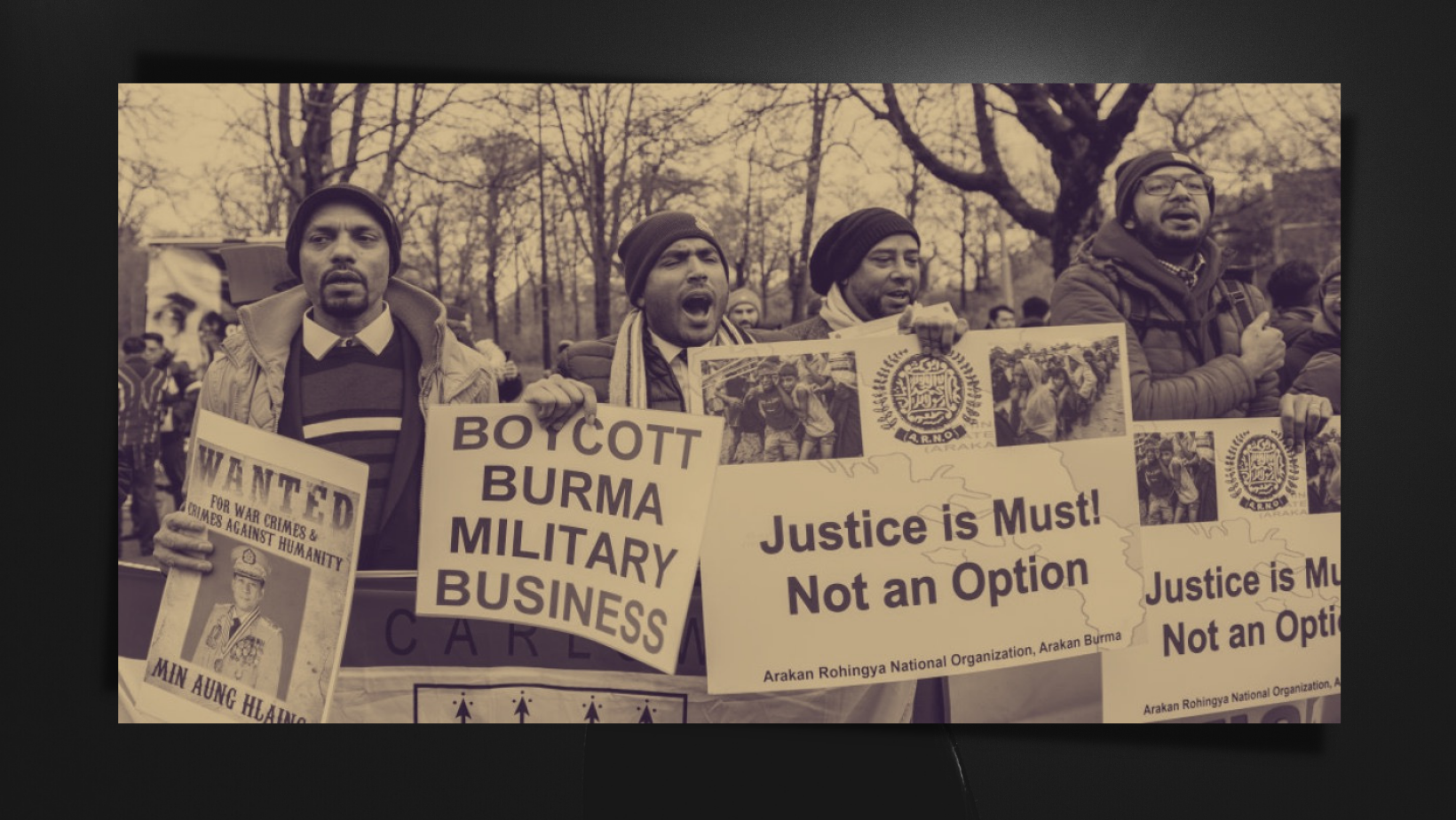
    The following weeks were then marked by massive demonstrations and acts of civil disobedience by the citizens of Myanmar. Crowds of people from all walks of life continue to gather to protest around the country in a display of anger and frustration against the fledgling dictatorship of Min Aung Hlaing.

    The Myanmar military has responded with escalating acts of violence and control typical of any authoritarian state. Initially, they tried to shut down forms of communication and when these proved to be less than effective, they resorted to using physical force against their own citizens. To date, at least 149 people have been killed and countless more have been arrested.

    While the Myanmar military continues to claim that its takeover was inevitable due to its alleged and unsupported claims of election fraud, the truth is much less conspiratorial. It is the result of the callousness and unending greed of those who would willingly choose to set their nation ablaze rather than let power slip from their fingertips.

    Information has been released and verified that exposes the connections the Myanmar military has with several local and international corporations and businesses; these business interests continue to be the main driving force behind the Myanmar military’s oppressive and repressive actions.

    Yet, how much money do they actually stand to gain?

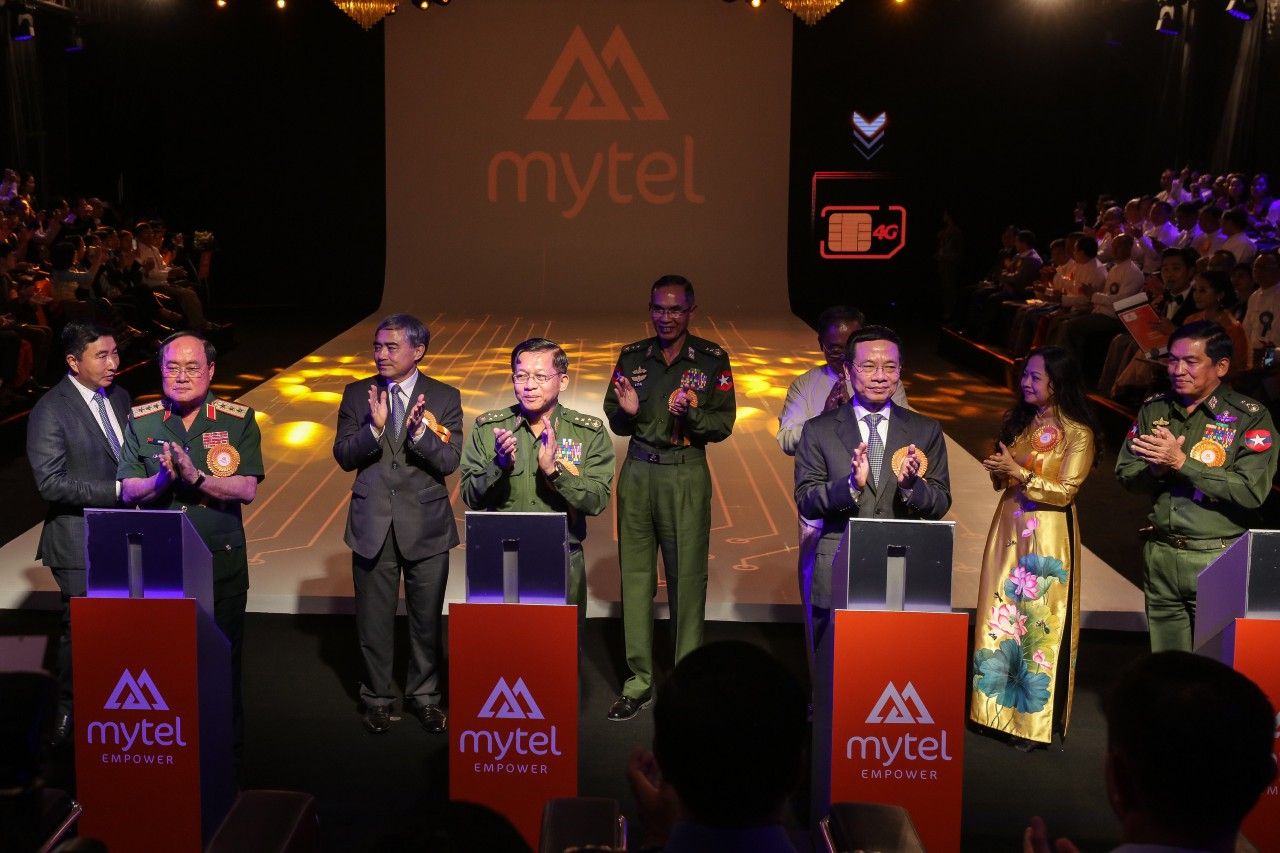
    In December 2020, Justice for Myanmar, a movement which aims to expose systemic oppression and human rights violations in the country, released a comprehensive report that details the involvement of the Myanmar military with Mytel and Viettel. The report then explains how these three entities work in tandem to further line their pockets while committing grave violations of human rights. Viettel is publicly known to be a state-owned enterprise with direct ties to both the Communist Party of Vietnam and the Ministry of Defense.

    Then, on March 4, 2021, Justice for Myanmar released additional information regarding this issue. While its previous report explores the structure and the effects of the symbiotic relationship of the military, Mytel, and Viettel, this more recent exposé focuses more on the financial aspect of the situation.

    Justice for Myanmar claims that Military generals involved in this operation may be entitled to more than US$700 million after five to nine years since the start of Mytel’s business venture and a further US$450 million in the five years after that.

    This is due to the military owning more than 28 percent of shares in Mytel through Star High, a subsidiary of the Myanmar Economic Corporation, which is a Myanmar military conglomerate.

    However, when the other domestic investor – Myanmar National Telecom Holdings (MNTH) – was unable to keep its financial obligations and was forced to sell a number of its total shares in Mytel to Star High, causing the military owns more shares of Mytel.

    In effect, the military actually owns as much as 39 percent of Mytel in shares while 49 percent belongs to Viettel. The remainder goes to the other smaller investors that came from MNTH.

    Viettel also stands to achieve significant financial gain through this arrangement.

    Viettel was essential in the establishment of Mytel itself. In Mytel’s first three years of operation, Justice for Myanmar reported that Viettel “agreed to provide the lion’s share of the US$1.38 billion needed by Mytel in its first three years by investing US$169 million in its shares and lending it up to US$903 million.”

    Aside from this, Viettel also dedicated staff and personnel to train and establish Mytel’s workforce. Interest is also paid to Viettel from the loan taken by Mytel on top of the 2 percent annual management fee from yearly profits.

    Mytel also has allegedly made deals with some Vietnamese banks as well. This report stated that Mytel had entered into a US$40 million five year loan with Vietnam’s TP Bank.

    It is clear that this arrangement stands to be very financially lucrative for those involved, and while the ethics of both military and sizable foreign ownership in commercial businesses is, to an extent, debatable, the danger with Mytel lies in the nature of the company itself.

    Mytel is not just any company; it is a telecommunications company. And it is often the case that governments and militaries have malicious vested interests in controlling telecommunications.

    There is already evidence available that the Myanmar military is using Mytel to infringe on the rights of the already oppressed Rohingya minority. Being a telecommunications company also gives the Myanmar military direct access to information it can use to strengthen and extend its hold on the country.

    Justice For Myanmar spokesperson Yadanar Maung states that, “Every phone call on the Mytel network and every kilobyte of data finances the people’s oppression. The brutal and corrupt Myanmar military junta is motivated by personal profit and it is greed that drives their brazen and bloody attacks on the people.” His words and sentiments seem to be echoed by a few of Mytel’s former business partners.

    In response to its militarization, some of Mytel’s domestic and international business partners and investors have grown concerned.

    Singaporean payments firm Coda has removed Mytel from it’s payment channels and International Power Generation, (IPG), a local investor, has taken initial steps to distance itself from the company. While the actions of Coda and IPG are commendable and other investors in Mytel should follow suit, it still remains doubtful if this will have any significant and immediate effect.

    After all, the fact remains that the three-way relationship between Mytel, Viettel, and the Myanmar military is only one of more than 100 business channels that the Myanmar military uses to fatten its coffers. Should one avenue be shut down, others continue to remain open for them to exploit and use. With the amount or resources available at their disposal, it should only be a minor inconvenience for them to open up alternative methods for monetary gain. But, this is hardly a surprise. In fact, it is expected.

    The struggle for true freedom and democracy has never been an easy fight. It has always been a Sissyphean battle, an uphill and treacherous climb against overwhelming odds. And once you reach the top, there is also no guarantee that you can stay there.

    Oftentimes, a nation finds itself on the zenith of the hill only to stumble and fall partway or even descend all the way to the very bottom. Yet, as believers in a better tomorrow for ourselves and for all, we pick ourselves up and try again. We stand and climb as many times as it takes, for a future we might not even get to see.

    And here lies the beauty of the struggle.

    While the Myanmar military and other authoritarians like it fight to amass wealth and hoard as many pieces of magic paper they can get, others fight for something much greater than themselves: an idea, a dream, a possibility.

    What activists, protestors, and demonstrators in Myanmar, and in the rest of the world stand to gain cannot be measured in billions, or even trillions of dollars. Rather, its value can only be glimpsed in the people’s eyes as they continue to stand firm, shoulder-to-shoulder, against tyranny and against terror.

    Now is the time to stand with the people of Myanmar; for the good of one is for the good of all.

  • The Enemy Of My Enemy: Tensions Between The US, China, And Vietnam

    The Enemy Of My Enemy: Tensions Between The US, China, And Vietnam

    The Vietnam War is a stain upon the fabric of recent human history. This bloody and violent conflict, fought on the premise of conflicting ideals and against the intangible boogeyman of Marx and Engels, resulted in the deaths of more than 3 million Vietnamese, the majority of which were civilian casualties. It has likewise led to the diaspora of more than 2 million other Vietnamese people and to the initial political and economic isolation of Vietnam from the rest of the world.

    Nearly five decades after the end of the fighting, the scars of the conflict still remain fresh in the eyes of those who lived through the war. For those fortunate enough to have been born after the war, these scars are but whispers at the back of their minds – almost silent and unobtrusive.

    However, these scars are always lingering somewhere in the corner of their minds. One would assume that both parties to the fighting, Vietnam and the United States, would have deep-seated animosity towards each other due to their entanglement in this conflict. However, this doesn’t seem to be the case. Diplomatic and economic ties between the US and Vietnam were reestablished in 1995, just two decades after the end of the Vietnam War.

    A report by the US Congressional Research Service, published on February 16, 2021, details several key components regarding current US-Vietnam relations. To date, the United States is Vietnam’s 2nd largest trading partner, only trailing behind China. Growing Chinese hegemony in the region has also led to stronger bonds between the US and Vietnam in matters of security and sovereignty.

    While it appears that the connection between these two nations is forged out of practicality and necessity more than anything else, with the United States needing allies in the Southeast Asian frontier and with Vietnam needing the commerce and trade to strengthen its economy, the two countries have been able to create and maintain several mutually beneficial arrangements with each other, despite their shared and bloody history of fighting and conflict.

    Yet, there still remain several issues which continue to hinder these relations from developing at a much quicker pace. One is the uneasy three-way tension among the United States, Vietnam, and China.

    China, as mentioned earlier, continues to remain Vietnam’s number one partner in trade. Likewise, both countries share similar political systems, which the US Congressional report stated provides “a party-to-party channel for communication” and also contributes to “often similar official world-views.” Being two of only a handful of nations led by Communist parties, there is a strange sense of kinship and familiarity that exists between the two sides. However, recent events have put a drastic strain on Sino-Vietnamese relations as well.

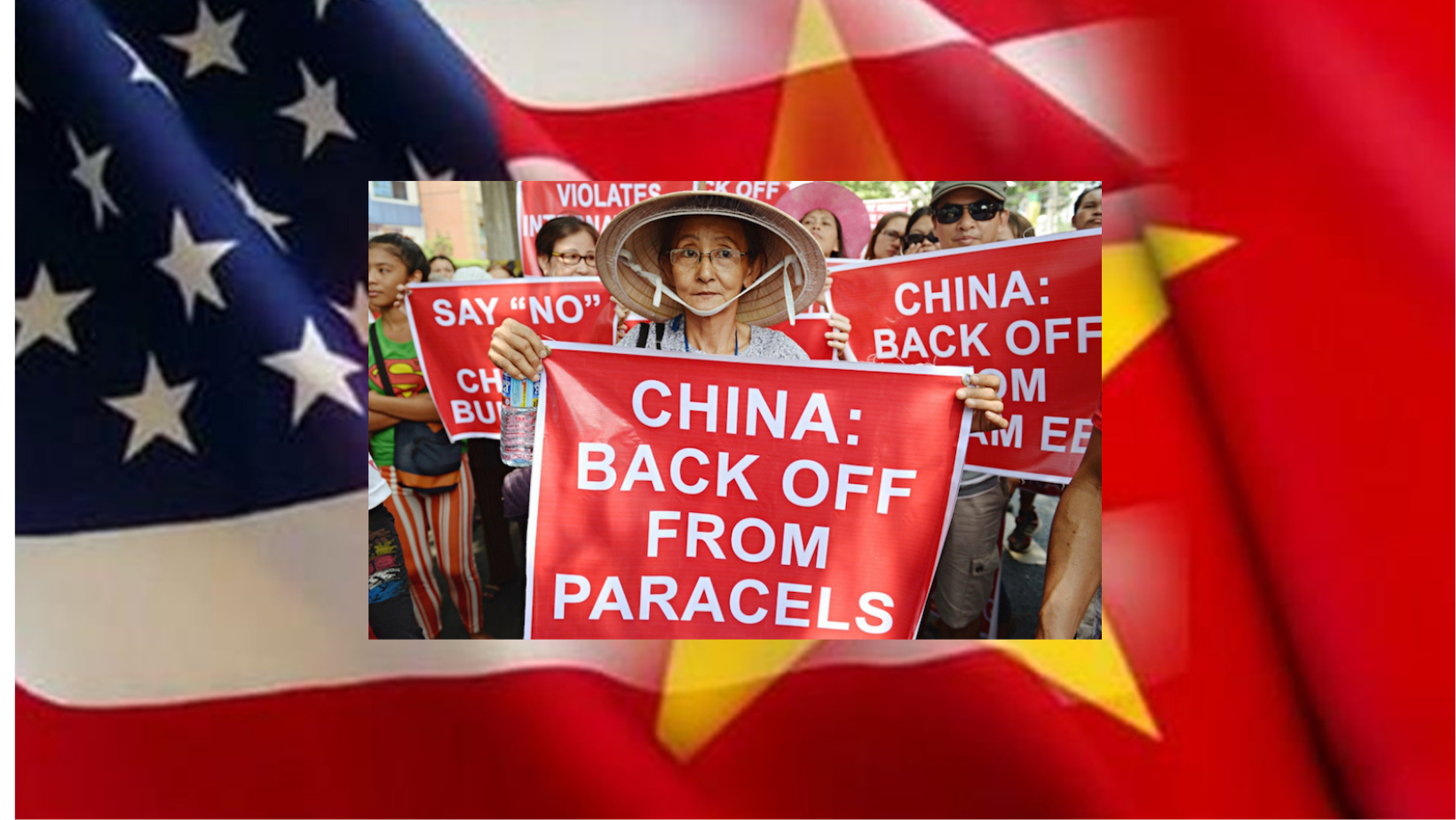
    For more than a decade, China has been claiming most of the South China Sea as part of its sovereign jurisdiction using its controversial and fraudulent Nine-Dash Line myth to support its expansion. It has also been illegally encroaching into the territories of Vietnam and the other Southeast Asian nations for its own personal gain.

    Mainland China has harassed and sunk many maritime vessels from several Southeast Asian countries, illegally harvested fish and other natural resources from these contested waters, and has been building several artificial islands to solidify its hold in this corner of the world. The Mainland’s aggressive, bullish, egoistic, and selfish actions have not only negatively impacted the people and governments of Southeast Asia, but have also caused drastic and irreparable damage to the environment.

    In response, Vietnam has made several international protests regarding China’s actions and has also increased its visibility in the region by expanding its offshore energy exploration program and by implementing its own land reclamation projects. It has also fostered better relations with other maritime powers such as Japan, India, and, of course, the United States, in an attempt to intimidate China and force it to rethink some of its expansionist policies and actions.

    Because of the increased security collaboration between the US and Vietnam, the Obama administration removed all restrictions on selling Vietnam lethal weapons in 2016. Donald Trump’s presidency continued this show of goodwill by providing Vietnam with 24 new coast guard patrol vessels, aerial drones, coastal radar, and two decommissioned US Coast Guard Hamilton-class cutters.

    Yet, Vietnam rarely joins the United States in undertaking large scale diplomatic actions without taking into consideration how China will react. Vietnam’s protests against the Mainland regarding the South China Sea also seem to have minimal effect in the region; in fact, China’s presence has even increased in recent years.

    Despite the tangible support of the United States and the backing of most of the international community, Vietnam’s condemnations and actions have merely been a form of lip service: all bark and no bite. The Vietnamese government’s crackdown on those critical of its policies against China isn’t doing it any favors either.

    In effect, Vietnam finds itself in a bind and is caught between the whims and desires of two irreconcilable world powers.

    On the one hand, you have the United States: a significant trading partner with links to the rest of the free world, but also the cause of much destruction and death in Vietnam’s recent history. On the other, you have China: Vietnam’s largest trading partner and a source of much revenue for the government, but whose expansionist policies are currently threatening and challenging its sovereignty.

    At the moment, Vietnam seems content to play both world powers off against each other in an attempt to squeeze as many benefits as it can from the United States and China. However, the longer the Vietnamese government tries to appease both sides, the more it stands to lose in the long run; the longer Vietnam wears the mantle of neutrality and passivity, the more citizens that will lose faith and trust in the Party. And a government without the backing and support of its citizens, is a complete and utter failure.

    So, should Vietnam pick a side? Should it finally choose between Uncle Sam and Chairman Mao? Is Vietnam even currently in a position to make such a polarizing decision?

    Granted, the economic backlash of this choice has the potential to be quite severe; cutting ties with either your first or second largest trading partner is more than enough to destabilize Vietnam’s growing economy. There is little to no guarantee that China will stop expanding into contested waters if Vietnam decides to fully comply with all of China’s demands. There is also no telling what the United States will do either. With so many variables to consider and so many unknowns, perhaps the most prudent and wisest decision would be to maintain the status quo.

    The answers to these questions  may best be left to economists and experts and we will only know in retrospect if Vietnam ends up making the right decision.

    Ultimately, what will be scrutinized and criticized by believers in democratic ideals is whether or not the Vietnamese government has acted in accordance with the whims and desires of its citizens. Yet, the Human Rights Group reported that given Vietnam’s track record of silencing dissent, its foray into the mass surveillance of its citizens, and other abuses, this remains extremely doubtful.

    Whatever the Vietnamese government decides to do regarding the enemy of its past and the enemy of its present will no doubt benefit the Party first, with the country and its people being merely afterthoughts in the Party’s  grand scheme. And perhaps this is the greatest tragedy of it all.

  • Chief Justice Nguyen Hoa Binh Elected To The VCP’s Politburo. What Does This Mean?

    Chief Justice Nguyen Hoa Binh Elected To The VCP’s Politburo. What Does This Mean?

    First, it means that the chief justice of the Supreme People’s Court, Nguyen Hoa Binh, has been officially promoted. He was elected to the Politburo for the first time on January 31, 2021, at the first meeting of the VCP 13th Central Committee.

    Nguyen Hoa Binh is the second chief justice in the history of Vietnam’s Supreme People’s Court to be elected to the Politburo. The Politburo is the agency that chooses the most powerful politicians in the Party.

    The other chief justice on the Politburo was also named Hoa Binh, but had the surname Truong; he was elected to the Politburo in January 2016 at the 12th Party Congress. However, Truong Hoa Binh was moved into an executive position as the deputy prime minister almost immediately thereafter, when Vietnam’s National Assembly met in a special session during April of that same year. During that time, it was Nguyen Hoa Binh who replaced Truong Hoa Binh as the chief justice of the Supreme People’s Court and he held this position since.

    If Nguyen Hoa Binh can continue to be the chief justice for the next five years, it will be the very first time that the Supreme People’s Court has had someone with real power in the Politburo.

    A chief justice in the past was not a very meaningful position in the Party. Up to now, there have been only a few chief justices that were included as members of the Central Committee.

    In addition to the two “Hoa Binhs” mentioned above, there were only two others, Pham Hung and Nguyen Van Hien. The other three chief justices – Pham Van Bach, Tran Cong Tuong, and Trinh Hong Duong – were not even selected as members of the Central Committee. The absence of the chief justices in the Central Committee glaringly emboldened the Party in how it dealt with  the judicial branch in Vietnam’s political system. That is, the Party did not see the judiciary as a body with significant power.

    One would think that judges and justices should not be members of the only political party in the country so that they can be neutral and independent. One would hope that the judicial branch would remain neutral so that we can have fair trials in the country. However, in reality, this is not the case in Vietnam.

    Vietnam does not have an independent judicial branch and the above standard cannot be applied in this country. One’s position within the Party determines the actual political power of a party member, and not any state position one may also hold. The Politburo is the agency that Vo Van Kiet – at one time – had considered to be “superior” to the Central Committee, and gaining a position on the Politburo was the ultimate political goal for the most ambitious and successful Party members in Vietnam.

    Phiên tòa giám đốc thẩm vụ án Hồ Duy Hải ngày 6/5/2020. Ảnh: TTXVN.
    Chief Justice Binh (standing) in the cassation hearing of the Ho Duy Hai case on May 6, 2020. Photo courtesy: VNA.

    Being in the Politburo is a reward that the Communist Party gave Nguyen Hoa Binh. We do not know enough to say what he did to receive such an honor. But what he has done in the past five years may possibly offer us some clues.

    His appointment is most likely a reward for his role in directing the courts to hear a series of prominent cases related to the “anti-graft” campaign that General Secretary Nguyen Phu Trong started. For the first time in Vietnam’s contemporary history, many high-ranking party members were tried and convicted with extremely heavy sentences: Dinh La Thang, Nguyen Bac Son, Truong Minh Tuan, Trinh Xuan Thanh, and others.

    Other prominent cases may also include the cassation trial of the death row inmate Ho Duy Hai and the Dong Tam trial in 2020.

    Also, there were many political cases in the past five years which the Party deemed to be closely related to the security of the regime. These include cases related to the Independent Journalists Association of Vietnam (2020), the Brotherhood of Democracy (2016), Nguyen Ngoc Nhu Quynh (blogger Mother Mushroom, 2017), etc. From 2016 to date, the number of dissidents who have been tried has increased much higher than in the past, to the point that the opposition has almost been wiped out in Vietnam.

    If the VCP rewarded Chief Justice Nguyen Hoa Binh for the way he handled the cases mentioned above, then we can see that it only encouraged the judicial branch to be more of a supportive team player within the authoritarian regime the Party has created, and that trials cannot be considered independent or the place to resolve injustices in society.

    This means that people, such as wrongful death-row inmate Ho Duy Hai, a peasant who was tried and convicted for fighting for his land as was Le Dinh Chuc of Dong Tam Village, or those political dissidents like Pham Chi Dung and Tran Huynh Duy Thuc, who have almost no chance to plead for justice.

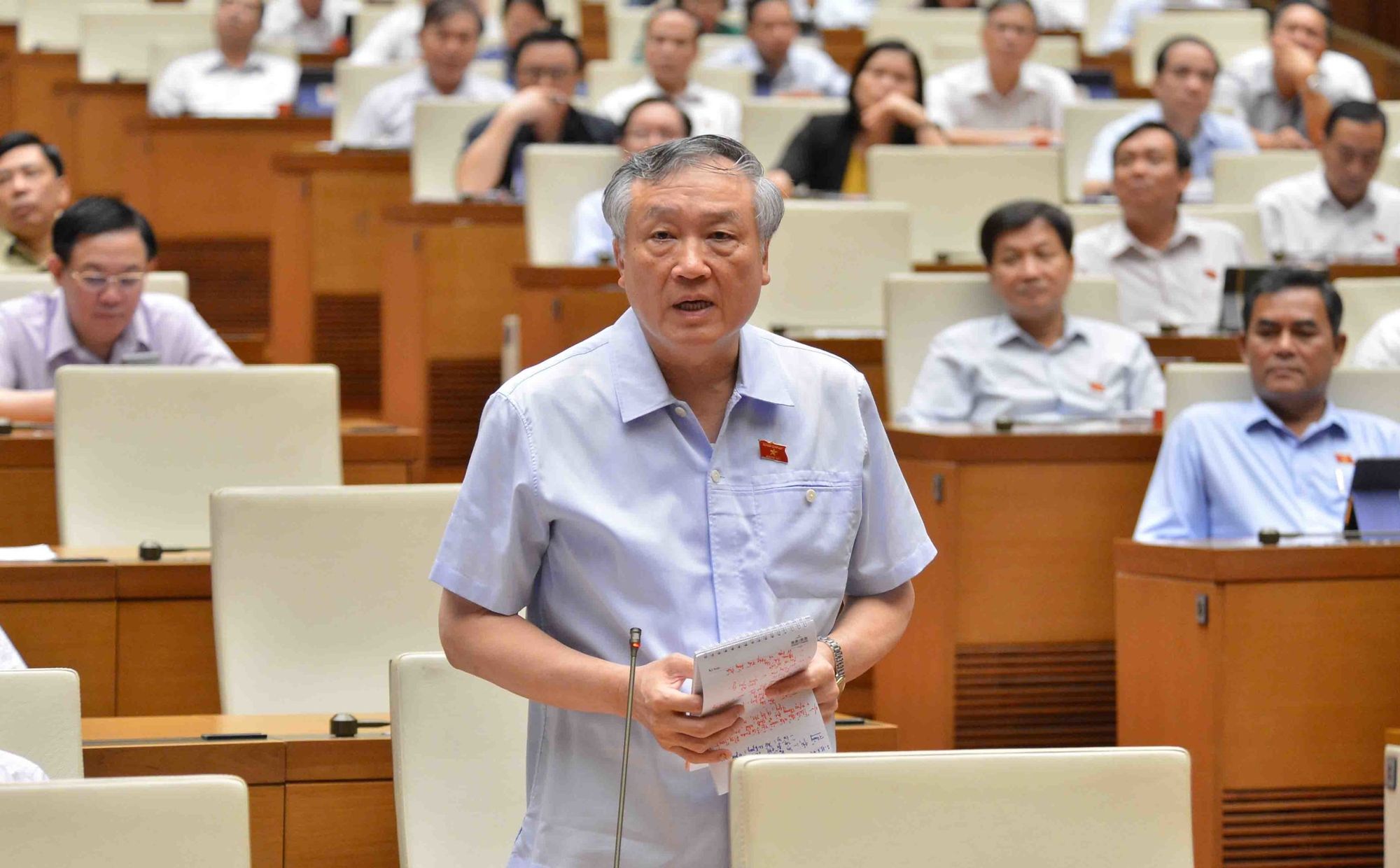
    Nguyen Hoa Binh was directly involved in the cassation trial of Ho Duy Hai in May 2020, and he was the person who continuously insisted that Ho Duy Hai was guilty, despite all the evidence that Hai’s attorney presented in court. Nguyen Hoa Binh was the center of widespread public criticism during the cassation trial, but he was still promoted by the VCP.

    The rise of Chief Justice Binh only proves that the Party is willing to disregard public opinion in order to keep its political power. Now, with his promotion, activists who are involved with the democracy movement in Vietnam may suffer more consequences. With this new position that makes him more powerful than before, Binh may begin to punish those who once made him lose face by criticizing him in public.

    It is true that the fact that Chief Justice Nguyen Hoa Binh was elevated to the Politburo may slightly enhance the status of the judicial branch in Vietnam’s political system. However, that doesn’t mean that the courts in Vietnam will be fairer and more independent. If Nguyen Hoa Binh’s promotion means anything, it is that the courts will act more like the powerful tools of the VCP so that the Party can continue to strengthen its one-party political power in the country.


    This article was written in Vietnamese by Trinh Huu Long and previously published in Luat Khoa Magazine on February 2, 2021. The translation was done by Jade NG.

  • Vietnam’s 13th Party Congress: Women Have No Place In Politics

    Vietnam’s 13th Party Congress: Women Have No Place In Politics

    This article was written in Vietnamese by Trinh Huu Long and previously published in Luat Khoa Magazine on February 3, 2021. The translation was done by Ha Thanh.

    * * *

    Only 9.5 percent of the members of the Central Committee of theVietnamese Communist Party (VCP) are women, or just 19 out of 200 members. Of these, 18 women are official members and one is an alternate member.

    What do these numbers tell us?

    Let’s take a look at some other numbers first.

    In the Politburo (the Party’s most powerful body), only one member out of 18 is a woman, Truong Thi Mai. Mai is currently the head of the Central Mass Mobilization Department of the Central Committee, a not-so-important organ of the Party. Also, it is expected that Mai probably will not hold any important position in the next five years.

    Among the new five members of the Secretariat – the body assisting the Politburo – one is a woman. Her name is Bui Thi Minh Hoai. Yes, while it is true that the Politburo could send more members to this body in the future, even if it does, it can only add one more woman, which would be its only female member, Truong Thi Mai.

    Compared to the 12th Party Congress, the number of female members in the Party’s Central Committee has fallen by one person, and the number of female Politburo members has decreased by two.

    None of the female Central Committee members of the 13th session may possibly hold key positions in the Party or the State. In the previous session, five years ago, Nguyen Thi Kim Ngan became the chairwoman of Vietnam’s 12th National Assembly. Now, the “gang of four” or the “four pillars,” will just be made up of males.

    However, if we look at the (arguably) equivalent of the VCP’s Central Committee, which is the National Assembly, we see a different picture.

    The percentage of women in the National Assembly over the past 10 years has often been around 25 percent. Now, it is close to 27 percent, which is a lot higher if we compare it to the number of females in the Central Committee. Furthermore, this gender ratio is expected to remain unchanged in the National Assembly election in May 2021.

    In 2018, Vietnam was among the top three countries in Southeast Asia with the highest proportion of women in its Congress, along with Laos (28 percent) and the Philippines (28 percent).

    In the world, the percentage of female delegates in Vietnam’s Congress is even higher than the United States (23 percent), the Czech Republic (23 percent), South Korea (19 percent), Hungary (12 percent), Japan (10 percent), and even exceeds the global average of 25 percent.

    Isn’t that great news? Unfortunately, the answer is No.

    It is because the National Assembly is of little significance in Vietnam. Every Vietnamese citizen acknowledges the fact that our Congress has no real authority. It is nothing more than the place that rubber stamps the Politburo’s and the Party Central Committee’s decisions.

    In Vietnamese, people usually call the National Assembly the agency of “puppets” where its delegates just nod and approve Party decisions.

    Real political power only rests in the VCP and its committees.

    The Politburo is a gathering of about 20 of the most powerful Party members. However, the Central Committee is also becoming increasingly powerful, and we could say it has become the main power center within the Party. Obtaining a position within the Central Committee is one of the key goals of any serious and ambitious Vietnamese Communist politician. Failure to enter the “Central” (the word commonly used to refer to the Central Committee) is often regarded as the end of a Party member’s political life because he or she would be one of the voices that carries no authority.

    The fact that women only make up less than 10 percent of the Central Committee, therefore, can be considered as a reflection of their actual position in Vietnam’s politics.

    Of course, the proportion of female politicians in the localities may be higher. However, for an authoritarian regime with only one political party like Vietnam, where the central government dominates almost every aspect of society, being a part of the Central Committee gives its members actual political authority.

    Why is the proportion of women in politics in Vietnam so low?

    https://2xjs7y10oiyz26vqxu2hok6y-wpengine.netdna-ssl.com/wp-content/uploads/2021/02/image-4.png
    National Assembly Chairwoman Nguyen Thi Kim Ngan presents flowers to the Standing Committee of the Central Presidium of the Vietnam Women’s Union. Photo courtesy: Ministry of Home Affairs.

    Gender stereotypes are considered to be a major barrier to climbing the political ladder in Vietnam. Research by Oxfam shows that all genders in Vietnam prefer male leaders. To them, men are viewed as more suited for leadership roles, and also have the masculine qualities that are also believed  to be the necessary qualities of a good leader.

    In spite of all the good rhetoric about fairness and gender equality promoted by the VCP propaganda machine, and despite its putting on a seemingly pretty face on the proportion of women in politics, Vietnam, in fact, is still almost exclusively dominated by men.

  • Is The VCP “More Democratic” Than The CCP?

    Is The VCP “More Democratic” Than The CCP?

    This article was written in Vietnamese by Bui Cong Truc and previously published in Luat Khoa Magazine on January 20, 2021. The translation was done by Luu Ly.

    * * *

    How is the VCP “more democratic” than the CCP?

    Most of the active communist parties today are more or less based on the Soviet Communist Party model.

    The system originated with the majority power of the Party National Congress. This congress elects a minority group called the Communist Party Central Executive Committee (the Central Committee, for short).

    Theoretically, the Central Committee is the governing body that decides most of the important issues in terms of policies and personnel in the Communist Party organization. However, the organs elected by this body have certain privileges, and can completely surpass the power of the Central Committee itself, depending on the time period.

    These agencies include the Political Bureau (aka the Politburo), the Secretariats, or a typical body of the Soviet Union Communist Party, the Organizational Bureau.

    So are the power structures of both Communist parties similar? How has the individual history of each party, the Chinese Communist Party of China (CCP) and the Vietnamese Communist Party (VCP), affected each country’s economic and social development? This article will  provide readers with more information about the fundamental differences between these two Communist brothers.

    Two leaders of the two Communist parties, Xi Jinping and Nguyen Phu Trong. Photo taken during Nguyen Phu Trong’s visit to China in 2017. Photo: Xinhua News Agency.

    Conflicts between the Central Committee and the Politburo

    Many people accept, as common sense, that the Politburo is the central power for both the VCP and the CCP. However, the party rules of these two brothers have many differences.

    The first notable point is that the Central Committee of the CCP has only been  required to meet once a year since Deng Xiaoping reformed and re-institutionalized the political apparatus. Many Chinese observers assert that this was an intentional effort to limit the frequency of the CCP Central Committee’s meetings so that the authority of the body would be reduced as much as possible.

    The pressure to democratize within this Party is not insignificant and not recent, but for many reasons, these proposals have been unsuccessful. Arguably, the CCP’s Central Committee only plays a behind-the-scenes role, compared to the main playerr, the Politburo.

    Regulations in Vietnam are different. According to Article 16 of the VCP Charter, the Central Committee of the Party must meet at least twice a year.

    The fact that the Central Committee of the VCP meets more than once a year does not seem to say much about the different power structures of the two parties. However, in reality, the most important issues require a decision of this body. If we compare the total number of meetings and resolutions of the Party’s central organs in the two countries, especially since Deng Xiaoping’s faction took power, the VCP’s Central Committee has twice as many meetings as its Chinese counterpart.

    For example, only in 2016 did the VCP Central Committee convene the conference four times, with important contents including redefining the working regulations of the Central Committee, the Politburo, and the Secretariats; the working regulations of the Central Inspection Committee; regulations on the implementation of the Party Charter; and the regulations on the inspection, supervision and discipline of the Party. These were all important meetings to help Nguyen Phu Trong’s political coalition gain the upper hand. Once he was the leader of the control group within the VCP, his famous “anti-corruption” campaign followed and it has been the most controversial issue in Vietnam in  recent years.

    Another feature that is also noticed by many international commentators when comparing the two parties is the number of times that resolutions of a party’s central body are referred to in official legal documents.

    According to statistics cited by three experts, Regina Abrami (Harvard), Edmund Malesky (Chicago), and Yu Zheng (Connecticut), the percentage of legal normative documents promulgated by competent state agencies that cited Central Committee resolutions by the VCP Central Committee was quite high, averaging 23 percent. Meanwhile, this rate in China was only 5.5 percent.

    This statistic shows the direct influence of the VCP’s Central Committee on the policy making process. The difference of more than 17 percentage points is also an indication that the VCP’s Central Committee plays a greater role than its Chinese counterpart, at least on a legislative basis.

    https://2xjs7y10oiyz26vqxu2hok6y-wpengine.netdna-ssl.com/wp-content/uploads/2021/01/image1-3-1024x605.jpg
    This table compares the powers of the CCP and VCP Central Committees through two criteria: the number of meetings and the proportion of legal documents that quote the agency’s resolutions (Abrami, Malesky, & Zheng, 2008).

    The differences in the real power of the Central Committee of the CCP and the VCP are not limited to the numbers. In some specific political events, the power of the VCP’s Central Committee is also more clearly shown.

    For example, in 1997, when General Secretary Do Muoi decided to retire before the end of his term, his replacement Le Kha Phieu, was selected after an unusual meeting of the entire Central Committee.

    This approach is in stark contrast to the cases of Hu Yaobang and Zhao Ziyang in China. Finding replacements for these two to take the seat of general secretary was a private matter decided in Politburo secret meetings. In these meetings, there were also many retired “revolutionary elders” who did not have a role in deciding the next generation of leaders, according to the Party Charter.

    Not only that, in 2001, the Central Committee of the VCP even vetoed the Politburo’s request to allow Le Kha Phieu to continue holding the position of general secretary. Instead, the Central Committee elected Nong Duc Manh, who was the president of Vietnamese National Assembly at that time, to fill the most powerful seat.

    In 2006, former Prime Minister Vo Van Kiet also wrote an open letter to the Politburo requesting it to respect collective intelligence and the democratic decision of the Party’s Central Committee, and not make the Politburo the “superior” body.

    On the Chinese side, there has never been any case where the Central Committee directly and flatly opposed a proposal by the Politburo.

    So far, many people have questioned whether the VCP’s Central Committee still has real power over the Politburo, as well as if it has followed in the footsteps of it’s elder brother in the north.

    There is still reason to believe that the traditional competition between the 176 members representing various factions and schools within the Central Committee of the Communist Party still exists.

    The historical path of the two political parties

    So what is the reason for the difference between the VCP and the CCP? Many scholars often point to the history of the two political parties.

    For China, although Mao Zedong was seen as the CCP’s supreme leader for a long time, the power rivalry between factions within the party remained fierce, until Deng Xiaoping restored order according to his wishes.

    First, the policies of political and economic reform after the dire consequences left behind by Mao were enacted from the top down, and specifically from the Politburo. In a time when the Party’s political bodies were mostly ragged and lost across China, the top-down orientation seemed to make things easier to manage. This increased the legitimacy of a few powerful individuals in the Politburo.

    Not only that, but the Tiananmen Incident in 1989 created more controversy between the groups of “hard players” and “soft players” towards the protesters. The controversy further fueled the desire of Deng Xiaoping and the elites to concentrate more power, and to limit the mass discussions, of the Central Committee – which they saw as an impediment to the process of fast decision making and effective policy enforcement.

    https://2xjs7y10oiyz26vqxu2hok6y-wpengine.netdna-ssl.com/wp-content/uploads/2021/01/China-Deng-Xiao-ping-005-1-1024x819.jpg
    Mao Zedong and Deng Xiaoping in 1959. Photo: Kyodo News/ Associated Press.

    With Deng Xiaoping officially succeeding in selecting the general secretary without the consent of the Party’s Central Committee (a serious violation of the Party’s Charter), the few minorities in China gradually took control of political power.

    Since 1989, the three positions of the troika in the power structure of the socialist state of China have been the general secretary of the Communist Party, president of the State, and chairman of the Chinese Central Military Commission, all traditionally held by one person, which have been Jiang Zemin, Hu Jintao, and now Xi Jinping respectively.

    Prior to the 7th Party Congress in 1991, it can be said that the troika model in Vietnam was not much different from the Soviet Union. The general secretary had a central position in the Party with an important influence on its political policy and direction, while the chairperson of the Council of Ministers was the head of the executive branch with the obligation to enforce and guarantee the Party’s orientation. And finally, there was the president of the State, but that position often just has a symbolic meaning.

    However, the three titles of general secretary, prime minister, and president are the real “three-pillars” of power in the contemporary Vietnamese political apparatus.

    What happened?

    Some researchers point out that after the period of bad experiments with macroeconomic and microeconomic policies, chaos emerged in Vietnam’s society. Some senior leaders within the Party, such as Nguyen Van Linh and Vo Van Kiet, wished to promote more key reforms to revitalize Vietnam. One of the first things they did was to diversify and turn the Central Committee into a more authoritative institution, which they hoped in the future would be the point of consensus for the new reforms they proposed.

    Their first success was the  increase in the number of members of this body. Starting in 1986, during the 6th National Congress, leaders in the Party’s provincial committees began to be elected to the Central Committee, thereby displaying a large force supporting economic and political reforms.

    By the 7th Congress, Vo Van Kiet successfully persuaded the Party to allow local representatives to get nominated and elected as official members of the Central Committee. With that change, the voting power of local leaders was strengthened, making them  a majority group within the Party.

    https://2xjs7y10oiyz26vqxu2hok6y-wpengine.netdna-ssl.com/wp-content/uploads/2021/01/kiet_1.jpg
    Vo Van Kiet, who was the advocate of empowering the Party’s Central Committee. Photo courtesy: VNA.

    Obviously, the reformists’ wishes could only be fulfilled quite smoothly after the remaining four symbols of the Communist Party’s anti-colonial era, including Le Duan, Le Duc Tho, Pham Hung, and Truong Chinh, had passed away. After their deaths, the Party was left with a power vacuum, which created opportunities for the resurgence of the reform faction.

    According to many studies, before the 7th Congress of the VCP, two factions arose and became rival forces in the Party.

    The first group was made up of  former central leaders, or the Marx theorists, who had found a common voice under the leadership of general secretary Do Muoi.

    The second group, as previously mentioned, was the technocratic leaders, who tended to modernize and came from the grassroots level, such as Vo Van Kiet and his ally in the south, Phan Van Khai.

    By 1990, another group wanted to participate in defining the power model, and it was led by Le Duc Anh. Le Duc Anh was the commander-in-chief of the Vietnamese armed forces on the Cambodian battlefield, and he had just returned home. He wanted to strengthen the military’s role in governance, and he favored economic reform, but he also wanted to control its pace.

    During the 7th Congress, after these three groups compromised with one another, the VCP’s new tradition of power was formed. All three factions would have power and this was codified in the 1992 Constitution – which could be the most important outcome of the compromise. Do Muoi continued to hold the post of general secretary, Vo Van Kiet became prime minister and General Le Duc Anh succeeded to  the presidency.

    * * *

    In 1996, Le Kha Phieu was expecting to hold both the presidency and the position of general secretary, with a goal of unifying state power in a way that would be similar to China’s model. Nevertheless, this effort was unsuccessful. In 2018, when Nguyen Phu Trong concurrently held both of the aforementioned titles after President Tran Dai Quang died, people began to worry that a Chinese power structure model was being formed in Vietnam. That concern is not without foundation.

    Besides, there is not enough information to significantly compare whether the Vietnamese “three-pillars” model or the Chinese “monopoly” model is better. Some scholars argued that decision-making through a majority of a large body – such as the Party’s Central Committee – would reduce extremization and give highly compromising decisions. However, some other experts would argue that these compromising decisions only showed the lack of a definite direction from the Party’s central authority. It could deem that the Party only served a few politicians’ self-interests, considering the one-party and authoritarian political environment in Vietnam.

    When we examine whether the VCP or CCP can be deemed more “democratic,” it must be pointed out that neither system includes “the people” in their decision-making process. The members in both of these parties are still more concerned with their own power within their respective parties.

  • Vietnam-Myanmar, A Tale Of Two Systems: The Takeover Of Telecommunications By Authoritarian Governments And The Military

    Vietnam-Myanmar, A Tale Of Two Systems: The Takeover Of Telecommunications By Authoritarian Governments And The Military

    A report submitted by Justice for Myanmar, a movement which aims to expose systemic oppression and human rights violations in the country, on December 20, 2020, released details regarding the involvement of Viettel and other international businesses in the Myanmar telecommunications sector. This piece of investigative journalism states that “the commercial partnerships established between these businesses and Mytel (Myanmar’s newest mobile network operator) show that they are complicit in the abuses committed by the Myanmar military.”

    An even more concerning factor would be the connivance of the Vietnamese government itself. Viettel is a state-owned enterprise operated by Vietnam’s Ministry of Defense and it is also the fourth largest stakeholder in Mytel. Hence, the Vietnamese government appears to have a direct hand in the affairs of another sovereign nation. In the same vein, Mytel itself has its own fair share of controversies and scandals hounding it since its inception.

    While a large number of businesses are named in the report, Mytel and Viettel are given more attention and both play an integral role in the scandal surrounding the Myanmar telecommunications sector. The remainder of this article will shed light on both these companies and will examine the reasons for their involvement in this issue.

    Mytel is Myanmar’s fourth mobile network operator. It launched in June 2018 and from the report, it was envisioned to be “a successful collaboration between the private sector and [the] Union government” of Myanmar. In the two years it has been in operation, Mytel has amassed more than 10 million subscribers and their quarterly profits are estimated to be at around US$25 million. On the surface, Mytel appears to be your typical for-profit communications business. However, the aforementioned report exposes the truths, lies, and intricacies within this corporation.

    Justice for Myanmar also stated that 28 percent of Mytel’s shares are publicly owned, the shares under the control of Star High Co. Ltd., a privately registered company that is a subsidiary of the Myanmar Economic Corporation (MEC), a military-controlled conglomerate.

    A lack of transparency regarding the company’s finances also plagues Mytel with public shareholders not being informed of how the company’s profits are being used. The report also highlights that the communication infrastructure built by Mytel is being utilized by the Myanmar military to aid in their oppression of the Rohingya ethnic minority. With the advent of 5G coming into the region, these human rights violations and abuses will only intensify.

    Unlike Mytel, Viettel is publicly known to be a state-owned enterprise with direct ties to both the Communist Party of Vietnam and the Ministry of Defense. Since its establishment in 1989 as a construction company, the enterprise has gradually evolved and is now the leading force in the Vietnamese telecommunications sector. The company’s reach has also extended to other fields as well, such as the real estate and investment sectors. It’s involvement in Myanmar began in 2010 and its sway and influence in that country has only grown since then. According to the report, aside from being a major shareholder in Mytel, Viettel has also been actively aiding the modernization of Myanmar’s military through providing equipment and training. In effect, Vietnam Ministry of Defense, a foreign government entity, is aiding and complicit in the multitude of war crimes and human rights violations of the Myanmar military.

    It is apparent that both these companies, Viettel and Mytel, are heavily influenced, or even controlled, by their country’s respective governments and military. Yet, what benefits could these twin pillars of the state stand to gain from their involvement in the telecommunications sector? Why are these two towers of nationhood so fascinated with controlling communications?

    The meddling of the government and the military in telecommunications is not something new. This is most apparent when we look at the various authoritarian states of the past. Mass surveillance, wiretapping, and undercover spy rings are the tricks of the trade and these were heavily used to observe and control citizens living under the heels of these regimes.

    For instance, a 2015 report by Amnesty International asserted that the Stasi surveillance network had around 174,000 informants, which made up about 2.5 percent of the working population of East Germany during the Cold War. The amount of information this network was able to amass about both citizens and foreign tourists is both staggering and horrifying; this information was then used to influence public opinion, identify dissidents, and control the general population. Since the fall of the Berlin Wall in 1989, around 2.75 million people have asked to see their files in the Stasi database. While this is just one prime example of how totalitarian states use the personal information of their citizens, this has been fairly consistent throughout history. No matter which era, the play has been the same: authoritarian regimes collect information from just about everyone and use this knowledge to quash any dissenting thoughts people might hold and to quell any actions the government might find subversive.

    This is exactly what we see in how the Myanmar military treats the Rohingya people. Several Mytel towers are built inside military bases found within ethnic areas. In doing so, Mytel subverts the need for negotiations and the consent of the local communities in order to expand its communications network inside those locations. The townships of Ann, Kengtung, and Lashio have suffered the brunt of the abuses by the Myanmar military with thousands of citizens displaced from their homes, a lack of food and water, extrajudicial killings, forced disappearances, torture, and constant surveillance all made possible due to the infrastructure established by Mytel, with the invisible hand of the Vietnamese government pulling the strings from behind the scenes.

    While surveillance has historically been known to be the main reason governments and militaries desire to control telecommunications, in the case of Viettel and Mytel, a lucrative avenue for corruption presents itself.

    The Justice For Myanmar report also mentions that the profits the Myanmar military makes through Mytel are hidden through proxy shareholders and military shell companies. While 23 percent of the profit goes to 11 Myanmar investors, another 28 percent goes to the state-owned enterprise, Star High Co. Ltd. Although Star High is registered as a private company, it is listed as a public company on both the Mytel website and official government documents. Shares in this company also belong to individual members. Moving through Star High, the money flows and changes hands several times and at the end of it all, no one can really tell where the money goes. The remaining 49 percent of the profit, the lion’s share, goes to Viettel Global JSC, and at the end, reaches Vietnam’s Ministry of Defense.

    In the case of Mytel and Viettel, corruption and control appear to be the main forces that fuel how the Vietnamese and Myanmar governments and militaries act. A symbiotic relationship has been formed between all players involved that benefits those in-charge, but at the cost of human rights, and more importantly, human lives.

    The lives of their citizens and those underrepresented are treated not even as commodities, but as obstacles that need to be discarded, ignored, or eliminated. Yet, the dramatic irony of it all is that the same advancements in telecommunications used by governments and military to push their agendas also provide others with the means to identify and lay bare the truth for all the world to see. At the end of the day, all truths will be exposed, all lies will be debunked, and all will be laid bare at the feet of justice.

  • Everything You Need To Know About Vietnam’s Central Committee Of The VCP

    Everything You Need To Know About Vietnam’s Central Committee Of The VCP

    This article is based on Tran Ha Linh’s “Mọi điều bạn cần biết về Ban Chấp hành Trung ương Đảng Cộng sản Việt Nam,” published in Luật Khoa Magazine, a sister publication of The Vietnamese, on January 28, 2021. The translation is done by Karie Nguyen.

    ***

    The Central Committee of the Vietnamese Communist Party (VCP) is a very powerful governing body of the VCP and it seems to be gaining more influence within the Party day by day.

    What is the Central Committee?

    In a previous article, we explained  that the Party Congress is the highest governing body of the VCP according to its own charter. However, these congresses only happen every five years, and at some times in the past, they could actually be held at longer intervals. Then during the five years between the two congresses, which body will lead the VCP’s activities?

    That body would be the Central Committee. In other words, the Central Committee is the second most important body of the VCP.

    Who are the members of the Central Committee?

    The Central Committee gathers together all of the most powerful members of the VCP. There are about 180 official members (who have the right to cast votes) and approximately 20 alternative members (who do not have the right to vote). This is an approximation because these numbers fluctuate when some members are disciplined (as in the cases of Dinh La Thang, Nguyen Bac Son, and Truong Minh Tuan), or when some pass away (Tran Dai Quang). There are also some members  who resign during their terms for various reasons.

    Almost all of the secretaries of the provincial committees, some of the deputy secretaries of the major cities (such as Hanoi and Ho Chi Minh City), and the secretaries of significant departments (such as the central departments and state enterprises) get selected to the Party Congress to be members of the Central Committee (both of the official and alternative members).

    We also see the prime minister, deputy prime ministers, ministers, and some deputy ministers of the major ministries (such as the Ministry of Public Security or the Ministry of Defense) and directors join the Central Committee.

    Vietnam Television (VTV), the Voice of Vietnam (VOV), the Vietnam Academy of Social Sciences, and the Vietnam Academy of Science and Technology all belong to the central government and have equal standing as the ministries. Therefore, the heads of these organizations can also become members of the Central Committee.

    The National Assembly chairperson, vice-chairperson, and the commissioners of all committees are all included on the Central Committee. There may even be deputy commissioners of some committees participating in the Central Committee.

    The prosecutor general and deputy prosecutor general of the People’s Supreme Procuracy along with the chief justice and deputy justice of the People’s Supreme Court also participate as members of the Central Committee. The leaders of the Vietnamese Fatherland Front, the Vietnam Farmer’s Union, and the Ho Chi Minh Communist Youth Union, etc. are also members of the Central Committee.

    Of course, the members of the Politburo (including the VCP general secretary), and the Secretariat, the heads and deputies of the VCP departments, are all members of the Central Committee.

    Who elects the members of the Central Committee?

    New members of the Central Committee are elected during the Party Congress. Almost all of the new members will be nominated before the congress by the former Central Committee. It is very rare to see any members of the Central Committee get elected if they are not nominated in advance by the Central Committee. Being nominated at the Party Congress or by their self-nomination would not help them get elected.

    In the time period between the two Party Congresses, the Central Committee may also elect more official members from its own alternative members group.

    What are the roles of the Central Committee?

    Because it is acting as the VCP’s main stage, the Central Committee can do the following:

    • Elect the members of the Politburo, the general secretary, the members and the Standing Secretary of the Secretariat, and the members and the commissioner of the Central Commission for Disciplinary Inspection. These are the most important and powerful departments of the VCP.
    • Organize to implement the political platforms of the VCP, the VCP’s charter, the resolutions of the Party congresses, and decisions regarding both foreign and internal affairs. It also focuses on the VCP’s mass mobilization and constructing the VCP’s organizational development, as well as summoning the Party Congress.

    How often does the Central Committee hold its plenary sessions?

    According to the VCP’s charter, the Central Committee will meet every six months, but it can meet more often if it is necessary. The meetings are officially called plenary sessions. If these sessions are held twice a year, then during the five years between the VCP congresses there will have been 10 meetings. However, in recent history, the Central Committee has held between 12-15 sessions, and there were years when they met four times a year, as in 2011, 2015, and 2016.

    It is not a coincidence that the plenary sessions always met before the National Assembly had its sessions. Before the National Assembly conducts its session, there must be a Central Committee plenary session. In that plenary session, the Central Committee, together with Politburo meetings, will not only decide the National Assembly’s agenda, but also the decisions that the National Assembly will make during its session. Of course, the sessions of the National Assembly will not always be conducted as planned by the Central Committee’s original decision. In 2018, the National Assembly was pressured by the public to halt the law on the creation of the three Special Economic Zones. That halt has continued to date and that decision was not something the Central Committee could have expected.

    The first plenary session of a new term of the Central Committee begins during the Party Congress to elect the members of the Politburo, the general secretary, and a few other positions. The Party Congress will end on the next day after the Central Committee finishes its first plenary session and the new leaders of the VCP will be introduced during that final day.

    Are the plenary sessions of the Central Committee open to the public?

    No.

    Even at the National Assembly, which is the nation’s elected legislative body, the Vietnamese people are prevented from attending and observing its sessions. Thus, the plenary sessions of the Central Committee – one of the top governing bodies of the VCP – are not open to the public.

    The plenary sessions are conducted in the conference hall of the Office of the Party Central Committee located at No. 1, Hung Vuong Street, Hanoi, at Ba Dinh Square, the site of many historical events, and where Ho Chi Minh read the Proclamation of Independence of the Democratic Republic of Vietnam on September 2, 1945.

    Only representatives of a few of the special mouthpieces of the government – such as Vietnam Television, the Voice of Vietnam, the Vietnam News Agency, Nhan Dan (The People) newspaper, the VCP online newspaper, and the government’s online newspaper, are allowed to attend. However, these organizations only report on the commencement and the conclusion of these sessions. Everything else is kept secret.

    After the plenary session concludes, the Office of the Central Committee will announce the results of the meeting at a news conference.

    Does the Central Committee have actual power?

    Yes.

    Before Party Congress V (in 1982), the Central Committee had an insignificant role when compared to the Politburo. For example, the third Central Committee was active from 1960 to 1976 for a total of 16 years. Nevertheless, it only conducted 19 plenary sessions. All of the major decisions during those years came from the Politburo and the Party’s Central Military Commission.

    However, starting with its fifth term, and especially the sixth term, the Central Committee conducted more plenary sessions, having at least two sessions per year. During these sessions, the Committee decided and implemented more important policies with regards to the operation of the VCP.

    One reasonable explanation for this was the decentralization of the VCP’s power over the years.

    Before, people like Ho Chi Minh, Le Duan, Le Duc Tho, Truong Chinh, all had extensive influence within the VCP. Perhaps, that was mainly because Vietnam was in a state of war. At that time, the Politburo and the Central Military Commission, and even just a few top leaders, would have enough authority and power to execute their decisions on their own.

    However, beginning in the early 1980’s, the group of the heroic individuals who specifically contributed to the VCP development got older and died and so the group lost its influence in the Party.

    More than that, when Vietnam began to live in a peaceful period, each local province came to have its own individual and unique problems. Therefore, the authority in the VCP had to be shared among the members of the Politburo and also with the local governments, and with other governmental enterprises as well. The decentralization of power in the VCP and also in the government meant that more authority was disbursed to local governments.

    At the same time, there were issues that the Politburo could not decide, and it passed those on to the Central Committee. During the XI term, we had the example of two Politburo members, Prime Minister Nguyen Tan Dung and General Secretary Nguyen Phu Trong, who conflicted with each other a lot during their terms. Their conflict couldn’t be resolved within the Politburo, so they brought it to the Central Committee’s floor. At the 2012 Central Committee’s 6th plenary session, there was a plan to review the prime minister’s responsibilities during his term. The prime minister ended up not being disciplined and was able to retain his position.

    Even though the Central Committee possesses such significant power and has been gaining more control over the years, its agenda can still be dictated by the Politburo. In 2006, Prime Minister Vo Van Kiet penned his letter to the Politburo, asking it to respect the decisions that came from the Central Committee and to quit acting as the higher-level, supervising department of the Committee.

    Based on the VCP’s charter, the agenda and the nomination and election of all the positions in the Central Committee’s plenary sessions should be organized by the Politburo. However, it is still unclear which department has more power between these two most potent governing bodies of the VCP.

    We can only hope that with more research and analysis that we can better understand the organizational power of the VCP.