Category: Freedom of Expression

  • Reporters Without Borders Calls For The Release Of Pham Doan Trang

    Reporters Without Borders Calls For The Release Of Pham Doan Trang

    On April 7, 2021, Reporters Without Borders (RSF) released a press statement condemning the arrest of jailed Vietnamese journalist Pham Doan Trang.

    Phan Doan Trang, co-founder and editor of the online magazines The Vietnamese and Luât Khoa, and a recipient of the 2019 RSF Press Freedom Prize for Impact, was arrested at her home on the night of October 6, 2020. She was taken away by plainclothes policemen and has not been heard from since She has been denied access to a lawyer and her family has also been unable to contact her. Currently, she faces up to 20 years in prison under Article 117 of the Vietnamese Penal Code, under the charge of engaging in “anti-state propaganda”.

    Daniel Bastard, the head of RSF’s Asia-Pacific desk, says: “The Vietnamese Communist Party’s current leadership… needs to understand that history will hold them to account for the crackdown on press freedom …. They can save face by freeing Pham Doan Trang and all of the other unjustly detained journalists.”

    This is not the first time RSF has demanded her release. On October 7, 2020, just one day after her arrest, it published its first statement which echoes much of the same sentiments here. It has also launched an international awareness campaign to fight for her cause.


    Support from Other RSF Laureates

    Several other RSF awardees have called for Phan Doan Trang’s immediate and unconditional release. They have also released several videos in various social media outlets to show their support for her, and to help bring this situation to the attention of the international community.

    Tomasz Piatek, a Polish journalist and an RSF prize recipient in 2017, addressed Vietnam’s leaders:, “I am asking you to release my friend from prison immediately and stop harassing and tormenting her for writing the truth. If you want to present yourself to the world as politicians and leaders of the Socialist Republic of Vietnam, you must immediately stop harassing your citizens and give your citizens the right to the truth.”

    Swati Chaturvedi, an Indian journalist and Reporters Without Borders prize awardee in 2018, said, “RSF stands for the fight of all journalists. Please help and speak out for my colleague, my Vietnamese colleague Pham Doan Trang right now.”

    Can Dündar, a Turkish journalist, documentary filmmaker and 2016 RSF laureate, similarly asked that the Vietnamese authorities release Phan Doan Trang and to respect the freedom of the media.

    Inday Espina-Varona, a Filipina journalist and awardee of RSF’s Prize for Independence in 2018, stated that Pham Doan Trang “has been charged with disseminating information that opposed the state of Vietnam… [it is] every journalist and citizen’s obligation to criticise and when necessary to oppose policies and actions inimical to the welfare and rights of people… it is also the duty of journalists and citizens wherever we are in the world to stand up when those who seek to do the right thing are battered for their efforts.”


    Statement from the Publication:

    The Vietnamese joins Reporters Without Borders and our other international allies in demanding for the expedient release of Pham Doan Trang. The trumped-up charges against her are clearly false and the only thing she is guilty of is providing Vietnamese citizens with accurate and independent information free from the manipulation and misdirection of the Vietnamese government and its selfish misguided agenda.

    The fight for freedom, democracy, and a better tomorrow for Vietnam continues and we at The Vietnamese will do our part to see this through till the end.

    To show your support for this cause, kindly consider signing this petition for the swift release of our co-founder, colleague, and friend.
  • Vietnamese Stand-up Comedian Condemns National Newspaper For “Defamation and Humiliation”

    Vietnamese Stand-up Comedian Condemns National Newspaper For “Defamation and Humiliation”

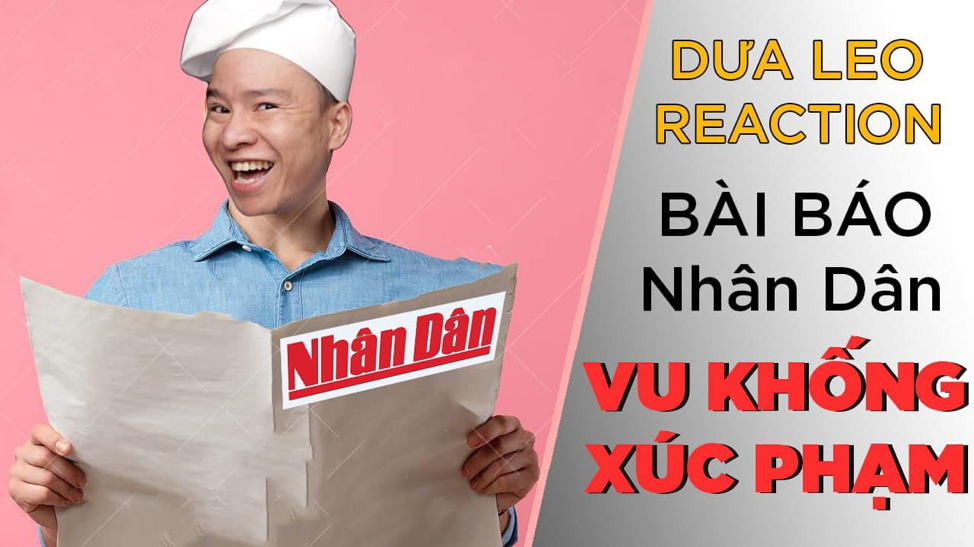
    One week ago, followers of Dua Leo – one of Vietnam’s most prominent stand-up comedians – weren’t expecting him to release a “lawsuit reaction” video.

    The incident resulted from an article published in Nhan Dan (The People), a Party mouthpiece, on January 8, 2021. The article, which was titled “Disguised as spreading knowledge to distort and undermine the nation’s image,” was by a writer named Viet Quang, and it targeted Dua Leo for his vlogs and videos published on his Youtube channel.

    That article is seen as part of a campaign to delegitimize and clamp down on influential opposition voices as the Party ramps up for its 13th National Party Congress.

    Mr. Nguyen Phuc Gia Huy, also known by his stage name Dua Leo, in one of his vlogs. Photo courtesy: nguoi-viet.com/ screenshot.

    The stand-up comedian and his journey

    Nguyen Phuc Gia Huy, commonly known by his stage name Dua Leo, which means cucumber in Vietnamese, is a Vietnamese stand-up comedian. He first came across stand-up comedy after watching one of Pablo Francisco’s videos; Francisco is an American stand-up comedian famous for his voice impersonating skills. Having graduated from the University of Economics with a bachelor’s degree in foreign trade, Mr. Huy had worked for several companies before deciding that he wanted to be a stand-up comedian.

    Being a unique performer in a relatively new comedy field, there’s much room for this young talent to rise. But unlike his fellow counterparts, Dua Leo embarked on a different journey: using comedy as an alternative method to raise people’s awareness of social issues and tangible problems. He also created content for various topics, including history, science, politics, and even mental health. For that reason, Mr. Huy touted his role as being similar to that of a chef who cooks and serves people delicious meals, in his case, creating and spreading useful knowledge.

    Dua Leo touted himself a “chef,” who “cooks and serves” useful knowledge to other people. Photo courtesy: nguoi-viet.com/ screenshot.

    Funny, informative, and approachable, Dua Leo’s videos quickly drew a large number of viewers and subscribers, mostly young people who are aware of the current situation and who are eagerly pushing for systemic change in Vietnam. Currently, Dua Leo’s Facebook fanpage and Youtube channel have over one million followers and 700,000 subscribers, respectively.

    No mercy for opposition voices

    Despite being an influential icon for the young, Mr. Huy is not particularly favored by the authorities.

    This is not the first time the comedian has provoked the ire of the government.

    In 2016, he was first summoned by Ho Chi Minh city police after claiming in one of his videos that “there’s no freedom of speech in Vietnam.” After the incident, Mr. Huy made a video addressing his fans, under the stage name Dua Leo, reassuring them that nothing would stop him from doing what he is doing now. “I just want to deliver a simple message in this video: I’m just a comedian, as I always am, and my main goal is to gain [as many] views and likes for my videos [as possible],” he sarcastically joked. “[And] my secondary goal is as important as my main goal, [and that] is to make Vietnam a better country.”

    Dua Leo raised concerns about the “National Cybersecurity Law”, which went into effect in 2019, expressing the fear that it would be used to suppress opposition voices. Photo courtesy: nguoi-viet.com/ screenshot.

    The shaming in Nhan Dan is another warning from the government, aimed at those who refuse to follow Party guidelines when speaking on social media.

    The author of the Nhan Dan article accused Mr. Huy of “faking the activity of spreading knowledge to obtain illegitimate donations with illicit intentions,” together with “colluding with overseas Vietnamese and foreign-based Vietnamese language news outlets –  which have unfavorable views towards the Vietnamese Communist Party, government, and the people of Vietnam.”

    On top of that, the writer also sourly slammed Mr. Huy for “being discontented” with the country’s current situation, accusing him of being “delusional of self abilities and knowledge,” or “dumb” and “child-minded.” Even worse, the author attempted to humiliate the comedian, claiming that “he’s popularly admired for his confident and eloquent manner, despite [his] physical disabilities.”

    Notwithstanding being one of the biggest and fastest growing markets for social networks, there is little free space for dissenting opinions in Vietnam. Social networking sites such as Facebook and Youtube, which served mainly as “non-censored” platforms for local dissidents to voice their opinions in the country, are often under strict government scrutiny.

    Standing up for justice

    Nevertheless, in order to deal with the powerful Propaganda Department that sets its own rules, the only way to fight back is to play by their rules.

    In one of his latest moves, Mr. Huy announced that he had hired a law firm to file a lawsuit for “defamation and humiliation,” demanding apologies from the newspaper as well as that the article be taken down.

    The lawsuit concluded that the article was entirely based on personal assumptions without any concrete or fact-based evidence. Furthermore, it argued that the writer had falsely accused Mr. Huy of criminal wrongdoings, without any court judgement or going through any legal proceedings.

    In his reaction video, Dua Leo constantly emphasized that this move was not a tit-for-tat response, but rather a so-called legal “case study” for people: everyone is equal under the law, therefore we should seek legal protections even when justice appears not to be on our side. And more importantly, he reaffirmed, everyone is innocent until proven guilty.

    As of January 26th, Nhan Dan newspaper had further published two sequences, on January 23rd and 24th, respectively. These two articles, which threatened Mr. Huy to “turn back before it is too late,” are nothing if not a retaliation move after the comedian had decided to file a lawsuit against its smearing campaign.

    One day after the publication, on January 25th, Dua Leo had released another reaction video, repeatedly condemning the newspaper for “groundless and unjustified accusations.” At the same time, the comedian also publicly released all the lawsuit papers on his Facebook fan page, as he carried on legal processes. And at the bottom of his post, Dua Leo did not forget to use the hashtag #JusticeWillPrevail.

    Dua Leo publicly released the legal papers on his Facebook fan page. Photo courtesy: Dua Leo Facebook fan page/ screenshot.

    As many activists, journalists, and prisoners of conscience are still being locked up in jail for defending human rights and freedom of speech, the fight for justice is not yet over in Vietnam.

    And just like those brave people, Dua Leo is a stand-up comedian who is standing up for a good cause.

  • Two Human Rights Groups Issue Joint Statement Against Harassment of Independent Publishing House

    Two Human Rights Groups Issue Joint Statement Against Harassment of Independent Publishing House

    Amnesty International and Human Rights Watch have condemned the Vietnamese government for their escalating harassment of an independent publishing house.

    Liberal Publishing House, established February 14th, 2019, seeks “to promote human rights and freedom of information in Vietnam by printing and publishing books without censorship from the Vietnamese government”, in a mode similar to samizdat operations in former communist countries of Eastern Europe.

    In a statement issued November 27th, Amnesty International and Human Rights Watch stated that Vietnamese “police have harassed and intimidated dozens of people connected to the Liberal Publishing House […] in what appears to be a targeted campaign” against both the publishing house’s readers and workers.

    The statement also describes a situation in which police “detained and allegedly tortured a man in custody on October 15 in Ho Chi Minh City, allegedly to force him to confess to working for the publisher. Police detained him for more than 12 hours, during which time he was repeatedly beaten until his nose bled. Since being released he has gone into hiding, fearful of re-arrest.”

    The police harassment has been nationwide, striking the three major Vietnamese cities of Hanoi (north), Hue (center), and Ho Chi Minh City (south), as well as the central provinces of Quang Binh and Quang Tri, the south-central province of Phu Yen, and the southern province of Binh Duong. Readers have reportedly been called into police stations for questioning and forced to sign statements declaring they will no longer purchase books from Liberal Publishing House; workers have reportedly been ensnared in police traps while carrying out deliveries.

    Liberal Publishing House has acknowledged the police harassment and issued to its readers a series of precautions to take when ordering books, as well as what and what not to say when confronted by police. It has also made available for free a digital copy of its book A Handbook for Families of Prisoners to inform readers of their rights and guide them through the legal process.

    Liberal Publishing House’s other titles include Politics for the Common People, Non-Violent Resistance, and the English-language title Politics of a Police State. Dissident blogger Pham Doan Trang, who recently received the 2019 Press Freedom Prize for Impact from Reporters Without Borders in September, is one of the publishing house’s main contributors.

    Although freedom of the press is guaranteed by Article 25 of the 2013 Vietnamese Constitution, the Socialist Republic of Vietnam is a one-party, authoritarian state that does not tolerate challenges to its power. It controls all official media and publishing houses in the country and regularly censors material that does not conform to sanctioned historical or political narratives.

  • In Prolific Day, Vietnam Sentences Six Dissidents to Prison for “Anti-state” Activities

    In Prolific Day, Vietnam Sentences Six Dissidents to Prison for “Anti-state” Activities

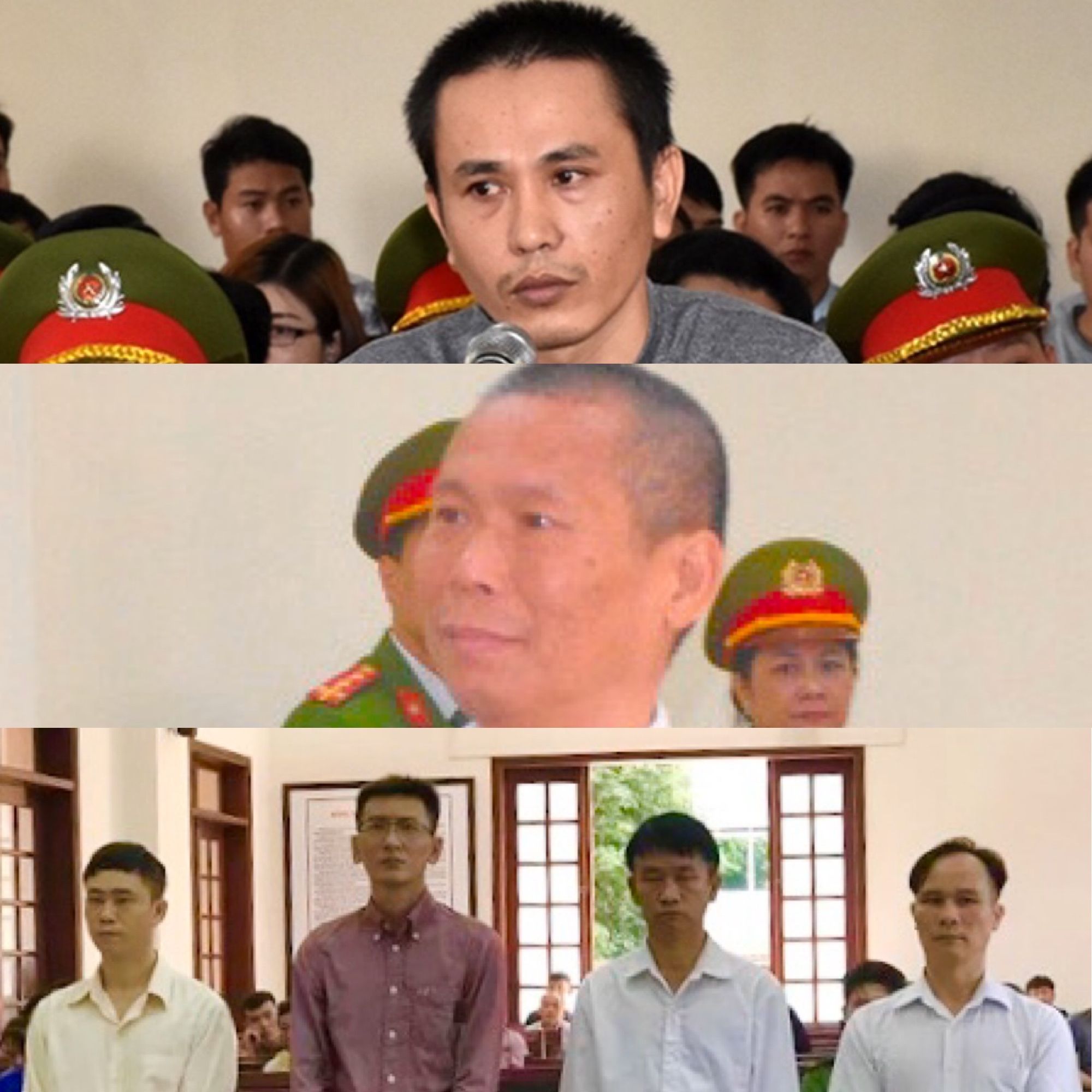
    Nguyen Chi Vung (top), Pham Van Diep (middle), Vo Thuong Trung, Doan Viet Hoan, Ngo Xuan Thanh, and Nguyen Dinh Khue (bottom, left to right) . Photo sources: Kien Thuc, Binh An, and Nguoi Lao Dong newspaper, respectively. Composite photo created by Will Nguyen.

    In a particularly damaging day for Vietnamese dissidents, six individuals were sentenced to a total of 26 years in prison for opposing the Vietnamese Communist Party (VCP) and the Socialist Republic of Vietnam (SRV). The convictions on November 26, 2019 bookend an active month for Vietnamese security forces, who have arrested and convicted numerous individuals for their on- and offline “anti-state” activities.

    Nguyen Chi Vung, 38, was sentenced to six years in prison by a court in the southern Mekong Delta province of Bac Lieu. Vung was convicted under Article 117 of the 2015 Penal Code for “Making, storing, distributing or disseminating information, documents and articles against the SRV”. According to Reuters, Vung had “held 33 livestream sessions on Facebook ‘to share distorted information’ and ‘encourage people to participate in protests during national holidays’”.

    Pham Van Diep, 54, was convicted under the same article, with a north-central Vietnamese court in Thanh Hoa sentencing him to nine years in prison and five years probation. His indictment stated that he had a nine-year history of expressing online dissent and that he made frequent Facebook posts criticizing the VCP leadership and SRV policies. According to Tuoi Tre newspaper, he had previously printed and distributed anti-SRV flyers in the Lao capital city of Vientiane. On June 28, 2016, Diep was arrested by Laotian authorities, tried in February of 2018, and sentenced to 21 months in prison for “using the territory of the Lao People’s Democratic Republic to oppose neighboring countries”. Lao authorities took him to the Vietnamese border one month after his trial, where he was allowed to re-enter Vietnam.

    In Dong Nai, a province bordering the southern hub of Ho Chi Minh City, four individuals were convicted under Article 118 for “Disruption of security”. According to Vietnamese Human Rights Defenders, “[t]he four convicted were arrested on April 25, 2019, for their intention to participate in a peaceful demonstration scheduled on April 30 to mark the 34th anniversary of the fall of the US-backed Saigon regime”. Vo Thuong Trung, 42, and Doan Viet Hoan, 35, were each sentenced to three years in prison, while Ngo Xuan Thanh, 49, and Nguyen Dinh Khue, 41, each received 28 months.

    The convictions of these six individuals in one day comes a little over a week after 43-year-old music teacher Nguyen Nang Tinh was sentenced to 11 years in prison and five years house arrest for violating Article 117. According to his lawyers, a Facebook account making anti-SRV posts used the same name as their client. However, they said the account did not, in fact, belong to him. Tinh was arrested May 29, 2019 and convicted on November 16 in the north-central province of Nghe An.

    Last week also saw the high-profile arrest of Pham Chi Dung, a journalist with a doctorate in economics, and a founding chairman of the Independent Journalists Association of Vietnam. Dung, 53, is a former VCP member and is known for his incisive political and economic critiques of both the VCP and SRV. He has written for Voice of America, BBC, Radio Free Asia, NBC News, Nguoi Viet, and Asian Nikkei Review.

    Dung’s arrest has been noted by the European Union and condemned by Reporters Without Borders, who hailed him as “an outspoken Vietnamese journalist and leading press freedom defender who for years has been trying to help create an open and informed civil society in Vietnam that is not controlled by its Communist Party.” He is currently being held at the Phan Dang Luu Detention Center in Ho Chi Minh City, one of two centers in the city where political dissidents are usually held while they are being investigated (the other being Chi Hoa Prison). He faces up to 12 years behind bars.

    Although freedom of speech, press, and assembly are all guaranteed by Article 25 of the 2013 Vietnamese Constitution, the SRV is a one-party, authoritarian state that does not tolerate challenges to its power. It routinely arrests and convicts activists under Articles 117 and 118 of the penal code, as well as Article 331, which cites  “Abusing democratic freedoms to infringe upon the interests of the State”. Such broadly defined articles are regularly used as a catch-all to target citizens who criticize the VCP or demand political reform. The SRV has long claimed that it does not jail prisoners of conscience, only individuals who violate the law. Human rights groups say the two are not mutually exclusive.

    Addendum: On November 28, 2019, two more individuals in Dong Nai were convicted under Article 117. Huynh Minh Tam, 41, and his sister Huynh Thi To Nga, 36, were sentenced to nine and five years of prison, respectively, for making Facebook posts critical of the SRV.

  • Vietnam: Lawyer Disbarred For Speaking Ill Of Regime and The Communist Party

    Vietnam: Lawyer Disbarred For Speaking Ill Of Regime and The Communist Party

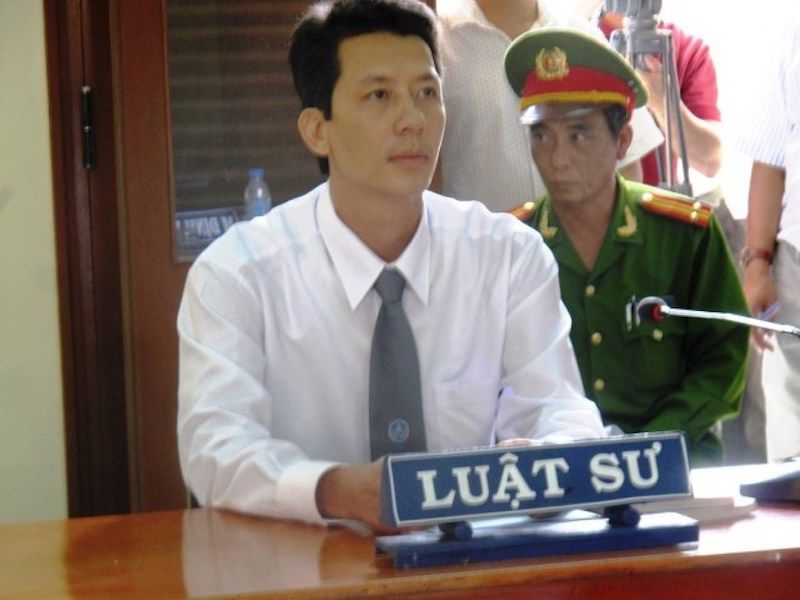
    “I have lost my license to practice law forever, with no apparent recourse available,” Vo An Don, one of Vietnam’s most well-known lawyers in recent years, lamented on Facebook on April 9, 2019. Last week, a high court in Danang ruled that the minister of justice’s decision to affirm his disbarment in 2018 remained effective and final.

    The 42-year-old lawyer from Phu Yen province, however, is widely recognized for his fierce advocacy. In the past five years, Don took on cases involving some of the more popular political dissidents, such as blogger Mother Mushroom. But he gained the most public attention when he represented the family of Ngo Thanh Kieu,  a man who died while in custody after being beaten by the police in 2014. Don had demonstrated tireless efforts in bringing those who committed police brutality to justice in Kieu’s case. Yet on November 26, 2017, he was disciplined by his provincial bar association, and his bar license was taken away. In April 2019, the People’s High Court in Danang sided with the disciplinary decision and let the decision stayed.

    According to Tuoi Tre newspaper, the reason for the disciplinary action was because of Don’s “abuse of democratic freedoms to write and to give interviews to foreign press and broadcasters to defame lawyers, the prosecutorial bodies, the (Communist) Party and the State of Vietnam with the intent to incite, propagandize, and misrepresent the truth which had negatively affected the reputation of the Party, the State, the prosecutorial bodies, and other Vietnamese lawyers.”

    The Phu Yen Provincial Bar Association’s decision to disbar him came only a few days before the appeal trial of Mother Mushroom, which was on November 30, 2017. Don stated at the time in an interview with BBC-Vietnamese that such a decision was probably politically motivated.

    It was not the first time, however, that his local bar association had attempted to discipline Vo An Don. In another interview with RFA in 2014, Don already disclosed that the Phu Yen Provincial Bar Association had tried, unsuccessfully, to disbar him a few times during his representation of the family of Ngo Thanh Kieu. But Don was unfazed and continued with the case, successfully bringing the offending officers to justice.

    The case of Ngo Thanh Kieu was probably the first one in recent years where the court convicted a group of police officers for causing death to a suspect in custody. Public opinion, however, was split about the sentences handed down to the former police. Some people thought that the jail terms were too light as the longest one was only a five-year-imprisonment. At the same time, many people also saw Vo An Don as the lawyer who fought for the people’s rights and stood against what they perceived as a corrupt system.

    The unintended popularity could be the root of the troubles that later followed the lawyer, who practiced law in one of the poorest areas in Vietnam. Don is often dubbed the “farmer lawyer” in social media because he still has to continue farming to support his family. Practicing law in an honest way, he said, cost him opportunities to “get rich” because he refused to be part of the widespread corruption in Vietnam’s judiciary. His popularity and his candid words about the profession together made him an unpopular person among his fellow attorneys. His allegation of corruption among lawyers was one of the statements that cost him his bar license, as reported by The Law newspaper in Ho Chi Minh City on May 24, 2018.

    After the Phu Yen Provincial Bar Association issued its disciplinary decision on November 26, 2017, Vo An Don petitioned the Vietnam Bar Federation in December 2017 for a review.  Over 100 Vietnamese lawyers signed a petition asking the Federation to stand by its member’s freedom of expression and stated that the disciplinary action would be a dangerous precedent for the law profession. The Federation still rejected his petition on May 21, 2018.

    Don continued to appeal his case with the Ministry of Justice later last year, but the minister of justice also decided against him.

    Finally, in December 2018, Don initiated a lawsuit against the administrative decision to uphold the disciplinary action by the minister of justice. But as stated, the court system also did not side with him and effectively allowed the disbarment to remain in effect. The high court in Danang agreed that the dismissal of Don’s case by a lower court was proper.

    Both courts had reasoned that the minister of justice’s decision to uphold the disbarment was done within a professional and social organization – the Vietnam Bar Federation. Such a decision did not fall under the categories of subject matters that could be decided in a lawsuit against an administrative order.

    At this time, even Vo An Don does not seem to think that there could be any other recourse for him. In the meantime, Don’s case has raised sufficient concerns about the freedom of expression of lawyers in Vietnam and whether their human rights will continue to be subjected to professional disciplinary actions.

  • English Speakers In Vietnam Got A Taste Of Censorship Over An Article On Pollution

    English Speakers In Vietnam Got A Taste Of Censorship Over An Article On Pollution

    February 20, 2019, a few foreigners living both inside and outside of Vietnam were sharing the news that an English article published on the site VN Express was taken down before they could read it.

    Some of them suspected that it was the state’s censorship or even the beginning of the enforcement of the new cybersecurity law.

    As of press time, still, the link is not working.

    The article was about the lone man’s trip across the country of a Vietnamese photographer, Nguyen Viet Hung, to raise awareness on marine pollution in Vietnam using what he knows best, photography.

    The story of Hung was becoming quite popular in Vietnam during recent days.

    He is a well-known photographer whose trip was published on social media and a few newspapers, including one that is under the ownership of the Ministry of Public Security, Cảnh Sát Toàn Cầu online (Global Police Force).

    The 3,260 km long journey, dubbed “The Green Journey” on social media, was documented by Hung and his photography skills

    He began his trip in August 2018.

    Along the way, he was documenting the danger of improper waste disposal, especially plastic waste, and its effects on the environment.

    There was an incident where Hung said he felt scared for his life when taking a picture of a truck dumping trash into the ocean because he thought the truck driver was calling more people to come over and intimidate him.

    The story was well-received by the public because it raised concerns over an urgent matter that all Vietnamese people face daily: how to deal with garbage disposal in the country.

    Marine pollution and pollution, in general, have gained more attention among the public because the amount of trash being disposed in Vietnam on a daily basis is quite alarming.

    In 2018, Vietnamese people became even more concerned when a report placed their country among the top five ocean polluters regarding plastic waste became viral.

    Like many other censored topics in Vietnam, we could never fully understand why an article suddenly becomes “unavailable” when the web link stops working.

    One may suspect that it was because the story placed equal responsibility on both the people and the state for marine pollution, where the failure of the garbage disposal system in Vietnam played a significant role.

    Hung said in one of the Vietnamese articles, that while at Sa Ky Harbor in Quang Ngai Province, it was impossible for him to find a garbage can. As the result, all local residents living in the area would dump their trash directly into the waters which they also use for bathing and consuming.

    Regardless of the reason, Nguyen Viet Hung’s photographs bring about a reality that both the Vietnamese people and their government must face: marine pollution in Vietnam is a code red issue where drastic measures, as well as immediate behavioral changes, must happen now.

    Hung had put this succinctly in the only paragraph left from the taken-down article:

    The farther I went, the more I realized that the environment in general and marine environment in particular of our country are being seriously destroyed. Most people are not aware of the scale of the problem, and this should change, Hung said.

    A few photographs from Nguyen Viet Hung’s trip:

    Plastic rubbish filled the land near a market place in Tuy Phong, Binh Thuan Province. Photo Courtesy: Nguyen Viet Hung.
    Lacking proper garbage disposal, people dumped their trash directly into the ocean. Photo courtesy: Nguyen Viet Hung.
    Children were playing near a creek filled with garbage. Photo courtesy: Nguyen Viet Hung.
    A child was picking up near the seashore. Photo courtesy: Nguyen Viet Hung.
  • Facebook’s Community Standards Continue to Hinder Activism in Vietnam

    Facebook’s Community Standards Continue to Hinder Activism in Vietnam

    For almost two months, a group of drivers in Vietnam continuously protested against a BOT (Build-Operate-Transfer) toll booth near Ho Chi Minh City for collecting illegal fees after its contractual time had expired.

    According to the group, BOT An Suong was collecting fees illegally when their contract with the government for the placement of the booth had ended about 32 months ago.

    The owner of the BOT claimed that they had built other transport projects in the area, and hence received the right to continue to collect fees.

    Regardless of who is right and who is wrong about BOT An Suong, the drivers should be allowed to protest and used social media to broadcast their campaign.

    However, an unlikely aide came to the BOT’s owner’s defense: Facebook.

    This is not anything new.

    In Vietnam, Facebook has faced allegations coming from activists that it repeatedly upheld requests (most likely by anonymous users and suspected government’s hired trolls) to shut down or suspend Vietnamese users’ accounts at the request of the authorities to suppress free speech.

    One of the latest casualties was Facebooker Huynh Long who became well known in the past year and a half as someone leading the protests against wrongful BOTs, including the latest one, BOT An Suong.

    The tactics used by Long and his fellow drivers have always been peaceful.

    They just refused to pay when they were driving by BOT An Suong and demanded evidence proving that it could still collect toll fees. They would often live-stream and broadcast the encounters so that others could watch and show support.

    During many of these encounters, it was the community’s support that kept the drivers safe when the BOT hired towing trucks and unknown groups of masked men to intimidate Long and his companions.

    But last night, Facebook informed Long that his account would be suspended for 30 days.

    He joined the increasingly long list of journalists, bloggers, and activists whose accounts have been either shut down or suspended by Facebook in the last six months.

    Activist Hoang Dung’s account has been suspended so regularly that it became a known fact among the activists’ community that Facebook took action against him every time his account disappeared.

    Freelance journalists who published misconducts committed by government’s officials like Le Nguyen Huong Tra and Truong Chau Huu Danh were also among the victims.

    Tra’s account received a blue badge for verification, but that did not help when her account was suspended twice in September 2018.

    What has caused the most frustration to the Vietnamese Facebook users probably is the fact that Facebook would only give out notice of suspension for violating its community standards without any further explanation.

    The users would never know which “standard” they might have violated even when they appealed their cases.

    Moreover, no one knows what the standards that Facebook is using in Vietnam are, or who is the third party’s fact-checker for them inside the country.

    Attempts from the activists’ community to get these answers from Facebook had gone nowhere. At most, they received some evasive responses from Facebook that did not resolve the problem.

    Unlike its neighbor, the Phillippines, where an independent newspaper – Rappler – is one of Facebook’s fact-checkers, the identities of fact-checkers in Vietnam remain a secret.

    In the meanwhile, living in a country like Vietnam where there are already a handful of arbitrary and vague laws that could put one in prison for exercising their freedom of expression, the secretive and non-transparent conduct of Facebook easily angered the community.

    It was not a coincidence that during July 2018, over one hundred thousand Facebook users in Vietnam were signing up on Minds – another social media platform – in just one weekend to make their point to Facebook.

    With the new cybersecurity law enacted and took effect already in Vietnam, Facebook does face pressure from both the government and the 60 million users’ community.

    Vietnam’s Minister of Information and Communications Nguyen Manh Hung had been quite upfront about the government’s desire to build Vietnam’s own social media platform, one that could compete and win over the market from Facebook.

    Part of the main reason that many Vietnamese still rely on Facebook instead of Vietnam’s own Zalo or any other platform is the fact that it is an American product.

    While it may surprise some foreigners, the preference for American made products is a known fact in Vietnam – the country that ranked No. 1 in finding the United States favorable in one PEW’s research in 2017.

    Facebook is also benefiting from the U.S’ rule of law and its Bill of Rights where individual rights, including their right to privacy and free speech, are protected.

    Whether Facebook will uphold these values is crucial to Vietnamese users.

    Failing to demonstrate that it does and will continue to adhere to these democratic values and human rights, Facebook will no longer be attractive in Vietnam.

  • “Minds” over Facebook: Vietnamese Netizens’ Great Cyber Exodus?

    “Minds” over Facebook: Vietnamese Netizens’ Great Cyber Exodus?

    In the past two days, the “F-Generation” of Vietnam started what seems to be an online exodus when many well-known Facebookers announced that they are moving on to Minds.com – an alternate platform for social media.

    The “F” in F-Generation stands for “Facebook” as the online social media giant has a dominant presence in the country where some statistics raised the number of users to be between 50 to 60 million.

    For about two months, people had been protesting both online and offline against the latest Cybersecurity law which was passed by an overwhelming 86.86% of the National Assembly.

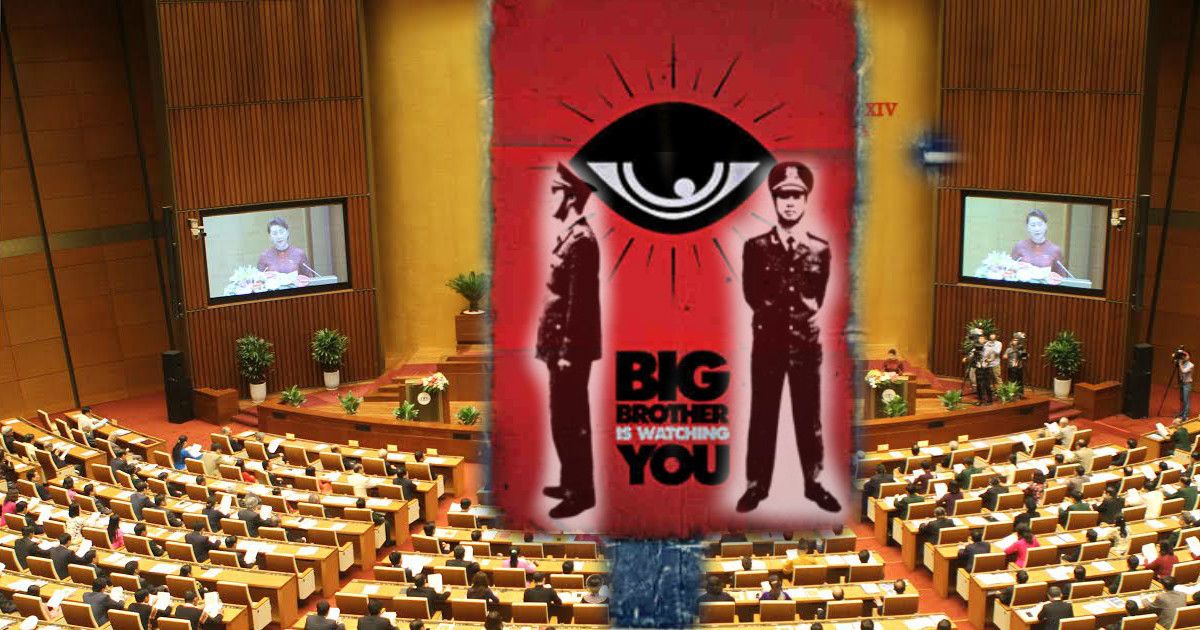
    The law raised concerns over Internet users’ privacy, people’s freedom of expression, and their right to access the Internet.

    Brad Adams, Asia director at Human Rights Watch, declared: “This bill, which squarely targets free expression and access to information, will provide yet one more weapon for the government against dissenting voices. It is no coincidence that it was drafted by the country’s Ministry of Public Security, notorious for human rights violations.”

    In less than two days, some of the prominent Facebookers have received thousands of subscribers over at their freshly minted Minds accounts.

    In the same time, reports of pages and personal accounts have been taken down by Facebook also surfaced.

    Trương Thị Hà, a victim of police brutality during the last “Black Sundays” protest, announced on Minds this morning that her account has been deactivated by Facebook.

    After she posted a letter to her university professor, asking him to explain why he stood there while the police brutalized her during her detention after the protest, that very post was deleted for “violating Facebook community standards” at about 8:30 a.m. Then, her entire account seemed to have disappeared by 10:40 a.m.

    According to author Claire Bernish who wrote about Minds back in June 2015, Facebook could finally meet its match. Minds gives users the familiarity with many features they have already accustomed to on Facebook while commits to protecting their privacy.

    “Minds takes the government’s eyes out of the equation by encrypting private messages and using open-source code that any programmer can check,” Bernish explained.

    “We are a free and open-source platform to launch your digital brand, social network, and mobile app. We are also a social network ourselves. It is a global social network of social networks,” the Minds team declared.

    The hacker collective Anonymous also backed Minds, citing the fact that the founders of the new online social media shared the same vision of those who use the Internet for activism.

    According to the Wired UK: “Two of those on the Minds team – Bill Ottman and Lori Fena – have strong backgrounds dealing with privacy and freedom of expression issues and are both known for their internet-related activism. It is likely these are the type of people that the company is hoping to attract – those with a cause, who want to build something and share it openly with others who may also have a cause.”

    President Trần Đại Quang signed the Cybersecurity bill into law on June 25, 2018, although some 27,000.00 signatures of citizens who had expressed their objection to the proposal of the law, were delivered to his office during the prior weekend.

    It seems as if the activists and human rights defenders from Vietnam might have found a friend in Minds because the reason they chose Facebook in the first place, was to use the platform as a tool to advance a cause: promoting human rights and democracy in the country.

    While not all of them agreed to the solution of leaving Facebook and saw that as a sign of defeat, the silence from Facebook during the last two months as the Cybersecurity law stormed the nation could force many activists to reconsider whether to continue to use it as their primary platform. Most are still using both platforms, but all seemed to agree that if Facebook agreed to comply with the new Cybersecurity, then it could mean they will have to leave for good.

    Vietnamese netizens are no strangers to such online “resettlement.” Back in 2009, when Yahoo 360 blog closed down its operation, Facebook quickly became the next best choice in the country.

    Almost ten years later, while Facebook could still enjoy its reign in the country as the most used online social media platform, the power of Vietnamese users should not be underestimated by anyone.

    Afterall, Vietnamese are a group of people whose contemporary history entwined with mass migration and exodus. They have a lot of experience with starting over, yet again, and they will not be afraid to do so.

  • Enhanced Restrictions In Cybersecurity Bill Shows Vietnam Is NOT Ready To Commit To EU-FTA’s Human Rights Clause

    Enhanced Restrictions In Cybersecurity Bill Shows Vietnam Is NOT Ready To Commit To EU-FTA’s Human Rights Clause

    In recent days, the people in Vietnam, again and again, have proven that social media was the most effective platform to express their discontent with various social and political issues in the country.

    Around the first week of May 2018, people’s outpoured anger over an appellate court’s decision which reduced the sentence for a convicted child molester had forced the country’s top court – the court of cassation – to swiftly responded and reaffirmed the original sentence.

    And just this week, when citizens discovered that their National Assembly was going to pass a law to create three Special Economic Zones (SEZ) at Vân Đồn, Bắc Vân Phong, and Phú Quốc, they again took to Facebook to express their objection to the government’s plan. Then, they used the social media to organize the actual demonstration.

    The call for a nationwide protest on one Facebook page received more than 160,000.00 shares and close to 140,000.00 reactions within days.

    Social media has proven that it still is the most effective tool to disseminate information in Vietnam and to raise awareness on a variety of issues.

    It was precisely seven years ago this summer that a nationwide anti-China’s aggression in the South China Sea – Vietnam’s East Sea – broke out because of a call to protest on Facebook by the page Nhật Ký Yêu Nước – Patriotic Diary.

    Since 2011, social media has witnessed the emerging democracy movement in the country where it served as the birthplace of many independent civil society organizations, online newspapers, and media agencies.

    With some current 30 million Facebook users in a recent statistics, neither the government or its people would underestimate the power of social media and Facebook in Vietnam.

    In both of the recent incidents, the people’s power prevailed, at least for now.

    By the early morning of June 9, 2018, the Vietnamese government officially announced the SEZ bill would be postponed until the fall session of the National Assembly.

    However, it does not mean that the government is ready to throw in the towel.

    Another bill is pending for approval by the National Assembly on June 12, 2018, and it is what would become the infamous Cybersecurity law with at least seven strikingly similar provisions when compares to China’s laws.

    More concerning is the fact that these provisions are more than “copy and paste” paragraphs from China’s laws. They are in direct violation of international human rights standards.

    Explicitly, in 2016, the Human Rights Council passed a resolution without a vote, to include an addition to Article 19 of the Universal Declaration of Human Rights, recognizing the right to Internet access is a human right.

    The goals and objectives of this Cybersecurity bill will violate Article 19 because it gives the government and the police power to demand readily accessible information to all citizens’ Internet usage data whenever they want and without any due process.

    Internet service providers will act as informants for the government, voluntarily give up users’ activities to police.

    Foreign corporations such as Google, Facebook, Microsoft, Apple, and so forth, will most likely comply with Vietnam’s request to have their servers – which contain Vietnamese users’ data – to be stationed in Vietnam and must have an operating office located inside the country.

    It would mean all of these companies’ stored data within Vietnam’s national territory will have to be given up to police once they demand it.

    The European Union, its parliament, and its member countries should take careful notes of this Cybersecurity bill when they consider the ratification of the EU-Vietnam Free Trade Agreement (EU-FTA) in early 2019.

    As in all EU trade agreements, the human rights clause have been maintained by EU officials and politicians as an essential condition, and that they reserve the power to suspend the agreement if there are going to be gross violations.

    The Chair of the European Parliament’s Committee for International Trade, Bernd Lange, during his visit to Hanoi in September 2017, even declared that human rights and labor rights are at the center of the continued discussions about the FTA between Vietnam and EU.

    If this Cybersecurity bill is passed, it will very well be in contradictions with the human rights clause of the EU-FTA. The U.S. government, Amnesty International, and Human Rights Watch all seem to have taken this view.

    The U.S. Embassy in Hanoi urged Vietnam in their statement issued late June 8, 2018, not to pass this bill, citing concerns that such law “may not be consistent with Vietnam’s international trade commitments.”

    At the same time, Amnesty International and Human Rights Watch both declared that if the Cybersecurity bill is passed and goes into effect, it would violate Vietnamese people’s freedom of expression and their privacy.

    Some Vietnamese are worrying that they might have spent too much time and efforts on the SEZ bill and neglect the one on Cybersecurity, letting it slips through.

    Undoubtedly, the main reason that many Vietnamese were willing to take their anger from Facebook to the streets regarding the SEZ bill and in a certain extent, direct such outrage at their government this past week, was the China factor.

    The people believed that the law would give Chinese investors and corporations an advantage as to the future development in those three locations.

    Tensions between Vietnam and China are historical facts that no regime could re-write. It does not help either that in recent years, China’s rising aggression in the East Sea would continue to remind the younger generations in Vietnam that China has been, still is, and will be a threat to their nation’s sovereignty.

    “Bringing the elephants home to demolish your ancestors’ grave” – an idiom that has been recited over and over again online during the past week – is probably the image many Vietnamese have in mind when they protest the SEZ bill.

    If the Cybersecurity bill passes, the government can construe this very phrase (when use to object any of its decision – such as the SEZ bill this time) as “information which propagandizes, misrepresents, and defames the People’s government” according to its Article 15, and that will be the reason for people to find themselves in trouble with the laws.