Author: Aerolyne Reed

  • Tightening The Noose: The Latest Developments In Vietnam’s Assault On Internet Freedom

    Tightening The Noose: The Latest Developments In Vietnam’s Assault On Internet Freedom

    On August 25, 2021, U.S. Vice President Kamala Harris met with several of Vietnam’s top leaders. According to a report by Reuters, while the focus of their dialogue centered on the South China Sea dispute and the strengthening of U.S presence in the region, she also brought up several human rights concerns with the Vietnamese government. Although Harris did not provide details about what they had discussed, the vice president assured the press that “[the United States] was “not going to shy away” from difficult conversations with countries the United States has partnerships with.

    Prior to her arrival, Vietnam was already dealing with a surge in Covid-19 infections, which resulted in lockdowns and travel restrictions in several places in the country, including Ho Chi Minh and Hanoi. As of September 26, Vietnam has tallied over 476,000 confirmed cases with 18,000 deaths. The Vietnamese government’s approach to containing the spread of the virus has been questionable at best with its use of state media and propaganda to control the narrative and deployment of the military to enforce lockdown measures.

    Yet, despite the ongoing health crisis and the dialogue with the U.S. vice president, Vietnam continues its crackdown, detention, and imprisonment of several online critics, journalists, and activists.

    Freedom on the Net 2021

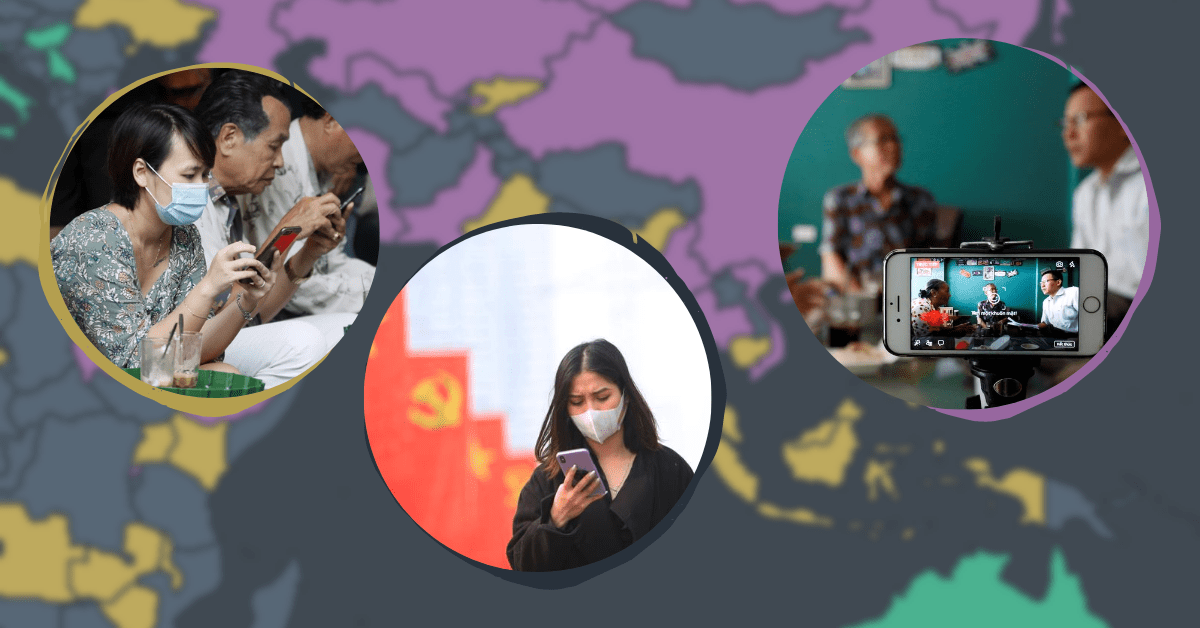
    Freedom House, a US-based organization founded to support and defend democracy worldwide, released its annual Freedom on the Net report on September 21, 2021. This report analyzes the state of accessibility and censorship of a country’s cyber domain, alongside violations of internet users’ rights, and ranks each nation as being Free, Partly Free, or Not Free. It comes as no surprise that Vietnam continues to fare poorly in this regard; it has been classified as Not Free for three consecutive years and has been performing terribly under the standards set by Freedom House.

    This research highlights several aspects of the state of internet freedom in Vietnam. Regarding accessibility, Freedom House states that smartphone and internet penetration in the country has been good with internet prices becoming more affordable. However, connectivity continues to remain an issue for those living in extreme poverty and for ethnic minorities who live in the remote mountainous areas of Vietnam. Censorship also continues to be practiced by the Vietnamese government as it blocks or filters content coming from individuals and organizations that are critical of the regime. Predictably, Vietnam’s violation of internet-user rights is just as rampant compared to prior years with “police routinely [flouting] due process, arresting bloggers and online activists without a warrant or retaining them in custody beyond the maximum period allowed by law.”

    CIVICUS: Latest Developments in Vietnam

    On September 27, 2021, CIVICUS, an international alliance of various organizations that aim to strengthen citizen action and civil society worldwide, released its own report that details more recent events regarding the state of internet freedom in Vietnam. Similar to Freedom House, CIVICUS classifies Vietnam as Closed according to its own standards; a country with this rating exhibits “a complete closure of civic space” where “an atmosphere of fear and violence prevails, where state and powerful non-state actors are routinely allowed to imprison, seriously injure and kill people with impunity.” Criticism of those in power is also severely punished. Likewise, media freedom is virtually non-existent and the internet is heavily censored.

    The CIVICUS report begins by highlighting the cases of several Facebook users who were arrested or imprisoned under Articles 117 and 331 of Vietnam’s Criminal Code. Nguyen Van Lam and Tran Hoang Minh were both found guilty by Vietnamese courts of violating these statutes on July 20, 2021. Lam was sentenced to nine years in prison for “posting anti-state writings and sharing videos and other content, including broadcasts considered politically subversive,” and for “creating, storing, disseminating information and materials against the Socialist Republic of Vietnam.” Minh was given five years of jail time for “abusing democratic freedom” and for his objections to the Dong Tam land dispute incident.

    The report continues with the arrests of Facebookers Tran Hoang Huan and Bui Van Thuan, on August 10, 2021, and August 30, 2021, respectively. Huan’s recent posts voiced his objections and concerns regarding Vietnam’s use of Chinese-made COVID-19 vaccines. He was charged by the Tien Giang People’s Procuracy for “making, storing and spreading or propagandizing information or documents against the state under Article 117 of the Penal Code.”  Bui Van Thuan was arrested in his home by policemen who pretended to be medical workers. Bui Van Thuan’s wife, Trinh Nhung, stated with The 88 Project that Thuan had previously posted “biting commentaries against the government’s handling of COVID-19 and other political issues.”

    The more recent cases of Nguyen Thuy Duong and Nguyen Duy Linh are also mentioned in the report. CIVICUS states that Amnesty International had reported on September 2, 2021, that Duong had been fined 5 million dong (US$220) for sharing a Facebook post that accused Vietnamese authorities of neglect during the COVID-19 lockdown. This post blamed the government for the rampant spread of hunger among city residents during this time. Nguyen Duy Linh was arrested on September 14 and charged by state authorities with “conducting anti-state propaganda” under Article 117 of the country’s Criminal Code.

    Updates regarding the case of detained human rights defender, journalist, and co-founder of The Vietnamese and the Luat Khoa online magazines, Pham Doan Trang, are also included in the CIVICUS report. On September 6, 2021, the government informed Doan Trang’s lawyer, Luan Le, that his client would be “formally indicted with ‘conducting propaganda against the Socialist Republic of Vietnam under Article 88 of the 1999 Penal Code.” Despite her case being brought to the attention of the United Nations Working Group on Arbitrary Detention (UNWGAD), she still faces the very real possibility of being sentenced to 20 years imprisonment.

    Radio Free Asia’s coverage regarding the arrest of five journalists from the Facebook-based news outlet, Bao Sach (Clean Newspaper) is also mentioned in the report. Truong Chau Huu Danh, Nguyen Thanh Nha, Doan Kien Giang, Nguyen Phuong Trung Bao, and Le The Thang were charged with violating Article 331 of Vietnam’s Criminal Code for posting “anti-state and reactionary information” which delved into information that was “inappropriate, distorting, against the country’s interests, and slanderous of the people’s administration.” Thang is currently released on bail while the other four journalists are still in detention. Truong Chau Huu Danh, the founder of Bao Sach, also faces the additional charge of posting stories that “generated bad interactions between internet users in the cyber environment” which “propagandized, distorted, defamed and seriously slandered Party organizations and local Party committees.”

    Tran Huu Duc and Le Thi Kim Phi were accused by the authorities of using Facebook to connect with members of the U.S.-based Provisional Government of Vietnam, an organization founded in 1991 by former soldiers and refugees who remained loyal to the South Vietnamese government after the war. Than Huu Duc was arrested in January 2021 and charged under Article 109 of Vietnam’s Penal Code for “gathering information on Nghe An residents … for a referendum on naming [Provisional Government of Vietnam] member, Dao Minh Quan, as president of Vietnam.” Duc was also accused of “posting political content online” that opposed government policies and “slandering leaders of Vietnam’s ruling Communist Party.” In September 2021, Le Thi Kim Phi was arrested and charged under the vague clause of “carrying out activities to overthrow the government.”

    In January 2018, the Provisional Government of Vietnam was labeled a “terrorist organization” by the Vietnamese authorities.

    Additional Restrictions on Internet Freedom

    Following the passage of the controversial Cybersecurity Law in 2018, the CIVICUS report further mentions a draft of a government decree which further restricts internet freedom by limiting live-streaming on popular social media sites. CIVICUS states that, “under the terms of the decree, any account that operates on a social media platform in Vietnam and has more than 10,000 followers must provide contact information to authorities” and that “only registered accounts will be allowed to live-stream.” The draft also imposes additional responsibilities on social media providers, requiring them to block or remove content within 24 hours if they receive a “justified complaint” from an individual or organization.

    When passed this decree, coupled with the already draconian Cybersecurity Law, will serve to further cement the Vietnamese Communist Party’s (VCP) rule over the country’s already restrictive cyberspace, putting social media users more at risk of the government’s retribution and reducing social media platforms to tools of government surveillance.

    Freedom on the Net 2021 provides an overall look at the state of internet freedom in Vietnam while the CIVICUS report presents recent, documented, and specific events that support Freedom House’s outlook on the country. Both illustrate a very grim and depressing reality about Vietnam: that despite international pressure, in the form of U.S Vice-President Harris’ visit, and the ongoing COVID-19 pandemic, the VCP is more concerned about maintaining power and control over its people than prioritizing their welfare and safety during these difficult times; the Party would rather control the narrative than work to give actual aid to much of its struggling populace.

    In the end, the actions of the Vietnamese government serve only as a reminder of its ineptitude during times of crisis and its callousness to the plight of everyday Vietnamese; in its relentless attack against internet freedom and freedom of speech, the more pressing and immediate threats to the welfare of the Vietnamese people remain half-heartedly addressed.

    Citations:

    1. Bose, N. (2021, August 25). U.S. VP Harris offers Vietnam support to counter Beijing in the South China Sea. Reuters. Retrieved September 28, 2021, from https://www.reuters.com/world/asia-pacific/us-vp-harris-offers-vietnam-support-counter-beijing-south-china-sea-2021-08-25/
    2. Jaffe, A. (2021, August 26). Harris says she urged Vietnam to free political dissidents. – The Diplomat. Retrieved September 29, 2021, from https://thediplomat.com/2021/08/harris-says-she-urged-vietnam-to-free-political-dissidents/
    3. Nguyen, J. (2021, August 19). State media and social media during the COVID-19 pandemic: A tale of two cities in Vietnam. The Vietnamese. Retrieved September 29, 2021, from https://www.thevietnamese.org/2021/08/state-media-and-social-media-during-the-covid-19-pandemic-a-tale-of-two-cities-in-vietnam/
    4. Nguyen, J. (2021, September 12). Why did the Vietnamese Communist Party militarize its fight against COVID-19? The Vietnamese. Retrieved September 29, 2021, from https://www.thevietnamese.org/2021/09/why-did-the-vietnamese-communist-party-militarize-its-fight-against-covid-19/
    5. Shahbaz, A., & Funk, A. (n.d.). Freedom on the net 2021: The global drive to control Big Tech. Freedom House. Retrieved September 30, 2021, from https://freedomhouse.org/report/freedom-net/2021/global-drive-control-big-tech
    6. Reed, A. (2021, September 21). New research: Vietnam remains “not free” on internet freedom, Freedom House says. The Vietnamese. Retrieved Sept 30, 2021, from https://www.thevietnamese.org/2021/09/new-research-vietnam-remains-not-free-on-internet-freedom-freedom-house-says/
    7. Huu Long, T. (2021, September 21). Vietnam: Freedom on the net 2021 country report. Freedom House. Retrieved October 1, 2021, from https://freedomhouse.org/country/vietnam/freedom-net/2021
    8. C. I. V. I. C. U. S. (2021, September 27). CRACKDOWN ON ONLINE CRITICS PERSISTS IN VIETNAM AS NEW DECREE CONTROLLING LIVESTREAMING PROPOSED. Civicus. Retrieved September 29, 2021, from https://monitor.civicus.org/updates/2021/09/27/crackdown-online-critics-persists-vietnam-new-decree-controlling-livestreaming-proposed/
    9. Civicus. (2020, April 7). ONLINE DEBATE ON DONG TAM INCIDENT FOLLOWED BY PANDEMIC SILENCED BY VIETNAM AUTHORITIES. Civicus. Retrieved October 1, 2021, from https://monitor.civicus.org/updates/2020/04/07/online-debate-dong-tam-incident-followed-pandemic-silenced-vietnam-authorities/
    10. The 88 Project (2021, September 6). Vietnam free expression newsletter no. 34/2021 – week of August 30-September 5. The 88 Project. Retrieved September 29, 2021, from https://the88project.org/newsletter-no-34-2021/
    11. Finney, R. (2021, September 3). Vietnamese facebook user fined for ‘fake news’ as criticism grows of government’s handling of pandemic. Radio Free Asia. Retrieved September 30, 2021, from https://www.rfa.org/english/news/vietnam/fine-09032021182640.html
    12. Whong, E. (2021, September 10). Vietnam indicts five journalists from Facebook-based outlet. Radio Free Asia. Retrieved September 30, 2021, from https://www.rfa.org/english/news/vietnam/baosach-09092021174755.html
    13. Finney, R. (2021, September 14). Vietnam court sentences member of ‘Provisional Government’ to three-year prison term. Radio Free Asia. Retrieved October 29, 2021, from https://www.rfa.org/english/news/vietnam/court-08182021185109.html
    14. Gerin, R. (2021, September 14). Third Vietnamese charged for Facebook connections with US-based Exile Group. Radio Free Asia. Retrieved September 30, 2021, from https://www.rfa.org/english/news/vietnam/le-thi-kim-phi-09102021183034.html
  • The Threat Of A Free And Open Internet In Vietnam

    The Threat Of A Free And Open Internet In Vietnam

    We now live in the Age of Information, where we can access facts, data, or statistics with a simple touch of a button through our phones or computers. With enough time, commitment, and motivation, anyone can attain baseline theoretical knowledge in various fields with access to the internet.

    And if a private individual wants to share what they know, they can easily do so using the many avenues to spread information now available on the World Wide Web. Yet, this ease of access carries with it several caveats, one of which is the rampant spread of misinformation.

    Fake news, bogus statistics, and false narratives have sadly become common as we try to navigate our way through the internet. While trusted news outlets, publishers, and independent journalists are doing their part to weed out disinformation, their efforts are not enough to realistically stop, or at the very least, stifle the spread of these lies.

    And while these experts continue to research and learn about how best to deal with this issue, for now, the challenge falls on private citizens to exercise their judgment and recognize their biases to discern the truth from what is merely a constructed or false reality. Even though humans are far from rational beings touted by various thinkers and philosophers from the past, this should hopefully be enough to slow down misinformation coming from isolated sources.

    Yet, what if campaigns of disinformation were more focused? What if they were run not only by an individual or a small group but by an entire ecosystem that pushes a questionable goal or agenda? And what if this hive mind had enough power, money, and resources to censor alternate sources of information or silence anyone, or anything, that would compromise its meticulously constructed version of the world?

    The U.S Department of State’s 2020 Country Reports on Human Rights Practices: Vietnam tackles several issues plaguing the country: internet freedom. The report states that the Vietnamese government “restricted and disrupted access to the internet, censored online content, imposed criminal sentences for online expression, and monitored private online communications without legal authority.”

    Also mentioned are several restrictions on local internet service providers in the country, which the government controls. Those few that are allowed to operate are either in part or wholly owned by the state, which can actively monitor the online activities of the subscribers of these internet services.

    The report also states that websites that the Vietnamese Communist Party (VCP) considers “politically or culturally inappropriate” are also blocked on the Vietnamese internet and cannot be accessed directly. This group includes international sites owned and operated by Vietnamese people residing overseas and several credible news outlets such as Radio Free Asia, Voice of America, and the BBC Vietnamese news service.

    The meddling of the Vietnamese government does not end there. The report adds the situation of websites and social media networks – such as Facebook and Google – where Vietnam already gives the privilege to operate in the country. Yet, these companies are still being compelled to fully cooperate with the Ministry of Information and Communications to weed out and identify news and information that the government considers “bad” or “toxic.”

    They added that companies and organizations that operate social network sites, host blogs, or provide information about politics, economics, culture, or society must give comprehensive details about their plans and set up their servers within Vietnam. It is done for the convenience of the Vietnamese government so that when it requests the personal information of the account holders, it will undoubtedly have them. Hence, all information collected by these companies is stored for 90 days, with specific metadata being held for up to two years.

    The report highlights the government’s crackdown against private citizens, journalists, and bloggers who use their platforms to criticize and complain about the actions of the VCP or expose the many allegations and manifestations of corruption that plagues the Vietnamese government. These brave men and women, with our co-founder and co-editor, Pham Doan Trang, being one of them, bear the brunt of the government’s ire and often face the possibility of “arrest, short-term detentions, surveillance, intimidation, and the illegal confiscation of [their or their family’s] computers and cell phones.”

    Despite the severity of the restrictions on the Vietnamese internet, this is not something new; it is just another manifestation of the Vietnamese government’s ever-tightening noose around the neck of free speech and press freedom.

    The careful monitoring of websites, internet service providers, social media programs, and bloggers is the latest in a long line of the party’s transgressions against outlets that challenge the narrative the VCP tries so hard to instil as truth. And with the passage of the controversial Cyber Security Law in 2018, it is evident that the government is trying to replicate its success in controlling all forms of printed media in a more modern context, according to an article written in January 2019 by Thoi Nguyen in The Diplomat.

    Yet, with all their control and propaganda, what is this elusive narrative that the VCP is trying so hard to maintain? What is the story they want every one of their citizens to accept as gospel and as the absolute truth?

    The Party is perfect, and that the Party only has the people’s best interests at heart?

    The VCP’s version of reality has itself at the helm of Vietnam; it paints the Party as the almighty saviour of the country from the hands of the West. It construes itself as the central, and perhaps, the sole reason for Vietnam’s miraculous rebirth from conflict and civil war to its current state. The Party believes the VCP, guided by the spirit of Ho Chi Minh, should continue to carry the nation towards progress for all eternity.

    Such is the display of bravado, arrogance, and delusion of the Vietnamese government.

    Hence, it continues its charade, striving to censor masterfully, control, and monitor what occurs in Vietnam’s corner of the internet, a tactic not too different from what China practices. At the same time,  it continues to peddle its story to its citizens and the rest of the world,

    All this leads to a peculiar reversal of roles where misinformation comes not from the flawed thought process of the ill-informed or the writings of misguided conspiracy theorists. Instead, it comes from the precise calculations and machinations of the state, which can control most of what people consume in mainstream media. And if the people are constantly bombarded with lies and misdirection, they will eventually accept these falsehoods as fact and gospel.

    As such, the task of revealing new truths to the Vietnamese people and raising awareness about what is going on outside the government’s online information bubble lies in the hands of individuals. It falls on independent journalists, writers, bloggers, and small online publications to crack open the Vietnamese firewall, despite the risks, to make citizens question what they hold to be true. The threat to the free and open internet in Vietnam is genuine to the government as it exposes their lies and renders them obsolete.

    For when the state fails to provide the truth, it becomes our duty to do it ourselves.

  • New Research: Vietnam Remains “Not Free” On Internet Freedom, Freedom House Says

    New Research: Vietnam Remains “Not Free” On Internet Freedom, Freedom House Says

    Internet freedom in Vietnam has always been at the mercy of state censorship and strict government control. Journalists, bloggers, and activists face the genuine risk of harassment by state forces and even imprisonment. On September 21, 2021, Freedom House, a US-based organization founded to support and defend democracy worldwide, released its annual report titled Freedom on the Net 2021. Disappointingly, Vietnam continues to fare poorly in its metrics and analysis as the situation surrounding Vietnam’s internet freedom continues to worsen year after year.

    Freedom House’s Methodology

    In its annual report, Freedom House rates each country on a scale of 100 to 0, with a score of 100 representing the freest conditions and with 0 signifying the least free. The highest possible score of 100 is then divided into three categories, namely: Obstacles to Access (25 pts.), Limits on Content (35 pts.), and Violations of User Rights (40 pts.). These three categories are then further split into several specific questions, which are then used by Freedom House to determine a country’s appropriate standing.

    Countries that attain a grade between 70-100 are classified as Free, those with scores between 40-69 are noted as being Partly Free, and nations with a score from 0-39 are considered to be Not Free.

    Freedom House’s full methodology can be found here.

    Key Events

    Vietnam’s rating for 2021 in Freedom House’s report is 22, which classifies it as being Not Free. This score is 2 points lower than its rating of 24 in 2019 but is equal to its 2020 score, which was also 22. However, just because Vietnam’s rating is the same in last year’s report does not mean that the situation in the country has remained unchanged. For instance, in 2020, Freedom House reported a temporary connectivity disruption in Đồng Tâm coupled with Facebook’s servers in the country were taken offline in February 2020, which led to a lower accessibility score for that year. No similar issue has happened so far in 2021, which leads to Vietnam having a higher rating in this category. In the same vein, several issues in the past may no longer be present, and several issues today may not have been problematic one or two years prior.

    Freedom on the Net 2021 report begins by listing several key events that affect Vietnam’s overall score.

    Firstly, the report states that the Vietnamese government had threatened to shut down Facebook’s activities in the country if the company refuses to comply with the government’s requests to restrict content it deems to be “sensitive” or “critical.”

    Secondly, the report discusses the prior elections and the Vietnamese government’s censorship, arrests, and smear campaigns related to several independent candidates. Related to this are the long-running and ongoing arrests of activists and bloggers.

    Lastly, the report mentions the draft decree regarding personal data protection, which was released in February 2021; if passed, this would require online platforms to collect and store the personal data of Vietnamese users for the purposes of providing it to the government upon request.

    These events give us much-needed context into how Freedom House came to its rate for Vietnam in its 2021 report.

    Internet Freedom in Vietnam

    Regarding Obstacles to Access, Vietnam scores 12 out of a maximum of 25 points, or around 48 percent of the total. The report states that internet penetration in the country is at around 68.70 percent of the population and that smartphone penetration is at around 61.37 percent. Internet prices have also become more affordable, even to those in rural areas. Despite these positives, connectivity remains an issue for those in extreme poverty and for ethnic minorities who live in remote mountainous regions.

    Any business or firm is allowed to operate as an internet service provider in Vietnam; however, some informal barriers prevent many from doing so. Currently, the Vietnam Posts and Telecommunications Group (VNPT) and Viettel dominate the industry, with these companies controlling 40 percent and 38 percent of the market respectively. The mobile sector is no different, with Viettel accounting for 50.5 percent, VinaPhone 24.6 percent, and MobiFone 21.1 percent, comprising the lion’s share of all subscriptions. As such, smaller companies in both the internet and mobile sectors cannot hope to compete with these already established businesses.

    The Vietnamese government still retains the ability to restrict connectivity on a whim. Various government agencies tasked with regulating and overseeing digital technology remain secretive and operate without public oversight.

    Regarding Limits on Content, Vietnam scores 6 out of a maximum of 35 points, or roughly around 17 percent of the total.

    The Vietnamese government actively and continuously blocks or filters any form of content that, from their point of view, challenges the ruling Vietnamese Communist Party (VCP). High-profile blogs, individuals with many followers, content which promotes religious organizations, and local and international news websites which are critical of the regime are often the targets of government censorship. This 2021 Freedom House report states that Vietnam’s Department of Cybersecurity and High-Tech Crime Prevention has “monitored and blocked almost 3,400 overseas websites that have ‘published harmful and toxic information’ in 2020.” The regime has also threatened to shut down Facebook, and so, even this social media giant was forced to comply and agree to remove content that the VCP deems “anti-state.”

    The passing of the controversial Cyber Security Law in January 2019 has also led to the expeditious removal of content. State authorities have “imposed heavy fines and suspended online publications” for having comments that criticize the regime on their platforms. In addition, mounting government pressure has made social media platforms subservient to the government’s wishes, and in effect, they restrict content that the VCP deems inappropriate.

    The social media accounts of activists and dissidents are also under the constant threat of being suspended for “violating the platform’s community standards.” Even normal internet users, commentators, and journalists have to practice some degree of self-censorship or risk being detained or questioned by the authorities.

    This situation of mass censorship and control gives the Vietnamese government the perfect setting to be able to influence, sway, and dictate public opinion. The report quotes the Oxford Internet Institute (OII) which claims, “Vietnam employs a network of approximately 10,000 people that manipulates information on Facebook and YouTube [, and at] least one government agency is involved.”

    Regarding Violations of User Rights, Vietnam scores 4 out of a maximum of 40 points, or roughly 10 percent of the total.

    Even if the Vietnamese Constitution affirms the rights of freedom of expression, access to information, press freedom, and the like, these are not actually protected by the Vietnamese state. Freedom on the Net 2021 report states that “police routinely flout due process, arresting bloggers and online activists without a warrant or retaining them in custody beyond the maximum period allowed by law.” And it says further that the Cybersecurity Law also “prohibits a wide range of activities conducted online” in addition to putting additional pressure on internet users and social media platforms.

    As of June 2021, according to the report, 235 activists are being held in detention for practicing their freedom of expression. Several journalists, activists, and even ordinary everyday users were also given outrageous prison terms or made to pay hefty fines for their online activities for allegedly violating several provisions under Articles 117 and 331 of the Penal Code. Prominent journalist Pham Thi Doan Trang, a co-founder and editor of The Vietnamese Magazine, has been detained since October 2020 and charged with “creating, storing, and disseminating information, documents, items, and publications opposing the Socialist Republic of Vietnam” under Article 117.

    Also mentioned in the report is the controversy surrounding Bluezone, a COVID-19 tracing app. People were unaware that this application disclosed private user information to the government; in June 2021, the state announced that it would sanction people who did not have this app installed on their mobile phones when they entered certain public areas. This is a blatant infringement of a person’s right to privacy.

    Cases of intimidation and physical violence by the authorities are also noted in the Freedom House report and the names of prominent bloggers and activists who were put under surveillance and de facto house arrest. A notable case cited is the situation of Le Anh Hung, a blogger and democracy activist. Hung was arrested in July 2018 for criticizing Vietnam’s one-party communist state in online posts. He was “beaten with a metal folding chair, tied to his bed, and forcibly medicated while being held in a psychiatric hospital without his consent” in July 2020.

    Conclusion

    The state of internet freedom in Vietnam continues to remain abysmal and disheartening, with no improvement in terms of the protection of the rights of individual users. The state maintains its tight grip on the flow of information by pressuring or outright censoring social media platforms, journalists, and media outlets and by stifling any discussion by everyday people through the internet. It’s business as usual for the VCP even during the height of the COVID-19 pandemic in the country.

    Yet, the report points out that “young, educated Vietnamese people are increasingly turning to blogs, social media platforms, and other online news sources for information, rather than state television and radio broadcasters” and that “tools for circumventing censorship” exist and can be easily found. Hence, while the state may continue on its crusade to monopolize the flow of information, its efforts are failing; the truth is still being spread, and the Vietnamese people are always looking for ways to circumvent the walls being built by the regime.


    Trinh Huu Long, an editor of The Vietnamese Magazine and co-director of Legal Initiatives for Vietnam, is the author of the Vietnam chapter of Freedom House’s Freedom on the Net 2021.

  • Toward Greener Pastures: A Reflection On Human Trafficking In Vietnam

    Toward Greener Pastures: A Reflection On Human Trafficking In Vietnam

    In October 2019, 39 people were found dead inside a sealed refrigeration trailer in Grays, Essex, in the United Kingdom. Initially thought to be Chinese, these people were, in fact, Vietnamese, mostly from Nghe An and Ha Tinh provinces in the north-central region of Vietnam, who had left their families and their homeland for a minuscule chance at a better life.

    “They were treated worse than cattle,” DCI Daniel Stoten, the lead investigator, told The Guardian.  This tragic event is now commonly known as the Essex Lorry Deaths.

    In response to this tragedy, Nguyen Xuan Phuc, who was the prime minister of Vietnam at that time, ordered an investigation into the incident. He ordered the Ministry of Public Security, the Foreign Ministry, and the two central provinces of Nghe An and Ha Tinh to investigate and find out cases of Vietnamese citizens being brought illegally to foreign countries and strictly handle the violations.

    Yet, after almost two years, despite the sentencing and imprisonment of the people involved with the trafficking crimes and the investigations by Vietnam and other foreign governments, human trafficking in Vietnam continues to thrive.

    Deutsche Welle, a media organization based in Germany, reports that the ongoing surge of COVID-19 cases in the country is pushing more and more Vietnamese citizens to turn towards smuggling and human trafficking to make ends meet. Despite the country’s closed borders, people are still able to move in and out of the country through routes passing through neighboring Myanmar and China.

    Michael Brosowski, the co-founder of the Hanoi-based Blue Dragon Foundation, a charity organization that deals with child rescue and human trafficking, mentions in the article that most of the cases he’s been handling involve women and girls from ethnic minorities. He also adds that there have been reports of girls being forced to work in karaoke bars, which are likely fronts for brothels.

    Human trafficking is a messy, disturbing, and heartbreaking issue. Yet, the fact that it continues to this day and that some people willingly choose to engage in it, or are left with no other choice but to resort to it, only underscores the importance and necessity of open dialogue and addressing it in the public sphere. In the context of Vietnam, it is essential to reflect on why it continues to be so prevalent and on why it has remained cancer growing seemingly unchallenged in Vietnamese society.

    Human Trafficking in Vietnam

    The United Nations defines human trafficking as “the recruitment, transportation, transfer, harboring or receipt of people through force, fraud or deception, with the aim of exploiting them for profit.” They add that “men, women, and children of all ages and from all backgrounds can become victims of this crime” and that the people who operate such practices often use “violence, fraudulent employment agencies, or fake promises of education and job opportunities to trick and coerce their victims.”

    The U.S. Department of State’s global report on human trafficking provides several facts and statistics regarding the troubled state of this issue in Vietnam and lays out several recommendations that the country should take in order to better improve this situation. Likewise, our own Jason Nguyen, in his pieceregarding human trafficking, summarizes many of the key points and features of this aforementioned report.

    To put it simply, The U.S. Department of State classifies Vietnam under its Tier 2 watchlist; this means that the country has not met its minimum standards in terms of eliminating human trafficking but is at least trying to do so. Continued failure to act and a lack of concrete action may lead Vietnam to be reclassified as Tier 3; countries that fall under this bracket will be barred from getting any financial assistance from the United States. Vietnamese citizens will also face heightened immigration restrictions and the assets of Vietnamese officials in the United States will be frozen as well.

    Regarding the actions Vietnam is currently undertaking to address human trafficking, Nguyen writes that the country has ramped up prosecution against human traffickers and has passed legal revisions to terminate ludicrous brokerage fees; these fees, if too steep, cannot be realistically paid. In effect, workers end up indebted to their employers

    With regards to specific legislation, Nguyen notes that Articles 150 and 151 of the Penal Code are specific anti-trafficking provisions that aim to dissuade would-be traffickers; both carry hefty prison sentences and associated fines. Yet, despite being called “sufficiently stringent” in the U.S. Department of State’s report, the implementation of these laws is not ideal. Despite having more charges filed against human traffickers, the number of investigations and convictions has actually decreased. Poor data collection, inadequate monitoring, and problematic evidence collection continue to hinder Vietnam’s fight against human trafficking, despite the government providing personnel and state forces anti-trafficking training.

    The U.S. Department of State report also alleges that some Vietnamese government officials, at the commune and village levels, were complicit in the practice of trafficking itself. They allegedly accepted bribes from traffickers, overlooked trafficking indicators, and even demanded large sums of money from the victims prior to reuniting them with their families.

    As for the victims and perpetrators of human trafficking themselves, Nguyen writes that “over 60 percent of victims come from ethnic minority groups” and that both traffickers and their victims “share poor economic and educational backgrounds.” He also notes that most traffickers are also illiterate and have not finished high school.

    The Borgen Project, a non-profit organization that aims to make fighting poverty part and parcel of the U.S foreign policy, also notes several facts that highlight the plight of Vietnamese human trafficking victims; men, women, and children are all fair game in this industry and their servitude ranges from forced labor in various physically intensive industries, such as manufacturing or agriculture, to prostitution and sex work in brothels.

    Addressing the Issue

    The U.S. Department of State’s global report does an exceptional job in presenting the current state of human trafficking in Vietnam. Likewise, it also provides several suggestions and recommendations that the country should prioritize to improve the situation as soon as possible. Nguyen condenses these as follows:

    1. Bolstering collaboration with NGOs and civil society;
    2. Amending existing loopholes;
    3. Training law enforcement officials in domestic trafficking cases;
    4. Implementing policies;
    5. Increasing national funding for provincial-level authorities to assist victims of trafficking; and
    6. Inviting independent bodies to verify that the government has terminated forced labor in rehabilitation centers.

    These suggestions are all well and good but they mostly seem to deal with the effects and the aftermath of human trafficking itself; even preventative measures such as information campaigns and policy formation skirt the root of the problem. They fail to get to the heart of the issue and sadly this almost guarantees that human trafficking in Vietnam will continue to exist and grow.

    How then should we approach Vietnam’s human trafficking problem?

    As mentioned earlier, the victims and perpetrators of human trafficking in the country do not come from privilege nor wealth. They are not from the upper or middle classes of society, nor have they completed their formal education; some cannot even read. They come from ethnic minorities and face daily challenges that would seem alien to those blessed with the sanctity of comfort. They constantly live in extreme poverty, and due to their actual and perceived lack of choice, are forced to latch onto any opportunity that comes their way just to be able to bring home food for themselves and for their families. Necessity and despair force both traffickers and their victims to do what they think they need to do, even if it means resorting to illegal and dehumanizing means.

    The hopeless deceive the hopeless with promises of greener pastures and a better life while concealing the risks, dangers, and reality.

    Inequality, poverty, and social disparity are at the center of this issue and if Vietnam desires long-lasting permanent change regarding human trafficking, these need to be rightfully addressed and resolved.

    Granted, non-governmental organizations and volunteer groups, such as the Blue Dragon Children’s Foundation, exist and are already doing their part to help alleviate this situation. However, they lack the funds, manpower, and machinery to continuously push forward to bring about definite progress; only the Vietnamese government has an abundance of all three. And yet, the government seems content with keeping the status quo and staying at Tier 2.

    Hence, unless some form of change occurs within the government, or the human trafficking trade suddenly becomes less lucrative for those corrupt and morally bankrupt officials involved in it, more Vietnamese people face the risk of suffocating to death in a cramped enclosed space, thousands of miles away from their homes and loved ones.

    Bibliography:

    1. BBC News. (2021, January 22). Essex lorry deaths: Men jailed for killing 39 migrants in trailer. BBC News. https://www.bbc.com/news/uk-england-essex-55765213.
    2. Gentleman, A. (2020, December 21). Essex lorry deaths: two found guilty over manslaughter of 39 Vietnamese people. The Guardian. https://www.theguardian.com/uk-news/2020/dec/21/essex-lorry-trial-two-found-guilty-over-deaths-of-39-vietnamese-people.
    3. Thuy, H. (2019, October 27). PM orders investigation into overseas trafficking of Vietnamese citizens – VnExpress International. VnExpress International – Latest news, business, travel, and analysis from Vietnam. https://e.vnexpress.net/news/news/pm-orders-investigation-into-overseas-trafficking-of-vietnamese-citizens-4002921.html.
    4. Bohane, H. (2021, June 11). Vietnam: Human trafficking on the rise amid COVID: DW: 11.06.2021. DW Made for Minds. https://www.dw.com/en/vietnam-human-trafficking-on-the-rise-amid-covid/a-57853994
    5. The United Nations: Office on Drugs and Crime. (n.d.). Human-Trafficking. United Nations : Office on Drugs and Crime. https://www.unodc.org/unodc/en/human-trafficking/human-trafficking.html.
    6. Office To Monitor And Combat Trafficking In Persons. (2021, July 1). 2021 Trafficking in Persons Report: Vietnam. United States Department of State. https://www.state.gov/reports/2021-trafficking-in-persons-report/vietnam/
    7. Nguyen, J. (2021, July 17). Q&A: What You Should Know About The Human Trafficking Situation In Vietnam. The Vietnamese. https://www.thevietnamese.org/2021/07/qa-what-you-should-know-about-the-human-trafficking-situation-in-vietnam/.
    8. Minh, H. L. (2020, January 18). 10 Facts About Human Trafficking in Vietnam. The Borgen Project. https://borgenproject.org/10-facts-about-human-trafficking-in-vietnam/.
  • The Power Of Your Ballot

    The Power Of Your Ballot

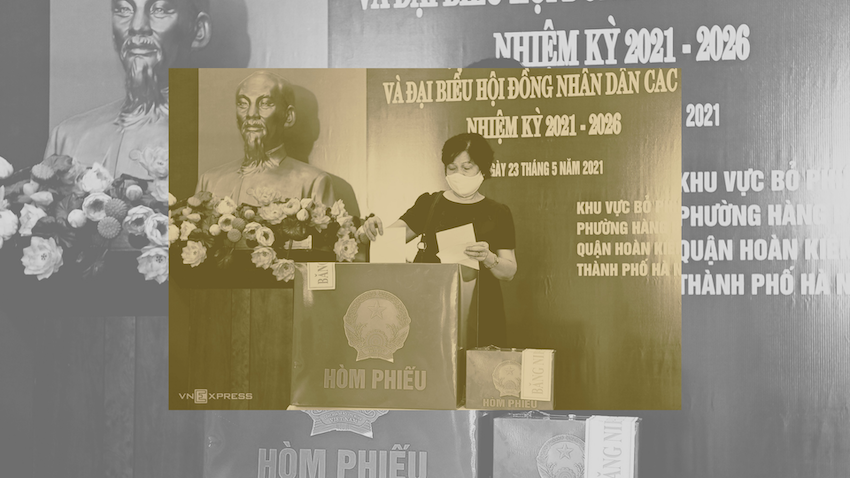
    As election day approaches for seats in the Vietnamese National Assembly, it is important to take a step back and reflect on the significance of this political exercise as a whole and on our role as voters.

    It is common knowledge that several aspects of this entire electoral process are suspicious or perhaps even fraudulent. As such, a large portion of the Vietnamese population may choose not to vote at all, even though they seem to care greatly about the politics and elections of other foreign nations. At first glance, their actions are logical and make total sense.

    Why should Vietnamese citizens continue to take part in a rigged electoral system where their votes will not matter in the end? Why should they take time off from their day and exert effort to indulge in the whims of a government that hardly even cares about the well-being of its people? After all, non-participation is a form of civil disobedience in itself, and in most cases, it is effective and it works.

    Yet, in the context of Vietnam, perhaps another way to express discontent might be more effective in bringing about lasting social and political change.

    A History of Fraud and Deception

    The Vietnamese government has constantly alleged a remarkable voter turnout since the 2002 election for the National Assembly, according to the IFES Election Guide. To be specific, Vietnam tallied 98.85 percent in 2002, 99.52 percent in 2011, and 99.35 percent in 2016. It is also expected that government claims for the turnout for the upcoming election will remain in a similar range.

    Yet, according to some experts, election results in Vietnam come as no surprise as these tallies could be mere fabrications, highly exaggerated, and may not accurately reflect reality. To support their opinions, these experts – such as Mu Sochua, a board member of ASEAN Parliamentarians for Human Rights (APHR), and a former Cambodian Member of Parliament – state that the VCP will enlarge these numbers by relying on proxy voting – wherein one person can vote for his/her entire family – and pressuring local authorities to ensure high voter turnouts in their regions.

    Contrived voter statistics is not the only thing the Vietnamese government is guilty of; its claim of free and fair elections is also deceptive. Candidates for the National Assembly are closely scrutinized and vetted by the Vietnamese Fatherland Front, an arm of the VCP. In the upcoming elections, out of 868 candidates vying for 500 seats, only nine are self-nominated, with six of these also reported to be members of the VCP as well. From this, we can see that pluralism and choice are all but non-existent.

    Prior elections also illustrate this phenomenon and the distinct lack of choice. A report by Freedom House states that out of the 500 seats available for the National Assembly in 2016, 473 were taken by Vietnamese Community Party members while “independent” candidates, who were also vetted by the VCP, took 21.

    Independent candidates and those who are not part of the Communist Party also face an uphill battle in their bid to be candidates in the elections. While most don’t even pass the Vietnamese Fatherland Front’s scrutiny, some are imprisoned or pressured into rescinding their intention to run.

    The arrests of Le Trong Hung, Nguyen Quang Tuan, and Tran Quoc Khanh, as reported by Amnesty International, stand as recent examples.

    Le Trong Hung was a citizen journalist who worked for Chan Hung TV and Nguyen Quang Tuan was a medical doctor. Tran Quoc Khanh ran a popular social media account, which he used to comment on social issues and to criticize the Vietnamese government. All three were independent candidates running for seats in the National Assembly in the upcoming election. However, they were arrested for allegedly violating Article 117 of Vietnam’s penal code, a statute which Amnesty International claims in the report, “ …violates Viet Nam’s international human rights obligations” and that Article 117 “should be repealed or substantially amended…”

    To top all of this, the result of the National Assembly elections is more or less carved-in-stone and predetermined months in advance. This can be seen in the “tentative proportion” or “tentative allocation” data released by the National Assembly’s Standing Committee. The committee has portioned the number of available seats and through this, we can get a fairly clear picture of who will get “elected” and what the priorities of the National Assembly will be over the next five years.

    To Vote or Not to Vote

    Hence, we are faced with a conundrum.

    Given the state of elections in Vietnam with all the deceit, manipulation, and unfairness involved, would it be proper and appropriate to still vote come election day, or would non-participation in the system itself be the better alternative?

    The usual reaction, when faced with such a situation, would, of course, be the road of passivity and non-compliance. Ergo, to choose not to participate in the elections at all.

    This perspective is all well and good. After all, a lack of voters usually implies a government’s lack of legitimacy and the absence of its citizens’ trust. However, legitimacy does not seem to be the VCP’s concern and they would be more than happy to pad the actual number of voters through the use of various statistical anomalies.

    On the other hand, choosing to vote seems to be a fruitless and purposeless course of action when the result is more or less predetermined several months in advance.

    At the end of the day, it appears that no matter what we decide to do with regards to the elections, the Vietnamese government and the Communist Party emerge as the true victors.

    Rays of Hope

    And yet, you have someone like Luong The Huy, an openly homosexual man, civil society activist, and gender expert, who is one of the few self-nominated candidates who somehow managed to slip through the Vietnamese Fatherland Front’s obscure vetting process.

    On election day, May 23, he and a few other candidates will take on a seemingly hopeless fight for a slim chance at winning a single seat in the National Assembly. The odds and the deck are stacked against them, but they still continue to push back; they refuse to remain silent in passive acceptance.

    And while most of us cannot run for any government position, choosing to vote is the next best thing; even though it feels like an exercise in futility, we should still force ourselves to vote come election day.

    Even though our choice may not matter, our mere participation in the simplest of democratic freedoms given to us shows the VCP that we are concerned and invested in the direction the country is moving towards. Even if the election is rigged from the start, the mere act of supporting a candidate that does not agree with the Party’s schemes shows the Party that we will not take kindly to the government’s machinations and ploys. Even the act of submitting a blank ballot carries much more weight than simply not voting at all.

    The VCP thrives on the growing apathy and passivity of its people and could care less about legitimacy. Hence, choosing to vote and then deciding to vote properly becomes an act of rebellion; it becomes revolutionary in that it respects the concept and sanctity of the democratic process itself rather than the Vietnamese government as an institution. And if enough people unite and vote for those actually deserving of a seat in the National Assembly, there is a minuscule chance that perhaps true and lasting change and reform can slowly come from within.

    The strength of your ballot lasts beyond election day and extends far into the uncertain future. And when your time comes to make a decision, we hope you make the right choice.

  • Persisting Issues In The Vietnamese Garment Industry

    Persisting Issues In The Vietnamese Garment Industry

    In March 2015, workers from Ho Chi Minh City gathered in protest. Despite a heavy police presence, they continued marching along Highway 1, blocking traffic along this main thoroughfare. The workers occupied a factory owned by Pou Yuen Vietnam, a firm that produces footwear for brands such as Nike, Adidas, Lacoste, Converse, and Reebok.

    These disgruntled workers were airing out their grievances against an upcoming social insurance law that would affect their lump-sum separation pay if they quit their jobs.

    This new law stated that those who resign earlier than the mandated age of retirement had to wait until they reached the actual retirement age to access their compensation. This demonstration led to the temporary closure of other factories in the area for safety purposes and led to local city officials engaging in dialogue with the workers.

    In the ensuing dialogue, former vice-minister for Labor, Doan Mau Diep, stated that his department would submit a proposal that would let the workers choose between getting one-time social insurance benefits when they quit or opting to receive benefits upon retirement.

    In a country infamous for its draconian policies that criminalize most forms of dissent, to even get government officials to address the issue is a small victory in itself. However, this situation is an outlier, and, sadly, other scenarios do not end in adequate or bloodless resolutions; Vietnamese laborers who work in the apparel or footwear industries face a slew of other hardships as well.

    In May 2013, the Workers Rights Consortium (WRC) released a paper that discussed the many workers’ rights issues present in the garment industry in Vietnam.

    The report stated that the government did not respect the right of Vietnamese workers to freedom of association and that the State had prosecuted those who attempted to form unions. The paper also argued that workers suffered from several forms of forced labor and were compelled to spend excessive hours at their jobs. Several also experienced some form of gender discrimination and were also paid inadequate wages. The report added that workers  also had to deal with a lack of job security because most were hired on a contractual basis rather than fully employed.

    The WRC report also highlighted several illegal or questionable practices present in the Vietnamese manufacturing industry. The authors claimed that some companies employed child labor and that some factories did not have safety measures that met minimum standards.

    Hence, WRC also stated that the Vietnamese government’s failure to “enforce labor laws leaves workers vulnerable to unlawful employment practices that deny workers earned wages and access to social insurance benefits.”

    Sadly, in the time that has passed since the release of the WRC paper, not much has changed in terms of the protection of workers’ rights. However, the same cannot be said about the evolution of the garments industry.

    In recent years, Vietnam has entered into several international trade agreements, 13 of which “were signed between 2013 and 2019, with more than 50 partners across Asia, Europe, and Latin America.”

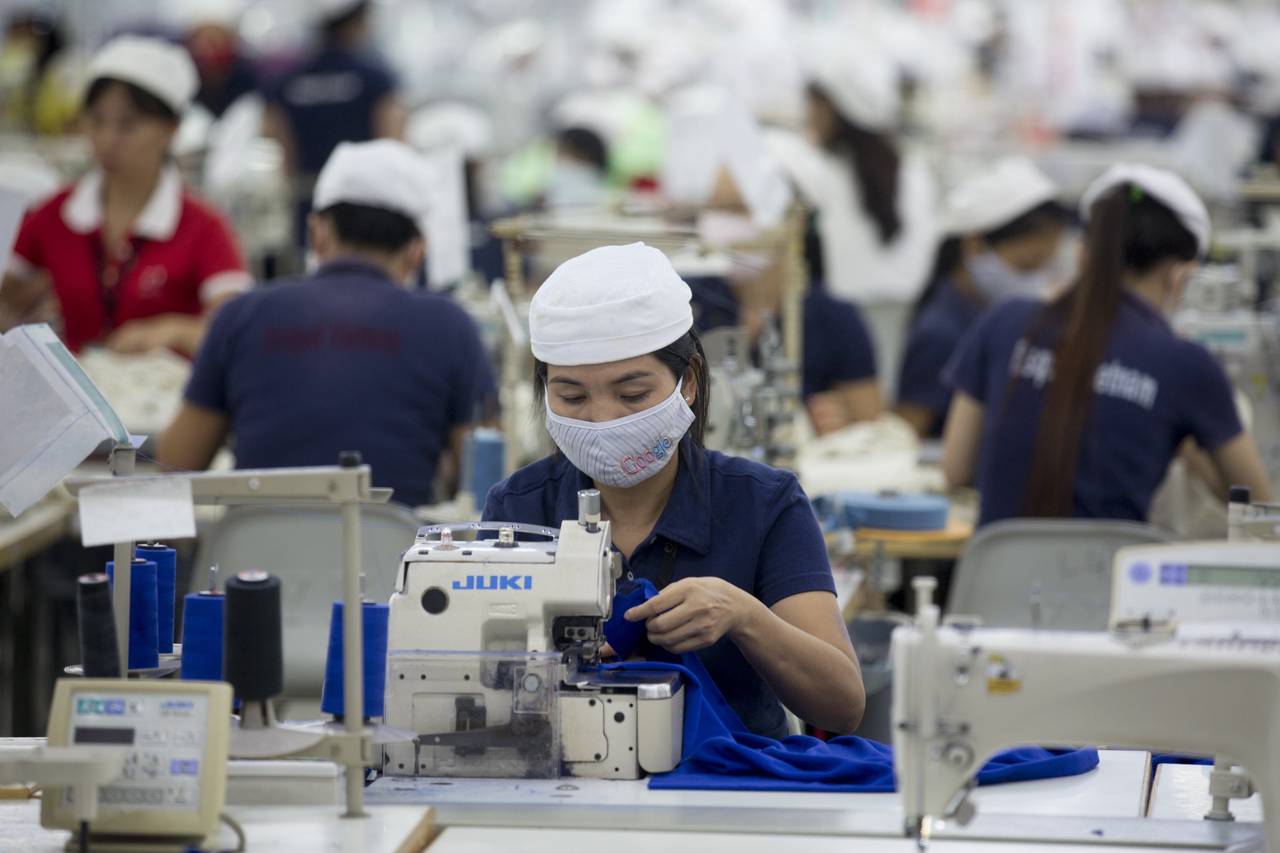
    Currently, Vietnam is the world’s 4th largest garments exporter and the 2nd largest footwear exporter. Nearly 6,000 apparel and 3,000 footwear companies comprise these industries, with approximately 80 percent of the workers employed in them being women and migrants from regional areas with no vocational training.

    Vietnam’s apparel and footwear industries continue to prosper and grow alongside the country’s general economy. Yet, while this may bring employment, poverty alleviation, and infrastructure development, it also comes with additional challenges to labor rights.

    On April 15, 2021, the Australian Human Rights Commission (AHRC) in collaboration with Australian Aid, and the Vietnam Chamber of Commerce and Industry (VCCI) published a set of guidelines in a primer entitled “Responsible business conduct and the apparel and footwear industry” to help these two industries in their operations in Vietnam.

    Their goal in releasing these rules was to “highlight some of the human rights challenges and issues that arise in the apparel and footwear industry in [Vietnam] and [to] provide practical steps grounded in international frameworks and principles.” These guidelines “[have]  been designed to assist businesses operating in [Vietnam] to understand and meet their responsibility to respect human rights.”

    These guidelines are based on UN Guiding Principles, which “operate on a three-pillar framework,” also known as the Protect, Respect, Remedy Framework. The three main tenets are:

    1. The duty of the State to protect human rights

    2. Corporate responsibility to respect human rights

    3. Access to an appropriate and effective remedy for victims of business-related abuse

    The UN Guiding Principles are intended to serve as “a global standard for preventing and addressing adverse human rights impacts related to business.” This primer serves as an attempt to apply these standards to Vietnam’s apparel and footwear industries.

    However, implementation is often much harder in practice.

    While there is a noticeable difference in overall choice of words and tone, both the WRC report and the AHRC’s primer discuss the same labor rights issues in Vietnam, despite being published eight years apart. Severe problems, such as child labor, restrictions on the right of freedom of association, and having unsafe working conditions, remain to this day.

    The AHRC’s guidelines also include several Vietnamese laws, which, at least on paper, show the government’s effort to address these persistent problems.

    All in all, the guidelines penned by the AHRC and the other organizations who contributed to the primer seem to be genuine; those involved seem to have the best interests of Vietnam and the garment workers in mind.

    In reality, however, this primer lacks any real force. It clearly states that this guide provides general information only and is not legally binding. The guidance is not intended to constitute legal advice.

    It goes on to say that “Organizations or individuals should seek their own legal advice if they have concerns regarding their compliance with domestic legislation or international standards. Any case studies or examples are included for educational purposes and do not constitute an endorsement of a company or organization.”

    In short, companies and businesses who are part of the apparel and footwear industries have no obligation to follow these guidelines aside from the threat of government intervention if they violate any existing statutes. Yet, with corruption being so widespread and rampant in Vietnamese society, it’s very easy to bribe the government to make officials look the other way.

    For there to be any real and tangible developments regarding labor and human rights in the apparel and footwear industries, change has to come from both directions, it has to come from both the business sector and the State.

    The guidance provided by the AHRC is a step in the right direction; there’s no contesting that. However, without shifts in the policies and the foundation of the government, no semblance of progress or improvement will ever be fully attained.

    Granted, the Vietnamese government has passed many laws which aim to tackle the working conditions in the garment industry. Yet, proper implementation is an entirely different beast compared to the simple passage of a law. And it is in the implementation itself that the Vietnamese State struggles the most as it is actively hindered by corruption and the short-sighted selfishness of politicians and the Party itself.

    Throughout the years, the Vietnamese apparel and footwear industries have grown to be very lucrative ventures for entrepreneurs, investors, and owners. However, it continues to come at the cost of its workers’ rights, lives, and liberties.

    Genuine change will only come if society, as a whole, wills it to happen. It would include not only the private and government sectors but also the people themselves.

  • The Collision Of Religion And The Vietnamese State

    The Collision Of Religion And The Vietnamese State

    The Separation of Church and State is a concept that has been accepted and promulgated by several democratic countries in the modern era. While the seeds of this idea were planted during the late Middle Ages and the Reformation, it was only during the early years of the establishment of the United States of America that this idea started to blossom.

    While this concept is often construed to simply mean that religion should not intertwine with politics, the more comprehensive meaning is as follows: “it is the right to practice any faith, or to have no faith [at all].” As such, the state has no right to interject, interfere, or hinder an individual’s practice of his or her beliefs; ideally, no laws or statutes will be passed that will limit a person’s free exercise of his or her faith.

    The Vietnamese Communist Party, however, has chosen to take a radically different approach towards religion.

    Legal Initiatives For Vietnam (LIV) released its legal research in September 2020, penned by Vo Quoc Hung Thinh, in which the author presented the many difficulties, challenges, and hurdles that religious organizations face when they deal with the Vietnamese state.

    The writer also highlights the existing institutionalized discrimination against religions in Vietnam and gives us a glimpse into how the state’s direct interference affects believers as well.

    Faith and Law

    Several documents and resolutions have been passed by the VCP that perfectly illustrate its stance towards religious organizations.

    Vo Quoc Hung Thinh noted in his research that in its Resolution 297/CP Concerning Policy on Religion (1976), the Vietnamese government, at least on paper, claimed to acknowledge the right of freedom of religion and supposedly guaranteed equality under the law.

    However, it also emphasized, “that religions shall not be ‘exploited’ to bring harm to the Socialist State.” This resolution then states that the faithful “shall be educated to ensure the spirit of socialist patriotism” and that “ ‘[r]eactionary’ elements hiding inside religions shall be eradicated.”

    This resolution seems to assume that religious organizations are going to be used to subvert state authority. And while it is possible for this to happen, this is not something specific for religion itself; any coalition or gathering of people can fulfill this role just as well or even better than a Sunday Bible Study group; to focus on religion is discriminatory and goes against the concept of equality under the law.

    Vo Quoc Hung Thinh also noted in his legal research that Resolution 40 –NQ/TW, which focused on religion management in the new situation (October 1, 1981), mentioned several religions that existed in the former Republic of Vietnam (1955-1975) and discussed the “state of socialist enlightenment” among practitioners who belonged to them.

    For instance, regarding the Catholic Church that existed in the former Republic of Vietnam, the current Vietnamese government believed that the followers of this religion were “vulnerable to anti-communist propaganda.”

    Another example would be that of the Unified Buddhist Sangha of Vietnam (UBSV). The resolution stated that the leaders of this religion were already somewhat “re-educated” but that the party needed “to abolish UBSV and unify Buddhism in Vietnam under the supervision of the Communist Party.”

    While this resolution document is quite outdated and old, through it, we can catch a glimpse of how the VCP deals with religious groups.

    The Communist Party monitors both followers and spiritual leaders in Vietnam, gathers data about them, and directly interferes in the teachings and belief systems of religion. This runs contrary to the right of freedom of religion and the separation of church and state.

    Vo also noted that Resolution 25 – NQ/TW, which focused on the National Central Committee on Religion Management (2003), was drafted after the Doi Moi era when Vietnam wanted to join the World Trade Organization.

    This resolution, therefore, removed most of the aggressive language used in prior legislation but kept several “core principles” intact. This particular document stated that “any religion must be recognized by the State and religious activities shall be subject to [the] State’s regulations and supervision.” It also maintained that there were still “reactionary elements” hiding in various religious groups and that the government shall prepare to defeat any of them.

    All three of these resolutions illustrate, that despite the passage of time, not much has changed in the way the VCP thinks about religious organizations. They are still seen as threats to the Party’s power, and as such, have to be destroyed or controlled. And despite what the VCP might claim, the Party does not respect freedom of belief nor provide these groups equal protection under the law.

    Faith and Red Tape

    For religions to be formally recognized in Vietnam, and for them to also have some semblance of protection against state forces, they have to register and be approved by the government.

    Human Rights Watch reported in October 2020 that failure to do so can lead to the arrest, imprisonment, interrogation, and torture of the leaders or followers of these religions. Hence, for the sake of self-preservation, it is in their best interest to comply.

    However, this process is far from convenient.

    In order to be recognized, religious groups in Vietnam first need to obtain a Certificate of Religion Operation. Five years later, they then need to formally apply for official recognition. Only upon completion of these two requirements are they, at least on paper, afforded all the rights, benefits, and protections that they should have been given 10 years earlier.

    This process, which is explained in detail in Vietnam’s Law on Religions and Beliefs 02/2016/QH14 (LBB), passed on November 18, 2016, is also vulnerable to abuse by the Vietnamese authorities.

    LIV’s research paper also highlights the case of the religious group An Dan Dai Dao (ADDD), which was established in 1969. It is a sect of Buddhism which had a network of 14 temples and thousands of followers before 1975. After Saigon fell on April 30, 1975, the new ruling Vietnamese Communist Party accused ADDD of working with the Central Intelligence Agency.

    ADDD was also not granted registration, which led to its properties being taken away by the government; their followers were also forced into hiding.

    In 2003, adherents tried to jumpstart their religion once more due to the perceived reforms going on in Vietnam. However, they were once again persecuted by the state.

    Phan Van Thu of ADDD. Picture: The 88 Project.

    In 2013, Phan Van Thu, the leader of ADDD, was sentenced to life imprisonment while 21 other leaders were sentenced to a collective total of 299 years in prison and 105 years of house arrest. To this day, the ADDD situation holds the record of having the highest sentence ever imposed in a political-religious case in Vietnam.

    Those incarcerated are currently dealing with abuse and maltreatment, and are faced with the very real possibility of death.

    In denying the ADDD sect the right to register, the Vietnamese state branded the group as criminals and treated them as such despite ADDD’s lack of involvement in any political activities.

    The followers of this religion have faced persecution for more than 40 years for simply practicing their faith and holding firm to a belief they deem essential to their human existence. This situation casts a bright light on the black bleeding heart of the VCP and exposes the lengths the government is willing to go to destroy its own people.

    Faith and Freedom

    Even state-approved religious organizations have to constantly deal with the ever-watchful eye of the VCP.

    LIV research also states that these organizations are required to get the state’s permission and approval for various things such as hosting religious events whether inside or outside their designated place of worship or for something as simple as a change in leadership within their organizations.

    The locations where religious structures can be built also require the state’s consent. In effect, rather than portraying strength, the VCP presents itself as being unhealthily obsessed with religious groups, their leaders, and the many people who are part of them.

    This is not at all surprising; as Marx, the father of the hammer and sickle, once stated “religion is the opium of the people.”

    In Communism, religion is seen as something undesirable, as something taboo, and as something that must be purged. We’ve seen this in the history of many Eastern and Central European countries when they were under the rule of the former Soviet Union.

    Vietnam is going through the same motions. Yet, we’ve also seen that after the fall of the USSR, religion never truly went away.

    In religion, people find hope; people find something greater than themselves that they aspire to attain, whether it may be the afterlife, heaven, nirvana, or enlightenment. In faith, they find purpose; they find direction and guidance to help them navigate the tumultuous sea of life with the company of those who choose to travel the same path.

    In belief, they find freedom.

    And this is what the VCP fears the most: that the people will no longer be dependent on them for subsistence and survival. They fear for a time when their countrymen start to dream or come to know of a world outside the Party’s tiny dictatorship. They fear a populace that holds another being in higher regard than the crumbling corpse of Ho Chi Minh.

    The VCP fears becoming obsolete. Yet in the end, that is exactly what it fated to be.

    Long after Vietnam has risen above the shackles of authoritarianism and long after it has reached a future of true and genuine democracy, the Party will be gone.

    But religion will be there to stay.

  • A Prisoner’s Dilemma: The State Of Human Rights Defenders In Vietnam

    A Prisoner’s Dilemma: The State Of Human Rights Defenders In Vietnam

    Since the United Nations released the first World Report on the Situation of Human Rights Defenders in 2018, the many human rights violations committed by the Vietnamese Communist Party (VCP) have slowly come under international scrutiny.

    Many of the same issues presented in the report mentioned above, such as the VCP’s active restriction of the rights to freedom of expression, freedom of assembly and association, or a fair trial with due process, continue to persist three years down the line. Even though fewer Vietnamese citizens were convicted in 2020 than in 2019, more were persecuted through other means for simply exercising their supposedly protected rights.

    The 88 Project’s 2020 Human Rights Report on Vietnam explores, details, and highlights the many struggles that Vietnamese activists faced that year. And much to everyone’s expectations and disappointment, Vietnam continues to fail in its international obligations to protect the right of free speech and the well-being of its human rights defenders.

    People at Risk

    Sharing similarities with the data presented by the Human Rights Measurement Initiative, the report states that, “[o]f the 35 people arrested in 2020, nine were women…. The top areas of activism of those arrested in 2020 were democracy activists (16), land rights (11), human rights (9), and freedom of expression (8) [and] [t]he most common occupations of those arrested in 2020 were farmers (8), journalists (4), and teachers (3).”

    Of those arrested, eight were denied legal representation for the charges filed against them, four were not allowed to be visited by friends or family, six were part of small religious sects, and nine came from ethnic minority groups.

    Several high-profile activists were also jailed, such as Pham Doan Trang, a writer and co-founder of the Luat Khoa and The Vietnamese online magazines, and Pham Chi Dung, president of the Independent Journalists Association of Vietnam (IJAVN).

    Eleven online commentators were also taken into custody in 2020, and their number makes up roughly 31 percent of all arrests made that year. The most shocking thing is that these people were brought to jail even though they were not members of any specific civil society group; they were arrested for the sole reason that they chose to air  their grievances against the Vietnamese government.

    In summation, it is clear that no one is safe from the VCP. It hardly matters to them if you are an activist fighting tooth and nail for your principles and beliefs or an average citizen trying to be as discreet as possible. If you publicly express any discontent or disapproval with the government’s actions you run the genuine risk of being put under the spotlight and you will not be safe from the Communist Party’s malicious retribution.

    The Injustice of the Law

    The charges facing those arrested are based on specific provisions in the 2015 Vietnamese Penal Code.

    To be specific:

    1. Article 118: disrupting security
    2. Article 331: abusing democratic freedoms
    3. Article 117: conducting propaganda against the state
    4. Article 330: resisting officers in the performance of their official duties

    These statutes, according to Brad Adams, executive director of Human Rights Watch’s Asia Division, involve national security in Vietnam laws which “are vaguely defined and often used arbitrarily to punish critics, activists, and bloggers.”

    He adds, “it’s even more outrageous to lock up someone for five years just because the government arbitrarily decides that they are preparing to criticize the government.”

    Yet, this is far from the only maltreatment faced by those arrested.

    Several detained individuals have also been denied access to legal representation, meaning that they were sent directly to trial without consulting with a lawyer. And even if they were allowed to meet an attorney, the lawyers were often not given all of the relevant material they might have needed to help defend their client in court.

    Additionally, the appeals of political prisoners for reduced sentences or a retrial are often ignored by the judiciary or are not granted. In 2020, only two who appealed their case, Dang Thi Hue and Bui Manh Tien, successfully had their pleas heard. Yet, the sentences of each one were only reduced by three months.

    It is apparent that the Vietnamese legal system is skewed against human rights defenders and activists. They are not afforded the legal remedies that they are entitled to by law, and they are also not given proper and impartial trials or allowed to use arbitration to plead their cases.

    The Vietnamese government actively refuses to abide by the due process standards that it has codified into law. In any other democratic country, this kind of behavior would not be acceptable. But in a one-party state run by strongmen, this is sadly the norm.

    Life Behind Bars

    For those already incarcerated, their situation is far from ideal. According to The 88 Project’s report, political prisoners are often “forced into severe physical and psychological conditions” such as the “denial of family communications, denial of adequate healthcare, forced mental health treatment, solitary confinement, and punitive prison transfers.”

    The COVID-19 pandemic has only served as further justification for the Vietnamese government to deny people proper and humane treatment.

    The report also details the situations of several imprisoned activists in 2020, such as Hoang Duc Binh, Chau Van Kham, and Nguyen Van Tuc, who are not only barred from meeting or even speaking with their family but are also denied medical care for their severe and underlying health conditions.

    Le Anh Hung and Pham Chi Thanh are the names of other political prisoners made to undergo mental health treatments despite being perfectly sane and normal; they, and others like them,  are forced to take anti-psychotic medication and are made to undergo ethically questionable psychiatric therapies which border on torture.

    The appalling conditions that political prisoners face in Vietnam are vicious, nasty, and inhumane. They are treated even worse than livestock; they are seen as pariahs, not deserving of even the slightest modicum of respect.

    The prison situation reflects what the VCP thinks about the citizens of the country. The moment you become inconvenient, detrimental, or even a minor nuisance to their unchecked power and greed, they will not hesitate to use force, torture, or even to threaten you with the possibility of death to crush your body and spirit.

    ***

    The tactics used by the Vietnamese government and its state agents against activists and human rights defenders are nothing new; these actions are what they’ve been doing for decades now.

    However, due to the ongoing global pandemic, the VCP feels emboldened to further step on the necks of the people it thinks are a danger to its position in society. The Party is willing to toss away the humanity and decency of its citizens just to sate their never-ending lust for riches and power.

    The authorities use force and fear in tandem to scare the populace into silence and compliance.

    Yet, as imposing and threatening the VCP wants itself to appear, it has failed to acknowledge one simple fact: these acts of oppression against Vietnamese citizens betray the Party’s fear and paranoia.

    In reality, the authorities are the ones who are scared. They live in fear that one day, the people may grow wise to the truth: that real power lies not in the state or its corrupt institutions but within the farmer, the student, the teacher, the journalist, and the worker. It is found in the breasts of mothers, fathers, and their children, and in the hearts of all those who desire a better future for themselves and those they love.

    The Vietnamese government continues to act with impunity, not because of its abundance of strength but because of its lack of strength.

  • Vietnam: The True Victims Of Political Repression

    Vietnam: The True Victims Of Political Repression

    The Absence of Choice

    National elections in any part of the world are always interesting to observe. What occurs in them tends to range from comically hilarious, to shockingly horrifying, to essentially pivotal in the future progress and growth of a country. And as much as some people might say otherwise, whoever wins these elections matter; they are an important factor that determines the direction a nation will steer itself in over the coming few years.

    Living in a Communist state, Vietnamese citizens do not get the same opportunity afforded to other people in democratic countries during their general election. The Vietnamese people do not get to choose the top elected officials in their own nation; such a decision is left to the Politburo.

    In effect, the direction in which the leaders of Vietnam steer the nation tends to be a one-way street with very few deviations to the plan and to the overall end goal.

    While there are indeed some benefits to this kind of system, a long hard look at the failures of communist states of the past tends to raise more than a few eyebrows.

    Hence, it should come as no surprise that a significant number of Vietnamese citizens do not approve of how their government handles elections, or how their leaders run the country.

    Faces in the Crowd

    CIVICUS, a global alliance of civil society organizations and activists dedicated to strengthening citizen action and civil society throughout the world, released a report on March 29, 2021 detailing how several activists in Vietnam were targeted, arrested, detained, or tortured by the government.

    CIVICUS noted that leading up to the conclusion of the 13th National Congress of the Vietnamese Communist Party (VCP) on February 2, 2021, the Vietnamese government and state security forces had been intensifying a crackdown on whoever they perceived to be critical of the regime.

    An alarming  number of Vietnamese citizens were arrested, detained, or even tortured on the basis of trumped-up charges and the overuse of vaguely defined Vietnamese penal laws.

    Following are just some of the people mentioned in the CIVICUS report.

    Tran Duc Thach at his trial. Photo: Tuoi Tre

    Tran Duc Thach, an activist, writer, and co-founder of Vietnam’s Brotherhood for Democracy, was convicted on December 17, 2020. He was charged with subversion under Article 109 of the country’s criminal code and was sentenced to 12 years in prison and three years’ probation.

    State prosecutors claimed that his posts on Facebook “threatened social stability, encroached upon national independence and socialism, reduced people’s trust in the political institution of the state of Vietnam, and infringed upon national security and social safety and order.” On March 24, 2021, his appeal was denied and his sentence was upheld.

    In December 2020, Nguyen Dang Thuong, Huynh Anh Khoa, and Tran Trong Khai were sentenced to serve 18, 15, and 12 months in prison, respectively. The three were administrators of a Facebook political discussion group. They were arrested under Article 331 of the 2015 Penal Code for “abusing democratic freedom rights to infringe upon the benefits of other individuals and/or organisations.”

    Their Facebook group had a following of around 46,000 users before it was shut down.

    From left to right: Le Huu Minh Tuan, Nguyen Tuong Thuy, and Pham Chi Dung. Graphic: Luat Khoa Magazine

    On January 5, 2021, Pham Chi Dung, Nguyen Tuong Thuy, and Le Huu Minh Tuan were convicted for allegedly “making, storing, and disseminating documents and materials for anti-state purposes” under Article 117 of Vietnam’s Penal Code. The three men are all members of the Independent Journalists Association of Vietnam (IJAVN). They wrote blogs and articles critical of the Vietnamese government. Nguyen Tuong Thuy also testified in front of the US House of Representatives in 2014 regarding the lack of freedom in Vietnam.

    Dinh Thi Thu Thuy. Photo: The 88 Project.

    Dinh Thi Thu Thuy, an environmental activist, was jailed for seven years on January 20, 2021, after having been in police custody since April 2020. She was charged with “conducting propaganda against the state,” also under Article 117 of the Penal Code. Thu Thuy had made just a total of five social media posts that had garnered a total of 130 likes and 50 shares.

    Phan Bui Bao Thy and Le Anh Dung, two Vietnamese state media bloggers, were detained on February, 10, 2021, for publishing articles accusing provincial officials in Quang Tri Province of corruption. They were charged with “abusing press freedoms.” Phan Bui Bao Thy was the bureau chief of the online magazine Age and Education.

    More recently on March 9 2021, Tran Quoc Khanh was detained for “defaming the government and distorting its policies.” He had used his personal social media page to post about the state’s human rights abuses, corruption, and the South China Sea. He is currently held in pre-trial detention and if found guilty faces 12 years in prison.

    Tran Huynh Duy Thuc at his trial.

    Nguyen Van Hoa, a contributor for Radio Free Asia (RFA), and Tran Huynh Duy Thuc, an imprisoned blogger, started hunger strikes in protest against the appalling conditions in Vietnamese prisons. Hoa was arrested in the past for filming a toxic waste spill after the Formosa environmental disaster happened in Vietnam in 2016. Tran Huynh Duy Thuc has remained in prison since his arrest in May 2009.

    Nguyen Van Duc Do, an activist currently incarcerated for “carrying out activities aimed at overthrowing the people’s administration” under Article 79 of the 1999 PenalCode, has been in prison since October 5, 2018. Amnesty International reports that he has been in solitary confinement since May 2020 and has been subjected to various forms of torture. According to the human rights group, both his legs were bound by chains for 10 consecutive days. He was also fed food mixed with human excrement.

    The Measure of Their Reach

    These people are just a drop in the ocean compared to the total number of Vietnamese who are facing the ire of the government. In reality, it is difficult to ascertain how many people have been subjected to unjust prosecution by the Communist Party. Yet, the one thread that seems to be in common with all of them is that they were all very vocal in their criticisms.

    It would be easy to claim that only high profile individuals are the target of the ever watchful gaze of state authorities. Yet, Dinh Thi Thu Thuy only made five social posts and she was sentenced to 7 years in prison. Even members of the Vietnamese state media itself – like Phan Bui Bao Thy – were arrested.

    On social media, a person’s message can reach 10, a hundred, a thousand, or even a million people. However, the popularity of your posting hardly even matters in the eyes of the Vietnamese government. If the regime does not approve the message’s content, it will treat everyone equally, everyone as the same, because no one is above the VCP’s supreme authority. That would mean it will arrest and sentence anyone who dares to write in contradiction with its propaganda.

    Anyone is in danger, no one is secure, and even the slightest word critical of the government might be the last one you ever get to say.

    All the people mentioned above and the countless others like them are indeed victims of a government so thin-skinned that it responds to even the slightest whiff of dissent with arrests, coercion, and brute force. Yet, these journalists, activists, and human rights defenders account for just a tiny part of the whole. They are not the only casualties under the Communist regime.

    The actual victims of political repression are you, me, and everyone living and breathing under the iron heels of despots and dictators. And even though Vietnam always insists that it upholds and respects all of the human rights treaties it has entered into, in reality, all citizens are living in fear that one sentence or even one word may destroy our lives and the lives of those we love.

    We are not free, and we will never be truly free if we still condone this type of government Vietnam has.

  • The Price Of Progress

    The Price Of Progress

    The aftermath of the war left Vietnam in shambles. As the conflict that raged and surged within its borders came to an end, the country was left bleeding, battered, and broken. With millions dead, an almost non-existent economy, and a bleak uncertain future under the questionable leadership of the Communist Party, Vietnam was beginning to look more and more like a lost cause, destined to be another failed state under the selfish rule of tyrannical forces.

    However, no one would have expected Vietnam to be where it stands today.

    Since Vietnam opened its economy to international trade in 1986, the country has undergone a massive and abrupt shift. It morphed from being one of the poorest nations in the world to being one of the fastest growing economies in Southeast Asia. Case in point, between the years 2002 to 2018, Vietnam’s GDP increased 2.7 times which, according to the World Bank, lifted 45 million people out of poverty.

    Vietnam’s economy has also shown surprising resilience in the face of the ongoing global pandemic. While other countries in the Southeast Asian sphere have been greatly suffering due to COVID-19, Vietnam has been keeping itself afloat; some might even argue that it is thriving.

    Aside from keeping infection rates under control, Vietnam’s GDP actually grew a surprising 2.6 percent in the third quarter of last year, passing even Singapore and Malaysia. Because of its commendable handling of the pandemic and its perceived economic stability, Vietnam is shaping up to be an alternate hub for manufacturing as international businesses begin to pull out of China.

    Yet, economic growth and financial stability is only one way to measure the worth of a nation. While Vietnam seems to be doing admirably well in this regard, it is floundering in several other aspects. To be more specific, in its observation of human rights, and in the protection of several of its most marginalized citizens.

    The Human Rights Measurement Initiative’s (HRMI) 2020 Country Report on Vietnam presents several findings that both highlight Vietnam’s economic success and its key failings as a country.

    In terms of Quality of Life, Vietnam has performed reasonably well in the categories of Health, Housing, and Work but its ranking regarding food accessibility still falls below the benchmark.

    This report states that “Vietnam is performing better than many countries in East Asia for the rights to housing (89.5%), work (91.3%), and health (94.6%). This suggests that the Vietnamese government is using its resources fairly effectively so that people have access to housing and work. These scores have also increased steadily since 2007, suggesting that the quality of life in Vietnam is increasing.”

    However, in regards to food, the Human Rights Measurement Initiative also believes that Vietnam could manage its resources better to ensure that more of its citizens do not go hungry.

    It is also important to take note of some caveats in the given information. The report makes an effort to highlight the fact that Housing does not actually refer to having a place to live in.

    Rather, it refers to sanitation access and access to potable drinking water. As such, several respondents have stated that some people are at risk of having these rights violated. Some of these people include street children, homeless youth, and surprisingly, human rights advocates.

    The category for Work also needs slight clarification. The 91.3 percent figure refers to people who are NOT absolutely poor. This means that anyone who lives on more than a meager amount of  US$3.20 a day is counted towards this number.

    Granted, even with Vietnam’s less than stellar performance regarding food accessibility and concerns regarding housing and work, what the Vietnamese government has done so far is, to a small degree, admirable and we have to give credit where credit is due, political beliefs notwithstanding. If we go solely by the data presented regarding Quality of Life, and also taking into consideration the state Vietnam was in after the war, what it has accomplished is somewhat commendable.

    But the report does not end there. And as more information is presented, the more sinister reality behind the facade begins to reveal itself.

    Regarding the upholding of civil and political rights, it is clear that Vietnam is performing miserably. In all aspects presented in the report under the categories of  Safety from the State and Empowerment, Vietnam’s scores range from Bad to Very Bad and these scores have only been getting worse with the passage of time.

    The data heavily implies that the Vietnamese government doesn’t seem to care about protecting, or even at the very least acknowledging, the universal human rights of its citizens.

    The report also notes several groups of people whose rights are at most danger of being violated. One fact that immediately stands out is that these groups are common in all the lists provided within the report itself. Some of these people-at-risk include: members of labour unions, people engaged in or suspected of political violence, journalists, people with particular religious beliefs and practices, immigrants, and human rights advocates.

    In general, if a person has particular political affiliations or beliefs that don’t align with what the Vietnamese government espouses, or if they believe in a religion that isn’t part of the mainstream zeitgeist, their rights to work, freedom from arbitrary arrest, freedom from disappearance, freedom from torture, assembly and association, and freedom of opinion and expression are actively hindered, ignored, or violated by the government.

    In effect,  the HRMI report presents a two-faced Vietnam.

    On the one hand, you have Vietnam as a rising cub economy. This is the face of Vietnam that is often read or heard about in mainstream news outlets.

    This is the Vietnam that Western economists praise to high heavens for being able to steer itself away from total collapse towards some semblance of stability and even growth. This is the Vietnam that the communist  government wants its citizens to be proud of.

    On the other hand, you have Vietnam as a heartless oppressor of its own people. This is the Vietnam that is willing to go to drastic lengths to silence or restrict any form of discontent, dissent, and differing points of view.

    This is the Vietnam that shows no concern for those it tramples under its heels as it marches forward towards a selfish vision of progress and growth that benefits only those who hold the reins.

    This is the Vietnam that is willing to pay for the price of progress with the rights, liberties, and lives of its own citizens.

    This is the face that very few get to see.

    But it doesn’t have to be this way. There are many avenues to progress and growth, and the road is never set in stone. History has shown us time and time again that nations formed on a foundation of dialogue, compromise, and free speech tend to outlast the rest and stand firm against the test of time.

    Governments can work with their citizens, even with those who hold beliefs or thoughts that go against the grain to bring about benefits that everyone can enjoy. This kind of progress is possible, and it is attainable.

    However, the question isn’t “Can Vietnam go on this path?” The response to this should be apparent; if Vietnam can pull itself from the brink of collapse to be where it is today, of course it can.

    In reality, the question stands as such,“Is the Vietnamese government willing to do so?”

    And this query is a lot harder to answer.